
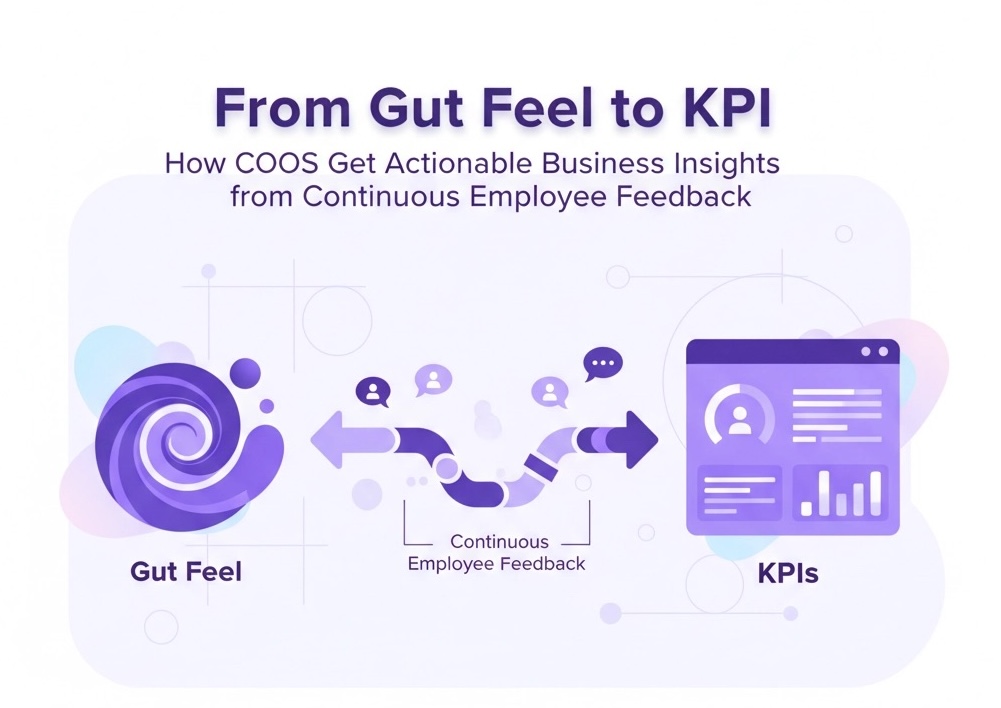
The most successful COOs have moved beyond making people decisions based on quarterly reports and executive hunches. They’re leveraging real-time employee sentiment data as a core business intelligence tool: and the results speak for themselves. Companies using actionable business insights from continuous feedback systems see 23% higher employee retention rates and 18% increased productivity compared to those relying on traditional annual surveys.
The shift from gut-feel management to KPI-driven people operations isn’t just about employee satisfaction (though that matters too). It’s about having the operational visibility to predict turnover costs, identify productivity bottlenecks before they impact revenue, and make data-backed decisions that directly improve your bottom line.
Why Annual Surveys Leave COOs Flying Blind
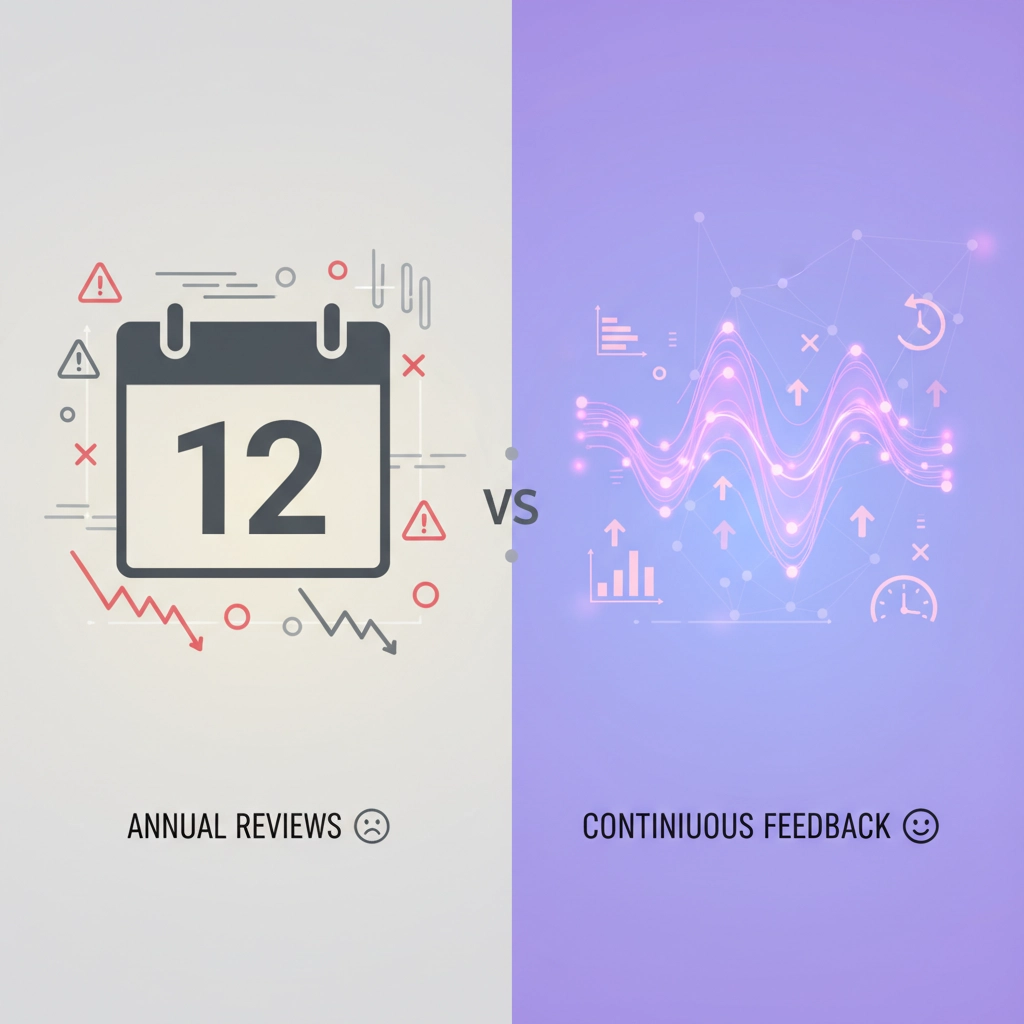
Traditional annual employee surveys create massive operational blind spots. When a high-performing sales rep starts disengaging in March, you won’t know until December: after they’ve already missed two quarters of targets and potentially influenced team morale. That’s not just a people problem; it’s a revenue problem.
The data backs this up: companies using annual-only feedback systems experience 40% higher unexpected turnover rates in key positions. For a COO managing operational efficiency, that translates to:
- Replacement costs averaging 150-200% of an employee’s annual salary
- Knowledge transfer delays that can extend project timelines by 25-30%
- Team productivity drops of 15-20% during transition periods
Real-Time Sentiment as Operational Intelligence
Smart COOs treat employee sentiment the same way they treat supply chain metrics or customer satisfaction scores: as real-time operational data that predicts business outcomes. When you have continuous visibility into team engagement, workload concerns, and process friction, you can make adjustments before they become costly problems.
Key Takeaways: Operational Benefits of Continuous Feedback
- Early Warning System: Identify flight risks 3-6 months before traditional indicators
- Process Optimization: Surface operational inefficiencies through employee insights
- Resource Allocation: Redistribute workloads based on actual capacity data
- Leadership Development: Pinpoint management issues affecting team performance
The most effective approach combines multiple data streams: pulse surveys, anonymous feedback channels, manager check-ins, and behavioral analytics. This creates a comprehensive operational dashboard that shows not just what’s happening, but why it’s happening.
Converting Sentiment Data Into Business KPIs
The magic happens when you stop treating employee feedback as soft data and start connecting it to hard business metrics. Here’s the framework that forward-thinking COOs use:
1. Identify Predictive Correlations
Map sentiment trends to business outcomes you already track. For example:
| Employee Sentiment Metric | Business Impact |
|---|---|
| Manager relationship scores below 6/10 | 3x higher turnover risk within 90 days |
| Workload stress ratings above 8/10 | 25% decrease in individual productivity |
| Career growth satisfaction under 5/10 | 60% more likely to actively job search |
2. Create Leading Indicators
Transform these correlations into predictive KPIs that give you 30-90 day advance warning:
- Retention Risk Score: Weighted algorithm combining multiple sentiment factors
- Team Velocity Index: Engagement metrics that predict project completion rates
- Leadership Effectiveness Ratio: Direct report satisfaction tied to departmental performance

3. Establish Response Protocols
Define specific actions triggered by KPI thresholds. When retention risk scores hit certain levels, automatically flag for intervention. When team velocity drops below benchmarks, investigate resource constraints or process bottlenecks.
Business Impact: The Numbers Don’t Lie
Companies implementing continuous feedback systems as operational intelligence tools see measurable improvements across core business metrics:
Revenue Protection: Salesforce reduced sales team turnover by 32% after implementing real-time sentiment tracking, protecting an estimated $15M in annual recurring revenue that would have been at risk from account transitions.
Productivity Gains: A 2023 study of manufacturing operations found that teams using continuous feedback systems achieved 22% higher output rates, primarily through early identification and resolution of workflow friction points.
Cost Reduction: Organizations using predictive retention models built on sentiment data reduce recruiting and training costs by an average of $2.3M annually per 1,000 employees.
Building Your Cultural Business Intelligence Platform
The most successful implementations treat employee feedback as a business intelligence initiative, not an HR program. This requires:
Technology Integration
Your feedback system should integrate seamlessly with existing operational dashboards. When sentiment scores drop in the customer service department, you want that data flowing directly to your operational reviews alongside call volume metrics and satisfaction scores.
Manager Training on Data Interpretation
Your middle management layer needs to understand how to read sentiment data as operational intelligence. A manager who sees engagement scores declining should know to investigate workload distribution, resource constraints, or process inefficiencies: not just schedule more team-building activities.
Executive Dashboard Design
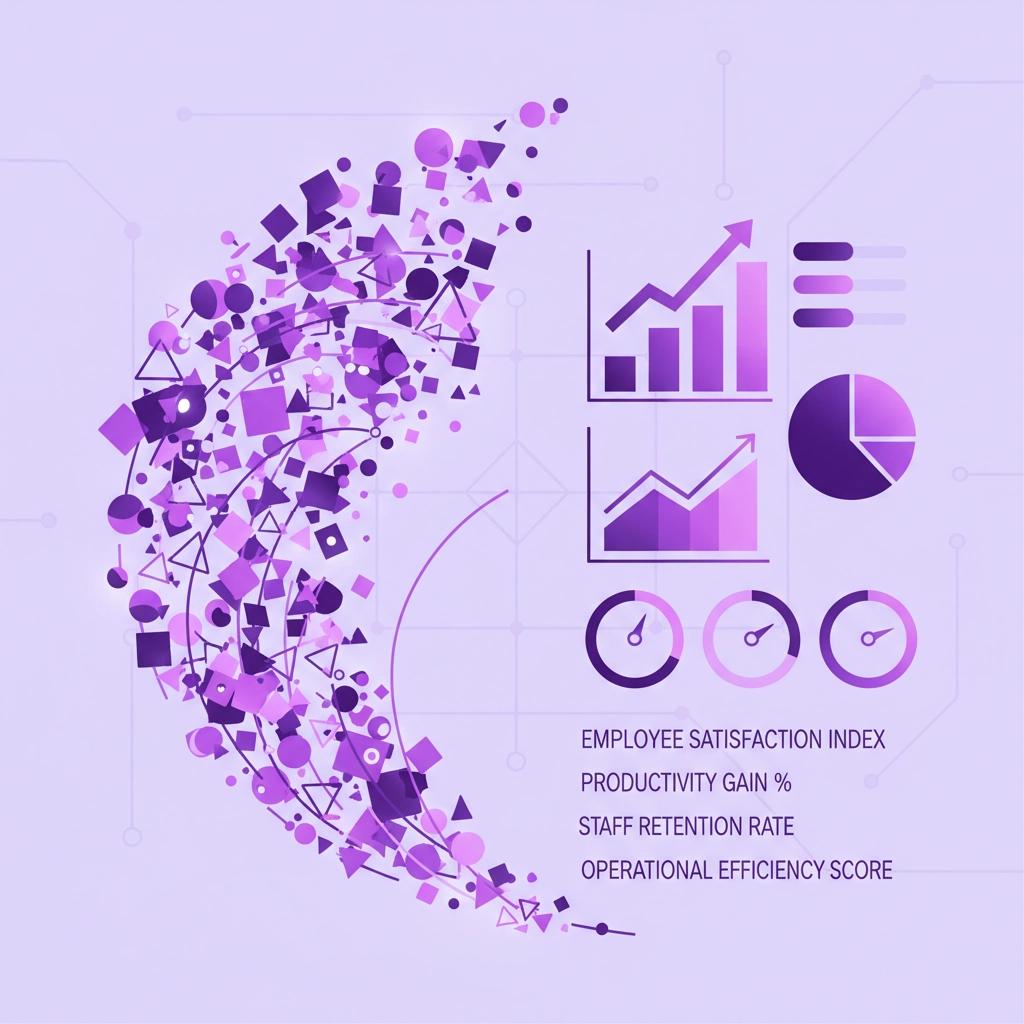
COO-level dashboards should present people data alongside financial and operational metrics. You want to see retention risk scores next to revenue forecasts, team velocity indicators alongside project timelines, and leadership effectiveness metrics integrated with departmental performance reviews.
Measuring ROI: Proving Business Value
To justify investment in continuous feedback systems, track these business-focused metrics:
Turnover Cost Avoidance: Calculate the dollar value of retentions that can be attributed to early intervention triggered by sentiment data.
Productivity Improvements: Measure output increases in teams where feedback-driven process changes were implemented.
Operational Efficiency Gains: Track reductions in project delays, quality issues, or customer complaints that correlate with improved team sentiment scores.
The most compelling ROI story comes from prevention rather than reaction. One manufacturing COO calculated that their continuous feedback system prevented $4.2M in potential productivity losses by identifying and resolving operational friction points an average of 8 weeks earlier than previous methods.
Implementation Strategy for COOs
Start with pilot programs in your highest-impact departments: typically sales, customer service, or operations teams where performance directly correlates with revenue. Focus on:
- Clear Business Objectives: Define exactly what business outcomes you’re trying to improve
- Manager Buy-In: Position this as operational intelligence, not additional administrative burden
- Integration Planning: Ensure data flows into existing operational review processes
- Success Metrics: Establish baseline measurements for productivity, retention, and efficiency
Remember: this isn’t about making employees happier (though that’s a nice side effect). It’s about having the operational visibility to run your business more effectively. When you can predict turnover, identify process problems, and optimize resource allocation based on real-time data instead of quarterly guesses, you’re not just improving workplace culture: you’re gaining competitive advantage.
The COOs who master this approach don’t just retain better talent; they build more efficient operations, reduce costly surprises, and make data-driven decisions that directly impact their company’s growth trajectory. In today’s competitive landscape, that operational intelligence might be the difference between hitting your numbers and missing them entirely.
The question isn’t whether continuous employee feedback will become standard practice: it’s whether you’ll be ahead of the curve or playing catch-up with competitors who are already using their people data as a strategic business advantage.