
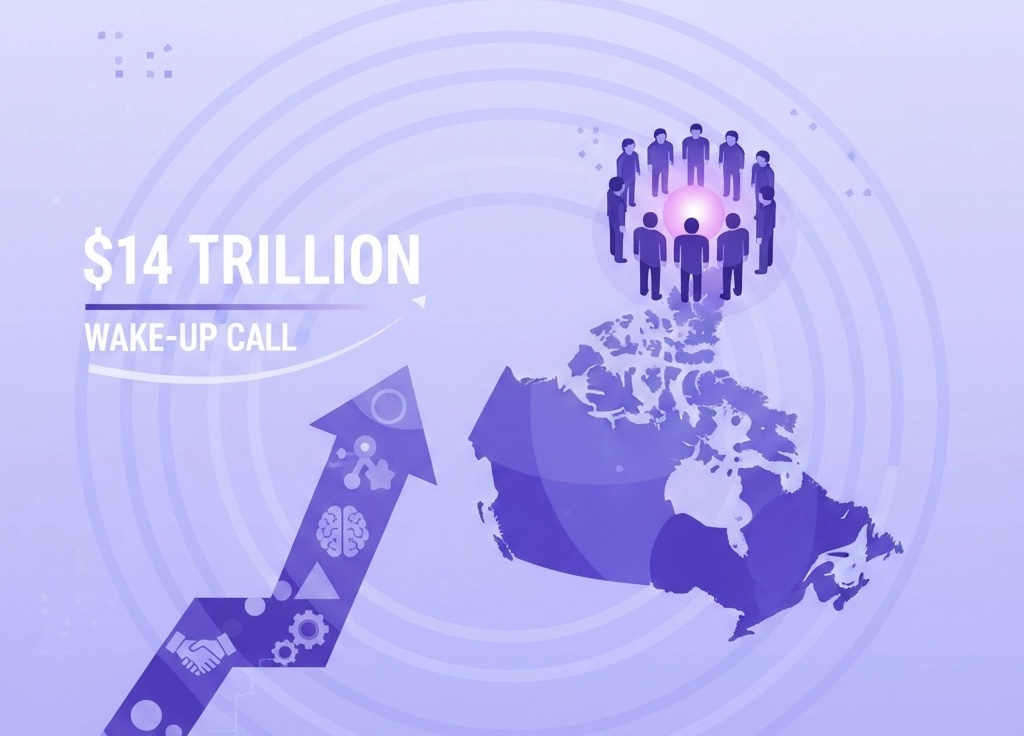
Canada is hemorrhaging economic potential at an unprecedented scale. According to the Canadian Chamber of Commerce’s Business Data Lab, Canada’s productivity gap with the United States has cost over $14 trillion USD in lost economic output since 1980, that’s $385,314 USD per Canadian and more than $4.5 trillion USD in foregone public revenue that could have been invested in innovation and infrastructure.
The numbers are staggering, but here’s what most economic analyses miss: this isn’t just about technology adoption or capital investment. It’s fundamentally a workplace culture problem that requires Cultural Business Intelligence to solve.
The Real Cost of Disengaged Workforces
While economists debate tax policy and R&D spending, Gallup’s State of the Global Workplace report reveals that only 15% of employees worldwide are actively engaged at work. In Canada specifically, this engagement crisis directly correlates with our productivity lag.

Key Productivity Indicators:
- Canadian productivity grew 61% from 1981-2024 vs. U.S. growth of 127%
- Business productivity in Canada declined 0.6% from 2017-2024 while U.S. grew 10.1%
- Canadian workforce generates USD 74.7 per hour vs. USD 97.0 in the United States
The connection isn’t coincidental. McKinsey research demonstrates that companies with highly engaged workforces show 23% higher profitability, 18% higher productivity, and 12% better customer metrics.
Why Traditional Engagement Surveys Can’t Close Canada’s Productivity Gap
Most Canadian organizations still rely on annual employee surveys, a practice that’s become as outdated as dial-up internet in addressing modern workplace challenges.
The Annual Survey Problem:
- Delayed Response: By the time you get results, market conditions have shifted
- Low Participation: Average response rates hover around 30-40%
- Static Insights: No ability to track sentiment changes or identify emerging issues
- Action Lag: Months between identifying problems and implementing solutions
Deloitte’s Human Capital Trends report confirms that organizations using real-time feedback see 3x higher employee retention and 2.5x higher revenue growth compared to those relying solely on annual assessments.
The Cultural Intelligence Advantage
Forward-thinking COOs are recognizing that Cultural Business Intelligence, continuous, real-time insights into workforce sentiment and engagement, represents the missing link in Canada’s productivity equation.
What Cultural Intelligence Delivers:
- Immediate Problem Detection: Identify disengagement before it impacts productivity
- Predictive Retention: Spot flight risks 60-90 days before turnover occurs
- Performance Correlation: Connect cultural health directly to business outcomes
- Resource Optimization: Allocate management attention where it’s most needed
Harvard Business Review research shows that organizations with robust cultural intelligence systems achieve 21% higher profitability and experience 65% lower turnover rates.
Real-Time Sentiment: The Productivity Multiplier
Consider this scenario: A high-performing development team starts showing decreased engagement signals. Traditional annual surveys would catch this 6-12 months later. Cultural Business Intelligence platforms detect the shift within days, enabling immediate intervention.

Productivity Impact Analysis:
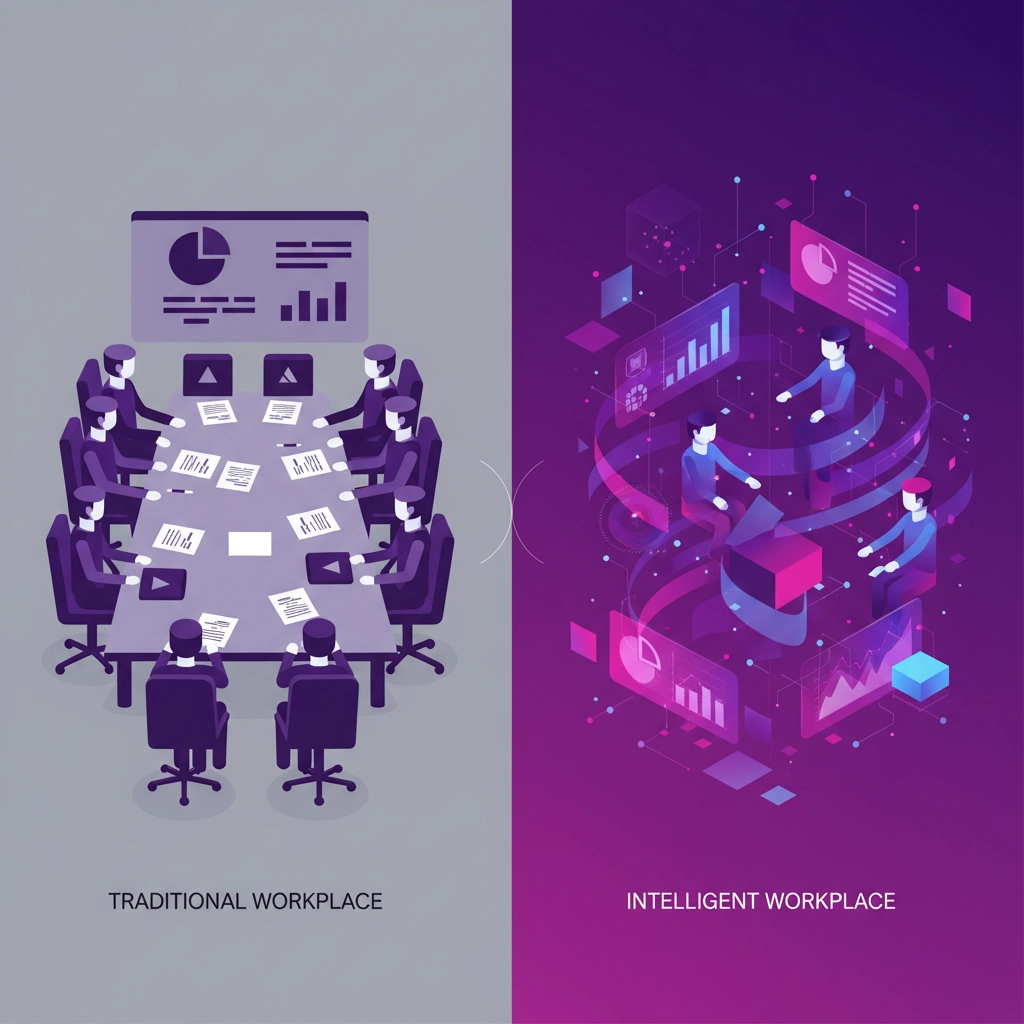
| Traditional Approach | Cultural Intelligence Approach |
|---|---|
| 12-month detection lag | Real-time detection |
| 40% response rates | 90%+ participation |
| Quarterly action plans | Daily optimization |
| Reactive management | Predictive leadership |
Forbes research indicates that 70% of organizational change efforts fail due to cultural resistance, but organizations using continuous sentiment monitoring have 3x higher success rates in implementing productivity-enhancing changes.
The Canadian Context: Why Culture Matters More Here
Canada’s unique workplace dynamics make Cultural Business Intelligence even more critical for closing our productivity gap.
Canadian-Specific Factors:
- Geographic Dispersion: Remote and hybrid teams need different engagement strategies
- Cultural Diversity: Multicultural workforces require nuanced understanding
- Seasonal Variations: Sentiment patterns vary significantly across Canadian regions
- Talent Retention: Competition for skilled workers demands proactive culture management
Statistics Canada data shows that Canadian organizations lose an average of 18% of their workforce annually, each departure costs between 50-200% of that employee’s annual salary in recruitment, training, and lost productivity.
Building Your Cultural Business Intelligence Framework
Smart COOs are implementing comprehensive Cultural Intelligence systems that go far beyond traditional HR metrics.
Essential Components:
- Continuous Pulse Surveys: Weekly or bi-weekly sentiment tracking
- Predictive Analytics: AI-driven insights into engagement trends
- Department-Level Visibility: Granular insights across all business units
- Integration Capabilities: Seamless connection with existing business systems
- Actionable Reporting: Insights that drive immediate management decisions
MIT Sloan research demonstrates that companies with strong Cultural Intelligence systems see 4x higher revenue growth and 6x higher employee satisfaction scores.
The ROI of Cultural Intelligence Investment
The economics are compelling. If Canada could close just 25% of its productivity gap through improved workplace culture, we’d generate approximately $3.5 trillion in additional economic output.
Individual Organization Benefits:
- Revenue Impact: 15-25% higher profitability through improved engagement
- Cost Reduction: 40-60% decrease in turnover-related expenses
- Productivity Gains: 12-18% improvement in output per employee
- Innovation Acceleration: 3x faster time-to-market for new initiatives
Measuring What Matters: Beyond Employee Satisfaction
Cultural Business Intelligence goes deeper than traditional satisfaction metrics. Modern systems track:
Advanced Cultural Metrics:
- Psychological Safety Indicators: Team confidence in speaking up
- Innovation Readiness: Willingness to experiment and take risks
- Cross-Functional Collaboration: Effectiveness of interdepartmental work
- Leadership Trust Scores: Confidence in management decisions
- Change Adaptability: Organizational resilience during transitions
Gallup’s Q12 engagement survey reveals that teams scoring in the top quartile on these metrics show 18% higher productivity and 23% higher profitability.
Implementation Strategy for Canadian Organizations
Successfully deploying Cultural Business Intelligence requires a structured approach tailored to Canadian business environments.
Phase 1: Foundation Building (Months 1-3)
- Establish baseline cultural metrics across all departments
- Implement continuous feedback systems
- Train management on real-time sentiment interpretation
Phase 2: Intelligence Integration (Months 4-6)
- Connect cultural data with business performance metrics
- Develop predictive models for engagement trends
- Create automated alerting for cultural risk indicators
Phase 3: Optimization and Scale (Months 7-12)
- Refine intervention strategies based on data insights
- Expand measurement across all organizational touchpoints
- Develop cultural performance benchmarks
The Competitive Advantage Window
Canada’s $14 trillion productivity gap represents both a crisis and an unprecedented opportunity. Organizations that invest in Cultural Business Intelligence today will capture disproportionate benefits as competitors struggle with traditional, reactive approaches.
Market Timing Factors:
- Technology Maturity: Cultural Intelligence platforms have reached enterprise-grade reliability
- Workforce Expectations: Employees increasingly expect responsive, data-driven management
- Economic Pressure: Rising costs make productivity optimization essential
- Talent Competition: Cultural excellence becomes a key differentiator
The window for early adoption advantage is narrowing rapidly. McKinsey data shows that organizations implementing Cultural Intelligence systems in 2024-2025 will maintain 5-7 years of competitive advantage over late adopters.
Your Next Steps
Canada’s productivity challenge won’t be solved by government policy or technology investments alone. It requires individual organizations to take ownership of their cultural performance and implement the intelligence systems necessary for continuous optimization.
The $14 trillion question isn’t whether Cultural Business Intelligence works, it’s whether your organization will be among the first to capture its benefits or among the many that wait until competitive pressure forces adoption.
Frequently Asked Questions
Q: How quickly can organizations see ROI from Cultural Business Intelligence investments?
A: Most organizations report measurable improvements in productivity metrics within 6-9 months, with full ROI typically achieved by month 12-18.
Q: What’s the typical investment required for enterprise-grade Cultural Intelligence platforms?
A: Investment varies based on organizational size and complexity, but the average enterprise deployment ranges from $50,000-$200,000 annually, a fraction of the cost of a single key employee departure.
Q: Can Cultural Intelligence systems integrate with existing business intelligence platforms?
A: Yes, modern Cultural Intelligence platforms offer robust integration capabilities with major business intelligence, HR, and performance management systems.
Q: How do employees respond to continuous cultural monitoring?
A: When implemented transparently with clear privacy protections, employees typically embrace continuous feedback systems, reporting higher job satisfaction and stronger connection to organizational goals.
Q: What specific productivity gains can Canadian organizations expect?
A: Based on implemented case studies, Canadian organizations typically see 12-25% productivity improvements, 30-50% reduction in turnover, and 15-35% improvement in employee satisfaction scores within the first year.