

The most successful COOs have cracked the code on something their peers are still figuring out: workplace culture isn’t a “soft” metric: it’s a business intelligence goldmine that directly impacts your bottom line. Companies with engaged employees see 23% higher profitability and 18% higher productivity (Gallup), while reducing turnover by up to 40% (Gallup). That’s not HR fluff: that’s operational excellence you can measure, track, and optimize.
The challenge? Most COOs are still flying blind when it comes to culture data. They’re making critical operational decisions based on gut instinct while sitting on a treasure trove of real-time insights about what’s actually driving (or killing) performance across their teams.

The Hidden Cost of Culture Blindness
Here’s what happens when COOs operate without cultural business intelligence: you’re constantly in reactive mode. Someone quits unexpectedly, productivity drops in a key department, or a high-performing team suddenly starts missing deadlines. By the time these issues surface through traditional reporting channels, you’ve already lost weeks (or months) of optimal performance.
Organizations using continuous culture data see dramatically different outcomes:
- 31% lower voluntary turnover (Bersin, The State of Employee Recognition)
- 40% lower absenteeism (Gallup Q12 Meta-Analysis)
- 70% fewer workplace accidents (Gallup)
- 12% increase in productivity metrics (University of Warwick)
The difference? These COOs treat culture data like any other business intelligence: as a leading indicator they can act on before problems compound.
Key Takeaways for Culture-Driven Operations
Before diving deeper, here are the core principles every COO should understand about leveraging workplace culture data:
• Culture data predicts operational performance – Employee sentiment shifts 2-3 months before productivity changes show up in traditional metrics
• Anonymous feedback reveals hidden operational bottlenecks – Your best performers often know exactly what’s slowing things down but won’t speak up in traditional channels
• Real-time insights enable proactive decision-making – Monthly surveys are too slow; you need continuous pulse data to catch issues early (Workday Peakon Employee Voice)
• Integration with existing systems amplifies impact – Culture data becomes exponentially more valuable when connected to project management, HR, and financial systems
Building Your Cultural Business Intelligence Stack
The most effective COOs approach culture data like any other business intelligence initiative: with clear infrastructure, defined metrics, and integration points across their operational ecosystem.
Start with Anonymous, Always-On Feedback Systems
Traditional employee surveys are to culture data what annual financial reports are to daily trading: interesting historically, but useless for real-time decision-making. Leading COOs implement continuous feedback systems that capture sentiment, engagement, and operational friction points in real-time.
The key is anonymity. When employees can share honest feedback without fear of retribution, you get unfiltered insights into what’s actually happening on the ground. This means identifying process bottlenecks, communication breakdowns, and resource constraints that traditional reporting channels miss entirely.
Connect Culture Data to Business Outcomes
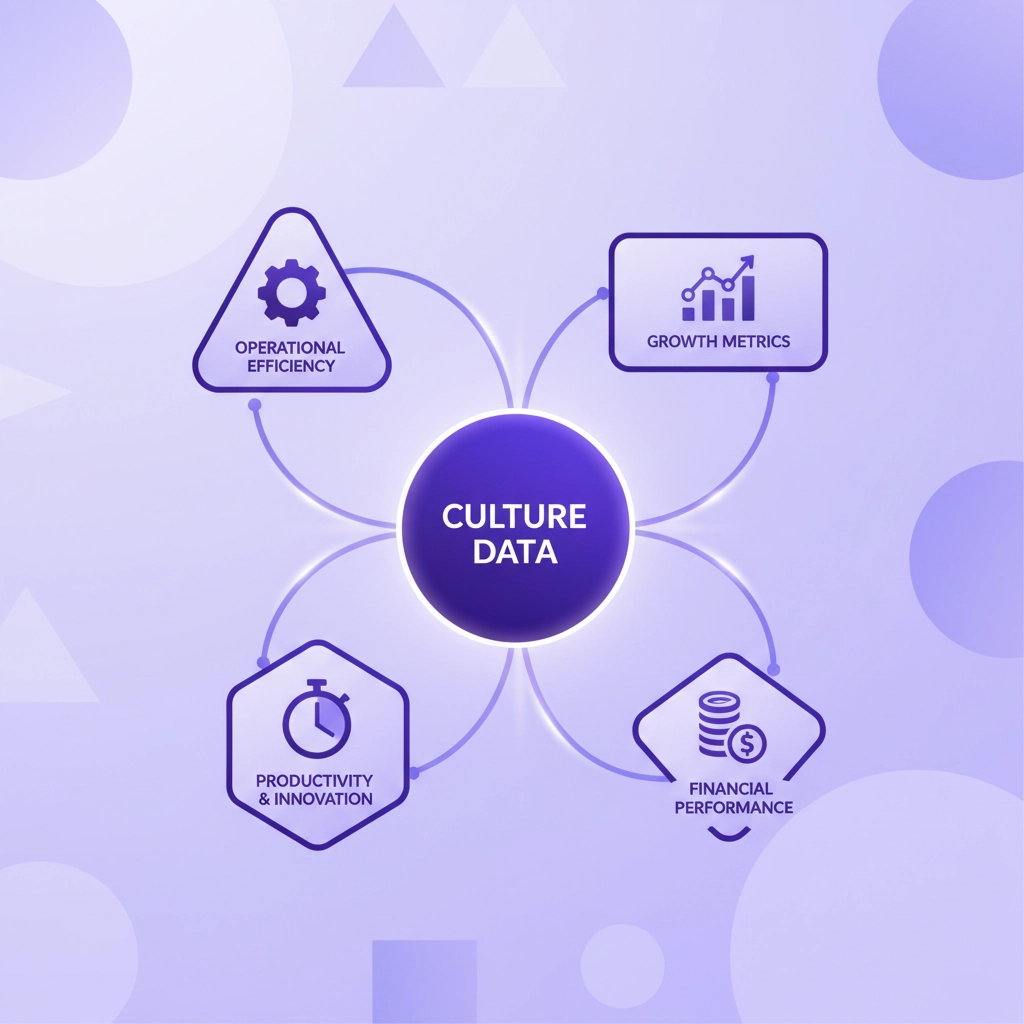
Here’s where most organizations fail: they collect culture data but don’t connect it to business metrics that matter to COOs. The most successful implementations create direct links between employee sentiment and operational KPIs.
| Culture Metric | Connected Business Outcome |
|---|---|
| Team Satisfaction Scores | Project Delivery Times |
| Manager Effectiveness Ratings | Department Productivity |
| Work-Life Balance Indicators | Sick Days & Turnover |
| Communication Quality Scores | Cross-Department Efficiency |
| Recognition Frequency | Innovation/Improvement Suggestions |
When you can show that a 10-point drop in team satisfaction consistently predicts a 15% increase in project delays, culture data becomes as valuable as any operational metric you track.
Proactive Attrition Management Through Data
The most expensive operational problem COOs face isn’t equipment failure or supply chain disruptions: it’s unexpected talent loss. The average cost of replacing a skilled employee ranges from 50% to 200% of their annual salary (SHRM), and that’s before accounting for knowledge loss and productivity gaps.
Identify At-Risk Employees Before They Decide to Leave
Culture data reveals attrition risk 60-90 days before employees start job hunting (HR Tech Series; Workday Peakon research). Key indicators include:
- Declining engagement scores
- Reduced participation in team activities
- Negative feedback on management or processes
- Decreased collaboration metrics
- Changes in work pattern data
COOs using predictive culture analytics report 35% better retention rates (Virtasant on IBM predictive attrition) because they can intervene while employees are still persuadable, not after they’ve mentally checked out.
Address Systemic Issues, Not Individual Cases
The real power of culture data isn’t identifying individual flight risks: it’s spotting systemic issues that drive turnover across teams or departments. When multiple employees in a division show similar dissatisfaction patterns, you’re looking at a management, process, or resource problem that traditional metrics won’t catch until it’s too late.
Optimizing Team Performance Through Culture Insights
Beyond retention, culture data provides unprecedented visibility into what makes your teams perform at their peak: and what’s holding them back.
Identify High-Performance Culture Patterns
Your best-performing teams aren’t just lucky: they have measurable culture characteristics you can replicate. Culture data reveals patterns like:
- Optimal meeting frequency and structure
- Most effective communication styles for different team types
- Recognition patterns that drive sustained high performance
- Workload distribution that maximizes both productivity and satisfaction
Eliminate Hidden Productivity Killers
Employees often know exactly what’s slowing down operations but lack formal channels to communicate these insights. Anonymous culture feedback surfaces operational inefficiencies that traditional process reviews miss:
- Redundant approval processes frustrating top performers
- Technology gaps creating workarounds that waste time
- Communication breakdowns between departments
- Resource allocation issues affecting project timelines
As one manufacturing COO told Harvard Business Review: “Our culture data revealed that a 15-minute daily standup was consuming 3 hours of productive time across our engineering teams because of the context-switching required. We moved to async updates and saw immediate productivity gains.”
Integration Strategy: Making Culture Data Operational
The difference between collecting culture data and leveraging it lies in integration. Leading COOs don’t treat culture insights as separate from operational intelligence: they weave it into existing decision-making processes.
Connect to Project Management Systems
When culture data integrates with project management tools, you can correlate team satisfaction with project outcomes in real-time. This enables proactive interventions: if a critical project team shows declining engagement metrics, you can adjust resources, timeline, or scope before performance suffers.
Link to Financial Planning
Culture data should inform budget allocation decisions. Departments with high satisfaction and engagement scores may be good candidates for expanded responsibilities or additional resources. Conversely, areas with persistent culture issues may need management changes or process improvements before increasing investment.
Integrate with Talent Development Systems
Connect culture insights to professional development planning. Employees expressing frustration with growth opportunities through anonymous feedback can be automatically flagged for career development conversations, preventing talent loss while building internal capability.
Measuring ROI: Culture Data as Business Intelligence
COOs need clear metrics proving that culture data initiatives generate measurable business value. The most effective measurement frameworks track both leading and lagging indicators.
Leading Indicators
- Employee Net Promoter Score (eNPS) trends
- Engagement score velocity
- Manager effectiveness ratings
- Internal mobility rates
Lagging Indicators
- Voluntary turnover reduction
- Productivity metrics improvement
- Customer satisfaction correlation
- Revenue per employee growth
Organizations with mature cultural business intelligence systems report average ROI of 4:1 within 18 months (OpenText/Foundry; Wharton), primarily through reduced turnover costs and increased productivity.
What Should COOs Do Next?
The operational advantages of cultural business intelligence are too significant to ignore. Start by auditing your current culture data capabilities: Are you collecting real-time feedback? Can you connect culture metrics to business outcomes? Do you have systems that enable proactive rather than reactive management?
The most successful implementations begin with pilot programs in high-impact areas: critical teams, key departments, or operations with known performance challenges. Prove the concept, measure the results, then scale across your organization.
Remember: in today’s competitive environment, the COOs who thrive are those who leverage every available data source to optimize operations. Culture data isn’t a nice-to-have: it’s competitive intelligence that’s hiding in plain sight.