
To stop people from leaving, you first have to figure out why they’re leaving. This means getting past the usual exit interviews and adopting a data-first mindset to understand the real stories behind your turnover numbers. Only then can you build retention strategies that actually fix the right problems.
Diagnosing the Real Reasons Your Best People Leave
Before you can solve a retention problem, you have to find its source. Too many leaders in Canada and the United States lean on exit interviews or those big annual surveys, but let's be honest—that data is almost always too little, too late. The insights only show up after your best talent has already packed their bags, leaving you to piece together clues about what pushed them out the door.
This reactive approach is like trying to drive somewhere new without a map. You might guess compensation is the problem and bump up salary bands. When that doesn’t move the needle, you might pivot to manager training. This cycle of guesswork is not only expensive and inefficient, but it’s also incredibly demoralizing for the people who are still on your team.
Moving Beyond Reactive Feedback
To really get a handle on turnover, you need to shift your thinking from reactive to proactive. The goal isn't just to collect feedback; it's to connect different data points into a clear story that flags attrition risks long before anyone hands in their notice.
Instead of waiting for a resignation letter, a modern approach means keeping a constant finger on the pulse of your organization’s health. This involves looking at all kinds of signals together:
- Performance Trends: Are performance scores suddenly dipping in a specific department?
- Engagement Levels: Is participation in company events or initiatives falling off on one team?
- Communication Sentiment: Does the tone in your team channels feel more negative or stressed out lately?
- Absenteeism Rates: Is there a sudden spike in sick days for a particular role?
On their own, any one of these might not seem like a big deal. But when you look at them together, they start to paint a pretty clear picture of where trouble is brewing.
The Power of Business Intelligence in Retention
This is where a business intelligence tool designed for culture, like Wurkn, offers something fundamentally different from traditional HR survey tools and employee engagement platforms. Standard survey tools are great for one thing: collecting answers to questions you’ve already thought to ask. They can tell you what employees think about a topic at a single point in time. If you want to dive deeper into that, our guide on crafting a great employee satisfaction survey is a good place to start.
But Wurkn is built differently. It’s a business intelligence platform that gives you a live pulse on your organization by connecting disparate data sets. It doesn’t just stop at survey responses; it anonymously analyzes sentiment from the communication tools your teams use every day—like Slack and Microsoft Teams—and ties it directly to business outcomes.
By synthesizing qualitative feedback with quantitative business metrics, you can move from asking "Are my employees happy?" to answering "Which teams are at the highest risk of turnover in the next quarter, and why?"
This is how a truly data-driven retention strategy works, moving you from a broad diagnosis to targeted, effective action.
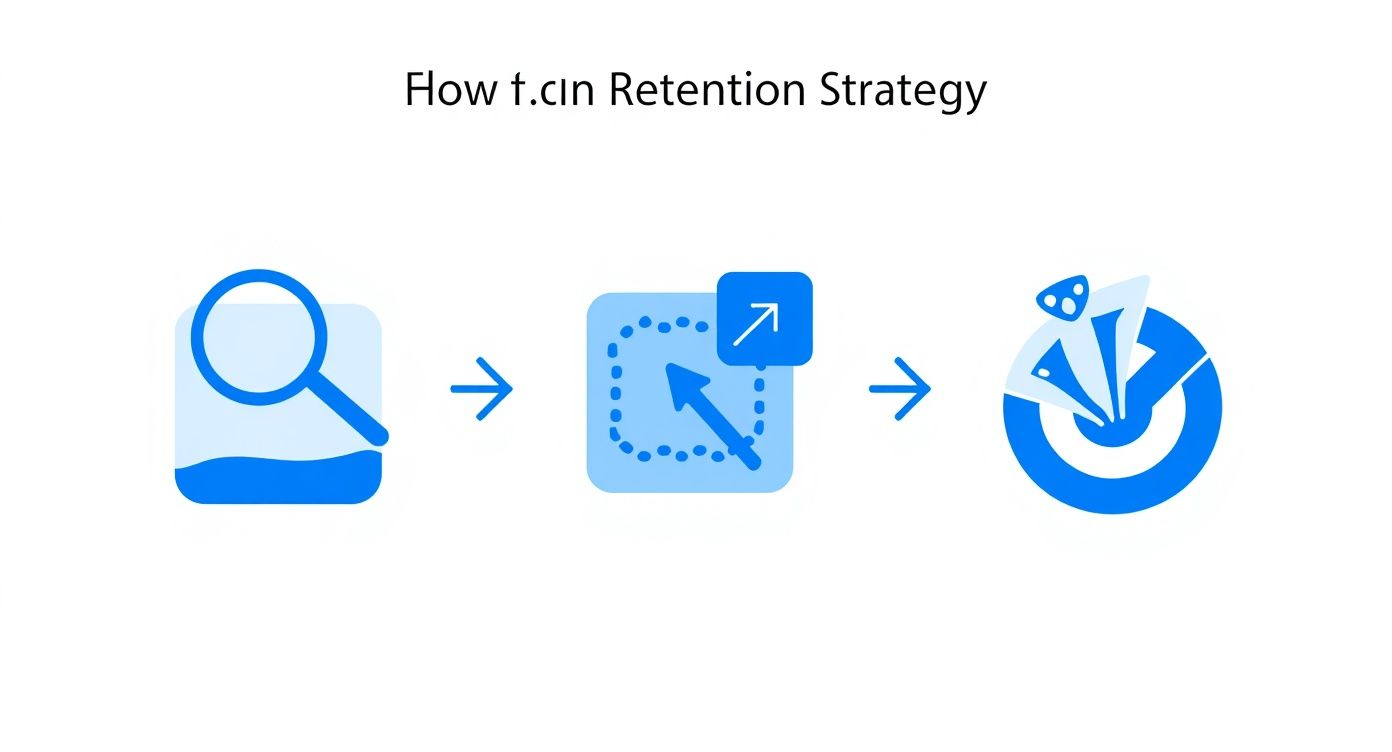
The visualization above breaks it down into a clear, three-stage approach: analyze the data to diagnose the real issues, grow by pinpointing specific causes, and achieve your goals by acting with informed strategies.
This kind of diagnostic power lets you get surgically precise. For instance, you might discover that turnover on your software engineering team has nothing to do with compensation, despite your initial assumptions. Instead, Wurkn's analysis might show a strong correlation between attrition and projects with constantly shifting deadlines.
Suddenly, you see the real culprits are burnout and poor project management. With that insight, you can build a retention plan that solves the actual problem.
Refining Your Hiring and Onboarding Process
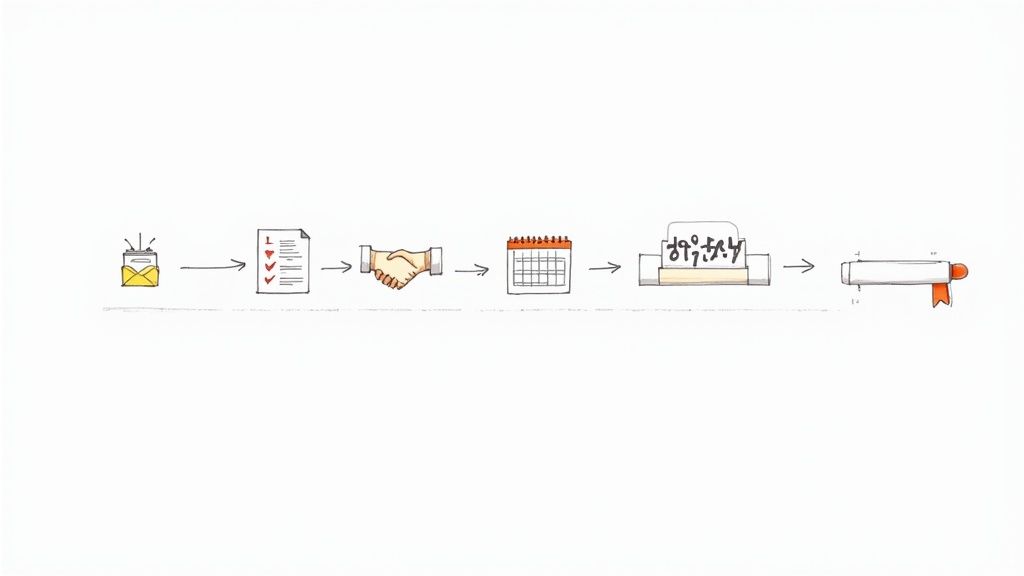
Excellent employee retention doesn't start after someone joins your team; it starts the moment they first interact with your company. A clunky, impersonal, or confusing hiring and onboarding experience is one of the biggest drivers of early turnover, creating a costly revolving door you can't afford.
Think about it from the candidate's perspective. Your hiring process is the very first promise your company makes. If that experience is slow and disorganized, it sends a clear signal that the actual work environment might be the same. This first impression sets the tone for everything that follows, making it a critical area to fix if you want to stop turnover before it even begins.
Crafting Job Descriptions That Attract the Right Fit
The first real step in keeping an employee is hiring the right one in the first place. This is about so much more than just skills and experience; it's about finding someone whose values, expectations, and work style actually align with your company culture. Vague, generic job descriptions cast a wide net, but they often bring in a pool of mismatched applicants, wasting everyone’s time.
Your job descriptions should be your first retention tool. Get specific. Be explicit not just about the role’s day-to-day, but also about the team's culture and the company's real mission.
To make your descriptions work harder for you:
- Lead with Your Values: Briefly explain what your company stands for. Do you prioritize collaboration, deep work and autonomy, or rapid innovation?
- Paint a Picture of the Team: Give candidates a genuine feel for the team they’ll be joining. Is it a fast-paced, heads-down environment or a highly social, interactive group?
- Set Clear Expectations: Outline what success looks like in the first 90 days. This kind of transparency helps candidates self-select and ensures they understand the role's immediate impact from day one.
This level of clarity doesn't just attract better-aligned people; it kicks off the onboarding process before an offer is even made, building a foundation of trust.
Designing a Structured and Engaging Onboarding Journey
Once you’ve hired a great candidate, the real work of retention starts. A weak onboarding process can sour a new hire's excitement and undo all the hard work of recruiting. Just handing over a laptop and a password is a recipe for disengagement and an early exit.
A proper onboarding journey should be a strategic 90-day plan. The goal is to fully immerse new employees in your culture, connect them with their colleagues, and empower them to contribute meaningfully. This isn't just about paperwork; it's about building their confidence and sense of belonging.
The goal of onboarding isn't just to get someone started—it's to validate their decision to join your team. Every interaction should reinforce that they made the right choice.
An effective 90-day plan needs clear milestones, regular check-ins, and dedicated feedback loops. This structure ensures new hires feel supported and can raise concerns before they fester into reasons to leave. It proves you’re invested in their long-term success, which is a powerful driver of loyalty.
Using Intelligence to Continuously Improve the Process
How do you know if your hiring and onboarding are actually working? This is where a business intelligence tool like Wurkn delivers insights that go far beyond what a traditional HR survey can offer. An annual engagement survey might eventually tell you that new hires are unhappy, but that's a lagging indicator. Wurkn gives you real-time, actionable intelligence.
By analyzing early employee feedback and sentiment from the tools they’re already using, Wurkn helps you connect the dots between the onboarding experience and early turnover risk. You can pinpoint specific friction points. Maybe new engineers consistently feel isolated during their first month, or the sales team’s training materials are outdated and confusing.
This capability allows you to shift from guessing to knowing. Instead of waiting for exit interviews to tell you what went wrong, you can see the early warning signs and make targeted adjustments to your process. This continuous feedback loop transforms your onboarding from a static checklist into a dynamic system that constantly learns and improves, ensuring every new hire feels supported and set up for success from their very first day.
Developing Managers Who Build Loyalty
It’s an old saying in HR for a reason: people join companies, but they leave managers. A single ineffective manager can dismantle a high-performing, engaged team faster than anything else, sending your best people right out the door. This makes manager development one of the most powerful levers you have to pull in any serious retention strategy.
Good managers are the bedrock of loyalty. They are the daily, living embodiment of the company for their teams. They're the ones who translate high-level strategy into meaningful work and foster the psychological safety needed for people to thrive. When managers are skilled coaches, motivators, and advocates, their teams feel seen and supported—and are far more likely to stick around.
This is exactly why investing in leadership and management development pays such high dividends. Research consistently points to poor management as a primary driver of why people quit. One report found that organizations with strong management practices experience up to 30% lower turnover than those with weak leadership (Gallup, 2015). You can see more data on how managers impact retention in the full report on Applauz.me.
Moving from Manager to Coach
Great management today isn't about directing tasks; it's about developing people. To build the kind of loyalty that lasts, your managers need to evolve from supervisors into coaches who are genuinely invested in their team's growth.
This shift requires equipping them with practical skills they can use every single day:
- Delivering Constructive Feedback: Teach managers how to give feedback that is specific, actionable, and focused on behaviour, not personality. Instead of a vague, "Your presentation was weak," a coach says, "Let's work on strengthening the data points in the first section to make your argument even more compelling."
- Recognizing Achievements Meaningfully: A generic "good job" is nice, but it doesn't land with real impact. Recognition needs to be timely and personal. A specific comment about why someone's contribution was valuable shows you're actually paying attention.
- Guiding Career Conversations: These discussions can't be reserved for the annual review. Managers need to be comfortable having ongoing dialogues about an employee's goals and figuring out how the company can help them get there.
These are the small, daily coaching moments that build trust and show employees that their manager—and by extension, the company—is in their corner.
Identifying Your Best and Most Promising Leaders
So how do you know which managers are crushing it and which ones need more support? Traditional performance reviews are often subjective and backward-looking. A business intelligence platform like Wurkn gives you a far more accurate, real-time picture of manager effectiveness.
Wurkn goes beyond the simple engagement scores you get from traditional employee engagement platforms. It connects a manager's actions directly to tangible team outcomes like retention rates, productivity, and sentiment trends. This allows you to see, with hard data, which leaders are building resilient, high-performing teams and which ones might be unknowingly creating friction.
Imagine Wurkn flagging a manager whose team reports high engagement scores but also has a turnover rate 15% higher than the company average. That's a powerful, data-driven insight. It allows you to intervene proactively—not with blame, but with targeted support. The issue might be their communication style or a lack of career-pathing skills, both of which are solvable with the right coaching.
By correlating leadership actions with team retention, you can identify your top-performing managers and use their behaviours as a model for developing leaders across the entire organization.
This transforms your manager development from a generic, one-size-fits-all training program into a precise, data-informed strategy.
Building a Culture of Leadership Accountability
Ultimately, if you want to reduce employee turnover, you can't leave leadership quality to chance. You have to build a culture where managers are accountable for their team's engagement and retention. That starts by giving them the right tools and insights to succeed.
When managers have access to real-time data about their team's health, they can stop guessing and start making informed decisions. Business intelligence from Wurkn empowers them to spot the early warning signs of disengagement or burnout and address them before they escalate into resignations. You can learn more about the link between a leader's impact on staff retention success.
By investing in your managers and arming them with the intelligence they need, you create a powerful, positive feedback loop. Better managers lead to more engaged teams, which drives down turnover and strengthens business results. This intentional focus on leadership is the key to building an organization people simply don't want to leave.
Creating Clear Career Paths and Fair Pay
When your best people feel like they’ve hit a dead end, they don’t just get frustrated—they start polishing their resumes. A perceived lack of growth is a huge driver of turnover, especially for the high-achievers you want to keep most. To keep them, you have to show them a real future inside your company.
This isn’t about vague promises of “growth opportunities.” It’s about building transparent, concrete career frameworks. And hand-in-hand with that, you have to ensure your compensation is not just keeping up with the market, but is fair and equitable across your entire team. These two things—clear paths and fair pay—are completely intertwined.
Mapping Out Transparent Career Progression
A well-defined career path is like a roadmap. It shows an employee exactly where they are, where they can go next, and what they need to do to get there. It strips away the ambiguity that breeds frustration and empowers them to own their development. When promotion criteria are fuzzy, people start to feel it’s all about who you know, not what you do.
Building a solid framework means getting specific:
- Define Role Levels: Clearly outline the different tiers for each role. Think Junior Developer, Mid-Level Developer, Senior Developer, and Principal Engineer. No gray areas.
- Detail Core Competencies: For every single level, spell out the required skills, responsibilities, and expected business impact. This covers both hard skills and crucial soft skills like leadership or communication.
- Outline Advancement Criteria: Be explicit about what it takes to climb the ladder. Is it mastering a specific technology? Leading a major project from start to finish? Mentoring junior team members?
This structure transforms career conversations from subjective chats into objective, goal-focused planning sessions. It’s also a powerful retention tool. Data from the Mercer US Turnover Survey consistently shows that employees who see a clear path forward are far less likely to leave. Across the United States, companies that make a real effort to promote from within see much lower attrition, especially in cutthroat industries.
Ensuring Compensation is Competitive and Equitable
Even with the perfect career map, people will walk if they feel undervalued. Pay is more than just a number on a slip; it’s a powerful signal of an employee's worth to the business. Getting it right demands a data-driven strategy, not guesswork.
You need to regularly benchmark salaries against industry and regional data. This ensures your offers are strong enough to attract and keep the talent you need in competitive markets across Canada and the United States. But looking outward is only half the picture. You also have to run internal pay equity audits to find and fix any unjustifiable wage gaps tied to gender, race, or other factors.
Pay transparency isn't just about posting salary bands. It's about demonstrating a clear, consistent logic behind compensation decisions. This is how you build real trust and a culture of fairness.
This is where a business intelligence tool like Wurkn gives you a massive advantage over standard HR survey platforms. A survey might tell you people are unhappy with their pay. Wurkn can show you why. By cross-referencing compensation data with performance metrics, tenure, and real-time sentiment, it flags disparities that would otherwise fly under the radar.
For instance, Wurkn could highlight that your top-performing female employees in marketing have a consistently lower compensation-to-performance ratio than their male counterparts, even with similar time at the company. That’s not just a sentiment signal; it’s a critical business risk waiting to explode. Armed with that kind of specific insight, you can fix the inequity before it costs you your best people.
To take this even further, you can tie these initiatives together. A great next step is exploring our guide on achieving career goals with employee mentorship programs. When you combine fair pay and clear career paths with strong mentorship, you create an environment where top performers feel truly valued and have every reason to stay for the long haul.
Building a Culture That Puts Well-Being First

Let's be honest: free snacks and a ping-pong table aren't culture. They're nice, but they won't stop your best people from leaving. A positive, resilient workplace culture is your single most powerful tool for reducing turnover, but it doesn’t happen by accident. It's built on a foundation of psychological safety, genuine connection, and a real commitment to employee well-being.
When your team feels safe enough to voice concerns, supported when they face challenges, and truly connected to their colleagues, they stick around. This kind of environment is the result of intentional, continuous effort—not a one-off initiative. It’s about creating a place where people can thrive, both personally and professionally.
Going Beyond Surface-Level Perks
Meaningful wellness isn't about ticking boxes. It’s about holistically supporting your team’s mental, physical, and financial health. While a gym membership is a good start, a truly effective well-being program digs deeper to address the root causes of stress and burnout that are so common in Canadian and American workplaces.
Think about introducing more impactful initiatives:
- Mental Health Support: Provide easy, confidential access to therapy sessions through an Employee Assistance Program (EAP) and offer subscriptions to mindfulness apps.
- Financial Wellness Workshops: Host workshops on budgeting, saving for retirement, and managing debt. Reducing this major source of personal stress has a direct impact on focus at work.
- Clear Boundaries: Actively encourage your team to disconnect after hours. Leaders need to model this by not sending late-night emails, and your policies must protect people's time off.
Improving culture and fighting burnout are non-negotiable for retention, especially in high-stress fields. The NSI National Health Care Retention & RN Staffing Report showed that US hospitals with robust wellness programs saw significant drops in turnover. Facilities that truly prioritized mental health support consistently reported lower turnover than the industry average. You can discover more insights from the full report.
Establishing Flexibility That Actually Works
In today's world, flexibility isn’t a perk—it’s an expectation. A rigid, one-size-fits-all policy is a surefire way to drive away top talent. Real flexibility means trusting your people to manage their time and deliver results, whether they're in the office, at home, or somewhere in between.
But a successful flexible work policy needs structure to prevent chaos and ensure fairness. You must clearly define expectations around communication, collaboration, and availability. Without clear guidelines, hybrid models can accidentally create an uneven playing field where in-office employees get more visibility and opportunities.
The goal of flexible work isn't just to let people work from home. It's to create an environment where every employee, regardless of their location, has an equal opportunity to contribute, connect, and grow.
This means investing in the right tech to make collaboration seamless and intentionally creating moments of connection that bridge the gap between remote and in-office team members.
Monitoring Cultural Health in Real-Time
How do you know if your culture initiatives are actually landing? An annual survey gives you a single snapshot, but culture is a living, breathing thing that changes by the day. This is where a business intelligence platform like Wurkn comes in, giving you a continuous, real-time pulse on your cultural health.
Unlike traditional HR survey tools that only capture answers to questions you think to ask, Wurkn provides a much deeper layer of insight. It analyzes anonymized communication sentiment from tools like Slack and Microsoft Teams to spot emerging trends and potential issues long before they show up in your turnover stats.
Imagine seeing a subtle but steady decline in positive sentiment on your product team. Wurkn can flag this trend, allowing you to dig in proactively. You might discover the team is burning out from a series of tight deadlines—a problem you can now solve with more resources or a new timeline, stopping resignations before they happen.
This shifts you from guessing about your culture to knowing its true state. By connecting these real-time sentiment signals to business outcomes, you can see exactly how your well-being initiatives are impacting retention and productivity. This is how you build a workplace people are genuinely proud of—and one they have no desire to leave.
Common Questions About Reducing Turnover
As HR leaders and COOs across Canada and the United States tackle employee turnover, a few questions always come up. Getting these answers straight is the first step toward building a retention strategy that actually works.
What’s a Good Employee Turnover Rate to Aim For?
Everyone wants a magic number, but the truth is, it depends. While a general benchmark for a healthy annual turnover rate is often between 10% and 20%, that figure is almost useless without context.
If you're in hospitality or retail, your numbers will naturally be higher than in sectors like finance or government. Chasing an arbitrary percentage is a waste of time.
The real goal is to understand the type of turnover you're seeing. Losing a disengaged, low-performing employee isn't a crisis. Losing a top-tier engineer who is the backbone of a critical project? That's a five-alarm fire. A business intelligence tool like Wurkn helps you see the difference by linking turnover data to performance metrics, so you know the true cost of who is walking out the door.
How Can We Justify Investing in Retention Initiatives?
Let’s reframe this. The real question is, how can you justify the cost of doing nothing? The cost of ignoring turnover is almost always higher than the cost of investing in retention.
Replacing an employee can cost anywhere from 50% to 200% of their annual salary once you add up recruitment fees, training time, and the productivity hit while the new person ramps up (Work Institute, 2020).
To build your business case, you have to connect your retention efforts directly to financial outcomes. Don't just say, "we need better manager training." Use a platform like Wurkn to show how teams with managers who have low sentiment scores also have 25% higher turnover. Suddenly, it’s not a vague HR initiative; it's a specific, data-backed problem with a clear price tag, making it much easier to get that budget approved.
The most powerful argument for investing in retention is demonstrating the high cost of inaction. Frame your initiatives not as expenses, but as crucial investments to protect your bottom line and your most valuable asset—your people.
How Quickly Can We Expect to See Results?
Reducing turnover is a long game, not an overnight fix. While some targeted changes can deliver a quick hit of positivity, the deep, systemic improvements that truly move the needle take time to show up in your annual KPIs.
Here’s a realistic timeline:
- Quick Wins (1-3 Months): You can see fast results by tackling acute pain points. Fixing a clunky onboarding process or clarifying goals for a confused team can make an immediate impact on morale and short-term retention.
- Systemic Changes (6-12+ Months): Broader cultural shifts—like embedding a coaching mindset in your managers or building out meaningful career paths—require consistent effort over several quarters to really take hold.
This is why annual surveys are so frustrating; they only give you a rearview mirror perspective long after the damage is done. A business intelligence platform like Wurkn offers a live dashboard of your company’s cultural health. You can track the real-time impact of your initiatives through continuous sentiment analysis, seeing if your efforts are moving the needle long before the annual turnover numbers are crunched.
This transforms retention from a reactive guessing game into a proactive, data-driven discipline.
Ready to move beyond guesswork and start building a data-driven retention strategy? Discover how Wurkn transforms employee sentiment into actionable business intelligence that helps you pinpoint risks, support your teams, and keep your best people. Learn more about Wurkn.