
Moving beyond generic gift cards and pizza parties, today’s top-performing organizations in Canada and the United States understand that true employee appreciation is a strategic initiative, not just a line item. It's about demonstrating that you value your team's contributions, career growth, and overall well-being. But how do you move from well-intentioned gestures to a scalable system that genuinely impacts culture and business outcomes?
The key lies in understanding what truly motivates your team. Instead of relying on guesswork or infrequent HR survey tools, a cultural business intelligence platform like Wurkn provides continuous, anonymized insight into employee sentiment. By analyzing feedback from the tools your team already uses, you can pinpoint exactly which appreciation ideas for employees will resonate most, turning recognition into a measurable driver of retention and productivity. This is about making data-informed decisions that strengthen your organisational culture rather than just checking a box.
This guide moves past generic advice to offer a comprehensive roundup of 10 powerful, practical appreciation ideas. We will explore everything from real-time recognition and flexible work arrangements to transparent compensation and mental health initiatives. Each section provides actionable implementation tips and guidance on how to measure their real-world impact on key cultural metrics, helping you build a program that delivers tangible returns.
1. Real-Time Recognition Programs
Real-time recognition programs are structured systems that empower immediate, on-the-spot appreciation between colleagues. Unlike traditional annual reviews or quarterly awards, these programs use digital platforms to capture and celebrate positive contributions as they happen. This constant stream of acknowledgment reinforces desired behaviours and builds a dynamic culture of continuous gratitude, a core tenet of modern employee engagement.
These programs move beyond simple "thank yous" by creating a visible, searchable record of achievements. They integrate seamlessly into daily workflows, making appreciation a natural part of communication rather than a formal, infrequent event. This approach is one of the most effective appreciation ideas for employees in fast-paced, collaborative environments.

Implementation in Practice
Integrating a recognition tool directly into your company's primary communication hub, like Slack or Microsoft Teams, is crucial for adoption. Many platforms exist that allow peers and managers to give instant praise tied to specific company values. For example, a project manager could post in a public channel: "Big kudos to Sarah for spotting that critical bug before the client demo. Your attention to detail saved the day! #Quality"
Actionable Tips for Success
To maximise impact, organisations should:
- Set Clear Guidelines: Coach employees on how to give specific, meaningful recognition. Instead of "good job," encourage comments that detail the action and its impact. This prevents praise from feeling generic.
- Encourage Manager Participation: Leadership sets the tone. When managers consistently and publicly recognise their teams, it signals that the program is a priority.
- Amplify Recognition: Feature standout moments of recognition in weekly team meetings or monthly all-hands updates to give them greater visibility and celebrate contributors publicly.
- Analyse Recognition Data: Use a business intelligence tool like Wurkn to perform sentiment analysis on recognition messages. This goes beyond simple engagement metrics, revealing which company values are being demonstrated most often and identifying unrecognised high-performers, providing actionable insights for talent development.
2. Professional Development and Skill-Building Opportunities
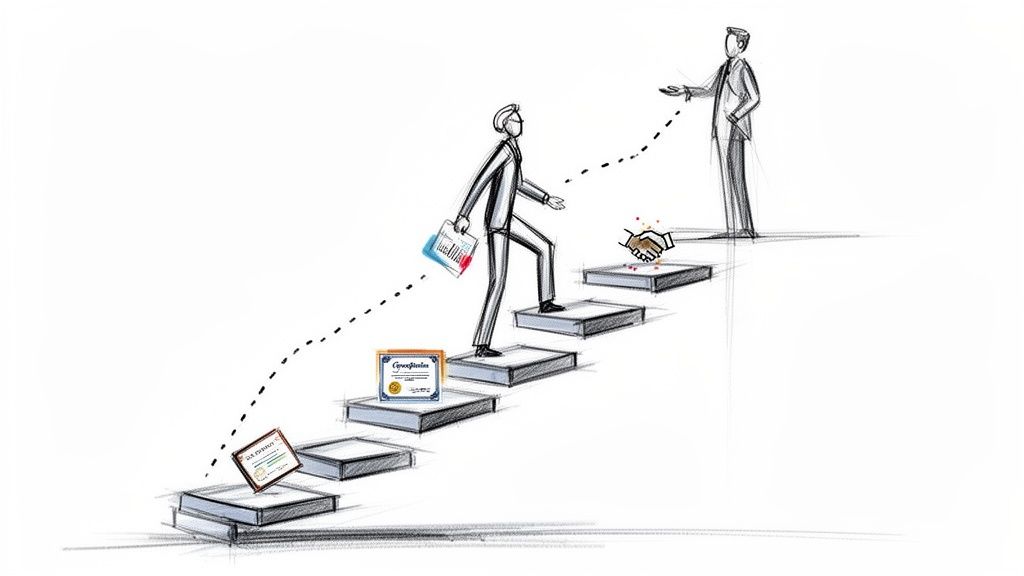
Investing in an employee's growth is one of the most powerful forms of appreciation, signalling a long-term commitment to their career. Professional development opportunities, such as training programs, certifications, and mentorship, show that an organization sees its people as valuable assets worth cultivating. This approach moves beyond immediate rewards to provide lasting value, directly impacting an individual's career trajectory and confidence.
This form of appreciation demonstrates a deep-seated belief in an employee’s potential. It is a strategic investment that benefits both the individual, who gains new skills, and the organization, which cultivates a more capable and engaged workforce. Offering these growth paths is a tangible way to show employees they are integral to the company's future, making it one of the most impactful appreciation ideas for employees focused on retention.
Implementation in Practice
Organizations can implement this by partnering with online learning platforms or by developing internal programs. For example, a large e-commerce company could offer to pre-pay a significant portion of tuition for employees to learn in-demand skills, while a major tech firm could provide a free, gamified learning platform for its ecosystem. Establishing a structured mentorship program is another excellent, low-cost way to facilitate skill-sharing and career guidance. Discover how to empower professional growth with mentorship programs and build a supportive learning culture.
Actionable Tips for Success
To ensure development opportunities are valued and effective, organizations should:
- Align Learning with Ambition: Use a business intelligence tool like Wurkn to analyze sentiment data from employee feedback. This reveals which specific skill areas and career paths your team is most passionate about, allowing you to tailor offerings that will have the highest impact.
- Establish Clear Pathways: Connect learning opportunities directly to internal mobility and promotion criteria. When employees see a clear line from skill development to career advancement, the value of the appreciation is magnified.
- Offer Flexible Learning: Provide a mix of learning formats, such as self-paced online courses, workshops, and micro-learning modules. This accommodates different learning styles and schedules, especially for remote and hybrid teams.
- Track and Celebrate Growth: Acknowledge employees who complete certifications or training programs in company-wide communications. This not only celebrates their achievement but also promotes the availability and benefits of your development programs.
3. Flexible Work Arrangements and Schedule Autonomy
Flexible work arrangements are a powerful form of appreciation that moves beyond rewards to fundamentally improve an employee's daily life. This approach grants individuals autonomy over when, where, and how they work, encompassing policies like remote options, flexible hours, and compressed workweeks. It's a tangible demonstration of trust, acknowledging that employees are responsible professionals capable of managing their own time and contributions.
This form of appreciation directly addresses the growing demand for better work-life integration. By giving employees control over their schedules, organisations empower them to meet personal and professional obligations without sacrificing performance. This is one of the most impactful appreciation ideas for employees because it shows the company values their well-being and respects their lives outside of work, fostering deep loyalty and engagement.
Implementation in Practice
Leading organisations have successfully integrated this model. One fully remote company operates with a globally distributed team, while an outdoor apparel brand has long been praised for its flexible schedules that allow employees to pursue personal passions. Another increasingly popular option is the four-day work week, where teams work condensed hours for the same pay, granting them an extra day off. These models prove that productivity and flexibility are not mutually exclusive. For a deeper look into this approach, explore how a 4-day work week can boost engagement.
Actionable Tips for Success
To effectively implement flexible work arrangements, organisations should:
- Establish Clear Communication Norms: Define "core hours" for mandatory collaboration and protect "deep work" time. Set clear expectations for asynchronous communication to ensure everyone stays connected without being tethered to their desks.
- Trust and Verify with Data: Empower your teams with autonomy but use a business intelligence tool like Wurkn to monitor for potential issues. Analyse anonymous sentiment data around schedule flexibility and cross-reference it with burnout indicators to ensure autonomy isn't leading to overwork.
- Focus on Outcomes, Not Hours: Shift performance management to be based on results and impact rather than hours logged. This is critical for flexible models to succeed.
- Regularly Assess and Adapt: Poll employees to ensure flexibility policies are genuinely being used and valued. Be prepared to adjust policies based on feedback and evolving team needs.
4. Transparent Compensation and Equity Sharing
Transparent compensation and equity sharing are powerful, tangible forms of appreciation that demonstrate an organisation's commitment to fairness and trust. This approach moves beyond verbal praise by addressing the foundational need for financial security and acknowledging employees as true partners in the company's success. By openly communicating about salary bands, bonus structures, and equity, you show respect for your team's contributions.
This strategy directly tackles potential resentment and pay inequity, fostering a culture of psychological safety where employees understand their value and see a clear path for growth. Offering competitive pay, performance-based bonuses, stock options, or profit-sharing plans are among the most impactful appreciation ideas for employees because they align individual success with organisational prosperity, proving that you value their long-term commitment.
Implementation in Practice
Implementing this requires a systematic and transparent approach to compensation philosophy. Some companies are renowned for their radical salary transparency, publishing all salaries publicly, which builds unparalleled trust. Similarly, offering an equity program to all employees, not just senior leadership, sends a powerful message that every individual's contribution is integral to the company's future. This can range from stock options in a startup environment to a formal profit-sharing plan in more established businesses.
Actionable Tips for Success
To effectively implement this strategy, organisations should:
- Conduct Regular Pay Equity Audits: Proactively analyse compensation data to identify and address any gender, racial, or role-based pay gaps. Being transparent about this process and its outcomes reinforces your commitment to fairness.
- Communicate Salary Bands Clearly: Develop and share clear salary bands for every role, along with the criteria for progression within those bands. This demystifies compensation and empowers employees to own their career development.
- Offer Financial Literacy Resources: Help employees understand the full value of their compensation package, including equity, benefits, and retirement plans, by providing access to financial advisors or educational workshops.
- Analyse Compensation Sentiment: Use a business intelligence tool like Wurkn to analyse sentiment data from anonymous employee feedback channels. This can help you proactively identify and address concerns about compensation or benefits before they escalate into larger retention issues.
5. Mental Health and Wellness Initiatives
Mental health and wellness initiatives are comprehensive programs that signal an organisation's deep investment in its employees' holistic wellbeing. This form of appreciation extends beyond performance-based rewards to support the physical, mental, and emotional health of each individual. By providing resources like counselling services, fitness benefits, and dedicated mental health days, companies acknowledge that a healthy, supported workforce is the foundation of a resilient and productive culture.
These programs demonstrate that an employer values its people as human beings, not just as contributors to the bottom line. This approach has become one of the most critical appreciation ideas for employees in a post-pandemic world, where burnout and mental health challenges are more prevalent than ever. It's a strategic investment in the long-term health of both the employees and the business itself.

Implementation in Practice
A robust wellness program goes beyond a basic benefits package. Leading companies offer comprehensive Employee Assistance Programs (EAPs), stipends for therapy, and designated mental health days. Another powerful approach involves partnerships with mindfulness platforms to provide all employees with access to meditation and stress-reduction resources. These initiatives are most effective when they are actively promoted and integrated into the company culture, not just listed in a handbook.
Actionable Tips for Success
To maximise impact, organisations should:
- Promote Accessibility: Ensure mental health services are well-publicised, easy to access, and confidential. Regular communication through multiple channels reminds employees that these resources are available for them.
- Normalise the Conversation: Leadership must model healthy behaviour. When executives openly discuss the importance of mental health and take time off to recharge, it destigmatises the topic and encourages others to do the same.
- Monitor and Respond: Regularly survey employees anonymously about their wellness needs and challenges. Acting swiftly on this feedback shows that the organisation is genuinely listening and committed to their wellbeing.
- Analyse Burnout Signals: Utilise a business intelligence tool like Wurkn to analyse sentiment data from communications and feedback channels. This can proactively identify teams or individuals showing signs of burnout, allowing for early intervention before it impacts retention. To dive deeper into this topic, you can learn more about conquering health and wellness at work on wurkn.com.
6. Meaningful Work and Purpose Alignment
Connecting employees' daily tasks to the organisation's broader mission is a powerful, intrinsic form of appreciation. This strategy moves beyond extrinsic rewards by showing employees that their contributions matter and have a real-world impact. When people understand the "why" behind their work, it fosters a deep sense of value and belonging, tapping into the fundamental human need for purpose.
This approach transforms routine responsibilities into meaningful contributions, a key driver of long-term engagement and loyalty. For purpose-driven talent, especially in younger generations, seeing their work align with their personal values is one of the most significant appreciation ideas for employees an organisation can offer. It confirms that their effort is part of something bigger than just a bottom line.
Implementation in Practice
Purpose alignment is about consistently reinforcing the connection between individual roles and the company's mission. For example, a socially conscious company might host a quarterly town hall where leaders share detailed reports on its social and environmental impact, explicitly linking specific team projects to those positive outcomes. Similarly, a healthcare technology company could share patient testimonials describing how a new software feature developed by the engineering team improved their quality of care.
Actionable Tips for Success
To effectively embed purpose into your culture, organisations should:
- Share Impact Stories Regularly: Create a dedicated channel or a segment in company-wide meetings for sharing customer stories, client feedback, and community impact reports. This makes the mission tangible.
- Ensure Leadership Embodies Purpose: Leaders must consistently communicate the company’s purpose and demonstrate how it guides strategic decisions, from resource allocation to new product development.
- Create Direct Impact Opportunities: Allow employees to witness their work's effect firsthand. This could involve site visits to see a product in use or volunteer days with a community partner that benefits from the company's services.
- Measure Connection to Mission: Use a business intelligence platform like Wurkn to analyse anonymous feedback from surveys and pulse checks. Its advanced analytics can identify teams or departments that feel disconnected from the company’s mission, providing early warnings and pinpointing where leadership communication needs to be strengthened.
7. Comprehensive and Flexible Benefits Packages
Comprehensive and flexible benefits packages are a foundational form of employee appreciation, demonstrating a company's investment in its team's long-term well-being beyond their base salary. This approach moves past a one-size-fits-all model, offering a diverse suite of benefits that employees can tailor to their individual life stages and personal circumstances. By addressing needs from health and retirement to family support and personal growth, these packages show that an organisation cares for its people holistically.
This method of appreciation acknowledges that an employee's life outside of work directly impacts their performance and engagement. Offering robust options like extended parental leave, pet insurance, or wellness stipends is a powerful statement of support. These tangible benefits are one of the most impactful appreciation ideas for employees because they provide security and enrich lives in meaningful, practical ways.
Implementation in practice
Leading companies showcase what a commitment to comprehensive benefits looks like. For example, a large enterprise software company could offer extensive parental leave and adoption support, while a major streaming service might be renowned for its generous parental leave policy. A global coffee chain could extend healthcare coverage to part-time employees, and a major social media company might provide significant family-focused benefits, including surrogacy support. These examples highlight a shift towards benefits that adapt to a modern, diverse workforce.
Actionable Tips for Success
To build a benefits package that truly resonates, organisations should:
- Survey Your Team: Use employee feedback surveys to understand which benefits are most valued. Don't assume what your workforce needs; ask them directly to ensure your investment aligns with their priorities.
- Prioritise Communication: Invest in clear, consistent communication and education around your benefits offerings. Ensure employees understand the full value of their package and know how to access and use their benefits effectively.
- Offer Flexible Accounts: Provide options like Health Spending Accounts (HSAs) or Lifestyle Spending Accounts (LSAs) that give employees the autonomy to allocate funds to what matters most to them, whether it's childcare, fitness, or continued education.
- Analyse Sentiment Data: Leverage a business intelligence tool like Wurkn to analyse employee feedback and survey comments related to benefits. This sentiment analysis can uncover satisfaction trends, identify gaps in your offerings, and provide predictive insights into which benefits will have the greatest impact on retention and morale.
8. Inclusive Team Building and Social Connection
Inclusive team building and social connection initiatives are structured opportunities for employees to connect authentically across organisational boundaries. This appreciation strategy acknowledges that a sense of belonging and social connection are fundamental human needs, directly impacting engagement and well-being. It moves beyond standard team events by intentionally creating activities that are accessible and welcoming to everyone, regardless of their role, location, or background.
These initiatives are especially crucial for remote and hybrid teams where spontaneous "water cooler" interactions don't naturally occur. By fostering genuine relationships, companies show they value employees as whole people, not just for their work output. This approach is one of the most vital appreciation ideas for employees in a modern, distributed workforce, as it directly addresses potential isolation and builds a cohesive, supportive culture.
Implementation in Practice
Companies can foster connection through both synchronous and asynchronous means. For example, a software collaboration company cultivates virtual team rituals and global celebrations that accommodate different time zones, while others support extensive Employee Resource Groups (ERGs) that host inclusive events. A practical application could be creating dedicated Slack or Teams channels for non-work interests like #pet-photos or #gardening-club, allowing for low-pressure, asynchronous socialising. Another example is organising a virtual "escape room" where teams must collaborate on puzzles, an activity that focuses on teamwork rather than physical ability.
Actionable Tips for Success
To maximise impact, organisations should:
- Design for Inclusion: When planning events, consider accessibility, different time zones, and diverse interests. Offer options like a virtual cooking class and an online gaming tournament simultaneously to appeal to different personalities.
- Ensure Participation is Voluntary: Frame social events as optional opportunities, not mandatory fun. Pressured participation can feel inauthentic and lead to resentment, undermining the goal of genuine connection.
- Empower Employee-Led Communities: Provide budgets and resources for ERGs and other employee-led groups. These communities create safe spaces for connection and give employees ownership over the culture.
- Monitor Belonging Sentiment: Use a business intelligence tool like Wurkn to analyse qualitative feedback from surveys and communication channels. This can help identify if certain groups feel excluded or if inclusion efforts are making a measurable impact on employees' sense of belonging, providing crucial data for refining your strategy.
9. Public Recognition and Leadership Visibility
Public recognition and leadership visibility elevate appreciation from a private "thank you" to a powerful, organisation-wide statement. This approach celebrates employee achievements in highly visible forums, such as company all-hands meetings, internal newsletters, or dedicated award ceremonies. It directly satisfies the innate human need for recognition and status, motivating not only the individual but also their peers by showcasing what success looks like within the organisation's culture.
This strategy is more than just a morale booster; it's a tool for reinforcing company values. When leadership publicly honours an employee for demonstrating innovation or collaboration, it sends a clear message about what behaviours are prized. As one of the most impactful appreciation ideas for employees, it connects individual contributions to the company's broader mission, making work feel more meaningful and recognised.
Implementation in Practice
Organisations can implement this through various channels. A large technology corporation, for instance, could use a combination of peer-nominated awards and leadership spotlights to highlight exceptional work. A practical application could be creating a "Values Champion" segment in the monthly all-hands meeting, where a senior leader interviews an employee who recently embodied a core company value. This provides visibility and gives the employee a platform to share their story and insights directly with leadership.
Actionable Tips for Success
To ensure public recognition is effective and equitable, organisations should:
- Define Clear Criteria: Establish and communicate transparent, values-aligned criteria for all public awards and spotlights. This prevents recognition from being perceived as favouritism and ensures fairness.
- Recognise Diverse Contributions: Look beyond sales quotas and revenue. Actively celebrate achievements in areas like mentorship, process improvement, innovation, and cross-departmental collaboration to foster a well-rounded culture.
- Offer Private Options: Acknowledge that not everyone is comfortable with a public spotlight. Always offer a private alternative, such as a one-on-one lunch with an executive, to respect individual preferences.
- Ensure Equity: Use a business intelligence platform like Wurkn to analyse recognition data across departments, roles, and demographics. This helps identify and correct biases, ensuring that praise is distributed equitably and that high-performing but under-recognised employees receive the visibility they deserve.
10. Responsive Feedback Loops and Action on Employee Input
Responsive feedback loops are systems designed not just to collect employee input, but to actively analyse, act upon, and communicate the results of that feedback. This approach transforms suggestions from a passive data-gathering exercise into a dynamic conversation, showing employees their voices are valued and their insights drive meaningful organisational change. It is one of the most powerful appreciation ideas for employees because it demonstrates respect for their experience and expertise.
By creating transparent mechanisms for action, organisations prove they are listening and willing to evolve. This fosters a deep sense of psychological safety and ownership, as team members see tangible proof that their contributions matter beyond their immediate job descriptions. This strategy directly addresses the core need for employees to feel heard and respected by leadership.
Implementation in Practice
Effective feedback systems integrate into the daily workflow. For example, using pulse survey tools within Slack or Microsoft Teams allows for quick, low-friction input on specific initiatives. Some of the world's largest tech companies have built extensive listening programs that combine surveys, forums, and direct feedback channels to inform everything from product development to their hybrid work policies. The key is closing the loop: leadership must share which suggestions are being implemented, which are being considered, and why some may not be feasible.
Actionable Tips for Success
To build a culture where feedback is a gift, organisations should:
- Publish Transparent Action Plans: After a feedback cycle, share a clear document outlining what was heard, what actions will be taken, and the expected timelines. This builds trust and manages expectations.
- Close the Loop: Communicate back to all employees about the changes that resulted from their input. Celebrate wins that originated from an employee suggestion to reinforce the value of participation.
- Act with Urgency: Responding and acting on feedback quickly signals that leadership is engaged and cares. Delays can make the process feel performative and disingenuous.
- Analyse Feedback for Deeper Insights: Utilise a business intelligence tool like Wurkn to connect feedback themes with performance, retention, and engagement data. This helps identify which teams feel most heard and which feedback topics have the highest correlation with key business outcomes, allowing you to prioritise changes with the greatest impact.
Top 10 Employee Appreciation Ideas Comparison
| Program | 🔄 Implementation complexity | ⚡ Resource requirements | 📊 Expected outcomes | ⭐ Ideal use cases | 💡 Key advantages / tips |
|---|---|---|---|---|---|
| Real-Time Recognition Programs | Low–Moderate — integrate with chat tools and admin setup | Low — platform/subscription and light admin | Quick morale boost; more frequent visible appreciation | Remote/hybrid, high-collaboration teams | Integrate into Slack/Teams; set meaningful recognition guidelines |
| Professional Development & Skill-Building | Moderate–High — program design, partnerships, tracking | High — training budgets, mentor time, platform costs | Improved retention and capability; succession pipeline | Rapid-growth orgs, high-skill roles | Target skills via feedback data; connect learning to career paths |
| Flexible Work Arrangements & Schedule Autonomy | Moderate — policy design and manager training | Low–Moderate — tooling, possible office cost reductions | Better work–life balance; higher retention for many roles | Distributed teams; talent acquisition across geographies | Define async norms and core hours; monitor burnout signals |
| Transparent Compensation & Equity Sharing | High — pay bands, audits, legal complexity | High — comp budget, equity plans, audit resources | Increased trust and fairness; stronger retention/recruitment | Organizations prioritizing fairness and retention | Conduct pay equity audits; communicate salary bands clearly |
| Mental Health & Wellness Initiatives | Moderate — vendor partnerships and culture work | Moderate–High — benefits spend and program staffing | Reduced burnout/absenteeism; improved wellbeing metrics | High-stress environments; post-pandemic workforce | Normalize use via leadership; publicize access and privacy measures |
| Meaningful Work & Purpose Alignment | Moderate — requires cultural commitment and storytelling | Low–Moderate — comms, impact measurement, program time | Higher intrinsic motivation and resilience; better retention | Mission-driven orgs; younger workforce segments | Share impact stories regularly; align roles to outcomes |
| Comprehensive & Flexible Benefits Packages | High — benefits design, administration, compliance | High — insurance/retirement costs and admin complexity | Strong attraction and security; reduced stress for employees | Organizations competing on total rewards | Survey employees to prioritize offerings; simplify enrollment |
| Inclusive Team Building & Social Connection | Low–Moderate — program design and inclusive facilitation | Low–Moderate — event costs, coordination time | Improved belonging and cross-team collaboration | Remote/hybrid teams and diverse organizations | Design async and accessible options; empower ERGs |
| Public Recognition & Leadership Visibility | Low — nomination/process setup and comms cadence | Low — comms channels, occasional rewards | Strong morale and role-modeling; brand-building | Teams needing visibility for achievement and values | Clarify criteria; offer private alternatives for introverts |
| Responsive Feedback Loops & Action on Input | Moderate–High — systems for collection, analysis, follow-up | Moderate — tooling, analytics, and change management | Increased trust; faster problem resolution; higher engagement | Organizations aiming to be data-driven and agile | Close the loop visibly; act quickly and publish action plans |
From Ideas to Intelligence: Your Next Step in Employee Appreciation
You now have a comprehensive toolkit of impactful appreciation ideas for employees, ranging from real-time recognition programs to flexible work arrangements and mental health initiatives. We’ve moved beyond generic perks and delved into strategies that foster genuine connection, professional growth, and a profound sense of value. The core takeaway is clear: effective appreciation is not a one-size-fits-all program. It is a continuous, responsive, and culturally-aligned effort.
The most successful organisations understand that appreciation must be personalised and authentic. A public shout-out might energise one team member, while another might place a higher value on a dedicated budget for professional development. The key is to create a multi-faceted strategy that offers a diverse portfolio of recognition, ensuring every individual feels seen and valued in the way that resonates most deeply with them.
Key Takeaways for Building a Culture of Appreciation
As you move from inspiration to implementation, keep these foundational principles at the forefront of your strategy:
- Consistency is Crucial: Appreciation cannot be an annual event. It must be woven into the daily fabric of your organisation, from peer-to-peer shout-outs to regular check-ins and responsive leadership.
- Authenticity Over Everything: Employees can easily spot a disingenuous gesture. The most meaningful appreciation is specific, timely, and comes from a place of genuine gratitude for an individual’s unique contribution.
- Listen Before You Act: The ultimate form of respect and appreciation is to listen to your employees and act on their feedback. Don’t assume you know what they value; create channels to ask them directly and show you are paying attention.
Moving Beyond Guesswork: The Power of Cultural Intelligence
Implementing any of the ideas from this list will likely generate a positive impact. However, the most forward-thinking organisations are moving beyond isolated initiatives and into the realm of cultural business intelligence. The challenge with traditional approaches is the gap between action and insight. You launch a new wellness program or a recognition platform, but can you definitively measure its impact on retention, productivity, or psychological safety? How do you know you are investing in the right areas?
This is where a cultural business intelligence platform like Wurkn offers a distinct advantage over standard HR survey tools or traditional employee engagement platforms. Instead of just launching an initiative and hoping it works, Wurkn provides COOs and People Ops leaders with a living, real-time dashboard of their organisational culture. It transforms continuous, anonymous employee sentiment into measurable, actionable intelligence directly linked to business outcomes.
By diagnosing cultural friction points early and understanding the deep-seated 'why' behind employee sentiment, you can invest strategically in the appreciation ideas for employees that will deliver the highest return on investment. You can move from guessing what people want to knowing what they need. An internal study by the Wurkn data science team reinforces this, finding a strong, direct correlation between responsive feedback loops and higher employee Net Promoter Scores (eNPS). When employees feel heard, they feel valued, and their engagement deepens. Stop guessing what matters and start building a world-class culture based on real intelligence.
Ready to transform your employee appreciation from a checklist of ideas into a data-driven cultural strategy? Discover how Wurkn provides the business intelligence to measure the impact of your initiatives and build a workplace where every employee feels truly valued. Learn more and see how our platform connects culture to performance at Wurkn.