
In today's competitive talent market across Canada and the United States, generic perks are no longer enough. Employees seek genuine recognition that respects their contributions, supports their well-being, and invests in their growth. A strategic employee appreciation idea is more than a fleeting gesture; it's a powerful driver of retention, engagement, and productivity.
However, many organizations struggle to move beyond surface-level efforts, failing to connect appreciation initiatives to tangible business outcomes. Traditional HR survey tools provide a snapshot in time, but they can’t capture the continuous, nuanced cultural signals that reveal what truly motivates your team. This is where a business intelligence tool becomes critical.
A platform like Wurkn, which analyses continuous, anonymous employee sentiment from tools like Slack and Microsoft Teams, provides business intelligence that goes above and beyond traditional employee engagement platforms. It allows PeopleOps leaders and COOs to see the real-time impact of their appreciation strategies. By understanding not just what is happening in their culture but why, leaders can implement programs that resonate deeply and prove their ROI.
This guide moves past the obvious to explore 10 actionable employee appreciation ideas designed for modern, hybrid workforces. Each idea is presented with clear steps for implementation, budget considerations, and methods for measuring its true impact on your organization's culture and bottom line. You will gain a practical framework for building a recognition program that not only feels good but also measurably improves business performance.
1. Peer-to-Peer Recognition Programs
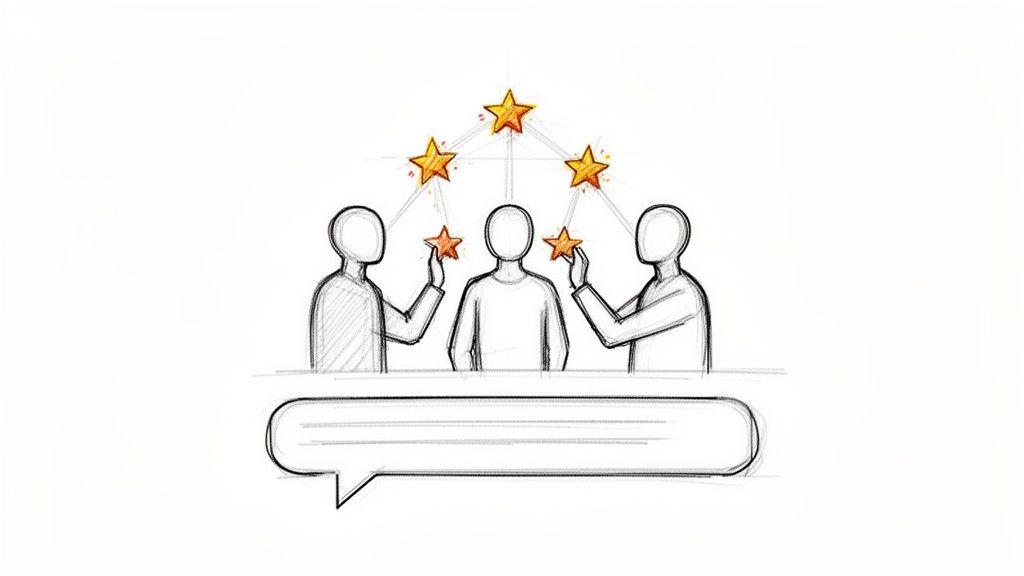
Peer-to-peer recognition programs formalise a process for employees to publicly acknowledge and appreciate their colleagues' contributions. Unlike traditional top-down recognition, which flows from management, this employee appreciation idea empowers individuals at all levels to celebrate each other's efforts. This decentralised approach fosters psychological safety, strengthens team bonds, and builds a more authentic culture of gratitude.
These programs often operate through dedicated software or integrated communication channels, allowing recognition to happen in the natural flow of work. This creates a real-time feed of positive reinforcement that is visible across the organisation.
Why It Works
Peer-driven recognition is powerful because it comes from those who witness the work firsthand. This type of praise often feels more genuine and specific, validating an employee's daily contributions and collaborative spirit in a way that managerial oversight might miss. It directly addresses the need for belonging and reinforces positive team behaviours.
How to Implement It
- Integrate Seamlessly: Embed the recognition tool directly into daily communication platforms like Slack or Microsoft Teams. For example, a marketing specialist can give public "kudos" to an engineer for quickly resolving a website bug, all within a shared project channel.
- Establish Clear Guidelines: Provide simple criteria for what constitutes meaningful recognition. Focus on specific actions, project contributions, or demonstrations of company values to avoid generic "thank you" messages.
- Celebrate Milestones: Publicly acknowledge individuals who frequently give and receive recognition. Feature standout examples in company newsletters or all-hands meetings to model ideal behaviour and encourage others.
- Analyse the Data: Use a business intelligence tool like Wurkn to transform recognition data into actionable insights. By analysing trends in peer feedback, leaders can identify hidden influencers, assess team cohesion, and understand which company values are truly being lived out, moving beyond simple engagement metrics.
2. Flexible Work & Time-Off Policies
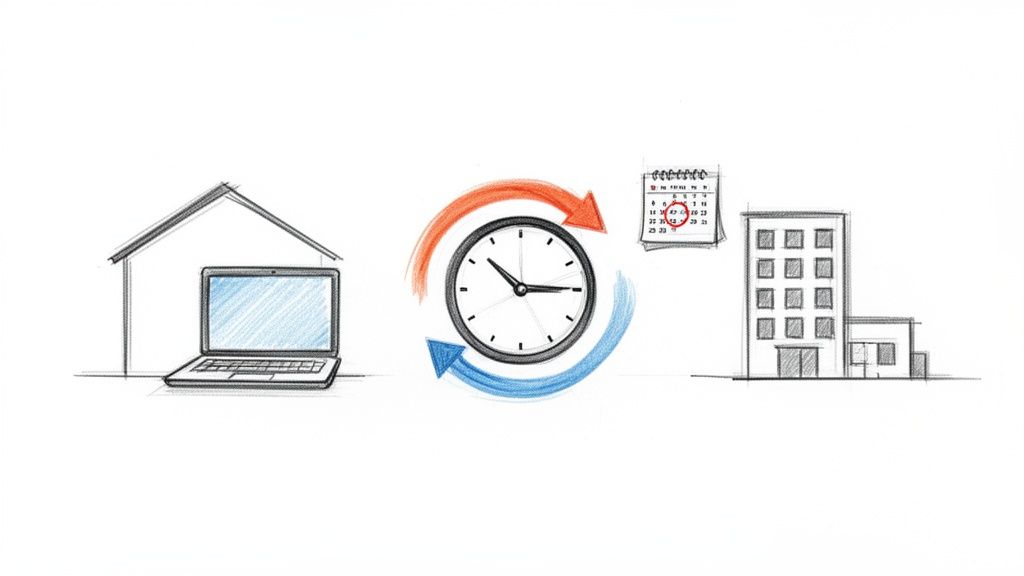
Flexible work arrangements and enhanced time-off policies are a powerful employee appreciation idea that directly impacts well-being and work-life balance. This approach moves beyond traditional rewards by offering employees autonomy over where, when, and how they work. It demonstrates deep institutional trust and respect for their lives outside of the office, a gesture highly valued by modern talent.
By offering options like remote work, flexible hours, or additional paid leave, organisations show they recognise employees as whole individuals, not just contributors. This appreciation is woven into the very fabric of the employee experience, fostering loyalty and engagement.
Why It Works
Giving employees control over their time is a tangible sign of respect that boosts morale and prevents burnout. Flexibility allows individuals to better manage personal responsibilities, from family care to appointments, which reduces stress and increases focus during work hours. This autonomy empowers employees, leading to higher job satisfaction and improved retention rates.
How to Implement It
- Establish Clear Policies: Document your flexible work and time-off policies in detail to ensure fairness and prevent confusion. For instance, a policy might state that core collaboration hours are between 10 AM and 3 PM local time, but employees are free to structure the rest of their workday as they see fit. A well-defined policy on benefits like a floating holiday can be a great place to start. Learn more about what a floating holiday is on wurkn.com.
- Train Your Leaders: Equip managers with the skills to lead distributed or hybrid teams effectively. Training should focus on outcome-based performance management rather than tracking hours or physical presence.
- Focus on Outcomes, Not Presence: Shift performance metrics to be results-oriented. Create accountability systems that measure contributions and impact, ensuring that flexible work arrangements do not hinder productivity or career progression.
- Monitor and Correlate Data: Use a business intelligence tool like Wurkn to connect flexibility policies to business outcomes. By integrating with your HRIS, you can analyse how policies like remote work or unlimited PTO correlate with retention rates, engagement scores, and performance data, proving their strategic value.
3. Public Recognition & Awards Programs
Public recognition and awards programs formalise how an organisation celebrates exceptional employee achievements. This employee appreciation idea goes beyond informal praise by creating structured ceremonies, spotlight features, or awards that highlight top performers and their impact. These initiatives create visible role models, reinforce performance standards, and build a positive organisational narrative around success.
Modern implementations are designed for hybrid work, blending in-person celebrations with digital elements to ensure every employee, regardless of location, feels included and recognised. This approach makes appreciation visible and scalable across distributed teams.

Why It Works
Formal awards provide a powerful, aspirational signal of what the company values most. By publicly celebrating specific behaviours and outcomes, such as innovation or customer impact, leaders can strategically guide the entire organisation toward key business priorities. This visibility not only motivates high-achievers but also clarifies for all employees what excellence looks like in practice.
How to Implement It
- Align Awards with Company Values: Create award categories that are explicitly linked to your core values and strategic goals. For instance, have an "Innovation Impact Award" for a team that developed a new process saving significant time, or a "Customer Champion Award" for an individual with consistently high satisfaction scores.
- Establish Transparent Criteria: Develop a clear and fair process for nominations and selections to build trust in the program. Communicate the criteria widely so everyone understands how winners are chosen.
- Celebrate the Story, Not Just the Win: When announcing winners, focus on the narrative behind the achievement. Explain the challenge, the actions taken, and the specific impact on the team or business to make the recognition more meaningful and educational.
- Measure Program Effectiveness: Use a business intelligence tool like Wurkn to gather and analyse sentiment data related to your awards program. By assessing feedback on fairness, inclusivity, and impact, you can refine the program and ensure it's genuinely driving motivation and cultural alignment, rather than just being a popularity contest.
4. Professional Development & Learning Opportunities
Investing in an employee’s growth is one of the most powerful and long-lasting forms of appreciation. This employee appreciation idea moves beyond immediate rewards to show a deep commitment to an individual's long-term career success and value within the organisation. It involves providing access to training, certifications, conferences, and mentorship that expand skills and open doors for internal mobility.
By funding learning opportunities, companies demonstrate they see employees not just as contributors to current projects but as future leaders and innovators. This approach directly ties appreciation to tangible career advancement, a key driver of engagement and retention for ambitious professionals.
Why It Works
Professional development is a high-impact form of recognition because it’s a direct investment in an employee’s future. It signals that the organisation values their potential and is willing to provide the resources for them to achieve it. This fosters a strong sense of loyalty and motivates employees to apply their newly acquired skills to drive business goals forward, creating a clear return on investment.
How to Implement It
- Create Accessible Learning Budgets: Allocate a clear, transparent annual budget for each employee to use on approved development opportunities. For example, provide a $2,000 annual stipend for each employee to use on courses, certifications, or conference attendance related to their career goals.
- Align Learning with Career Paths: Connect training opportunities directly to internal career ladders and development plans. Show employees a clear line from a completed course or certification to their next potential role.
- Establish Peer Learning Circles: Encourage employees who have completed training to share their knowledge with their teams. This multiplies the value of the initial investment and fosters a collaborative learning culture.
- Analyse Learning & Engagement Data: Use a business intelligence tool like Wurkn to correlate participation in development programs with engagement scores, performance metrics, and retention rates. This transforms your L&D budget from a simple expense into a strategic tool for talent management, revealing which investments yield the highest impact on employee satisfaction and business outcomes. Learn more about empowering professional growth with mentorship programs on wurkn.com.
5. Wellness Programs & Health Initiatives
Wellness programs are a powerful employee appreciation idea that shows organisational care extends beyond professional contributions. These initiatives address an employee's holistic well-being, encompassing physical, mental, emotional, and financial health. This comprehensive approach signals a deep investment in your people as individuals, not just as workers, fostering a culture where employees feel genuinely supported.
Modern wellness support moves beyond basic health insurance to include mental health resources, fitness programs, nutrition counselling, and financial wellness coaching. This communicates that the organisation recognises and values the whole person, which is a critical driver of both engagement and retention.

Why It Works
Investing in employee well-being is a direct and tangible form of appreciation that has a profound impact. It helps reduce stress, prevent burnout, and improve overall life quality, which in turn leads to higher productivity, creativity, and loyalty. When employees feel their employer genuinely cares about their health, it builds a powerful sense of psychological safety and belonging.
How to Implement It
- Offer Comprehensive Support: Develop a multi-faceted program that includes physical (gym subsidies), mental (therapy sessions), and financial (counselling services) wellness options. For example, partner with a virtual mental health provider to offer employees free, confidential access to therapy and coaching sessions.
- Normalise Participation: Encourage leadership to openly participate in and advocate for wellness initiatives. This modelling behaviour breaks down stigma and creates a culture where taking time for self-care is seen as a strength, not a weakness. For more tips, you can explore strategies for health and wellness at work.
- Survey Employee Needs: Use anonymous surveys to ask what wellness support employees actually want. Avoid making assumptions and tailor your offerings to meet their specific needs and preferences.
- Measure Impact on Culture: Use a business intelligence tool like Wurkn to analyse wellness program data and employee feedback. By correlating wellness initiatives with sentiment analysis and performance metrics, you can move beyond simple participation rates and measure the real impact of these programs on your organisational culture and business outcomes.
6. Spot Bonuses & Surprise Rewards
Spot bonuses are immediate, unexpected financial rewards or gifts given to recognise specific achievements, exceptional effort, or exemplary behaviour. Unlike planned annual bonuses tied to performance reviews, this employee appreciation idea thrives on timeliness and surprise. It creates a powerful, in-the-moment connection between a specific action and its acknowledgement.
This approach delivers instant positive reinforcement, making employees feel seen and valued for contributions that might otherwise go unnoticed until a formal review cycle. Modern variations include surprise gift deliveries, experience-based rewards, or even flexibility bonuses like an unexpected paid day off.
Why It Works
The power of a spot bonus lies in its immediacy. By directly linking a reward to a specific, positive behaviour right after it occurs, organisations reinforce the exact actions they want to see repeated. This spontaneity generates a stronger emotional impact than a predictable, delayed bonus, fostering a culture where exceptional contributions are recognised and celebrated in real time.
How to Implement It
- Define Clear, Fair Criteria: Establish guidelines for what merits a spot bonus to ensure fairness and prevent perceptions of favouritism. Criteria could include completing a project ahead of schedule, demonstrating a core company value in a challenging situation, or innovative problem-solving.
- Empower Managers to Act Quickly: Give managers the autonomy and budget to issue spot rewards without a lengthy approval process. For example, a manager could immediately issue a $100 gift card to an employee who stayed late to help a colleague meet a critical deadline.
- Communicate the "Why": When giving a bonus, clearly articulate the specific action being recognised. For example, "This is for the incredible initiative you showed in resolving that client issue last night." This context makes the reward more meaningful.
- Track Distribution for Equity: Use a business intelligence tool like Wurkn to monitor the distribution of spot bonuses across teams, roles, and demographics. Analysing this data helps identify and correct any unconscious biases in your recognition practices, ensuring the program is perceived as equitable and fair by all employees.
7. One-on-One Recognition & Personal Development Conversations
This employee appreciation idea moves beyond programmatic solutions to focus on the manager-employee relationship. One-on-one conversations are dedicated, private meetings that prioritise personalised recognition and discussions about an individual's career path, well-being, and professional growth. When conducted consistently, they transform the act of appreciation from a periodic event into an ongoing dialogue.
This approach creates a vital space for managers to show they genuinely care about their team members as individuals, not just as producers of work. It directly addresses the need for individualised support and career development, making employees feel seen, heard, and valued on a personal level.
Why It Works
Scheduled, personal conversations are a powerful signal of investment in an employee's success and well-being. Unlike public praise, one-on-ones allow for deeper, more nuanced recognition that can be tailored to an individual’s specific contributions and aspirations. This practice builds psychological safety and trust, which are foundational elements of high-performing teams, as identified in research from Google's Project Aristotle (The New York Times, 2016, "What Google Learned From Its Quest to Build the Perfect Team").
How to Implement It
- Schedule with Consistency: Book recurring one-on-ones (weekly or bi-weekly is ideal) and treat them as non-negotiable meetings. Consistency demonstrates that these conversations are a priority, not an afterthought.
- Focus on Recognition First: Begin each session by acknowledging specific accomplishments and positive behaviours from the previous week. For example, a manager might say, "The way you handled that difficult client call on Tuesday was outstanding; you demonstrated real empathy and found a great solution."
- Ask Growth-Oriented Questions: Go beyond status updates. Ask open-ended questions like, "What part of your work is most energising right now?" or "What skills are you hoping to develop in the next quarter?"
- Train Your Managers: Equip managers with the skills for active listening, coaching, and delivering constructive feedback effectively. This training is crucial for ensuring one-on-ones are productive and psychologically safe.
- Validate the Impact: Use a business intelligence tool like Wurkn to correlate one-on-one frequency and quality with team-level sentiment data. By analysing this data, you can see if these conversations are truly improving psychological safety and belonging, providing a clear measure of their cultural ROI.
8. Team Experiences & Offsites
Shared experiences like team outings, strategic offsites, and celebratory gatherings are a powerful employee appreciation idea designed to build cohesion and strengthen professional relationships. By moving teams out of their daily work environment, organisations create space for genuine connection, collaborative problem-solving, and positive memory-making. For remote and hybrid companies, these intentional events are critical for embedding culture and fostering the personal bonds that digital communication alone cannot replicate.
These experiences can range from local team lunches and virtual escape rooms to multi-day, travel-based retreats. The goal is to invest in the collective team unit, showing appreciation for their combined efforts and reinforcing a sense of shared purpose and identity.
Why It Works
Dedicated team experiences directly address the human need for connection and belonging. They break down hierarchical barriers and allow colleagues to interact on a more personal level, which builds trust and improves day-to-day collaboration. This investment signals that the organisation values its people not just as workers, but as individuals who are part of a larger community.
How to Implement It
- Co-Create the Experience: Gather input from employees on what types of activities they would find most enjoyable and meaningful. For example, poll the team between options like a cooking class, a volunteer day, or a strategic brainstorming workshop at an offsite location.
- Balance Structure and Social Time: Design an agenda that combines structured, work-related sessions with ample unstructured time for spontaneous conversations and socialising. This balance ensures both productivity and genuine relationship-building.
- Offer Hybrid Participation: For teams that cannot gather entirely in person, design hybrid experiences. Ensure virtual attendees have a dedicated facilitator and interactive elements so they feel just as included as their in-office counterparts.
- Measure the Impact on Cohesion: Use a business intelligence tool like Wurkn to analyse team sentiment and communication patterns before and after an offsite. By tracking changes in network analysis and keyword trends related to collaboration, leaders can quantitatively measure the event's ROI in strengthening team bonds and improving morale.
9. Flexible & Personalized Compensation
Flexible and personalized compensation moves beyond a one-size-fits-all model, allowing employees to choose benefits and rewards that align with their unique life stages, priorities, and values. This modern employee appreciation idea acknowledges that what one person values, another may not. It empowers individuals to build a total rewards package that truly supports them, whether that means enhanced family health coverage, a professional development stipend, or more paid time off.
This approach demonstrates a deep respect for individual circumstances and treats employees as partners in their own well-being. By offering choice, organizations show they are listening and are committed to providing meaningful support, which can be a powerful driver of loyalty and engagement.
Why It Works
Personalized compensation is effective because it directly addresses an employee's specific needs, making them feel seen and valued as an individual. When an employee can select benefits that solve their real-world challenges, such as childcare support or student loan repayment, the compensation package transforms from a standard job feature into a tangible form of care and appreciation. This level of personalization fosters a stronger emotional connection to the company.
How to Implement It
- Offer a Benefits Marketplace: Provide a "cafeteria-style" benefits plan where employees receive a set amount of credits to spend on a menu of options. For instance, an employee with young children could allocate more credits to dependent care, while another might prioritize a larger contribution to their retirement fund.
- Provide Total Rewards Statements: Clearly communicate the full monetary value of an employee's compensation package, including salary, bonuses, equity, and the employer's contribution to benefits. This transparency helps employees appreciate the complete investment the company is making in them.
- Allow for Life Event Changes: Create opportunities for employees to adjust their benefit selections outside of the annual enrolment period when major life events occur, such as marriage, the birth of a child, or a change in dependent care needs.
- Measure Impact on Retention: Use a business intelligence tool like Wurkn to gather feedback on benefit satisfaction and cross-reference it with retention data. This allows leaders to analyze which flexible benefit options have the highest correlation with employee loyalty, providing clear insights to guide future investment in your rewards strategy.
10. Purpose-Driven Initiatives & Impact Visibility
Connecting daily tasks to a larger purpose is a profound employee appreciation idea that resonates deeply with today's workforce. This approach moves beyond traditional rewards by showing employees that their work matters and contributes to meaningful outcomes. By making the impact of their contributions visible, you acknowledge their role in achieving a shared mission that transcends profits.
This method involves clearly communicating your organisation’s purpose and consistently sharing stories, data, and feedback that illustrate how individual and team efforts bring that purpose to life. It transforms work from a set of responsibilities into a source of fulfilment and collective achievement, fostering a powerful sense of pride and belonging.
Why It Works
Employees, particularly those from younger generations, are increasingly motivated by purpose over paycheques. When they see a direct line between their efforts and a positive impact on customers, communities, or the environment, it validates their contribution on a deeper level. This strategy taps into the intrinsic human need for meaning, boosting loyalty and engagement far more effectively than purely monetary incentives.
How to Implement It
- Share Impact Stories: Regularly feature customer testimonials, case studies, or user stories in company-wide communications. For example, share a video from a client explaining how your software solved a critical business problem, and explicitly thank the product and support teams involved.
- Create a "Mission Dashboard": Develop a visible, accessible dashboard that tracks key metrics related to your organisational purpose. This could include sustainability goals, community service hours, or customer success KPIs, making the mission tangible and measurable.
- Empower Employee-Led Initiatives: Allow employees to have a say in your company's social responsibility programs. Let them vote on charities to support or propose sustainability initiatives, giving them ownership over the mission.
- Connect Purpose to Performance: Use a business intelligence tool like Wurkn to track employee sentiment related to meaningful work and organisational purpose. This data helps you understand if your mission is resonating across different departments and allows you to correlate a strong sense of purpose with higher performance and retention, proving the ROI of a mission-driven culture.
10-Point Employee Appreciation Comparison
| Title | Implementation complexity (🔄) | Resource requirements (⚡) | Expected outcomes (📊) | Ideal use cases (💡) | Key advantages (⭐) |
|---|---|---|---|---|---|
| Peer-to-Peer Recognition Programs | 🔄 Low–Medium: platform integration + promotion | ⚡ Low cost; uses Slack/Teams; light admin | 📊 Higher engagement, real-time sentiment signals | 💡 Distributed teams seeking frequent, authentic recognition | ⭐ Boosts morale, team cohesion; cost-effective |
| Flexible Work & Time-Off Policies | 🔄 Medium: policy design + manager training | ⚡ Moderate: HR systems, manager time, remote tooling | 📊 Improved retention, wellbeing; variable productivity gains | 💡 Organizations prioritizing work‑life balance & remote talent | ⭐ Strong impact on retention and attraction |
| Public Recognition & Awards Programs | 🔄 Medium–High: design, nomination, events | ⚡ Moderate: event budget, admin, comms channels | 📊 Visible role-modeling; cultural reinforcement | 💡 Companies wanting public reinforcement of values | ⭐ Reinforces values; creates memorable culture moments |
| Professional Development & Learning Opportunities | 🔄 Medium: program design + alignment to careers | ⚡ High: training budgets, tools, mentor time | 📊 Increased retention of high performers; skills growth | 💡 Organizations investing in long-term talent and mobility | ⭐ Builds capability and internal advancement |
| Wellness Programs & Health Initiatives | 🔄 Medium–High: vendor selection + ongoing engagement | ⚡ High: benefits spend, vendor partnerships, promotion | 📊 Better health outcomes, reduced burnout, lower turnover | 💡 Employers addressing holistic employee wellbeing | ⭐ Tangible improvements in satisfaction and productivity |
| Spot Bonuses & Surprise Rewards | 🔄 Low–Medium: policy + transparent criteria | ⚡ Variable: budget allocation; fast payout systems | 📊 Immediate motivation; short-term morale boost | 💡 Teams needing timely reinforcement of behaviors | ⭐ High-impact, immediate recognition when used fairly |
| One-on-One Recognition & Personal Development Conversations | 🔄 Medium: manager training + cadence enforcement | ⚡ Moderate: manager time; coaching resources | 📊 Stronger psychological safety; early retention signals | 💡 Organizations focused on manager-led development | ⭐ Highly personalized and trust-building recognition |
| Team Experiences & Offsites | 🔄 Medium–High: event planning + inclusion design | ⚡ High: travel/venue costs; planning time | 📊 Improved cohesion and belonging; shared memories | 💡 Remote/hybrid teams needing periodic in-person connection | ⭐ Strengthens relationships and cross‑team bonds |
| Flexible & Personalized Compensation | 🔄 High: benefit design, HRIS, legal compliance | ⚡ High: complex administration and education | 📊 Perceived fairness and attraction; variable cost control | 💡 Organizations serving diverse employee needs/stages | ⭐ Increases perceived value and autonomy for employees |
| Purpose-Driven Initiatives & Impact Visibility | 🔄 Medium: strategy alignment + consistent communication | ⚡ Moderate: measurement tools, program coordination | 📊 Higher intrinsic motivation and values alignment | 💡 Mission-driven firms or recruiting socially conscious talent | ⭐ Drives meaning, engagement, and employer differentiation |
| Professional Development & Learning Opportunities | 🔄 Medium: program design + alignment to careers | ⚡ High: training budgets, tools, mentor time | 📊 Increased retention of high performers; skills growth | 💡 Organizations investing in long-term talent and mobility | ⭐ Builds capability and internal advancement |
| Public Recognition & Awards Programs | 🔄 Medium–High: design, nomination, events | ⚡ Moderate: event budget, admin, comms channels | 📊 Visible role-modeling; cultural reinforcement | 💡 Companies wanting public reinforcement of values | ⭐ Reinforces values; creates memorable culture moments |
From Idea to Impact: Turning Appreciation into a Business Advantage
We have explored a comprehensive collection of employee appreciation ideas, from peer-to-peer recognition platforms and flexible work policies to purpose-driven initiatives and personalized compensation. While each idea offers a unique pathway to a more engaged workforce, the true differentiator lies not in the what, but in the how and the why. Simply selecting an idea from a list and implementing it without a deeper strategy is like navigating without a map; you might move, but you won't necessarily reach your desired destination of a thriving, high-performance culture.
The real transformation begins when you shift your mindset from executing isolated acts of recognition to building an integrated, data-informed appreciation strategy. The success of any employee appreciation idea, whether it's a wellness program or a professional development opportunity, is fundamentally tied to its relevance and perceived value by your team. What resonates deeply in one department might fall flat in another. A spot bonus might motivate one individual, while another would find more value in a personalized learning budget. Without a clear understanding of these nuances, even the most well-intentioned efforts risk becoming costly and ineffective gestures.
The Strategic Imperative: Connecting Appreciation to Outcomes
The ultimate goal of employee appreciation is not just to make people feel good, it's to create an environment where they can do their best work, feel a strong sense of belonging, and contribute meaningfully to business objectives. To achieve this, leaders in People Operations and C-suite executives must be able to draw a direct line from their cultural initiatives to tangible business outcomes. This requires moving beyond anecdotal evidence and surface-level engagement metrics provided by traditional HR survey tools.
Consider the following critical connections:
- Retention: How does the implementation of a peer-to-peer recognition program correlate with a reduction in voluntary turnover in key departments?
- Productivity: Can you measure an uplift in team output or project completion rates following the introduction of flexible work arrangements?
- Innovation: Does providing dedicated time for professional development lead to a measurable increase in new ideas or process improvements?
Answering these questions is impossible with traditional, static tools like annual employee surveys. These methods provide a snapshot in time, often too late to be actionable, and fail to capture the continuous, evolving nature of employee sentiment.
Beyond Surveys: The Power of Business Intelligence
To truly master employee appreciation, organizations need a dynamic, real-time feedback loop. This is where a business intelligence tool becomes a competitive advantage. Instead of guessing what your employees value, a platform like Wurkn provides a continuous, anonymized stream of insight directly from where work happens. It transforms subjective feelings into objective, actionable data that can be correlated with performance metrics, offering value far beyond what standard employee engagement platforms can provide.
For example, by using Wurkn, a COO could see a dip in sentiment around career growth opportunities within the engineering team. Armed with this specific insight, they can then deploy a targeted professional development employee appreciation idea, such as subsidized certifications or mentorship pairings. More importantly, they can then monitor sentiment in real-time to see if the initiative is having the desired effect, allowing for immediate adjustments. This data-driven approach removes the guesswork, maximizes the ROI of your cultural investments, and ensures your appreciation efforts are genuinely impactful. It empowers leaders to diagnose cultural friction points before they escalate into retention problems, making appreciation a proactive, strategic function rather than a reactive, tactical one.
By grounding your strategy in continuous, contextual feedback, you turn every employee appreciation idea into a calculated investment in your company's most valuable asset: its people. You create a virtuous cycle where employees feel seen and valued, their engagement deepens, their performance improves, and the business thrives as a direct result. The future of appreciation is not about more lavish perks; it’s about more intelligent, responsive, and meaningful recognition that strengthens the very fabric of your organisation.
Ready to stop guessing and start measuring the true impact of your cultural initiatives? Discover how Wurkn transforms continuous employee feedback into actionable business intelligence, helping you connect every employee appreciation idea directly to performance and retention. Visit Wurkn to see how our platform provides the insights you need to build a truly high-performing culture.