
In today's competitive landscape, especially across Canada and the United States, company culture is no longer a soft perk; it's a critical business driver. While many organisations rely on annual surveys, these snapshots fail to capture the real-time, nuanced dynamics that define a thriving team. Effective team bonding activities are not about forced fun; they are strategic initiatives designed to build trust, improve communication, and foster a deep sense of belonging. The challenge is moving beyond generic advice to implement activities that generate measurable cultural improvements tied to business outcomes.
Traditional HR survey tools offer a rearview mirror, telling you about engagement long after the fact. A true business intelligence tool like Wurkn, however, provides a living dashboard of your culture by tapping into continuous, anonymous employee sentiment where work happens, in Slack, Teams, and your existing digital spaces. This continuous feedback offers a forward-looking perspective, allowing leaders to be proactive rather than reactive by correlating cultural signals directly with business KPIs like retention and productivity.
This article outlines 10 powerful team bonding activities designed for modern hybrid and remote workforces. Each is paired with actionable insights on how to measure their real impact on cultural signals like psychological safety and inclusion. By following this guide, you can turn qualitative connection into quantitative business intelligence, proving the direct link between a strong, cohesive team and organisational success. We will explore how to select, implement, and measure the impact of these initiatives, transforming them from one-off events into a sustainable cultural advantage.
1. Virtual Team Retreats and Offsites
A virtual team retreat is a structured, multi-day or full-day event designed to bring distributed teams together for strategic planning, deep connection, and celebration. Unlike a simple series of meetings, these offsites are intentionally curated to replicate the high-impact moments of an in-person gathering. They mix focused work sessions with social activities to foster the kind of organic connections that can be challenging to build in a remote environment.
This approach is one of the most effective team bonding activities for geographically dispersed workforces because it creates a shared, memorable experience. Leading remote-first companies have pioneered async-first retreat models, proving that you don't need a physical office to align on goals and strengthen company culture. These events are ideal for annual planning, major project kickoffs, or simply reconnecting the team on a deeper level.
How to Implement a Virtual Retreat
Successful virtual retreats require thoughtful planning that prioritises engagement over duration.
- Structure Your Agenda: Break the event into shorter, focused sessions of 45-60 minutes to combat video call fatigue. Mix strategic workshops with fun, interactive breaks like virtual escape rooms or guided coffee tastings.
- Facilitate Connections: Design multiple networking formats. Incorporate 1:1 "speed dating" rounds using breakout rooms, themed group discussions based on shared interests (e.g., pets, travel, books), and unstructured "virtual water cooler" time.
- Measure the Impact: Use a business intelligence tool like Wurkn to gather cultural data before and after the retreat. Analysing sentiment shifts provides concrete evidence of the event's ROI, highlighting improvements in connection, clarity, and morale that go beyond simple engagement metrics from traditional survey tools.
Key Insight: The goal isn't to replicate an in-person offsite online. Instead, it's to leverage digital tools to create a uniquely engaging and inclusive experience tailored for a remote audience.
By structuring these events carefully, organisations can create powerful moments of alignment and camaraderie. For more guidance on this topic, explore these team-building and cohesion strategies for hybrid work on wurkn.com.
2. Asynchronous Social Channels and Community Spaces
Asynchronous social channels are dedicated digital spaces, typically on platforms like Slack or Microsoft Teams, designed for non-work social interaction. These communities allow team members to share interests, celebrate milestones, and connect on a personal level without the pressure of immediate, real-time conversation. They are an always-on hub for casual communication, fostering a sense of belonging among colleagues.
This approach is one of the most vital team bonding activities for remote and hybrid teams, as it creates an inclusive environment where colleagues in different time zones can participate equally. For example, a global team can use a dedicated channel to share photos of their local holidays or weekend activities, allowing everyone to engage on their own schedule. They are ideal for nurturing ongoing, low-lift connections that strengthen the social fabric of an organisation between larger, synchronous events.
How to Implement Asynchronous Social Channels
A successful social channel strategy depends on thoughtful setup and light-touch moderation to ensure psychological safety and sustained engagement.
- Establish Clear Guidelines: Create and pin a charter for each channel that outlines its purpose and community standards. Appoint "channel champions" or a social committee to seed conversations and gently moderate discussions, ensuring the space remains positive and welcoming.
- Create Themed Engagement: Keep content fresh by introducing weekly themes like "Hobby Thursday" or "Weekend Wins." Regularly feature employee spotlights and explicitly celebrate work anniversaries and personal achievements to encourage participation and make individuals feel seen and valued.
- Monitor and Adapt: Use a business intelligence tool like Wurkn to analyse anonymised sentiment and participation patterns within these channels. Identifying which topics generate the most positive engagement provides deep insights into your team’s sense of belonging and helps you tailor your social strategy to what truly resonates, a capability far beyond traditional HR surveys.
Key Insight: The power of asynchronous channels lies in their accessibility. They offer a low-pressure, inclusive way for every team member, regardless of their schedule or communication style, to engage and build meaningful relationships.
By curating these spaces, organisations can foster authentic connections that thrive outside of structured meetings and formal events. For more ideas on enhancing remote work culture, see these strategies for driving employee engagement in a remote environment on wurkn.com.
3. Structured Peer Mentoring and Knowledge-Sharing Pairs
Structured peer mentoring is a formalised program that pairs employees across different departments, functions, or seniority levels for regular knowledge exchange and professional relationship building. Unlike informal mentoring, these organised partnerships involve scheduled meetings, guided discussion frameworks, and clear objectives to ensure both mentor and mentee derive significant value from the connection.
This approach is one of the most impactful team bonding activities for fostering deep, cross-functional relationships and breaking down organisational silos. By creating intentional one-on-one connections, companies can accelerate knowledge transfer, improve employee retention, and build a more supportive, interconnected culture. For example, a major technology firm might pair a senior engineer with a new marketing hire to foster mutual understanding of product development and go-to-market strategy, strengthening internal networks.
How to Implement a Peer Mentoring Program
A successful mentoring program relies on clear structure, thoughtful pairing, and consistent support.
- Set Clear Expectations: Define the program's framework from the start. Specify the frequency (e.g., bi-weekly for 30-45 minutes), the program's duration (e.g., six months), and the core goals, such as skill development or network expansion.
- Provide Conversation Guides: Equip pairs with discussion prompts or themed guides for their initial sessions to overcome initial awkwardness and ensure conversations are productive. Topics can range from career pathing and skill gaps to navigating workplace challenges.
- Measure Cultural Impact: Use a business intelligence tool like Wurkn to analyse communication and relationship data before and after the program launches. Tracking shifts in cross-departmental collaboration and sentiment provides measurable proof of the program's success in strengthening organisational cohesion, demonstrating ROI beyond simple participation numbers.
Key Insight: The true value of structured mentoring is its ability to create strong, individualised connections that collectively strengthen the entire organisation's social fabric and knowledge base.
By formalising these relationships, organisations can ensure that learning and connection are not left to chance. For a deeper dive, read more about empowering professional growth with mentorship programs on wurkn.com.
4. Gamified Team Challenges and Competitions
Gamified team challenges are structured, competitive activities that use game mechanics like points, leaderboards, and rewards to encourage collaboration toward a shared goal. These competitions can range from departmental fitness challenges and trivia contests to skill-based hackathons or productivity-based contests. By tapping into intrinsic human motivation and the spirit of friendly competition, gamification transforms routine tasks and wellness initiatives into engaging, collaborative experiences.
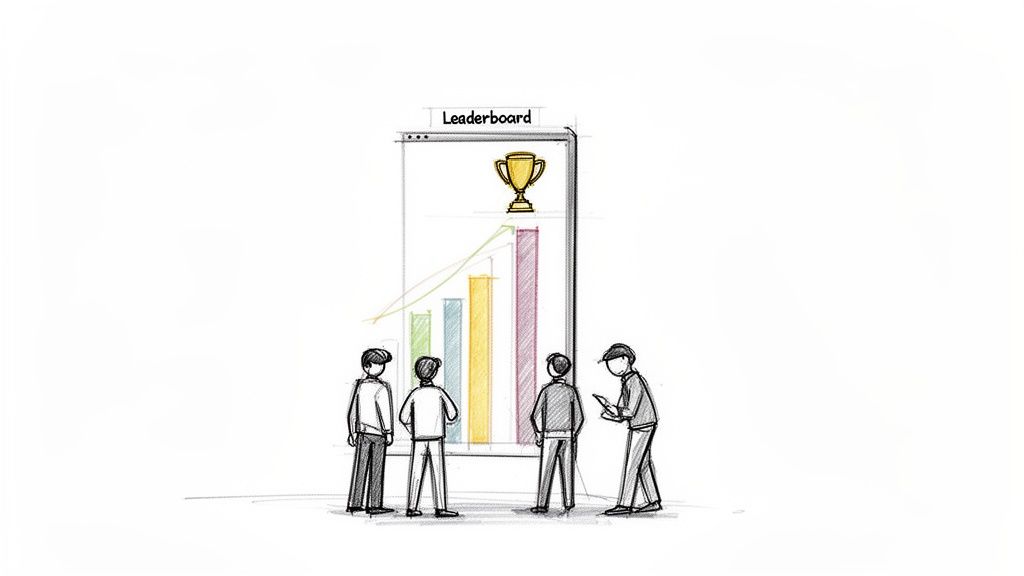
This method is one of the most dynamic team bonding activities because it creates a low-stakes, high-energy environment where colleagues can rally around a common objective outside of their day-to-day work. For instance, a sales organization might gamify their targets to drive performance and team spirit, while others use interactive quiz platforms for engaging learning and development sessions. These activities are perfect for boosting morale, encouraging healthy habits, or fostering innovation.
How to Implement Gamified Challenges
A successful gamified challenge is more about participation and camaraderie than winning.
- Align Challenges with Objectives: Ensure the competition supports company values or team goals. A challenge could be centred on a new software adoption, a wellness initiative, or a creative project.
- Emphasise Team Collaboration: Frame challenges around team achievements rather than individual glory. Create cross-functional teams to encourage new connections and break down departmental silos.
- Vary the Activities: Keep things fresh by rotating challenge types. Alternate between fitness-based, learning-focused, creative, and skill-based contests to appeal to a wider range of interests and strengths.
- Measure the Cultural Impact: Use a business intelligence tool like Wurkn to analyse how the challenge affects the team. Monitoring cultural data can reveal whether the competition is boosting morale and connection or inadvertently creating stress and division—insights that a simple participation report cannot provide.
Key Insight: The primary goal of gamification is not to find a winner but to foster a sense of collective effort and shared accomplishment. Celebration should focus on participation and teamwork.
By carefully designing these competitions, you can spark enthusiasm and strengthen bonds across your organisation.
5. Volunteer Service and Pro Bono Community Projects
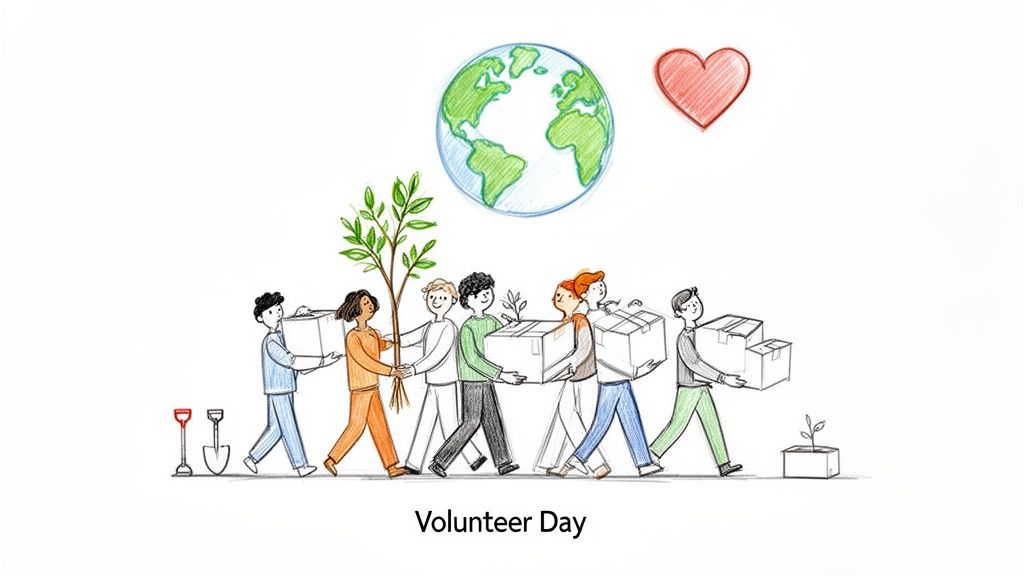
Organised team participation in volunteer work or pro bono professional services allows teams to collaborate on meaningful causes outside of core business operations. These initiatives build a powerful sense of shared purpose and impact, uniting colleagues through a common goal that transcends daily tasks. By working together to support a community need, teams can foster connections that are often deeper and more resilient than those formed through purely social activities.
This approach is one of the most impactful team bonding activities for organisations looking to reinforce their values and connect employees to a larger mission. A common model involves dedicating a percentage of employee time to nonprofits, demonstrating how integrating service into the corporate DNA can energise a workforce (Source: Chief Executives for Corporate Purpose, Giving in Numbers 2023 Edition). These programs are ideal for strengthening company culture, enhancing brand reputation, and giving employees a tangible sense of pride in their workplace.
How to Implement a Volunteer Program
A successful community service initiative requires alignment with employee interests and clear ties to company values.
- Identify Resonant Causes: Before planning, use a tool like Wurkn to survey employees and gather feedback on the causes they are most passionate about. This data-driven approach ensures the initiative will genuinely engage your team and provides a richer dataset than a simple poll.
- Offer Diverse Participation Models: Cater to different preferences and abilities by providing a mix of options. This could include in-person activities like a local park clean-up, skills-based pro bono consulting for a charity, or virtual volunteering opportunities like online mentoring.
- Measure the True Impact: Track both the project's outcome for the community and its effect on your team's culture. Use Wurkn's business intelligence capabilities to analyse sentiment shifts related to purpose, belonging, and values alignment before and after the event. This provides clear ROI by linking the activity to improvements in key cultural indicators that predict retention.
Key Insight: The most effective volunteer programs are not just one-off events; they are integrated into the company’s identity. They connect an employee’s daily work to a broader, positive impact on the world.
By aligning volunteer projects with employee passions and company values, organisations can create a powerful catalyst for team cohesion and shared pride. To learn more about fostering a purpose-driven workplace, explore these strategies for building team cohesion on wurkn.com.
6. Learning Circles and Skill-Sharing Communities of Practice
A learning circle or skill-sharing community of practice is a peer-led group focused on mastering specific skills, tools, or professional development areas. These groups meet regularly, often in a hybrid or asynchronous format, to share knowledge, solve common problems, and build collective expertise. Unlike formal training, these communities foster organic connection through intellectual curiosity and mutual growth.
This method ranks as one of the most impactful team bonding activities because it grounds connection in a shared purpose beyond day-to-day tasks. Open-source software communities have successfully used internal learning guilds to accelerate skill development and build strong cross-functional relationships. These communities are ideal for nurturing in-demand skills, promoting a culture of continuous learning, and connecting employees who might not otherwise interact.
How to Implement a Learning Circle
Successful learning circles empower employees to take ownership of their professional development while building relationships.
- Identify High-Impact Topics: Use a business intelligence tool like Wurkn to analyse employee interest data and identify emerging skill gaps. Cross-referencing interests with strategic priorities ensures the communities deliver value to both the individual and the organisation.
- Empower Peer Facilitation: Rotate facilitators for each session to distribute ownership and develop leadership skills across the team. Provide a simple framework or guide to help new facilitators, but encourage them to adapt it to the group's needs.
- Structure for Hybrid Work: Keep groups small (8-15 people) to ensure meaningful discussion. Offer both synchronous video meetings and asynchronous channels (e.g., Slack, Teams) for sharing resources, asking questions, and continuing conversations to include all team members regardless of location or time zone.
Key Insight: The most effective learning communities are not top-down initiatives. They are grassroots movements fuelled by genuine employee interest and a desire for shared growth, creating powerful and authentic bonds.
By creating a space for collaborative learning, organisations can foster deep, intellectually-driven connections that strengthen team cohesion and drive innovation. To learn more about fostering such connections, explore these team-building and cohesion strategies for hybrid work on wurkn.com.
7. Wellness Challenges and Team Health Initiatives
A wellness challenge is a structured, collaborative program designed to encourage and support the physical, mental, or emotional well-being of a team. Ranging from friendly fitness competitions to shared mindfulness practices, these initiatives transform individual health goals into a collective team effort. By creating accountability partners and a shared commitment, they foster connection through mutual support and encouragement.
This approach is one of the most impactful team bonding activities because it shows employees that the organisation values them as whole people, not just for their work output. Research from the Global Wellness Institute shows that workplace wellness programs can significantly impact employee morale and productivity. These initiatives are ideal for boosting morale, reducing stress, and building a supportive team atmosphere.
How to Implement a Wellness Challenge
A successful wellness initiative prioritises inclusivity and participation over intense competition.
- Design Inclusive Challenges: Create programs that accommodate all physical abilities and interests. Mix a steps challenge with options like guided stretching, weekly meditation goals, or hydration tracking to ensure everyone can participate comfortably.
- Emphasise Team Goals: Frame the initiative around a collective objective, such as a total team step count or a shared number of mindfulness minutes. This focuses energy on collaboration rather than individual performance, which fosters greater psychological safety.
- Measure the True Impact: Use a business intelligence tool like Wurkn to monitor cultural data and sentiment related to well-being before, during, and after the challenge. This allows you to see how the initiative affects morale, stress levels, and feelings of belonging, providing a much deeper ROI analysis than simple participation metrics.
Key Insight: The most effective wellness initiatives are not about forcing health on employees. They are about providing the resources, support, and collaborative structure to help team members achieve their own well-being goals together.
By focusing on collective progress and genuine care, organisations can strengthen team bonds while investing in their most valuable asset: their people. For more ideas, read these 10 tips for conquering health and wellness at work on wurkn.com.
8. Cross-Functional Project Teams and Rotation Programs
Cross-functional project teams are intentionally formed groups that bring together employees from different departments, functions, or locations to collaborate on a time-bound project. Similarly, rotation programs offer a structured way for employees to move between teams or roles for a set period. This approach breaks down organisational silos and builds a web of diverse professional relationships across the company.
This method stands out among team bonding activities because it integrates relationship-building directly into meaningful work. Instead of a one-off event, it fosters ongoing collaboration and mutual respect. Many large tech companies use rotational programs to develop well-rounded leaders and specialists who understand the business from multiple perspectives. This strategy is ideal for tackling complex challenges that require diverse expertise or for cultivating a more holistic and interconnected organisational culture.
How to Implement Cross-Functional Collaboration
Effective implementation requires a deliberate focus on both the project goals and the interpersonal dynamics.
- Structure for Success: Clearly define the project scope, roles, and desired outcomes. Pair cross-functional newcomers with peer "buddies" from the core team to accelerate integration and provide a go-to resource for questions. Explicitly schedule time for relationship-building activities, not just task-focused work.
- Facilitate Connections: Launch projects with a kickoff that prioritises getting to know each other's working styles and expertise. Hold brief retrospectives after project milestones to capture learnings about the collaborative process itself, not just the project's progress.
- Measure the Impact: Utilise a business intelligence tool like Wurkn to analyse cultural data before, during, and after a rotation or project. By tracking shifts in network connections and sentiment, you can identify integration gaps early, measure the increase in cross-departmental trust, and pinpoint friction points in the collaborative process to make data-driven improvements.
Key Insight: The primary benefit isn't just project completion; it's the creation of a resilient and agile network of employees who can collaborate effectively across departmental lines long after the project ends.
By weaving team building into the fabric of daily work, organisations can foster deep, authentic connections that drive both innovation and a stronger sense of belonging.
9. Celebration Rituals and Milestone Recognition Programs
Celebration rituals are formalized practices that consistently mark and celebrate individual and team achievements, milestones, and important life events. More than just an occasional "thank you," these structured programs create positive shared experiences and embed appreciation into the very fabric of your company culture. They can be synchronous, like all-hands recognition moments, or asynchronous, through dedicated platforms.
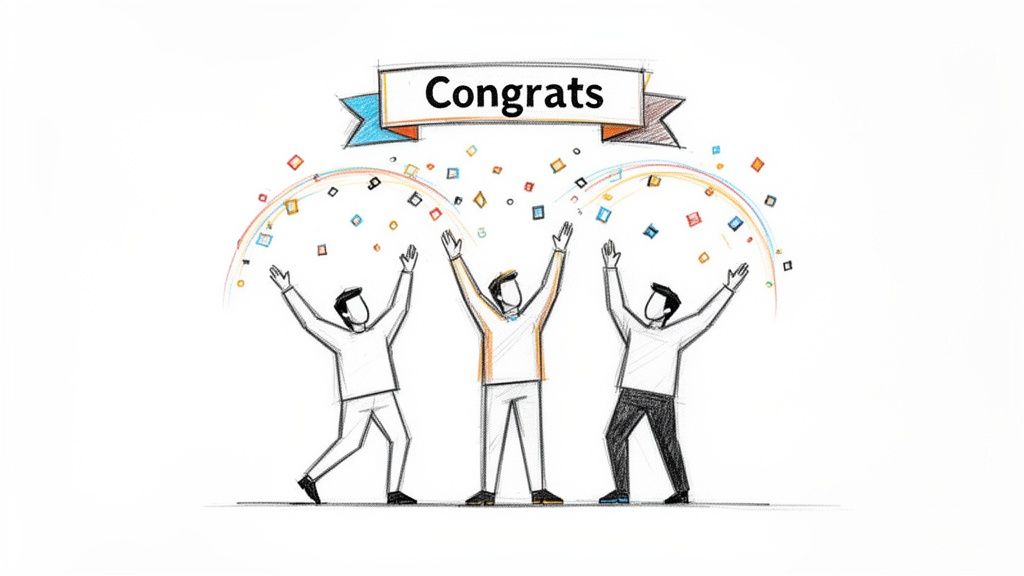
This approach is one of the most powerful team bonding activities because it validates employees' contributions and reinforces desired behaviours. When recognition is tied directly to company values, it shows team members what success looks like and fosters a deep sense of belonging. Modern employee experience platforms have made it easier than ever to build these rituals into the daily workflow, making appreciation visible, timely, and meaningful for everyone.
How to Implement Celebration Rituals
A successful recognition program is built on fairness, clarity, and authenticity.
- Establish Clear Criteria: Define what warrants recognition to ensure fairness and prevent bias. Create specific categories tied to company values, strategic objectives, or key performance indicators. This transparency helps everyone understand how to earn recognition.
- Diversify Recognition Channels: Create multiple avenues for appreciation. Implement peer-to-peer shout-outs in a public Slack channel, leadership awards announced at town halls, and private, manager-led celebrations for team-specific wins. This multi-channel approach ensures everyone feels seen.
- Measure the Cultural Impact: Use a business intelligence tool like Wurkn to analyze qualitative data around your recognition efforts. By tracking sentiment shifts, you can determine if your program is perceived as genuine and motivating or merely performative. This provides the cultural evidence needed to refine your strategy and maximize its ROI on team morale and connection.
Key Insight: Consistent, multi-faceted recognition is more impactful than grand, infrequent gestures. The goal is to make celebration a continuous and integrated part of the employee experience, not a rare event.
By intentionally celebrating both big wins and small steps, organizations can build a resilient and highly motivated culture. For more on this, check out these strategies for building team morale and motivation at wurkn.com.
10. Transparent Culture Feedback Loops and Action-Taking Initiatives
A transparent feedback loop is a systematic process for gathering employee voice, sharing the insights gathered, and taking visible, meaningful action. This moves beyond annual surveys to create a continuous dialogue where employees see their input directly influencing organisational change. When people feel heard and valued, it builds profound psychological safety and trust, which are the cornerstones of a cohesive team.
This approach transforms feedback from a static data point into one of the most powerful team bonding activities an organisation can foster. By demonstrating responsiveness, leadership proves it respects and trusts its team, encouraging employees to invest more deeply in the company's success. Companies known for radical transparency have shown that open dialogue about strategy and challenges builds an incredibly strong and aligned culture. These initiatives are perfect for any organisation committed to building a culture of trust and continuous improvement.
How to Implement a Feedback Loop Initiative
A successful feedback loop isn't just about collecting data; it's about closing the loop with transparent action.
- Establish a Continuous Listening System: Implement a business intelligence tool like Wurkn to serve as your always-on cultural listening post. This allows you to capture real-time, nuanced employee sentiment, moving beyond simple engagement scores to understand the underlying drivers of your team's experience.
- Share Insights Transparently: Commit to sharing aggregated, anonymised insights with the entire organisation on a regular cadence, such as monthly or quarterly. Be sure to share the challenging feedback, not just the positive highlights. This vulnerability builds trust and shows respect for your team's intelligence.
- Take Visible, Collaborative Action: Create executive-visible action items based on the top cultural themes and concerns identified through your data. Involve employees in co-designing solutions to the challenges they've raised. Publicly track progress on these initiatives and clearly explain the reasoning behind which feedback is being prioritised.
Key Insight: True team bonding occurs when employees see their collective voice shaping the organisation's future. The act of listening is important, but the act of transparently responding and adapting is what builds lasting trust and cohesion.
By operationalising feedback, organisations create a virtuous cycle of trust, engagement, and shared ownership. For more on fostering this kind of open dialogue, see these strategies for enhancing team communication on wurkn.com.
10 Team Bonding Activities Compared
| Initiative | Implementation Complexity 🔄 | Resource Requirements ⚡ | Expected Outcomes 📊 / ⭐ | Ideal Use Cases 💡 | Key Advantages ⭐ |
|---|---|---|---|---|---|
| Virtual Team Retreats and Offsites | High — multi-day scheduling, strong facilitation required | Medium–High — planning, platform, facilitator time | Culture alignment, engagement uplift; measurable sentiment (⭐⭐⭐⭐) | Distributed teams needing strategic alignment, team bonding | Remote-inclusive, measurable impact, cost-effective vs travel |
| Asynchronous Social Channels and Community Spaces | Low — create channels and guidelines | Low — uses existing platforms; moderation time | Steady peer connection and belonging; hard to quantify (⭐⭐⭐) | Always-on social interaction across timezones | Low friction, authentic participation, timezone-friendly |
| Structured Peer Mentoring and Knowledge-Sharing Pairs | Medium — matching logic and program structure | Low–Medium — coordination, participant time | Deep 1:1 relationships and knowledge transfer (⭐⭐⭐⭐) | Skill development, cross-silo relationship building | Meaningful connections, scalable, low direct cost |
| Gamified Team Challenges and Competitions | Medium — design, tracking, fair rules | Medium — platforms, rewards, content creation | Short-term engagement spikes; measurable participation (⭐⭐⭐) | Boosting energy, wellness, or learning adoption | Drives participation, measurable outcomes, fun momentum |
| Volunteer Service and Pro Bono Community Projects | Medium–High — partner coordination and logistics | Medium — partner management, paid volunteer hours | Strong purpose alignment and pride; retention lift (⭐⭐⭐⭐) | CSR initiatives, purpose-driven culture building | Deep shared purpose, brand impact, skill use |
| Learning Circles and Communities of Practice | Low–Medium — facilitation and cadence setup | Low — volunteer leaders, shared resources | Sustained skill growth and cross-team bonding (⭐⭐⭐⭐) | Ongoing professional development and knowledge sharing | Peer-driven learning, low cost, builds expertise |
| Wellness Challenges and Team Health Initiatives | Medium — inclusive design, privacy safeguards | Medium — integrations, coaching, tracking | Health habit formation and support; measurable engagement (⭐⭐⭐) | Improving team well-being and accountability | Builds supportive culture, measurable wellness outcomes |
| Cross-Functional Project Teams & Rotation Programs | High — coordination, onboarding, sponsorship | High — time, management support, training | Breaks silos, broad skill development, innovation (⭐⭐⭐⭐) | Leadership development, cross-functional problem solving | Enterprise thinking, career mobility, strong learning |
| Celebration Rituals and Milestone Recognition Programs | Low — establish cadence and recognition channels | Low — platforms and consistent leadership participation | Increased morale and retention; visible appreciation (⭐⭐⭐⭐) | Reinforcing values, regular recognition, distributed teams | Strengthens belonging, scalable, fosters appreciation |
| Transparent Culture Feedback Loops & Action-Taking Initiatives | Medium–High — systems, analysis, executive commitment | Medium — continuous feedback tools, change initiatives | Trust building, measurable culture change and retention (⭐⭐⭐⭐⭐) | Systemic culture improvement and continuous listening | Drives trust, data-driven action, closes feedback loop |
From Activities to Intelligence: Building a Connected, High-Performing Culture
We've explored a comprehensive toolkit of team bonding activities, from virtual retreats and gamified challenges to wellness initiatives and cross-functional projects. Each offers a unique pathway to strengthening relationships, improving communication, and fostering a sense of shared purpose. However, the most successful organisations recognise that these activities are not isolated events but catalysts for a deeper cultural transformation.
The ultimate goal is to move beyond simply doing activities and start building a culture where connection is an embedded, sustainable practice. The true measure of success isn't how many escape rooms you complete, but whether the trust and collaboration forged there translate into daily work. This means evolving from one-off events to integrated rituals and systems that reinforce your desired cultural norms.
From Lagging Indicators to Real-Time Insight
A common pitfall is relying on outdated methods to gauge the success of these initiatives. Annual engagement surveys or post-event feedback forms provide a snapshot in time, a lagging indicator that tells you what employees thought weeks or months ago. By the time you analyse the data, the cultural moment has passed, and the opportunity to make a timely, impactful adjustment is lost.
To build a genuinely connected, high-performing team, you need to understand the subtle, day-to-day shifts in team dynamics. You need a continuous feedback loop that captures the authentic voice of your employees and translates it into actionable business intelligence. This is where Wurkn excels, moving beyond the limitations of traditional employee engagement platforms by providing real-time cultural analytics tied to business outcomes.
Key Takeaway: The most impactful team bonding strategies are not about a single perfect activity. They are about creating an ecosystem of connection and then using real-time data to understand what's working, what's not, and why.
Actionable Next Steps: A Strategic Framework
Instead of just picking another activity from a list, your next step should be to build a strategic framework. This approach ensures your efforts are intentional, measurable, and aligned with core business objectives.
- Define Your "Why": Revisit your primary goals. Are you trying to improve cross-departmental collaboration, accelerate onboarding for new hires, or reduce regrettable turnover? Be specific. For instance, instead of "improving communication," your goal might be "reducing project delays caused by miscommunication between engineering and product teams by 15%."
- Select with Intention: Choose activities from this guide that directly map to your defined goals. If onboarding is the priority, structured peer mentoring is a better fit than a one-off virtual happy hour. If retention is the focus, transparent feedback loops and celebration rituals are critical.
- Establish a Continuous Measurement System: This is the most crucial step. Implement a business intelligence tool like Wurkn that provides an always-on, real-time view of your cultural health. You need to see how your initiatives influence key cultural signals like psychological safety, belonging, and trust as they happen.
- Connect Culture to Performance: The final piece is linking these cultural signals to hard business metrics. When you can draw a clear line from a successful volunteer day to a measurable increase in team cohesion, and then connect that cohesion to a 10% decrease in employee turnover, your team-building efforts become a strategic business driver. This is the difference between a "nice-to-have" HR program and a core operational function.
By adopting this strategic mindset, you transform team bonding from a cost centre into a powerful investment in organisational resilience and performance. You create a virtuous cycle where connection fuels performance, and performance data, in turn, informs how you foster even deeper connection.
Ready to move beyond guesswork and measure the true ROI of your cultural initiatives? Wurkn provides the cultural business intelligence you need, turning continuous employee feedback into actionable insights that link directly to KPIs like retention and productivity. See how your team bonding activities are really impacting your bottom line by booking a demo with Wurkn today.