
Company culture is more than perks; it’s the operating system for your business. It dictates how work gets done, how decisions are made, and ultimately, how your organisation performs. Yet, many leaders struggle to move from abstract values to tangible behaviours.
Traditional HR survey tools offer a snapshot in time, but they often miss the nuanced, continuous story of your culture as it unfolds daily. This can lead to reactive fixes for problems that have already impacted retention and productivity. In this guide, we'll explore 10 powerful and distinct company culture examples, from radical transparency to distributed ownership.
For each example, we provide a blueprint with actionable strategies that you can implement immediately. We'll also demonstrate how a business intelligence platform like Wurkn goes above and beyond traditional employee engagement platforms. Wurkn provides a living dashboard by capturing real-time, anonymised employee sentiment from everyday tools like Slack and Microsoft Teams. This gives leaders in Canada and the United States the cultural intelligence needed to connect culture directly to business outcomes like revenue and retention, and build a truly high-performing workplace. We'll dissect what makes these cultures effective and show you how to measure their impact, moving from guesswork to data-driven cultural strategy.
1. Radical Transparency Culture
A radical transparency culture is built on the principle of open, honest, and unrestricted communication across all levels of an organisation. Information that is typically firewalled, such as company financials, strategic decision-making processes, and key performance metrics, is made accessible to every employee. This approach dismantles information silos, fostering a deep sense of trust and shared ownership.
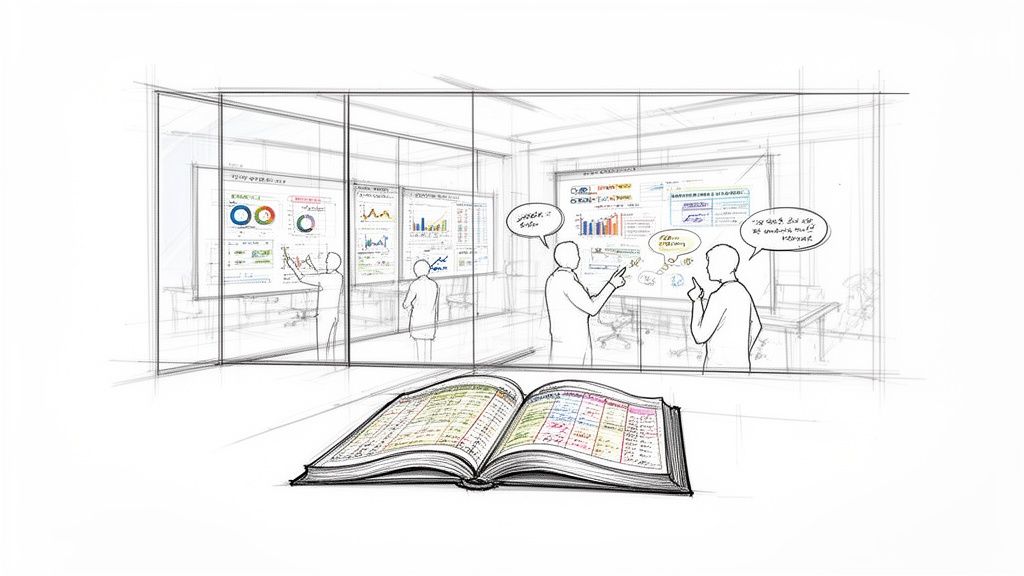
This model empowers employees by giving them the same context that leaders have, encouraging collaborative problem-solving and innovation. A well-known example comes from the social media management company Buffer, which has historically published employee salaries and revenue dashboards publicly, exemplifying this commitment.
Strategic Breakdown & Actionable Takeaways
Implementing this type of company culture requires a phased approach and dedicated tools to measure its impact.
- Start Incrementally: Begin with internal financial transparency, like sharing departmental budgets or revenue goals, before considering public disclosures.
- Provide Context: Raw data without interpretation can cause confusion. Pair transparent metrics with clear explanations during all-hands meetings or in shared documents.
- Train Leadership: Equip managers with the skills to communicate sensitive information authentically and handle difficult questions.
- Measure Impact with Wurkn: True transparency affects morale and engagement. Wurkn’s business intelligence tools can correlate transparency initiatives with sentiment analysis from employee feedback, providing quantifiable insights. By tracking metrics like voluntary turnover and engagement scores before and after a transparency initiative, Wurkn can demonstrate a clear return on investment that traditional HR survey tools miss. This is one of the most powerful company culture examples for building trust.
2. Distributed Autonomy & Ownership Culture
A distributed autonomy and ownership culture decentralizes decision-making, pushing authority from leadership to individual contributors and teams. Instead of a top-down hierarchy, employees are empowered to own outcomes, make independent choices, and are held accountable for their results. This model is founded on trust, responsibility, and an entrepreneurial mindset.
This approach fuels agility and innovation by minimizing bureaucratic approvals and encouraging proactive problem-solving. For instance, the streaming service Netflix champions this with its "Freedom and Responsibility" principle, granting employees significant autonomy within a high-performance context. Similarly, the DevOps software company GitLab thrives on distributed decision-making across its fully remote workforce.
Strategic Breakdown & Actionable Takeaways
Successfully building this culture requires clear guardrails and a commitment to measuring employee sentiment around empowerment.
- Establish Clear Guardrails: Define company-wide goals and values that guide autonomous decisions. A clear Objective and Key Results (OKR) framework ensures teams move in the same strategic direction.
- Create Psychological Safety: Autonomy requires a safe environment for smart failures. Encourage experimentation and treat mistakes as learning opportunities rather than punishable offences.
- Coach Decision-Making Skills: Equip emerging leaders and teams with frameworks for making sound, data-informed decisions, reducing reliance on senior management.
- Measure Empowerment with Wurkn: True autonomy impacts engagement and performance. As a business intelligence tool, Wurkn's platform can analyze qualitative employee feedback for keywords like 'empowerment,' 'clarity,' and 'trust,' correlating them with productivity metrics. By tracking how initiatives that increase autonomy affect performance and retention data, Wurkn provides leaders with a clear, quantifiable link between empowerment and business outcomes, making it one of the most impactful company culture examples for modern organizations.
3. Purpose-Driven & Mission-Aligned Culture
A purpose-driven culture centres on a meaningful mission that extends beyond profit. Employees in this environment clearly understand how their daily tasks contribute to a larger societal impact, which fosters deep engagement and loyalty. Core values often include social responsibility, sustainability, and providing purposeful work that resonates on a personal level.
This model attracts and retains talent who are motivated by more than just a paycheque. The outdoor apparel company Patagonia, which embeds its environmental mission into every business decision, is a prime example of this culture in action. Its mission is authentic, visible, and integrated into its operations.
Strategic Breakdown & Actionable Takeaways
Building an authentic mission-aligned culture requires consistent reinforcement and a commitment from leadership to live the company’s values.
- Embed Mission into Operations: Integrate your purpose into hiring, performance reviews, and even product development. Ensure every new initiative is evaluated against its alignment with the core mission.
- Communicate Impact Regularly: Don’t just state your mission; show it. Share regular updates and metrics on your social or environmental impact during all-hands meetings and in internal communications.
- Empower Employee Contribution: Create structured volunteer programs, donation-matching initiatives, or skill-based pro bono projects that allow employees to actively participate in the company's mission.
- Measure Mission Alignment with Wurkn: Understanding if your purpose truly resonates is crucial. Wurkn’s business intelligence can analyze qualitative feedback for keywords like 'impact,' 'meaning,' and 'purpose,' correlating sentiment with retention and productivity data. This allows you to measure the real-world effect of your mission, providing a powerful look into one of the most impactful company culture examples.
4. Learning & Development Culture
A learning and development culture prioritises continuous skill improvement, knowledge sharing, and a growth mindset. In this environment, employees are actively encouraged and supported in acquiring new capabilities, and the organisation invests significantly in development resources. This culture is built on core values like curiosity, professional growth, and collaborative knowledge sharing, making it a cornerstone of organisational agility.
This model positions the company as a place for career advancement, not just a job. For example, a large tech company like Microsoft provides a significant annual learning budget per employee, showing how investing in people fuels innovation and retention. This approach is one of the most effective company culture examples for building a resilient and adaptable workforce.
Strategic Breakdown & Actionable Takeaways
Cultivating a learning culture requires a strategic framework that connects individual growth to organisational goals.
- Create Clear Pathways: Develop learning paths aligned with career progression frameworks so employees can see a direct link between skill acquisition and advancement.
- Promote Peer Learning: Implement peer-led learning circles, mentorship programs, and internal "lunch and learn" sessions to democratise knowledge sharing.
- Empower Managers: Train managers to be effective coaches who can guide their teams through development conversations and identify growth opportunities.
- Measure the Real Impact with Wurkn: True learning cultures impact more than just participation rates. As a business intelligence platform, Wurkn can analyse employee feedback, identifying sentiment around keywords like 'growth,' 'development,' and 'career' to measure the perceived value of your programs. By correlating this data with retention and performance metrics, Wurkn reveals the direct ROI of your learning initiatives in a way that goes beyond simple HR survey tools. For more insights, learn more about building a continuous improvement culture.
5. Psychological Safety & Inclusive Culture
A culture of psychological safety ensures employees feel secure enough to take interpersonal risks without fear of negative consequences. This means they are comfortable voicing concerns, admitting mistakes, and being their authentic selves. It is the foundation of an inclusive environment where diverse perspectives are not just tolerated but actively sought, fostering innovation and deep-seated belonging.
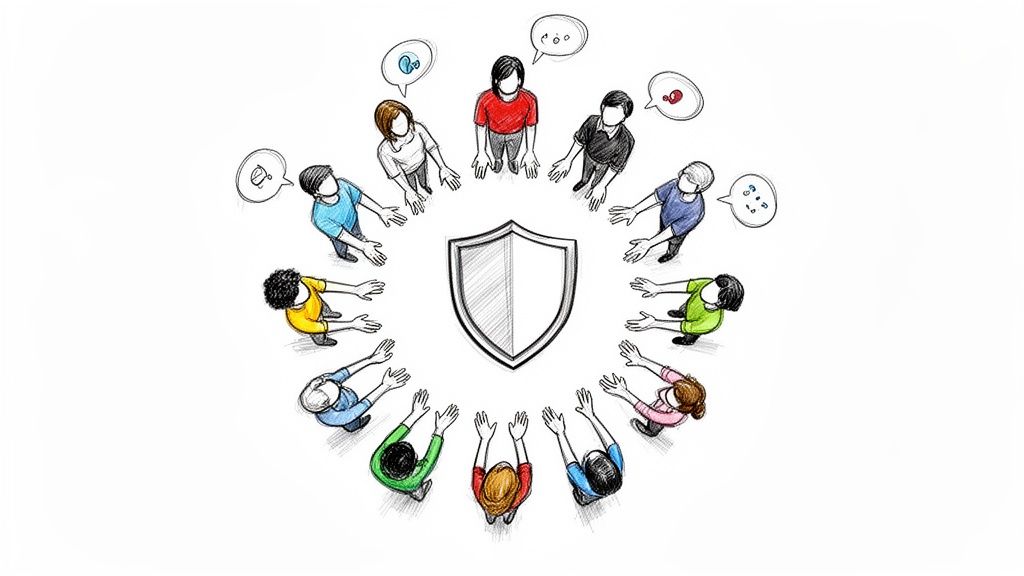
This environment is essential for high-performing teams, a finding famously highlighted by Google's Project Aristotle research (Sull, D., Sull, C., & Bersin, J. (2020). Measuring the forces that fuel or hinder your organization's success. MIT Sloan Management Review). Companies that champion this shift move toward a growth mindset where learning from failure is celebrated. Such a culture directly combats toxicity and unlocks the full potential of every team member.
Strategic Breakdown & Actionable Takeaways
Building this type of company culture requires intentional leadership and robust systems for feedback and accountability.
- Model Vulnerability: Leaders must set the standard by openly admitting their own mistakes and actively soliciting dissenting opinions. This behaviour normalises risk-taking.
- Establish Safe Channels: Create structured, anonymous avenues for feedback. This is crucial for employees who may not yet feel safe speaking up in public forums.
- Train for Inclusion: Equip managers with practical skills in facilitating inclusive meetings, providing constructive feedback, and mitigating unconscious bias in their daily interactions.
- Measure Belonging with Wurkn: Psychological safety is measurable. Wurkn’s business intelligence platform moves beyond simple surveys by capturing nuanced sentiment data related to belonging, inclusion, and the comfort to voice opinions. By correlating these metrics with performance and retention data, Wurkn can pinpoint which teams are excelling and which managers need more support, demonstrating the tangible business impact of a safe and inclusive workplace. For more on this, explore the essentials of building psychological safety on wurkn.com.
6. Flexible & Remote-First Culture
A flexible and remote-first culture prioritizes employee autonomy and results over physical presence. This model is built on trust, empowering team members to decide where, when, and how they work best, with remote work treated as a primary, not secondary, option. This culture shifts the focus from hours logged to outcomes achieved, fostering a healthier work-life integration.
This approach dismantles geographical barriers, enabling access to a global talent pool and promoting diversity. Companies like the software company Automattic have championed this model, proving that exceptional collaboration and productivity can thrive without a central office.
Strategic Breakdown & Actionable Takeaways
Successfully implementing this culture requires intentional structure and tools to maintain connection and equity.
- Establish Clear Norms: Define asynchronous communication protocols and meeting etiquette to ensure inclusivity across time zones.
- Invest in the Right Tools: Provide stipends for home office setups and equip your team with the right software. Learn more about the top tools for managing distributed teams effectively.
- Prioritize Connection: Intentionally create virtual spaces for informal interaction, such as digital "watercoolers" or team-building activities, to prevent isolation.
- Measure with Wurkn: This is one of the company culture examples where sentiment is crucial. Wurkn’s business intelligence can analyze communication patterns and feedback to monitor feelings of ‘flexibility,’ ‘connection,’ and ‘isolation.’ By correlating these qualitative insights with performance data, Wurkn provides a comprehensive view of how remote policies are impacting both employee well-being and business outcomes, ensuring equitable opportunities for all.
7. Collaborative & Teamwork-Focused Culture
A collaborative and teamwork-focused culture prioritises cooperation, interdependence, and collective success over individual achievement. In this environment, teamwork is not just encouraged but is deeply embedded into the organisation’s processes, systems, and reward structures. The core belief is that the best results are achieved when people work together, sharing knowledge and accountability.
This model breaks down departmental silos and fosters a powerful sense of unity and shared purpose. A great example can be found in the technology company Apple, which is renowned for its cross-functional collaboration. There, design, engineering, and marketing teams work in tight integration to create seamless products, ensuring diverse perspectives are considered for more robust innovation.
Strategic Breakdown & Actionable Takeaways
Building a truly collaborative culture requires intentional design in both structure and daily practices. It's about making teamwork the path of least resistance.
- Design for Interdependence: Structure projects and set goals that require input and effort from multiple functions or departments. Avoid systems that pit individuals against each other.
- Recognise the Team: While individual contributions are important, make a concerted effort to publicly celebrate and reward team accomplishments. This reinforces the value of collective effort.
- Invest in Facilitation Skills: Train managers and team leads to facilitate healthy debate, manage conflict constructively, and ensure every voice is heard. This creates the psychological safety needed for true collaboration.
- Analyse Collaboration with Wurkn: Is your collaborative culture truly breaking down silos or just creating more meetings? Wurkn’s business intelligence platform provides insights traditional employee engagement platforms can't. It can analyse communication patterns and employee feedback to identify friction points and measure sentiment around keywords like ‘teamwork’ and ‘cooperation’. This provides a clear, data-driven view of whether your collaborative initiatives are improving efficiency and engagement, making it one of the most effective company culture examples for modern organisations.
8. Customer-Centric & Feedback-Driven Culture
A customer-centric culture is organised around deeply understanding and serving customer needs above all else. Every decision, from product development to internal processes, is guided by its potential impact on the customer experience. Core values often include customer obsession, empathy, and continuous improvement driven by direct user feedback.
This model transforms customers from a simple revenue source into the central focus of the organisation’s strategy. For example, the e-commerce giant Amazon famously instills "Customer Obsession" as its first leadership principle. This approach fosters loyalty and creates a powerful competitive advantage.
Strategic Breakdown & Actionable Takeaways
Building a truly customer-centric organisation requires embedding the customer's voice into every role and function.
- Create Customer Exposure Programs: Ensure even non-customer-facing roles, like engineers and accountants, regularly interact with customers or their feedback to build empathy.
- Share Feedback Widely: Use dedicated channels to broadcast customer stories, feedback, and key metrics like Net Promoter Score (NPS) across the entire company.
- Link Internal and External Metrics: Connect employee performance goals to customer satisfaction outcomes, creating a clear line of sight between individual work and customer happiness.
- Measure with Wurkn: Understanding if a customer focus is truly embedded is difficult. Wurkn's business intelligence tools can analyse internal communications to gauge employee understanding of customer needs. By correlating these internal sentiment metrics with external KPIs like customer satisfaction, Wurkn provides leaders with a clear view of how their culture directly drives business results, making it one of the most impactful company culture examples for growth.
9. Innovation & Experimentation Culture
An innovation and experimentation culture is one that actively encourages calculated risk-taking, rapid experimentation, and learning from failure. Instead of confining innovation to a specific R&D department, this model embeds curiosity, creativity, and intelligent risk-taking into every function of the organisation. It’s about creating an environment where new ideas are welcomed, tested, and iterated upon quickly.
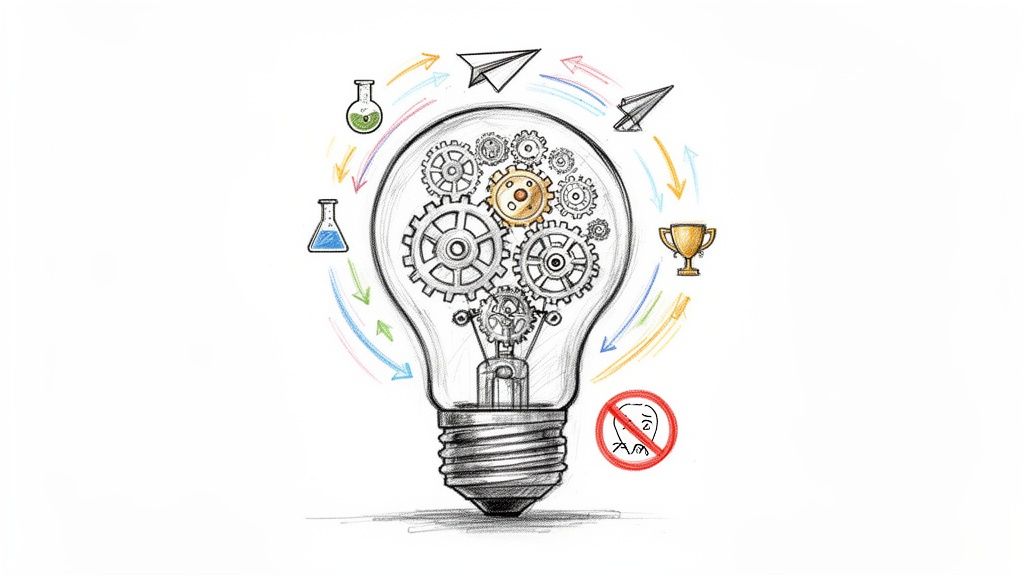
This approach empowers employees to challenge the status quo and explore novel solutions without fear of reprisal for unsuccessful attempts. The multinational conglomerate 3M, with its famous "15% Time" rule allowing employees to pursue passion projects, exemplifies this culture. It treats failure not as a setback but as a valuable data point on the path to breakthrough success.
Strategic Breakdown & Actionable Takeaways
Fostering innovation requires more than just encouragement; it demands structured support and psychological safety to truly flourish.
- Create Clear Frameworks: Implement structured processes for proposing, testing, and evaluating new ideas. This provides guardrails for experimentation and ensures learnings are captured.
- Allocate Dedicated Resources: Earmark specific budget and time for innovation, such as "hack days" or innovation stipends, to signal organisational commitment.
- Celebrate the Learnings: Publicly share the results of both successful and failed experiments. Highlighting what was learned from a failure normalises the process and reduces fear.
- Measure with Wurkn: Understanding the cultural health behind innovation is key. Wurkn’s business intelligence tools can analyse qualitative feedback for keywords like 'creativity,' 'risk,' and 'new ideas,' correlating sentiment with participation in innovation programs. By tracking metrics like idea submission rates against employee sentiment, Wurkn provides a nuanced view of your innovation culture, showcasing how these initiatives impact engagement and retention in a way that goes far beyond simple participation numbers. This is one of the most dynamic company culture examples for growth-focused organisations.
10. Wellness & Holistic Employee Care Culture
A wellness and holistic employee care culture prioritises the physical, mental, and emotional health of its workforce as a core business strategy, not just a perk. This culture is built on the belief that employee wellbeing is directly linked to engagement, innovation, and sustainable performance. It moves beyond reactive benefits to proactive support systems designed for human flourishing.
This approach means investing in comprehensive mental health support, flexible work arrangements, and programs that prevent burnout. For example, the software company Adobe is known for its generous wellness reimbursements and company-wide breaks, demonstrating this culture in action.
Strategic Breakdown & Actionable Takeaways
Successfully embedding wellness into your culture requires intentional policies and consistent measurement.
- Promote Mental Health: Destigmatise mental health support by making resources highly visible and encouraging leadership to speak openly about its importance.
- Protect Boundaries: Implement clear policies, such as no-meeting days or guidelines on after-hours communication, to help employees disconnect and recharge.
- Offer Flexible Wellness: Provide diverse options like fitness stipends, virtual therapy sessions, or mindfulness app subscriptions to cater to individual needs and preferences.
- Measure Wellbeing with Wurkn: Go beyond simple utilisation rates. Wurkn’s sentiment analysis can track conversations around 'burnout,' 'balance,' and 'stress,' providing real-time data on how your wellness initiatives are impacting employee experience. By correlating these qualitative insights with performance metrics, you can demonstrate the tangible business value of investing in holistic care, making this one of the most impactful company culture examples for modern workplaces.
Top 10 Company Culture Comparison
| Culture | Implementation Complexity (🔄) | Resource Requirements (⚡) | Expected Outcomes (📊⭐) | Ideal Use Cases (💡) | Key Advantages (⭐) |
|---|---|---|---|---|---|
| Radical Transparency Culture | 🔄 High — ~6–12 months; major change management | ⚡ Moderate — dashboards, comms, leader training | 📊↑ Trust & engagement; clearer decisions; possible information overload | 💡 Organizations needing alignment, trust-building, mature ops | ⭐ Visibility, faster informed decisions, reduced rumors |
| Distributed Autonomy & Ownership Culture | 🔄 Medium–High — ~3–9 months; governance & OKRs | ⚡ Moderate — training, OKR tooling, coaching | 📊↑ Innovation speed & ownership; risk of inconsistent choices | 💡 Fast-moving product teams; scaling startups | ⭐ Faster decisions, higher motivation, ownership |
| Purpose-Driven & Mission-Aligned Culture | 🔄 High — ~6–18 months for authentic integration | ⚡ Moderate — impact programs, reporting, comms | 📊↑ Retention & brand loyalty; resilience; potential mission–business tension | 💡 Consumer brands, social enterprises, recruitment focus | ⭐ Attracts mission talent; stronger reputation |
| Learning & Development Culture | 🔄 Medium — ~3–6 months to launch foundations | ⚡ High — budgets, platforms, mentors, time allocation | 📊↑ Retention, internal mobility, capability building | 💡 Growth orgs, talent-focused companies | ⭐ Skill growth, promotions from within, resilience |
| Psychological Safety & Inclusive Culture | 🔄 High — ~6–18 months; sustained behavior change | ⚡ Moderate — training, feedback systems, ERGs | 📊↑ Innovation, participation, wellbeing; hard to quantify early | 💡 Teams needing candid feedback and diverse thinking | ⭐ Better decision-making, lower conflict, diverse ideas |
| Flexible & Remote-First Culture | 🔄 Low–Medium — ~2–6 months for policies & norms | ⚡ Moderate — collaboration tools, stipends, training | 📊↑ Retention & talent reach; risk of isolation, communication gaps | 💡 Distributed teams; hiring across geographies | ⭐ Flexibility, larger talent pool, cost savings |
| Collaborative & Teamwork-Focused Culture | 🔄 Medium — ~4–12 months to embed practices | ⚡ Moderate — cross-functional processes, tools, facilitation | 📊↑ Alignment, knowledge sharing; may slow some decisions | 💡 Complex product dev; matrix organizations | ⭐ Improved cohesion, reduced silos, shared accountability |
| Customer-Centric & Feedback-Driven Culture | 🔄 Medium — ~3–9 months for feedback loops | ⚡ Moderate–High — research tools, CX programs, training | 📊↑ Product–market fit, customer retention; requires prioritization | 💡 Service/product orgs prioritizing customers | ⭐ Better decisions via customer insight; aligned priorities |
| Innovation & Experimentation Culture | 🔄 Medium — ~3–6 months to pilot frameworks | ⚡ Moderate — innovation budgets, time, tools | 📊↑ New ideas and revenue opportunities; needs failure tolerance | 💡 R&D, competitive markets, growth initiatives | ⭐ Competitive edge, creative solutions, adaptability |
| Wellness & Holistic Employee Care Culture | 🔄 Medium — ~3–12 months for comprehensive programs | ⚡ High — benefits, programs, mental health services | 📊↑ Retention, productivity, lower burnout; ROI longer-term | 💡 High-burnout industries; retention-focused employers | ⭐ Better wellbeing, lower turnover, improved productivity |
From Examples to Execution: Building a Culture That Works
Navigating the diverse landscape of company culture examples, from Buffer's radical transparency to Netflix's distributed autonomy, reveals a powerful, unifying truth. The most effective culture is not a template to be copied, but a strategic asset to be intentionally designed, meticulously cultivated, and continuously measured. The examples explored throughout this article-whether focused on learning, wellness, or customer centricity-demonstrate that culture is the operational framework that drives how your organization behaves, innovates, and ultimately, succeeds.
The critical takeaway is that culture cannot be a set-and-forget initiative. It is a living, breathing entity that requires constant attention and data-informed stewardship. Relying on annual engagement surveys to understand your culture's health is like trying to navigate a complex journey with a map that is a year old. You are making critical decisions based on outdated information, missing the subtle but crucial shifts in sentiment and behaviour that signal future challenges or opportunities.
The Shift from Guesswork to Intelligence
To build a culture that serves as a genuine competitive advantage, leaders must move beyond periodic, lagging indicators. The goal is to develop a real-time, nuanced understanding of the employee experience. This involves answering critical questions continuously:
- Are our flexible work policies actually reducing burnout or creating new collaboration challenges?
- Do employees in our engineering team feel the same level of psychological safety as those in sales?
- Is our push for a customer-centric culture translating into tangible actions and behaviours on the front lines?
Answering these questions requires a more sophisticated approach than traditional HR survey tools can offer. This is where the concept of cultural business intelligence becomes paramount. By capturing always-on, anonymous feedback directly within the flow of work, you can transform subjective feelings into a strategic, quantitative dashboard.
This is the precise advantage a business intelligence platform like Wurkn provides. It moves beyond simple surveys to become a central nervous system for your organization’s cultural health. It allows People Ops leaders and COOs in the United States and Canada to diagnose the root causes of disengagement, pre-empt costly turnover, and directly correlate cultural initiatives to hard business KPIs like productivity and retention. Instead of guessing how your culture impacts performance, you can see the connections clearly and adapt your strategy with precision and confidence. The first and most crucial step is to start listening, not just once a year, but every single day.
Ready to stop guessing and start measuring the culture you are building? See how Wurkn transforms anonymous employee feedback into actionable business intelligence, giving you the real-time insights needed to connect your cultural initiatives directly to performance outcomes. Discover Wurkn today.