
Company culture is the invisible force that dictates how work gets done, how decisions are made, and ultimately, whether your business thrives or stagnates. It’s the difference between a team that innovates proactively and one that merely survives. Too often, leaders mistake culture for perks like free snacks or ping-pong tables, but a truly effective company culture example is a strategic asset tied directly to business outcomes like retention, productivity, and revenue.
Traditional methods of measuring it, like annual HR surveys, provide a static, outdated snapshot. They tell you what employees felt months ago, but not why they feel that way today. This is where the paradigm shifts from simple employee engagement platforms to cultural business intelligence. To truly understand and shape your organisation’s culture, you need a living, breathing view of employee sentiment and behaviour.
Business intelligence tools like Wurkn offer this by capturing continuous, anonymous feedback and behavioural data from the digital spaces where employees already work, such as Slack and Microsoft Teams. This approach transforms qualitative feelings into quantitative, actionable insights. It allows COOs and People Ops leaders in Canada and the United States to diagnose cultural issues in real-time and make decisions that positively impact the bottom line. In this article, we’ll dissect eight powerful company culture examples, analysing their strategic underpinnings, replicable tactics, and how you can measure their effectiveness to build a resilient, high-performing organisation.
1. Google's Innovation-Driven Culture
Google's culture is a prime company culture example built on a foundation of innovation, psychological safety, and employee autonomy. Popularized by founders Larry Page and Sergey Brin, this model empowers employees to think creatively and experiment without fear of failure. At its core is the famous "20% Time" policy, which encourages engineers to dedicate a portion of their workweek to personal passion projects they believe will benefit the company.
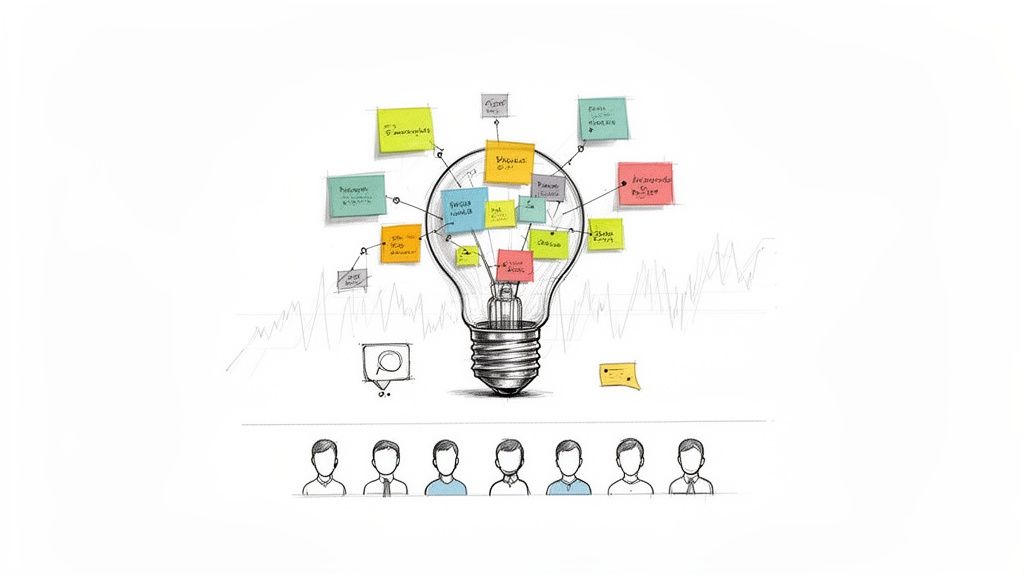
This approach is more than just a perk; it’s a strategic framework that has yielded some of Google's most successful products, including Gmail, AdSense, and Google News. By fostering a relatively flat hierarchy and emphasizing open, data-backed communication, Google creates an environment where great ideas can surface from anywhere. This culture signals to employees that their initiative is valued, which directly boosts engagement and retention.
Strategic Breakdown
- Psychological Safety: Google’s internal research, specifically Project Aristotle, identified psychological safety as the most critical factor for high-performing teams (Re:Work, 2017). This means team members feel safe to take risks and be vulnerable in front of each other.
- Data-Driven Decisions: Opinions are valued, but data wins arguments. This principle removes ego from decision-making and focuses teams on measurable outcomes.
- Autonomy and Ownership: The 20% Time policy is the ultimate symbol of trust. It gives employees the autonomy to explore their curiosity, leading to breakthrough innovations and a profound sense of ownership over their work.
Actionable Takeaways for Your Organisation
- Measure Innovation Sentiment: Traditional HR surveys lack depth. Use a business intelligence tool like Wurkn to deploy continuous pulse surveys that specifically measure sentiment around autonomy and the freedom to innovate. Track whether employees feel their ideas are heard and implemented, then correlate these metrics with team performance and retention data.
- Pilot a "Scoped-Time" Program: A full 20% program may not be feasible, but you can start smaller. Launch a "10% Time" or a quarterly "Innovation Day" where teams can work on projects outside their direct responsibilities. To learn more about creating an environment that supports these initiatives, explore how to build a culture of innovation.
- Create Psychological Safety Metrics: Go beyond generic engagement questions. Use anonymous feedback channels to identify psychological safety gaps. Ask targeted questions like, "Do you feel comfortable proposing a new idea that might fail?" and segment the data by team or department to pinpoint where leaders need to provide more support.
2. Netflix's Culture of Freedom and Responsibility
Netflix offers a powerful company culture example built on the principles of freedom and responsibility. Popularised by co-founder Reed Hastings and former Chief Talent Officer Patty McCord, this model treats employees like adults, providing them with immense autonomy in exchange for exceptionally high performance. The culture operates with minimal formal policies, favouring context over control and trusting employees to make decisions that are in the company's best interest.
This approach is famously documented in the Netflix Culture Deck, which emphasizes "talent density" and candid feedback. The core idea is that a team of high-performers, given the right context and freedom, will achieve more than a team constrained by rules and processes. This philosophy allowed Netflix to pivot decisively from a DVD-by-mail service to a global streaming and production giant, demonstrating its effectiveness in a rapidly changing market.
The culture's transparency is legendary, best summed up by the "keeper test" and the principle that "adequate performance gets a generous severance" (McCord, 2014). While intense, this clarity ensures that expectations are understood and that the organisation maintains a high concentration of top talent. It signals that trust is a two-way street: the company trusts employees with significant freedom, and in return, expects outstanding contributions.
Strategic Breakdown
- Talent Density: Netflix believes that high-performance is contagious. The primary strategy is to hire and retain "stunning colleagues," creating an environment where everyone is motivated to do their best work. This focus makes complex rules and oversight less necessary.
- Context, Not Control: Instead of creating policies for every scenario, leadership provides the strategic context and transparency needed for employees to make smart decisions independently. This empowers teams and dramatically increases organisational speed.
- Radical Candour: Open, honest, and timely feedback is a cornerstone. Employees are expected to provide constructive criticism to anyone, regardless of their position, fostering a culture of continuous improvement and preventing issues from festering.
Actionable Takeaways for Your Organisation
- Measure Autonomy and Trust Sentiment: Unlike static annual surveys, a business intelligence platform like Wurkn can deploy pulse surveys that measure whether employees feel trusted and empowered in real-time. Ask specific questions like, "Do you have the freedom you need to do your job effectively?" and correlate the results with performance and retention data for high-performers.
- Pilot a "No-Policy" Initiative: Choose a low-risk area, such as expense reporting or vacation time, and replace a rigid policy with a simple, high-level guideline (e.g., "Act in the company's best interest"). Monitor the outcomes and employee sentiment to see if more freedom leads to responsible behaviour. To learn more about fostering this kind of environment, read about creating a culture of trust.
- Introduce Structured Candour Sessions: Implement regular, structured feedback sessions where teams can practice giving and receiving candid feedback. Provide training on how to deliver constructive criticism effectively to build psychological safety around these conversations and ensure they remain productive, not personal.
3. Zappos' Customer-Centric and Values-Driven Culture
Zappos offers a legendary company culture example rooted in the belief that employee happiness directly translates to exceptional customer service. Popularised by the late Tony Hsieh, the culture is meticulously built around 10 core values, which are treated not as aspirational plaques on a wall but as the operating system for the entire business. This model posits that if you get the culture right, most of the other stuff, including great customer service, will happen naturally.

The company’s commitment is so strong that it famously offers new hires thousands of dollars to quit after training if they feel the culture isn't a fit. This ensures only truly dedicated and aligned individuals remain. This values-driven approach empowers employees to "WOW" customers, like the famous multi-hour customer service calls, creating a powerful competitive advantage built on loyalty and a positive brand reputation that other companies find nearly impossible to replicate.
Strategic Breakdown
- Culture as a Business Strategy: Zappos doesn't see culture as a "soft" HR initiative; it's a core business driver. The entire business model is built on the hypothesis that happy, engaged employees will create happy, loyal customers, which in turn drives long-term profitability (Hsieh, 2010).
- Values-Based Hiring and Firing: Cultural fit is weighted equally with technical skills in the hiring process. Candidates undergo separate interviews specifically to assess their alignment with the 10 core values, ensuring the cultural DNA remains strong and consistent.
- Empowerment Through Trust: By empowering customer service representatives to solve problems without strict scripts or time limits, Zappos demonstrates immense trust. This autonomy fosters a sense of ownership and encourages employees to go above and beyond for customers.
Actionable Takeaways for Your Organisation
- Quantify Values Alignment: A business intelligence platform like Wurkn moves beyond basic engagement surveys to measure how employees perceive the company's core values in action. Deploy pulse surveys with questions tied to each value (e.g., for "Deliver WOW Through Service," ask, "Do you feel empowered to do what's right for our customers?"). This provides real data on which values are thriving and which are just aspirational.
- Codify and Communicate Your Culture: Create your own "Culture Book" by collecting unedited employee submissions about what the culture means to them. This creates an authentic, living document that is far more powerful than a top-down mandate. To start this process, it's crucial to understand what corporate values mean to your specific organisation.
- Link Culture Metrics to Business KPIs: Use business intelligence tools to correlate employee happiness and values-alignment scores directly with customer satisfaction metrics (like Net Promoter Score) and customer lifetime value. This demonstrates the tangible ROI of investing in culture and provides a clear business case for cultural initiatives.
4. Patagonia's Purpose-Driven Environmental Culture
Patagonia's culture is a powerful company culture example rooted in a deep, unwavering commitment to environmental and social responsibility. Popularised by founder Yvon Chouinard, this purpose-driven model embeds sustainability into every business decision, rather than treating it as a separate marketing initiative. At its core, Patagonia's mission is to "use business to inspire and implement solutions to the environmental crisis," a principle that guides everything from product design to employee activism.

This authentic commitment attracts and retains mission-aligned employees who prioritise values over compensation. The culture is built on tangible actions, such as the "1% for the Planet" giving model and a "Worn Wear" program that encourages repairs over new purchases. By empowering employees to participate in environmental activism and aligning business goals with planetary health, Patagonia has cultivated fierce brand loyalty and proven that purpose can be a formidable driver of long-term, sustainable growth.
Strategic Breakdown
- Authenticity and Action: Patagonia's culture thrives because its actions consistently match its words. From suing the government to protect public lands to its transparent supply chain initiatives, the company demonstrates its values, which builds deep trust with employees and customers alike.
- Mission-Aligned Hiring: The company actively seeks individuals who share its core environmental values. This creates a cohesive workforce where employees are intrinsically motivated by the mission, leading to higher engagement and advocacy.
- Purpose Over Profit: As Chouinard outlines in his book Let My People Go Surfing (2005), the long-term health of the planet is prioritised over short-term financial gains. This philosophy informs strategic decisions, fostering a resilient business model that appeals to a growing base of conscious consumers.
Actionable Takeaways for Your Organisation
- Measure Purpose Alignment: Use a business intelligence tool like Wurkn to deploy continuous pulse surveys that measure whether employees believe the company's actions align with its stated purpose. Create a "Purpose-Cynicism Index" to identify gaps between values and operational reality before they harm morale and retention.
- Embed Purpose into Operations: Start with a specific, measurable initiative. For example, create a cross-departmental "Green Team" empowered to identify and implement one significant waste-reduction project per quarter. Track the project's impact on both operational costs and employee sentiment regarding the company's purpose.
- Link Purpose Sentiment to Business KPIs: With a platform like Wurkn, you can correlate purpose-alignment scores with key business metrics. Analyse the relationship between teams that feel highly connected to the mission and their respective retention rates, customer satisfaction scores, and even their word-of-mouth marketing impact. This data will prove the ROI of an authentic purpose-driven culture.
5. Remote-First Culture: GitLab's Asynchronous Work Model
GitLab offers a radical and highly effective company culture example for the modern era, built on a remote-first, asynchronous-first foundation. Popularized by CEO Sid Sijbrandij, this model decouples work from a specific time or place, empowering over 1,200 employees across the globe. Everything is documented by default in their extensive public handbook, making information transparent and accessible to everyone, regardless of their time zone.
This approach prioritizes written communication and deep work over synchronous meetings, fostering an environment of flexibility and employee autonomy. By documenting decisions, processes, and knowledge, GitLab ensures that context is never lost and that every team member can contribute meaningfully on their own schedule. This culture proves that a strong, cohesive organisation can thrive without a physical office, but it requires intentional effort to maintain connection and prevent isolation.
Strategic Breakdown
- Handbook-First Documentation: The GitLab handbook is the central source of truth. By documenting everything, the company minimizes ambiguity, streamlines onboarding, and ensures operational consistency across a distributed workforce.
- Asynchronous Communication: The default is to communicate asynchronously through text. This respects employees' time, encourages thoughtful responses, and creates a searchable record of conversations and decisions.
- Intentional Transparency: GitLab operates with a high degree of transparency, making its handbook, goals, and even strategy public. This builds trust and gives every employee a clear understanding of the company's direction and their role in it.
Actionable Takeaways for Your Organisation
- Monitor Remote Work Sentiment: In a remote setting, informal feedback is lost. Use a business intelligence tool like Wurkn to deploy continuous pulse surveys that measure key remote-work metrics like feelings of belonging, connection, and potential isolation. This provides deeper insights than a simple annual engagement survey.
- Start a Documentation Initiative: You don't need a massive public handbook to start. Begin by creating a "team-level" source of truth for one department. Mandate that all key processes, project decisions, and meeting notes are documented in a central, accessible location like a wiki.
- Conduct a Meeting Audit: Challenge your organisation's reliance on synchronous meetings. For one week, require teams to justify every meeting on their calendar with a clear agenda and desired outcome. Encourage them to convert status updates and information-sharing sessions into asynchronous formats like written updates or pre-recorded videos.
6. Amazon's Customer Obsession and High-Performance Culture
Amazon provides a powerful company culture example rooted in its 14 Leadership Principles, with "Customer Obsession" as the guiding star. Popularized by founder Jeff Bezos, this culture prioritizes long-term customer value over short-term competitor focus. It is a high-performance, high-pressure environment that demands ownership, a bias for action, and relentless operational excellence from every employee.
This model's effectiveness is evident in Amazon's market dominance, from the creation of AWS to the loyalty-driving Prime membership. However, the culture's intensity is also its most controversial aspect, linked to high employee turnover and concerns about burnout. For leaders in Canada and the United States, Amazon illustrates the critical need to balance ambitious performance metrics with employee well-being, using data to sustain growth without sacrificing human capital.
Strategic Breakdown
- Customer Obsession: The culture begins and ends with the customer. Leaders start with the customer and work backwards, a principle that drives innovation and maintains loyalty.
- High-Performance Bar: Amazon is famous for its "Day 1" mentality, treating every day like the company's first. This mindset fosters urgency and a high standard of performance, but it can also create a demanding and stressful work environment.
- Data-Driven Rigour: Decisions are made based on data, not hierarchy or opinion. This approach ensures objectivity and operational efficiency, but requires a culture where employees are comfortable with intense scrutiny and constant measurement.
Actionable Takeaways for Your Organisation
- Monitor Burnout and Well-being Signals: A high-performance culture risks employee burnout. A business intelligence tool like Wurkn provides real-time insights, allowing you to continuously track sentiment around workload, stress, and work-life balance, unlike infrequent HR surveys. Correlate this data with performance metrics to find the sweet spot between productivity and sustainability.
- Embed and Measure Leadership Principles: Don’t just list your values; integrate them into performance reviews and daily operations. Deploy pulse surveys asking employees if they see leaders demonstrating core principles like "Customer Obsession" or "Ownership." This helps measure whether your culture is lived or just aspirational.
- Link Culture Metrics to Business Costs: Use your people analytics platform to connect sentiment data on pressure and performance to tangible business outcomes. For example, track how dips in well-being sentiment correlate with increased attrition in specific teams, then calculate the associated hiring and training costs. This builds a powerful business case for investing in a balanced culture.
7. Salesforce's Stakeholder Culture and Social Responsibility
Salesforce offers a powerful company culture example rooted in stakeholder capitalism, where success is defined by the value created for all stakeholders: customers, employees, partners, communities, and the planet. Popularized by founder Marc Benioff, this "Ohana" culture (a Hawaiian concept for family) extends beyond shareholder returns to embrace social and environmental responsibility as core business functions. A cornerstone of this philosophy is the pioneering "1-1-1 model," where the company dedicates 1% of its equity, product, and employee time to philanthropic causes.
This integrated approach treats values not as an afterthought but as a key performance indicator. By transparently reporting on diversity, equal pay, and sustainability goals, Salesforce embeds accountability into its operations. This model attracts and retains talent, particularly younger generations, who seek purpose-driven work and want to see their employer's values reflected in tangible actions, from achieving global gender pay equity to extensive community volunteer programs.
Strategic Breakdown
- Stakeholder-Centric Model: Unlike traditional shareholder-first models, Salesforce's framework holds the company accountable to a broader set of constituents. This creates a more resilient and trusted brand by aligning business goals with societal well-being.
- Integrated Philanthropy: The 1-1-1 model is not a separate CSR initiative; it is woven into the company's financial and operational fabric. This makes giving back a scalable, sustainable, and integral part of the business model.
- Values as Measurables: Salesforce translates abstract values like equality and sustainability into concrete metrics. It actively audits and reports on goals like equal pay and carbon neutrality, proving its commitment through data.
Actionable Takeaways for Your Organisation
- Quantify Your Values: A business intelligence platform like Wurkn can measure whether your stated values are genuinely experienced by employees, going far beyond the scope of a simple employee survey. Deploy continuous pulse surveys with targeted questions like, "Do you believe our company's social responsibility efforts are authentic?" and correlate the sentiment data with retention rates across different demographics.
- Launch a "VTO" Pilot Program: You don't need a full 1-1-1 model to start. Introduce a Volunteer Time Off (VTO) policy, offering employees a set number of paid hours per quarter to support a cause they care about. This small step can significantly boost morale and reinforce a purpose-driven culture.
- Conduct a DEI Perception Audit: Go beyond representation metrics and measure the perception of inclusion. Use anonymous feedback tools to ask underrepresented groups if they feel a true sense of belonging and see equitable opportunities for growth. Segment this data to identify specific teams or departments where leadership needs to focus on creating a more inclusive environment.
8. HubSpot's Human-Centered Culture and Transparency Model
HubSpot offers a powerful company culture example rooted in extreme transparency and a human-centred approach. Co-founders Brian Halligan and Dharmesh Shah built their culture on the belief that treating people with respect and autonomy is not just right but also smart business. Their famous Culture Code, a publicly available slide deck, outlines their values and operating principles, making their cultural promises visible to employees and customers alike.
This model was tested during staff reductions, where HubSpot responded with upfront communication and a re-commitment to its core values (Halligan, 2023). By openly sharing strategic challenges and financial information during regular all-hands meetings, HubSpot maintains trust even through difficult periods. This demonstrates how a commitment to transparency isn't just for good times; it's a foundational element that strengthens an organisation's resilience and reinforces that culture is an ongoing, evolving responsibility.
Strategic Breakdown
- Radical Transparency: HubSpot’s public Culture Code is the cornerstone of its strategy. By making its cultural DNA public, it holds leadership accountable and attracts talent that is already aligned with its values.
- Employee Autonomy and Trust: The culture operates on the principle of "Use Good Judgment." Instead of creating complex policies for every scenario, HubSpot trusts its employees to make the right decisions, which fosters a deep sense of ownership and responsibility.
- Continuous Evolution: HubSpot treats its culture as a product that is never finished. It actively seeks feedback and is willing to adapt its principles, showing that a strong culture isn’t static but must evolve with the organisation and its people.
Actionable Takeaways for Your Organisation
- Monitor Transparency and Trust: Deploy pulse surveys with a business intelligence tool like Wurkn to measure employee sentiment around transparency. This provides continuous data flow, unlike one-off HR surveys. Ask direct questions like, "Do you feel leadership communicates important decisions openly and honestly?" and analyse the data to identify trust gaps across different departments or levels.
- Codify and Share Your Culture: Create your own "Culture Code" document. It doesn’t need to be as extensive as HubSpot's, but it should clearly outline your values, mission, and how you expect people to behave. Share it widely and use it in your onboarding process to set clear expectations from day one. To better understand the fundamentals, you can explore in-depth what organisational culture is and how to define it.
- Hold "Ask Me Anything" (AMA) Sessions: Foster transparency by creating regular forums where employees can ask senior leaders unfiltered questions. Track the themes from these sessions to understand what is top-of-mind for your team and address concerns proactively before they impact morale and engagement.
8-Company Culture Comparison
| Culture | Implementation Complexity 🔄 | Resource Requirements ⚡ | Expected Outcomes 📊 | Ideal Use Cases 💡 | Key Advantages ⭐ |
|---|---|---|---|---|---|
| Google's Innovation-Driven Culture | Moderate–High — requires autonomy frameworks and management training 🔄 | Significant investment in R&D time, learning, and data systems ⚡ | Breakthrough innovation, higher engagement and retention 📊⭐ | Product-led, knowledge-work orgs seeking sustained innovation 💡 | Attracts creative talent; strong employer brand ⭐ |
| Netflix's Freedom & Responsibility | High — radical decentralization and strict performance norms 🔄 | High hiring bar and talent management; low bureaucracy ⚡ | Fast decisions, high performance, potential turnover 📊 | Fast-moving, high-agility companies and startups 💡 | Rapid agility and strong accountability ⭐ |
| Zappos' Customer-Centric Values | Moderate — codified values and cultural hiring processes 🔄 | High onboarding, training, and culture programs ⚡ | Exceptional customer loyalty and high engagement 📊 | Consumer-facing service businesses focused on CX 💡 | Clear link between culture and revenue; strong retention ⭐ |
| Patagonia's Purpose-Driven Culture | Moderate — requires mission alignment across operations 🔄 | Ongoing investment in sustainability and supply-chain transparency ⚡ | Deep employee advocacy, premium pricing, long-term loyalty 📊 | Purpose-led brands and sustainability-focused markets 💡 | Strong employer brand and customer advocacy ⭐ |
| GitLab's Remote-First Asynchronous Model | Moderate — demands documentation discipline and async norms 🔄 | Low office costs but high tooling, documentation, and onboarding needs ⚡ | Global talent access, better knowledge preservation, risk of isolation 📊 | Distributed teams, remote-first organizations and global hires 💡 | Flexible workforce and robust institutional knowledge ⭐ |
| Amazon's Customer-Obsessed High-Performance Culture | High — strict metrics, leadership principles, and performance systems 🔄 | Heavy investment in data infrastructure, performance management ⚡ | Market dominance and operational excellence; burnout risk 📊 | Scale-driven, operations-focused enterprises 💡 | Exceptional efficiency, rapid scaling, clear meritocracy ⭐ |
| Salesforce's Stakeholder & Social Responsibility | Moderate — integrates DEI and community programs across org 🔄 | Significant resources for DEI, reporting, and community programs ⚡ | Strong employer brand, retention among purpose-driven talent 📊 | Companies prioritizing ESG, DEI, and stakeholder impact 💡 | Broad stakeholder goodwill and talent attraction ⭐ |
| HubSpot's Human-Centered Transparency Model | Moderate — requires transparency systems and leadership vulnerability 🔄 | Investment in communication platforms and continuous feedback ⚡ | High trust, faster problem detection, resilient culture during change 📊 | Organizations undergoing change or needing trust-building 💡 | Transparency-driven credibility and continuous culture improvement ⭐ |
From Examples to Execution: Building Your Culture with Intelligence
Navigating the landscape of company culture can feel like studying a collection of masterpieces. From Google’s structured innovation to Netflix’s high-stakes "Freedom and Responsibility," each company culture example offers a powerful blueprint for success. We’ve explored the customer obsession at Amazon, the purpose-driven ethos of Patagonia, and the radical transparency modelled by GitLab and HubSpot. Yet, the most critical lesson is not found in mimicking any single one of these frameworks.
The true takeaway is that exceptional cultures are not born from accidents or happy coincidences; they are meticulously engineered, rigorously measured, and relentlessly refined. The high-performance, high-consequence culture of Netflix could stifle creativity in an organisation that thrives on psychological safety, just as Zappos's all-in customer service model might not scale for a B2B software company. Your organisation’s culture must be a bespoke creation, tailored to your unique mission, market, and people. Copying a template without understanding its underlying mechanics is a recipe for disengagement and failure.
The Shift from Static Surveys to Dynamic Intelligence
For too long, leaders have relied on blunt instruments to measure something as nuanced and fluid as culture. Annual engagement surveys and periodic pulse checks from traditional HR survey tools provide lagging indicators—a snapshot of how your team felt months ago. This is like trying to navigate a complex highway by only looking in the rear-view mirror. To build a resilient, adaptive culture, you need a forward-looking, real-time system.
This is where the paradigm shifts from traditional employee engagement platforms to comprehensive cultural business intelligence. It’s about moving beyond simply asking, "Are our employees happy?" to asking, "What are the hidden frictions, behavioural trends, and sentiment patterns that are impacting our business outcomes right now?" This deeper level of inquiry requires a system designed for continuous, candid, and actionable feedback.
Strategic Insight: Culture is not a 'People Ops' initiative; it is a core business operating system. When you manage it with the same data-driven rigour you apply to finance or product development, it becomes a predictable and powerful lever for growth.
Architecting Your Culture with Precision
Translating inspiration from a compelling company culture example into tangible reality requires a disciplined, cyclical process. The journey from idea to execution involves several key steps:
-
Define and Codify: Start by clearly articulating your desired cultural traits. What specific behaviours define success in your organisation? Move beyond vague values like "integrity" and define what it looks like in action. Is it proactively flagging project risks, or is it owning a mistake without blame?
-
Measure What Matters: Identify the key performance indicators (KPIs) that reflect the health of your culture. These aren't just engagement scores. Business intelligence platforms enable you to consider metrics like the rate of internal promotions, voluntary turnover rates among high-performers, the speed of decision-making, and the diversity of ideas in strategic meetings.
-
Create Continuous Feedback Loops: The modern workforce, especially in remote and hybrid settings in the United States and Canada, requires a safe, anonymous, and always-on channel to voice concerns and ideas. This is not about creating a complaints box; it’s about sourcing unfiltered intelligence directly from those on the front lines.
-
Connect Culture to Performance: This is the most crucial step. You must draw direct, data-backed lines between qualitative cultural feedback and quantitative business results. For instance, business intelligence platforms like Wurkn use advanced AI to analyse anonymous employee sentiment and correlate it with data points like project velocity, customer satisfaction scores, and employee retention rates. This allows a COO to see precisely how a decline in psychological safety within an engineering team is impacting their ability to meet product deadlines.
By adopting this intelligent, data-driven approach, you stop guessing what might improve your culture and start making targeted interventions based on real evidence. You can spot burnout before it leads to turnover, identify communication bottlenecks that are slowing innovation, and amplify the cultural bright spots that are driving your success. This transforms culture from a vague, abstract concept into your most potent and defensible competitive advantage.
Ready to move from studying examples to executing a world-class culture? Wurkn provides the business intelligence engine to connect cultural health directly to business performance. Go beyond basic surveys and gain the deep, actionable insights needed to build a culture that wins. Discover how Wurkn can transform your approach today.