

In today's competitive talent market across Canada and the United States, generic perks no longer cut it. Employees are seeking genuine recognition that aligns with their values and contributes to a healthy, supportive culture. The challenge for People Ops and operations leaders isn't just about showing gratitude; it's about investing in appreciation strategies that measurably improve retention, productivity, and overall business performance. This requires moving beyond traditional HR survey tools and employee engagement platforms that provide static, rearview-mirror insights.
Instead, leaders need real-time cultural intelligence. A business intelligence tool like Wurkn, which captures continuous, anonymous employee sentiment from the platforms they already use (like Slack and Teams), transforms qualitative feedback into actionable insights. This allows you to connect appreciation initiatives directly to key performance indicators (KPIs) and understand their true return on investment.
This guide provides a comprehensive list of actionable staff appreciation ideas, moving far beyond surface-level rewards. You will find strategies organised for various budgets and workplace models, from remote teams to in-office environments. Each idea is backed by practical implementation steps and guidance on how to use continuous feedback to measure its impact on employee sentiment and business outcomes. We'll explore everything from peer recognition programs integrated with real-time feedback to customised rewards based on individual preferences, ensuring your efforts are both meaningful and strategic.
1. Peer Recognition Programs with Real-Time Feedback Integration
Peer recognition programs are a powerful staff appreciation idea that moves beyond traditional top-down praise. These structured systems empower employees to celebrate each other’s achievements in real-time, fostering a culture of mutual respect and collaborative success. By integrating recognition directly into daily communication tools like Slack or Microsoft Teams, appreciation becomes a natural part of the workflow, not an administrative chore.
This approach democratizes appreciation, ensuring that valuable contributions don't go unnoticed simply because a manager wasn't present to see them. It amplifies positive behaviours and reinforces the actions that drive team and organisational goals forward.
How to Implement a Peer Recognition Program
Effective implementation goes beyond just launching a tool; it requires a thoughtful strategy to ensure sustained engagement and impact.
- Tie Recognition to Core Values: Structure the program so that employees must link their kudos to a specific company value. This reinforces your organisational culture with every act of recognition.
- Make it Visible: Ensure praise is public by default within a dedicated channel or dashboard. This visibility not only motivates the recipient but also educates the wider team on what behaviours are valued.
- Train Your Leaders: Equip managers to model and encourage peer-to-peer recognition. Their participation is critical for signalling the program's importance and driving adoption.
- Analyse the Data: Use a business intelligence tool like Wurkn to go beyond simple engagement metrics. Its sentiment analysis capabilities can reveal trends in what your team values, identify unsung heroes, and provide insights into team dynamics that traditional HR tools miss.
By connecting peer appreciation to continuous feedback loops, you create a rich source of data that informs performance, engagement, and cultural health. For more guidance on crafting impactful messages, explore these positive feedback examples to inspire your team.
2. Flexible PTO and Wellness Days with Sentiment Tracking
Flexible Paid Time Off (PTO) and dedicated wellness days are high-impact staff appreciation ideas that directly address the need for genuine work-life balance. This approach moves beyond standard vacation policies by empowering employees with greater autonomy over their time, explicitly acknowledging that rest, mental health, and personal pursuits are vital for sustained performance and organisational loyalty. It's a tangible way to show you trust and value your team as whole individuals.
By offering policies like unlimited PTO, designated mental health days, or even sabbaticals, organisations demonstrate a deep commitment to preventing burnout. According to a 2023 study, 77% of employees have experienced burnout at their current job, underscoring the urgency for proactive wellness support (Source: Deloitte, "2023 Gen Z and Millennial Survey"). This appreciation is not a one-time gesture but a continuous, structural element of the company culture.
How to Implement Flexible PTO and Wellness Days
A successful flexible time-off policy requires clear communication and a data-informed strategy to ensure it benefits both employees and the organisation. It's about providing freedom with a supportive framework.
- Set Clear Expectations: Define what "flexible" means in your context. For unlimited PTO, consider setting minimum usage guidelines (e.g., at least 3 weeks per year) to ensure employees actually take time to recharge. Explicitly celebrate when team members take time off to combat a culture of overwork.
- Track Both Usage and Impact: Go beyond simply tracking days taken. Use a business intelligence platform like Wurkn to correlate PTO usage with key performance indicators. Its advanced analytics can connect time-off patterns to changes in team productivity, engagement scores, and retention rates, proving the policy's ROI.
- Monitor Sentiment and Burnout: Proactively measure the effectiveness of your wellness days. With Wurkn's continuous feedback and sentiment analysis, you can track burnout indicators and see how sentiment shifts after the policy is introduced. This allows you to validate that your investment in wellness is truly improving employee well-being.
- Model It From the Top: Leadership participation is crucial. When managers and executives take and openly discuss their own wellness days or vacations, it signals that the policy is not just for show. This encourages all employees to prioritise their health without fear of judgment.
Pairing a flexible PTO policy with robust sentiment tracking transforms it from a simple perk into a strategic tool for cultural health. For more ideas on building a supportive environment, explore these comprehensive worksite wellness programs to complement your efforts.
3. Skills Development and Career Pathing Recognition
Meaningful staff appreciation ideas go beyond celebrating past achievements; they invest in an employee's future. Skills development and career pathing recognition is a forward-thinking approach that shows appreciation by actively supporting an employee’s professional growth and long-term journey within the organisation. This strategy positions appreciation as a powerful investment, not just a reactive reward.
When organisations visibly recognise and reward learning milestones, they demonstrate a commitment to their team's potential. This builds loyalty and directly links individual development to business outcomes, such as improved performance, innovation, and reduced employee churn. A LinkedIn report found that 94% of employees would stay at a company longer if it invested in their career development (Source: LinkedIn, "2023 Workplace Learning Report"). This transforms the conversation from "What have you done for us?" to "Where can we go together?"
How to Implement a Skills Development Program
A successful program requires more than just offering courses. It needs a clear framework that connects learning to opportunity and recognition, making growth a visible and celebrated part of your culture.
- Make Pathways Transparent: Clearly map out career paths and the skills required for each role. This transparency reduces uncertainty and empowers employees to take ownership of their development.
- Recognise Learning Milestones: Publicly celebrate achievements like course completions, certifications, or new skill acquisitions in team channels or company-wide meetings. This reinforces the value your organisation places on continuous learning.
- Align Development with Strategy: Tie learning opportunities directly to organisational goals and future business needs. For example, if you're expanding into a new market, offer and recognise language or cross-cultural communication training.
- Gather Targeted Feedback: Utilise a business intelligence tool like Wurkn to understand which development opportunities your team truly values. Its analytical capabilities can uncover trends and reveal if employees feel supported in their career progression, providing insights that drive more effective succession management definition and planning.
By linking skills development to your appreciation strategy, you create a powerful cycle of growth and recognition that benefits both the employee and the organisation.
4. Transparent Compensation and Equity Recognition
One of the most meaningful staff appreciation ideas is to demonstrate value through fair, transparent, and equitable compensation. This approach moves beyond perks and praise to address the foundational element of the employer-employee relationship: recognising an individual's monetary value to the organisation. By implementing transparent pay structures and equitable practices, companies build a deep and lasting sense of trust.
This strategy involves being open about how pay decisions are made, from salary bands and advancement tiers to bonus and equity distribution. When employees understand the "why" behind their compensation, it removes the ambiguity and suspicion that can lead to feelings of being undervalued. It directly communicates that the organisation is committed to fairness and values every contributor equitably.
How to Implement Transparent Compensation Practices
Rolling out compensation transparency requires careful planning to ensure it is received as a positive, trust-building initiative rather than a source of conflict. A phased and well-communicated approach is key to its success.
- Establish Clear Compensation Frameworks: Develop and document clear salary bands for every role, based on factors like experience, skill level, and market rates. This involves defining levels and competencies so employees see a clear path for financial growth.
- Conduct Regular Pay Equity Audits: Proactively analyse compensation data across demographics like gender, race, and ethnicity to identify and correct any disparities. This tangible action demonstrates a genuine commitment to fairness over mere lip service.
- Communicate the Rationale: Don't just share the numbers; explain the philosophy and data behind your compensation strategy. For example, a tech company might publish its salary formula and explain how each variable (e.g., role, level, location) is weighted.
- Measure Sentiment and Impact: Use a business intelligence tool like Wurkn to analyse employee sentiment specifically around compensation and fairness. By correlating engagement data with pay transparency initiatives, you can measure the direct impact on morale and trust, identifying areas for improvement that a simple survey would miss.
5. Customized Appreciation Based on Personality and Preferences
Moving away from one-size-fits-all rewards is one of the most impactful staff appreciation ideas for a modern workforce. This approach centres on tailoring recognition to individual preferences, acknowledging that what motivates one person may not resonate with another. Some employees thrive on public praise, while others prefer a private note of thanks; some value tangible gifts, while others would rather have extra time off or a unique experience.
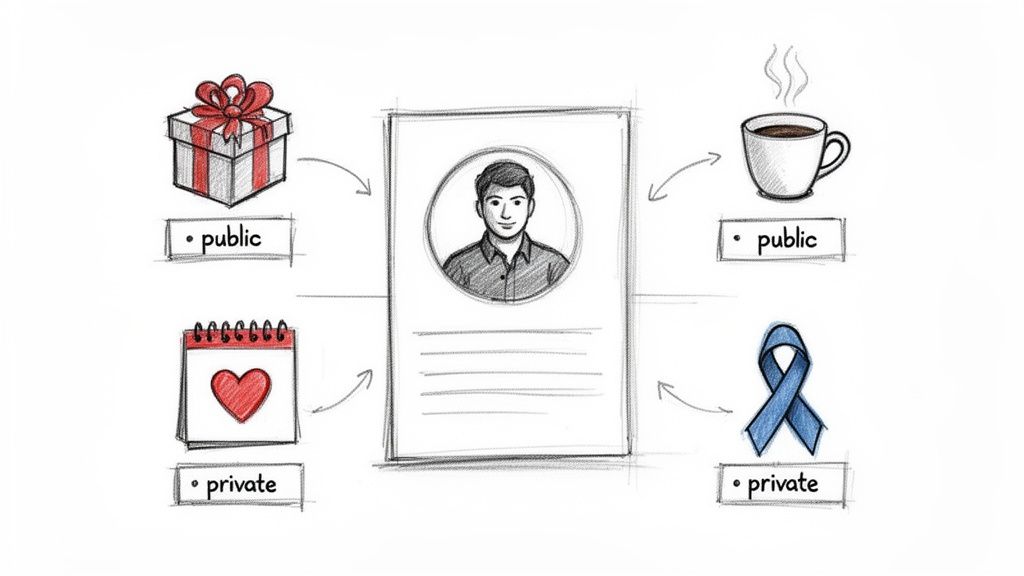
By using data to understand these individual preferences, organisations can ensure their appreciation efforts land with maximum impact. This strategy demonstrates a deeper level of care, showing employees they are seen and valued as unique individuals, not just as numbers on a spreadsheet. It transforms recognition from a generic gesture into a meaningful, personal experience.
How to Implement Customized Appreciation
A data-driven strategy is key to implementing personalized recognition effectively. It requires gathering insights and empowering managers to act on them.
- Gather Preference Data Early: Include questions about recognition preferences in your onboarding surveys. Ask simple questions like, "How do you prefer to be recognized for great work? (e.g., public praise, private feedback, a small gift, time off)."
- Train Managers on Personalization: Equip leaders with the understanding and tools to appreciate their team members in ways that are personally meaningful. This includes training on how to have conversations about preferences and how to use available data.
- Offer a Flexible Rewards Catalogue: Implement systems that offer a diverse range of rewards. This allows employees to choose from gift cards, experiences, charitable donations, or other options that best suit their tastes, ensuring the reward has personal value.
- Leverage Continuous Feedback for Insights: Use a business intelligence tool like Wurkn to analyze sentiment data from anonymous feedback channels. Its ability to surface trends and qualitative insights reveals which types of appreciation correlate most strongly with positive engagement and morale boosts within different teams or demographics.
6. Executive Visibility and Leadership Recognition
Recognition from a manager is impactful, but acknowledgement from an executive or C-suite leader carries a unique weight. This staff appreciation idea focuses on creating deliberate opportunities for senior leadership to visibly recognise and engage with employees. When executives take the time to highlight specific contributions, it signals that an individual's work is valued at the highest levels of the organisation, aligning their efforts directly with strategic priorities.
This approach powerfully validates employee contributions and bridges the gap between daily tasks and overarching company goals. Hearing praise directly from a CEO or VP, whether in a town hall or a personal message, can be a profound motivator and a memorable career moment. It demonstrates that leadership is connected to and appreciative of the work happening across all departments.
How to Implement Executive Visibility and Recognition
A successful executive recognition strategy feels authentic and is integrated into the regular rhythm of the business, not just reserved for annual reviews.
- Source Meaningful Stories: Use a business intelligence tool like Wurkn to surface impactful stories and achievements. Its analytical dashboard can identify trends and specific examples of employees exemplifying core values, giving executives the specific details needed to deliver genuine, informed praise.
- Schedule Regular Listening Sessions: Organise monthly or quarterly "ask me anything" sessions or informal roundtables with senior leaders. This creates a direct channel for communication and shows that executives are invested in hearing employee perspectives and concerns.
- Acknowledge Feedback Themes: When presenting results from company-wide feedback initiatives, have executives speak directly to the themes that emerged. Acknowledging what the company heard and outlining the subsequent actions shows that employee voices are driving organisational change.
- Promote Psychological Safety: Ensure that interactions with leadership are positive and supportive, not intimidating. Train leaders to foster an environment where employees feel comfortable sharing ideas and asking questions without fear of negative repercussions.
- Ensure Equitable Recognition: Actively work to recognise employees from all departments, levels, and locations. A common pitfall is over-indexing on sales wins or engineering breakthroughs; make a conscious effort to highlight achievements in operations, marketing, HR, and other vital areas to ensure fairness.
7. Inclusive Team Celebrations and Social Events
Organised team celebrations and social events are a classic staff appreciation idea, but their true value lies in fostering genuine belonging and community. For modern remote and hybrid organisations, this requires moving beyond traditional, one-size-fits-all gatherings. Truly effective events are intentionally inclusive, accessible, and designed to resonate with a diverse workforce, ensuring every team member feels seen and valued.
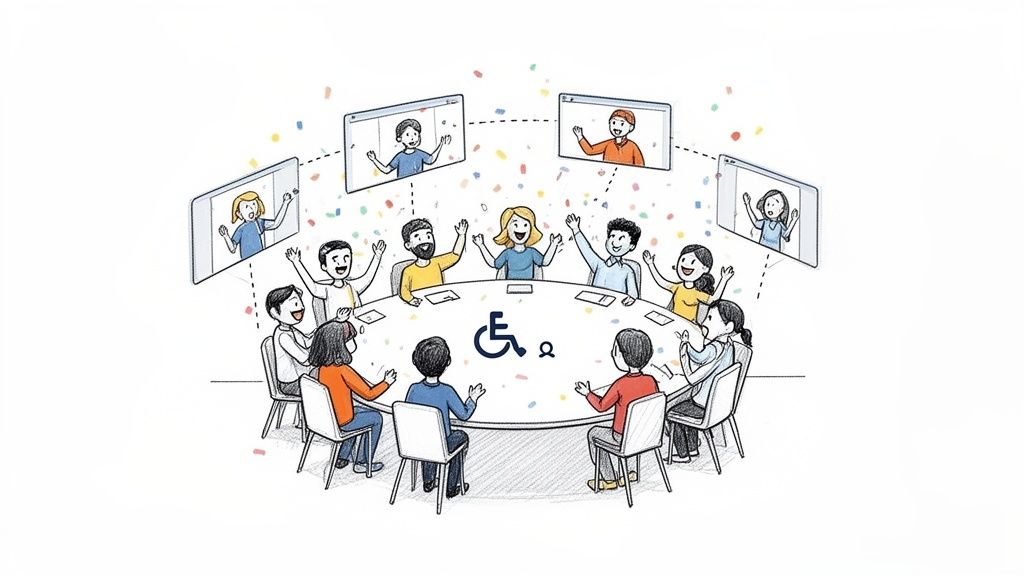
This approach means rethinking defaults like alcohol-centric happy hours and embracing a wider range of activities. By accommodating different cultures, abilities, life stages, and personal preferences, you create shared experiences that strengthen connections rather than unintentionally excluding segments of your team. This thoughtful planning transforms a simple get-together into a powerful act of appreciation.
How to Implement Inclusive Team Celebrations
Building an inclusive event strategy requires proactive planning and a commitment to hearing employee voices. It's about co-creating experiences that celebrate your unique team.
- Survey Your Team's Preferences: Don't assume you know what your employees want. Use a tool like Wurkn to deploy pulse surveys asking about preferred event formats, times, and activities. This data provides a clear roadmap for planning events that will actually be appreciated.
- Prioritise Accessibility and Inclusion: During planning, proactively ask about accessibility needs, dietary restrictions, and other considerations. For hybrid events, ensure the experience is equitable for both remote and in-office attendees. For example, record key moments for those in different time zones.
- Celebrate Cultural Diversity: Move beyond a narrow set of holidays. Create a shared calendar of global holidays and cultural events represented within your team. Organise celebrations or share educational resources with rotating themes to honour the diversity of your workforce.
- Measure the Impact on Sentiment: To validate the effectiveness of your efforts, measure employee sentiment before and after events. Using a business intelligence tool like Wurkn, you can correlate event attendance with sentiment data to understand which initiatives are truly boosting morale and a sense of belonging.
8. Autonomy and Decision-Making Authority Recognition
One of the most impactful staff appreciation ideas involves rewarding high-performers not just with praise, but with increased trust and ownership. Granting greater autonomy and decision-making authority shows employees you value their judgment and capabilities, empowering them to take direct ownership of their work and its outcomes. This form of recognition is often more meaningful and motivating for skilled professionals than a one-time bonus.
This approach acknowledges that true appreciation is about enabling growth and impact. By expanding an employee's sphere of influence, you are actively investing in their development and demonstrating confidence in their future contributions. Empowering teams to make independent decisions within a clear framework can lead to exceptional innovation and accountability.
How to Implement Autonomy as Recognition
Successfully granting autonomy requires a clear framework that empowers employees without creating chaos. It's a strategic move to build leadership and drive engagement from the ground up.
- Be Explicit About Boundaries: Clearly define the scope of new decision-making authority. Provide a "safe-to-try" framework where employees understand the parameters within which they can experiment and make calls independently.
- Rotate Leadership Opportunities: Recognise emerging leaders by giving them the chance to spearhead a new project, lead a team meeting, or mentor a junior colleague. This provides valuable experience and makes your appreciation tangible.
- Celebrate Autonomy-Driven Wins: When an employee-led initiative succeeds, celebrate it publicly. Highlight how their independent decisions and ownership led to the positive result, reinforcing the value of this approach.
- Measure the Impact: Utilise a business intelligence tool like Wurkn to track sentiment related to empowerment and autonomy. By analysing continuous feedback, you can correlate increased decision-making authority with key metrics like employee engagement, innovation rates, and retention, proving the ROI of this powerful recognition strategy.
9. Cause-Based and Volunteer Recognition Programs
Authentic staff appreciation ideas extend beyond professional achievements to recognise the whole person, including their values and passions. Cause-based and volunteer recognition programs honour employees' commitment to making a positive impact by supporting the causes they care about most. This approach connects their daily work to a greater sense of purpose and demonstrates that the organisation values what they value.
This method transforms appreciation from a transactional reward into a meaningful partnership. By offering volunteer time off (VTO), matching charitable donations, or organising company-wide service days, you show that your organisation is invested in both your employees' and your community's well-being. This powerfully reinforces organisational values and strengthens employee loyalty.
How to Implement a Cause-Based Recognition Program
A successful program requires more than just offering opportunities; it must be inclusive, genuine, and directly tied to what your employees are passionate about.
- Discover What Matters to Your Team: Before launching, use a business intelligence tool like Wurkn to survey employees and analyse sentiment to identify the causes and charities that resonate most deeply with them. This data-driven approach ensures your efforts are meaningful and well-received.
- Make Volunteering Accessible: Structure your program to be inclusive for all, regardless of role, physical ability, or location. Offer a mix of in-person events, remote skill-based volunteering opportunities, and flexible VTO that employees can use for individual activities.
- Celebrate Contributions Publicly: Shine a spotlight on employees' volunteer efforts with the same energy you give to work achievements. Feature their stories in company newsletters, all-hands meetings, or on dedicated communication channels to inspire others and reinforce a culture of service.
- Measure the Impact on Purpose: Track how these initiatives affect key metrics. Wurkn can help you correlate participation in volunteer programs with shifts in employee sentiment around purpose, belonging, and organisational pride, providing clear evidence of your program's ROI on culture.
10. Feedback-Responsive Recognition and Continuous Adaptation
Feedback-responsive recognition is an advanced staff appreciation idea that treats your programs as living systems, not static policies. This meta-approach involves systematically capturing employee feedback on how they prefer to be recognised, then using that data to continuously evolve your initiatives. It shifts the focus from assuming what employees want to actively listening and adapting, ensuring your efforts remain meaningful and impactful.
This strategy creates a powerful feedback loop where appreciation evolves to match the actual preferences of your team. By making recognition a two-way conversation, you demonstrate a profound level of respect for employee voices, significantly boosting the perceived value and sincerity of your programs. It’s the ultimate way to ensure your gestures of appreciation truly land as intended.
How to Implement Feedback-Responsive Recognition
Building a responsive system requires a commitment to listening and a clear process for turning insights into action. The goal is to make adaptation a core feature of your recognition culture.
- Establish "Always-On" Feedback Channels: Move beyond annual surveys. Utilise a business intelligence platform like Wurkn to enable continuous, low-friction feedback collection. This prevents survey fatigue while capturing real-time sentiment about what’s working and what isn’t in your recognition efforts.
- Create Transparent Action Timelines: When you receive feedback, communicate a clear timeline for review and potential implementation. Employees need to see that their input leads to tangible change, which encourages future participation.
- Visualise the Impact: Publish internal dashboards or communications that explicitly connect feedback themes to program changes. For example, show a chart of feedback requesting more non-monetary rewards, followed by the announcement of a new professional development initiative. This closes the loop and validates employees' contributions.
- Empower Manager-Led Adaptation: Train managers to solicit and respond to recognition feedback within their own teams. Wurkn’s AI can help by identifying emerging themes at a team level, allowing managers to tailor their appreciation style before minor issues become major morale problems.
By treating your staff appreciation ideas as an agile process, you build a resilient and highly personalised culture where every employee feels genuinely seen and valued. This continuous adaptation ensures your investment in appreciation delivers maximum returns in engagement and retention.
10-Point Staff Appreciation Comparison
| Approach | 🔄 Implementation Complexity | ⚡ Resource Requirements | ⭐ Expected Outcomes / Effectiveness | 📊 Key Advantages / Impact | 💡 Ideal Use Cases |
|---|---|---|---|---|---|
| Peer Recognition Programs with Real-Time Feedback Integration | Medium — integrations + governance | Low–Medium — platform + light admin | ⭐⭐⭐ High — boosts engagement & visibility | 📊 Real-time sentiment, peer-driven morale lift | 💡 Distributed teams using Slack/Teams; daily appreciation goals |
| Flexible PTO and Wellness Days with Sentiment Tracking | Medium — policy design + tracking | Medium–High — coverage & budget implications | ⭐⭐⭐ High — reduces burnout; improves retention | 📊 Direct wellbeing signals; measurable sentiment change | 💡 Remote/hybrid orgs with burnout risk |
| Skills Development and Career Pathing Recognition | Medium–High — LMS & career frameworks | High — learning budgets, mentors, platforms | ⭐⭐⭐ High — improves retention & performance | 📊 Builds internal mobility and succession pipelines | 💡 Growth-focused companies; technical or high-skill roles |
| Transparent Compensation and Equity Recognition | High — audits, legal, policy overhaul | High — analytics, possible salary adjustments | ⭐⭐⭐⭐ Very high — trust, fairness, retention gains | 📊 Reduces equity risk; attracts fairness-driven talent | 💡 Organizations addressing pay gaps or scaling rapidly |
| Customized Appreciation Based on Personality and Preferences | Medium — preference capture & maintenance | Medium — surveys, catalogs, manager training | ⭐⭐⭐ High — more meaningful, higher perceived value | 📊 Reduces wasted rewards; improves personalization impact | 💡 Diverse workforces; programs prioritizing individual fit |
| Executive Visibility and Leadership Recognition | Medium — scheduling + exec coaching | Low–Medium — executive time and comms support | ⭐⭐⭐ High — amplifies recognition credibility | 📊 Strengthens top-down alignment and trust | 💡 When leadership needs to signal priorities or connect directly |
| Inclusive Team Celebrations and Social Events | Medium — hybrid logistics & accessibility planning | Medium — event budgets, facilitation resources | ⭐⭐⭐ Medium–High — increases belonging & cohesion | 📊 Creates shared cultural moments; boosts psychological safety | 💡 Remote/hybrid teams building community and inclusion |
| Autonomy and Decision-Making Authority Recognition | Medium–High — change management & guardrails | Low–Medium — manager training, governance | ⭐⭐⭐ High — increases ownership and engagement | 📊 Develops leaders; drives discretionary effort | 💡 Knowledge-work environments valuing empowerment |
| Cause-Based and Volunteer Recognition Programs | Low–Medium — program setup & vetting | Medium — VTO, matching funds, coordination | ⭐⭐ Medium — strengthens purpose alignment | 📊 Enhances values alignment and external brand | 💡 Values-driven orgs and CSR-focused teams |
| Feedback-Responsive Recognition and Continuous Adaptation | High — continuous feedback systems & analysis | High — tooling, analytics, action capacity | ⭐⭐⭐⭐ Very high — evidence-based cultural improvement | 📊 Closes feedback loop; links recognition to KPIs | 💡 Data-driven organizations seeking adaptive culture change |
From Appreciation to Intelligence: Building a Responsive Culture
The journey through this extensive list of staff appreciation ideas reveals a powerful, unifying theme: appreciation is not an action, but an outcome. It’s the result of a deliberate, well-organised, and continuously refined cultural strategy. Moving beyond generic gift cards and once-a-year parties requires a fundamental shift in perspective. The most impactful initiatives are those that are personalised, aligned with company values, and, most importantly, informed by what your employees actually want and need.
We’ve explored a spectrum of ideas, from low-budget, high-impact peer recognition programs to significant investments in career pathing and transparent compensation. The key takeaway is not to implement every idea, but to build a system that allows you to choose the right ideas for your specific teams. A feedback-responsive approach, as detailed in our final point, is the engine that drives this system, transforming your efforts from a series of disconnected events into a cohesive, intelligent appreciation program.
Key Insights for Actionable Strategy
As you move from reading to implementation, keep these core principles at the forefront of your planning:
- Personalisation Over Generalisation: The most meaningful recognition acknowledges the individual. Understanding whether an employee prefers public praise, a quiet bonus, or an extra day off is critical. This level of insight prevents well-intentioned efforts from falling flat.
- Connection to Impact: Appreciation is most powerful when it’s tied to specific contributions. Linking recognition to company goals, successful project outcomes, or demonstrated company values reinforces desirable behaviours and shows employees their work has a tangible, recognised impact.
- Consistency and Fairness: A successful appreciation framework must be perceived as equitable and consistent. It cannot be limited to certain departments or favouritism. Establishing clear criteria and democratising recognition through peer-led systems helps build trust and ensures everyone feels they have an equal opportunity to be valued.
From Static Surveys to Continuous Intelligence
The traditional model of relying on annual engagement surveys to gauge employee sentiment is no longer sufficient. By the time you collect, analyse, and act on that data, it's already outdated. The modern workplace, especially in remote and hybrid environments, demands a more agile, real-time approach.
The ultimate goal is to create a responsive organisation that listens, understands, and adapts to the needs of its people in real time. Static approaches can't provide the velocity of insight required to stay ahead of cultural challenges like burnout and disengagement.
This is where the concept of cultural business intelligence becomes a game-changer. Imagine being able to correlate a dip in team morale with a recent project deadline, or seeing a direct lift in sentiment after launching a new wellness initiative. This isn't about surveillance; it's about understanding the anonymous, aggregate pulse of your organisation.
By leveraging a tool that provides continuous, anonymous sentiment analysis from everyday work conversations, COOs and People Ops leaders can move from guessing what employees value to knowing. This living dashboard of your company’s cultural health allows you to diagnose issues early, validate your staff appreciation ideas, and directly link your efforts to hard metrics like retention, productivity, and even revenue. True, sustainable appreciation isn't just a program, it's the natural output of a culture built on trust, responsiveness, and genuine intelligence.
Stop guessing and start knowing what truly motivates your team. Discover how Wurkn transforms anonymous employee feedback into actionable business intelligence, helping you design staff appreciation ideas that demonstrably improve retention and performance. Visit Wurkn to see how our platform connects culture to your bottom line.