

Every People Ops leader has faced the challenge of turning a group of talented individuals into a truly united team. Culture does not just happen on its own. It is shaped by shared values and everyday interactions that ripple out to influence employee engagement and business results. Understanding what organizational culture really means helps leaders design work environments where employees feel motivated, connected, and ready to contribute to overall performance.
Table of Contents
- What Organizational Culture Really Means
- Major Types And Key Traits Compared
- How Culture Drives Employee Sentiment
- Measuring And Linking Culture To KPIs
- Shaping Culture For Strong Performance
Key Takeaways
| Point | Details |
|---|---|
| Understanding Organizational Culture | It is a dynamic system of shared values, norms, and behaviours that influences workplace interactions and effectiveness. |
| Types of Organizational Culture | Different cultural types such as Hierarchical, Clan, Adhocracy, and Market each have unique impacts on employee experience and performance. |
| Culture and Employee Sentiment | A strong organizational culture shapes employee attitudes and motivation, creating an environment of psychological safety and shared purpose. |
| Measuring Culture’s Impact | Systematic methodologies are essential to quantify cultural attributes and link them to key performance indicators, facilitating strategic decision-making. |
What Organizational Culture Really Means
Organizational culture represents the intricate tapestry of shared meanings, behaviours, and fundamental assumptions that define how work gets done within an organisation. Critical assumptions shape workplace interactions through complex patterns of collective understanding and social dynamics.
At its core, organizational culture encompasses several key dimensions that transform a workplace from a simple collection of individuals into a cohesive, interconnected system:
- Shared Values: The fundamental beliefs that guide employee behaviour
- Collective Norms: Unwritten rules that determine acceptable workplace conduct
- Underlying Assumptions: Deep-rooted perspectives that unconsciously influence decision-making
- Communication Patterns: How information flows and interactions occur within the organisation
These elements work together dynamically, creating a unique organisational identity that distinguishes one workplace from another. Systematic cultural dimensions influence effectiveness by providing a framework for employee engagement, strategic alignment, and performance.
Understanding organizational culture requires recognizing it as a living, evolving system. It’s not a static document or a set of prescribed rules, but a continuous process of collective meaning-making that adapts to internal changes and external challenges.
Pro tip: Regularly assess your organizational culture through anonymous feedback mechanisms to identify emerging patterns and potential areas of transformation.
Major Types and Key Traits Compared
Organizational culture exists in multiple distinctive types, each with unique characteristics that profoundly impact workplace dynamics and employee experiences. Organizational culture types significantly influence employee behaviour through specific cultural dimensions that shape workplace interactions.
Researchers have identified several primary organizational culture types, each with distinctive traits:
- Hierarchical Culture: Emphasizes stability, control, and formal structures
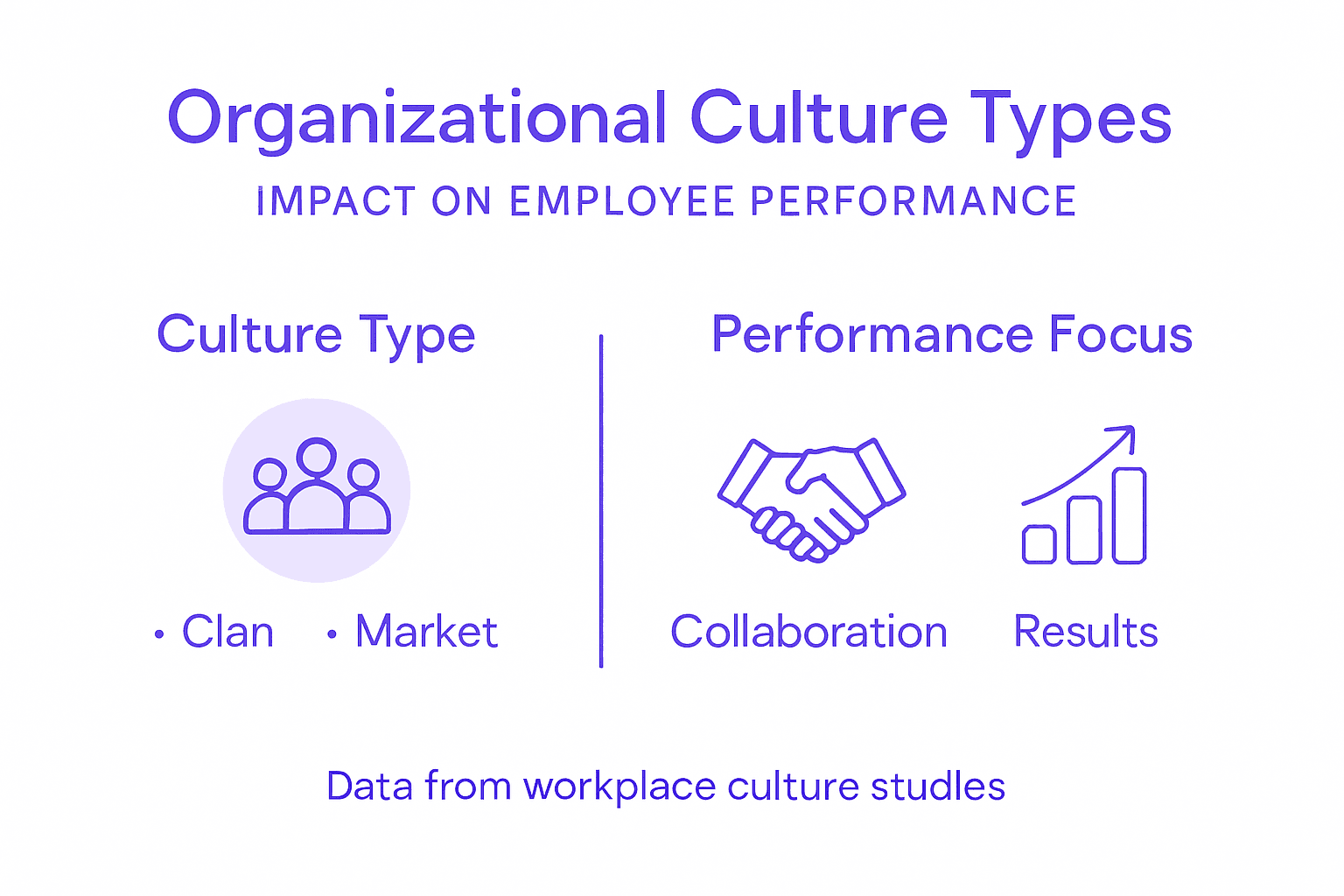
- Clan Culture: Focuses on collaboration, teamwork, and family-like relationships
- Adhocracy Culture: Prioritizes innovation, creativity, and dynamic problem-solving
- Market Culture: Driven by competition, achievement, and results-oriented performance
Each culture type presents unique strengths and potential challenges. Cross-cultural analysis reveals nuanced workplace dynamics that demonstrate how these cultural frameworks influence employee engagement and organisational effectiveness.
Different organizational culture types create distinct workplace experiences that directly impact employee motivation, commitment, and overall performance.
Understanding these culture types allows leaders to strategically align their organisational structure with desired outcomes, recognizing that culture is not a one-size-fits-all concept but a complex, adaptive system tailored to specific organisational goals and contexts.
The following table summarises how different organisational culture types can impact employee experience and business performance:
| Culture Type | Strength for Staff | Potential Challenge | Impact on Outcomes |
|---|---|---|---|
| Hierarchical | Clear roles and predictability | Resistance to change | High consistency, slow innovation |
| Clan | Strong sense of belonging | Blurred authority lines | High engagement, risk of groupthink |
| Adhocracy | Fosters creativity | Can disrupt stability | Rapid adaptation, variable results |
| Market | Drives results focus | Risk of burnout | High performance, competitive tension |
Pro tip: Conduct periodic cultural assessments to understand your current organisational culture type and identify potential areas for strategic cultural transformation.
How Culture Drives Employee Sentiment
Organizational culture fundamentally shapes employee attitudes by creating a complex ecosystem of shared values, expectations, and psychological experiences. These cultural dynamics act as an invisible infrastructure that profoundly influences how employees perceive their work, interact with colleagues, and engage with organisational goals.
The mechanisms through which culture drives employee sentiment are multifaceted and interconnected:
- Psychological Safety: Creates an environment where employees feel comfortable expressing ideas
- Shared Purpose: Generates collective motivation and alignment with organisational objectives
- Recognition Frameworks: Establishes how achievements and contributions are valued
- Communication Norms: Defines acceptable interaction patterns and feedback mechanisms
Research demonstrates that workplace culture directly impacts employee motivation by providing a sense of belonging and meaningful connection to broader organisational narratives. When employees feel their individual contributions are understood and appreciated within a supportive cultural context, their emotional commitment and discretionary effort significantly increase.
Organizational culture is not just a background element, but the primary mechanism through which employee sentiment is generated, maintained, and transformed.
Leaders who understand these nuanced cultural dynamics can strategically design workplace environments that naturally elevate employee engagement, reduce turnover, and create sustainable performance ecosystems.
Pro tip: Regularly map your organisational culture’s emotional landscape through anonymous, comprehensive sentiment assessments to identify subtle shifts in employee perception.
Measuring and Linking Culture to KPIs
Organizational culture measurement requires systematic methodologies that transform qualitative cultural attributes into quantifiable performance indicators. This approach enables leaders to translate abstract cultural dynamics into concrete, actionable business insights that drive strategic decision-making.
Key strategies for measuring and linking culture to KPIs include:
- Comprehensive Culture Audits: Holistic assessments of organisational values and behaviours
- Sentiment Analysis: Quantifying employee emotional engagement and perception
- Performance Correlation Studies: Mapping cultural attributes to specific business outcomes
- Longitudinal Tracking: Monitoring cultural evolution and its impact over time
Systematic tools enable quantitative culture assessments that connect cultural metrics directly to critical business performance indicators. By establishing clear relationships between cultural attributes and key metrics like employee retention, innovation rates, and productivity, organisations can develop targeted interventions to optimize their workplace ecosystem.
Culture measurement is not about capturing a static snapshot, but understanding a dynamic, evolving system of organisational interactions and underlying values.
Successful culture measurement transcends traditional survey approaches, requiring sophisticated analytical frameworks that capture nuanced emotional and behavioural patterns within complex organisational environments.
Here is a quick reference showing how key strategies link culture with measurable KPIs:
| Measurement Strategy | Example KPI Linked | Value for Organisation |
|---|---|---|
| Culture Audits | Employee retention rate | Identifies engagement drivers |
| Sentiment Analysis | eNPS (Net Promoter Score) | Tracks shifts in morale |
| Performance Correlation | Innovation output | Reveals culture-impact linkages |
| Longitudinal Tracking | Productivity trends | Monitors progress over time |
Pro tip: Develop a multi-dimensional culture measurement framework that integrates quantitative metrics with qualitative insights to create a comprehensive performance intelligence system.
Shaping Culture for Strong Performance
Strategic leadership actions transform organizational culture by deliberately embedding core values into daily operational practices. This intentional approach enables organisations to align cultural dynamics with performance objectives, creating a responsive and adaptive workplace ecosystem.
Key strategies for shaping high-performance culture include:
- Value Alignment: Consistently communicating and demonstrating organisational core values
- Behavioural Recognition: Systematically acknowledging and rewarding desired cultural behaviours
- Leadership Modelling: Ensuring senior leaders exemplify desired cultural attributes
- Continuous Learning: Creating environments that support skill development and innovation
Organizational culture management drives competitive advantage by strategically reinforcing practices that enhance employee commitment and organizational citizenship. By understanding how cultural elements influence workforce performance, leaders can design targeted interventions that promote efficiency, adaptability, and sustainable growth.
Culture transformation is not a one-time event, but a continuous process of intentional organisational development.
Successful cultural shaping requires a holistic approach that integrates systematic measurement, leadership commitment, and responsive adaptation to emerging workplace dynamics.
Pro tip: Implement a quarterly culture assessment process that tracks cultural evolution and provides actionable insights for continuous organizational improvement.
Transform Your Organizational Culture Into Measurable Success
Understanding the complex influence of organizational culture on employee sentiment and business outcomes is essential for leaders seeking real change. This article highlights key challenges like measuring cultural dynamics, linking them to KPIs, and shaping culture to boost performance. If you want to move beyond static surveys and uncover continuous, actionable insights into how culture drives motivation, retention, and productivity, there is a solution.
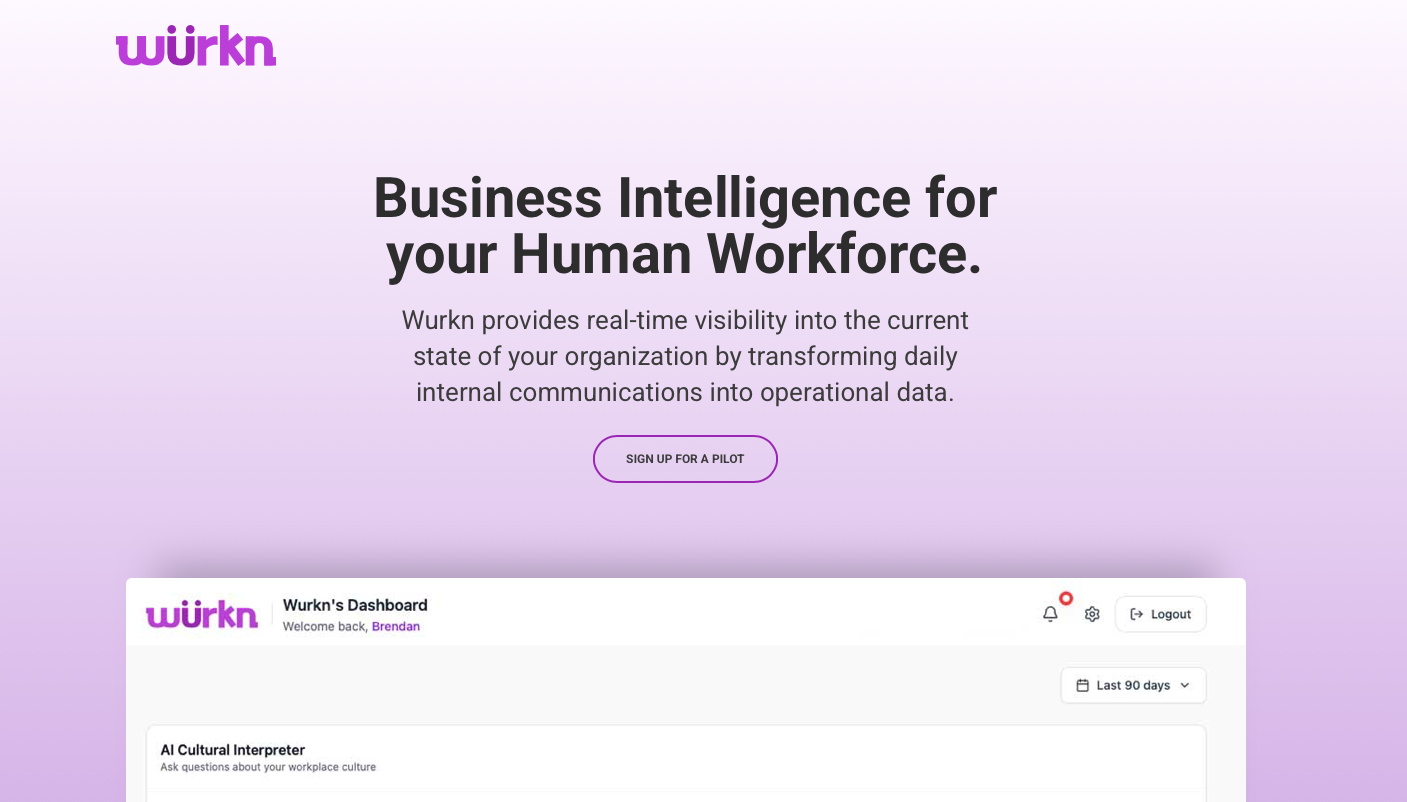
Wurkn is designed exactly for CXOs and PeopleOps teams who need a real-time window into their workplace culture. By gathering always-on, anonymous feedback from Slack, Microsoft Teams, and other familiar platforms, Wurkn captures rich cultural intelligence without disrupting workflows. With a fully anonymized approach and AI-powered analysis, Wurkn helps you pinpoint the emotional tone, uncover hidden drivers, and directly link cultural signals to your business KPIs. Experience how you can track culture’s impact on performance every day and react quickly to boost engagement and reduce churn. Start transforming your organizational culture today with Wurkn and gain the confidence to lead with clarity and purpose.
Frequently Asked Questions
What is organizational culture?
Organizational culture refers to the shared values, beliefs, and behaviours that shape how work is done within an organization. It encompasses aspects like communication patterns, norms, and underlying assumptions, creating a unique identity for each workplace.
How does organizational culture impact employee performance?
Organizational culture significantly influences employee performance by shaping engagement, motivation, and overall workplace satisfaction. A positive culture can enhance commitment and productivity, while a negative culture may lead to disengagement and high turnover rates.
What are the main types of organizational culture?
The primary types of organizational culture include hierarchical culture, clan culture, adhocracy culture, and market culture. Each type has its strengths and potential challenges that can shape employee experiences and business outcomes.
How can organizations measure their culture?
Organizations can measure their culture through comprehensive culture audits, sentiment analysis, performance correlation studies, and longitudinal tracking. These methods help translate qualitative cultural attributes into quantifiable performance indicators, providing actionable insights for leaders.
Recommended
- Positive Workplace Culture: Boosting Employee Engagement, Morale, and Revenue – Wurkn
- Optimizing Employee Morale with Performance Improvement Plan – Wurkn
- People and Culture: A Guide to Driving Business Performance
- What Is Organizational Culture And Why It Matters
- Job Fit Definition: Boost Retention With Personality Data