

Talent retention can feel like a moving target when new work models and cultural priorities reshape what matters to top performers. As HR leaders navigate these shifts, the ability to keep talent engaged and committed now hinges on more than salaries alone. This article explores how real-time feedback and meaningful engagement strategies help mid-sized tech companies worldwide adapt, connecting modern workforce expectations with dynamic approaches to retention.
Table of Contents
- Talent Retention Defined In Modern Workplaces
- Key Drivers Influencing Employee Retention
- Effective Strategies For Retaining Top Talent
- Role Of Real-Time Cultural Intelligence Tools
- Risks, Costs, And Pitfalls In Retention Efforts
Key Takeaways
| Point | Details |
|---|---|
| Talent Retention is Multifaceted | Successful retention strategies require a deep understanding of individual motivations, workplace culture, and organisational goals. |
| Psychological Contract Matters | Employees evaluate their work experience based on emotional investment, growth opportunities, and alignment with organisational purpose. |
| Cultural Intelligence Tools are Essential | Implementing real-time cultural intelligence helps organisations proactively manage retention by analysing employee sentiment and engagement. |
| Proactive Strategies Reduce Turnover | Organisations that take proactive measures to address employee concerns and needs can significantly mitigate retention risks and costs. |
Talent Retention Defined in Modern Workplaces
Talent retention represents a strategic organisational imperative focused on creating workplace environments that consistently motivate, engage, and sustain high-performing employees. In contemporary business landscapes, retention goes beyond traditional compensation models, encompassing holistic approaches that address psychological, professional, and cultural dimensions of workforce engagement.
The evolution of talent retention strategies has been profoundly influenced by changing workforce dynamics. Systematic reviews of embeddedness theory reveal complex, multi-level factors driving employee commitment and organisational loyalty. These factors include:
- Individual job satisfaction levels
- Organisational culture and values alignment
- Professional development opportunities
- Work-life balance considerations
- Meaningful engagement and recognition programs
Modern workplaces recognise that talent retention is not a one-size-fits-all proposition. Successful strategies require nuanced understanding of individual employee motivations, organisational goals, and the intricate psychological contracts that bind talented professionals to their workplace.
Psychological Dimensions play a critical role in retention. Employees seek environments where they feel valued, challenged, and connected to broader organisational missions. This involves creating transparent communication channels, offering meaningful career progression pathways, and developing inclusive workplace cultures that respect individual contributions.
Retention Drivers extend beyond monetary compensation. Top talent increasingly prioritises:
- Meaningful work experiences
- Continuous learning opportunities
- Flexible work arrangements
- Strong interpersonal workplace relationships
- Clear career development trajectories
Pro tip: Conduct regular, anonymous sentiment assessments to understand underlying retention challenges before they escalate into talent loss.
Key Drivers Influencing Employee Retention
Employee retention represents a complex ecosystem of interconnected factors that organisations must strategically manage to sustain high-performing workforces. Comprehensive theoretical frameworks reveal multiple intricate drivers that collectively shape workforce stability and commitment.
The contemporary landscape of employee retention is characterised by several critical dimensions:
- Job satisfaction and meaningful work experiences
- Clear career development pathways
- Organisational culture and values alignment
- Leadership quality and interpersonal dynamics
- Competitive compensation and benefits structures
- Work-life balance considerations
Psychological Contract Factors play a pivotal role in retention strategies. Employees increasingly evaluate their workplace experiences through multidimensional lenses that extend far beyond traditional monetary compensation. These include emotional investment, professional growth opportunities, and alignment with organisational purpose.
Empirical investigations into generational workforce dynamics highlight the evolving nature of retention drivers. Post-pandemic workforce expectations have dramatically transformed, emphasising:
- Flexible working arrangements
- Mental health support systems
- Personalised career progression frameworks
- Transparent communication channels
- Inclusive and adaptive workplace cultures
Organisations must recognise that retention is not a static concept but a dynamic process requiring continuous adaptation to changing workforce expectations and individual professional aspirations.

Pro tip: Develop comprehensive, personalised retention strategies that balance organisational objectives with individual employee needs and aspirations.
Effective Strategies for Retaining Top Talent
Talent retention demands a sophisticated, multi-dimensional approach that goes beyond traditional compensation models. Comprehensive retention strategies emphasize integrating holistic practices that address the complex needs of modern workforce demographics.
Organisations must develop nuanced strategies that encompass multiple dimensions of employee engagement:
- Total rewards management
- Professional development pathways
- Flexible work arrangements
- Mental health and wellness support
- Meaningful organisational culture
- Advanced leadership development
Intrinsic Motivation Factors are particularly crucial for retaining high-performing talent. Modern employees seek more than monetary compensation; they desire meaningful work experiences that align with their personal and professional aspirations. This requires creating environments that foster genuine connection, continuous learning, and purposeful professional growth.
Advanced retention approaches reveal the importance of customising strategies across different workforce generations and cultural contexts. Key focus areas include:
- Personalised career progression frameworks
- Technology-enabled flexible working options
- Comprehensive professional development programmes
- Transparent communication channels
- Robust mental health support systems
Successful talent retention is not about implementing generic programmes, but creating adaptive, responsive strategies that recognise the unique aspirations and potential of individual employees.
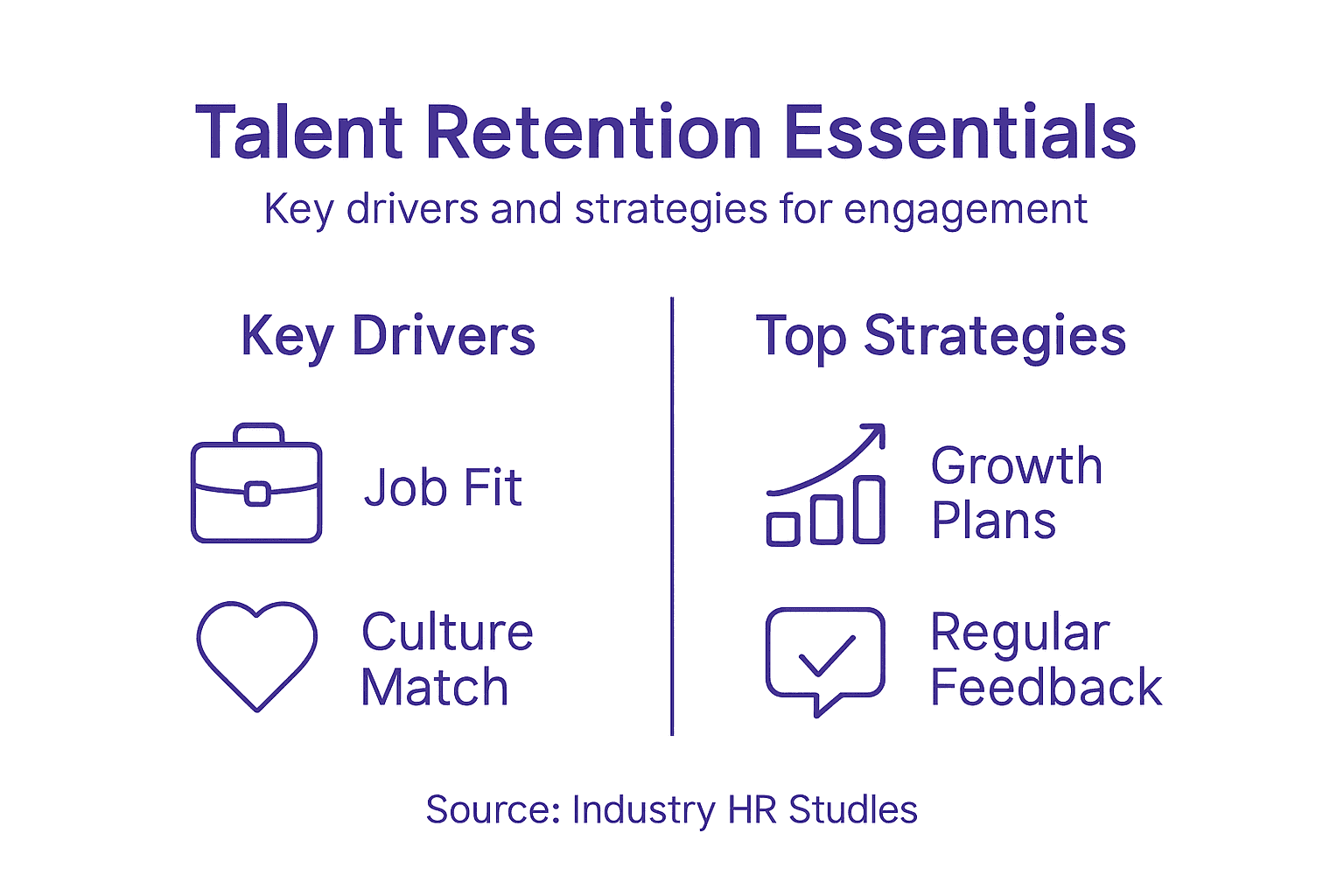
Pro tip: Conduct regular, confidential employee sentiment assessments to continuously refine and personalise your retention strategies.
Role of Real-Time Cultural Intelligence Tools
Cultural intelligence tools represent a transformative approach to understanding and managing workforce dynamics in modern organisations. Emerging talent management strategies highlight the critical role of real-time cultural intelligence in attracting and retaining diverse, multi-generational talent.
These sophisticated platforms enable organisations to capture and analyse nuanced workplace sentiment through multiple dimensions:
- Continuous anonymous feedback mechanisms
- Cross-generational communication insights
- Emotional tone and psychological engagement tracking
- Personalised workforce experience mapping
- Proactive retention risk identification
- Cultural alignment measurement
Technological Integration is fundamental to modern cultural intelligence approaches. By leveraging advanced analytics and machine learning, organisations can move beyond static survey models to develop dynamic, responsive engagement strategies that adapt to evolving workforce expectations.
Talent management platforms demonstrate how data-driven cultural intelligence supports comprehensive organisational development. Key capabilities include:
- Real-time sentiment analysis
- Predictive retention modelling
- Personalised development recommendations
- Inclusive workplace culture diagnostics
- Strategic workforce planning insights
Successful implementation requires a holistic approach that balances technological capabilities with human-centred design principles, ensuring that data collection enhances rather than replaces genuine human connection.
Here’s a summary of how cultural intelligence tools enhance retention efforts compared to traditional approaches:
| Approach | Key Capabilities | Employee Impact | Organisational Impact |
|---|---|---|---|
| Traditional Surveys | Periodic feedback collection | Limited real-time insights | Delayed issue resolution |
| Cultural Intelligence Tools | Real-time sentiment monitoring | Personalised experience, fast action | Proactive retention strategies |
| Basic Data Analytics | Engagement score tracking | Generic interventions | High turnover risk |
| Advanced Analytics Platforms | Predictive retention modelling | Early support for at-risk talent | Improved workforce planning |
Pro tip: Implement cultural intelligence tools with transparent communication, emphasising how these platforms will improve employee experience rather than serve as surveillance mechanisms.
Risks, Costs, and Pitfalls in Retention Efforts
Employee turnover represents a complex challenge with substantial financial and operational implications for organisations. Hidden costs of employee turnover extend far beyond immediate recruiting expenses, impacting organisational performance and institutional knowledge.
The most critical risks and potential pitfalls in retention efforts include:
- Significant financial losses from recruitment and training
- Disruption of team dynamics and productivity
- Loss of institutional knowledge and expertise
- Decreased employee morale and engagement
- Potential reputation damage in competitive talent markets
- Increased workload for remaining team members
Financial Implications are particularly profound. Studies suggest that replacing a single employee can cost between 50-200% of their annual salary, creating substantial economic strain on organisations. These costs encompass:
- Direct recruitment expenses
- Onboarding and training investments
- Productivity lag during transition periods
- Potential errors from inexperienced replacements
- Indirect morale and cultural disruption
Workforce retention strategies reveal that proactive approaches can mitigate these risks by addressing underlying employee development needs and creating clear career progression pathways.
The following table contrasts the impacts of proactive vs. reactive retention strategies:
| Strategy Type | Timing of Action | Outcome for Employees | Outcome for Organisation |
|---|---|---|---|
| Proactive | Before disengagement | Higher engagement and morale | Lower turnover costs |
| Reactive | After retention issues | Delayed improvements, uncertainty | Lost expertise, reputation risk |
Pro tip: Conduct regular, comprehensive exit interviews to systematically identify and address underlying retention challenges before they escalate into widespread turnover.
Unlock Real-Time Talent Retention Insights to Reduce Employee Churn
The challenge of retaining top talent goes beyond traditional surveys and monetary compensation. This article highlights the importance of continuous anonymous feedback, psychological contract factors, and real-time cultural intelligence as key drivers for deep employee engagement and preventing costly turnover. Organisations need solutions that capture evolving workforce sentiment without disrupting workflows while ensuring privacy and trust.
Wurkn is built exactly for this purpose. Our cultural business intelligence platform transforms ongoing employee sentiment gathered from Slack, Microsoft Teams, HRIS, and the web into actionable insights tied directly to retention and productivity KPIs. With always-on anonymous feedback, AI-driven theme synthesis, and human validation, Wurkn empowers leaders with a living dashboard to diagnose retention risks early and design responsive, personalised talent retention strategies.
Take control of your organisation’s retention challenges today. Experience how Wurkn’s real-time cultural intelligence tools can help you understand why employees stay or leave, enabling your PeopleOps and CXO teams to reduce churn and build healthier, high-performing teams. Visit Wurkn now to start transforming continuous feedback into business results.
Frequently Asked Questions
What is talent retention?
Talent retention is a strategic approach that focuses on creating engaging and motivating workplace environments to keep high-performing employees. It goes beyond traditional compensation, addressing various dimensions like job satisfaction, work-life balance, and career development.
What are the key drivers of employee retention?
Key drivers of employee retention include job satisfaction, organisational culture alignment, clear career development pathways, leadership quality, competitive compensation, and work-life balance considerations. Understanding these factors is essential for developing effective retention strategies.
How can organisations improve talent retention?
Organisations can improve talent retention by implementing holistic strategies that encompass total rewards management, professional development opportunities, flexible work arrangements, and strong leadership. Regular employee sentiment assessments can also help identify and address retention challenges.
What role do cultural intelligence tools play in employee retention?
Cultural intelligence tools help organisations understand workplace dynamics and employee sentiment in real-time. These tools facilitate continuous feedback, track engagement, and identify retention risks, allowing organisations to create adaptive retention strategies that enhance employee experiences.
Recommended
- Leadership’s Impact on Staff Retention & Success – Wurkn
- Your Attrition Rate: The Insanely High Cost of Employee Turnover – Wurkn
- How to Reduce Employee Turnover and Boost Retention
- How to Improve Employee Engagement
- Talent Retention Strategies: Boost Engagement With Personality
- Employee Retention Solutions | Reduce Turnover | OpenElevator