

Global teams bring both opportunities and unexpected friction when cultural differences shape everyday interactions. For CXOs and People Ops leaders, the ability to adapt and build trust across borders is more than a social asset—it is a strategic imperative. Enhanced cultural intelligence gives organisations the power to navigate complex workforce dynamics, boost engagement, and drive measurable performance. Understanding the four dimensions of cultural intelligence opens the door to actionable strategies that directly impact organisational success.
Table of Contents
- Defining Cultural Intelligence In Modern Workplaces
- Variations Of Cultural Intelligence And Key Dimensions
- How Cultural Intelligence Influences Business Outcomes
- Connecting Employee Sentiment To KPI Performance
- Risks Of Neglecting Cultural Intelligence Efforts
- Practical Steps For Building Real-Time CQ Analytics
Key Takeaways
| Point | Details |
|---|---|
| Cultural Intelligence Is Essential | Cultural intelligence (CQ) is a key competency that enhances organisational success in diverse environments. |
| Four Dimensions of CQ | Cognitive, motivational, behavioral, and metacognitive CQ are vital for effective cross-cultural interactions. |
| Impact on Business Outcomes | High CQ leads to improved market expansion, team performance, and innovation potential while reducing risks of miscommunication and reputational damage. |
| Continuous Development is Key | Organisations should invest in ongoing cultural intelligence training to systematically improve these skills and adapt to global challenges. |
Defining Cultural Intelligence in Modern Workplaces
In today’s rapidly evolving global business environment, cultural intelligence has emerged as a critical competency for organisational success. Cultural intelligence (CQ) represents an individual’s capacity to adapt, communicate, and operate effectively across diverse cultural contexts.
The concept of cultural intelligence extends far beyond traditional diversity training. It encompasses four key dimensions:
- Cognitive CQ: Understanding cultural differences intellectually
- Motivational CQ: The drive and enthusiasm to engage with different cultures
- Behavioral CQ: The ability to adapt communication and interaction styles
- Metacognitive CQ: Conscious awareness and strategic cultural processing
Modern workplaces require professionals who can navigate complex, multicultural environments with nuance and empathy. This means moving beyond surface-level understanding to developing genuine cross-cultural competence. Successful organisations recognise that cultural intelligence is not just a soft skill, but a strategic advantage that directly impacts team performance, innovation, and global collaboration.
Pro tip: Develop your cultural intelligence by actively seeking diverse perspectives, practising active listening, and maintaining curiosity about different cultural approaches.
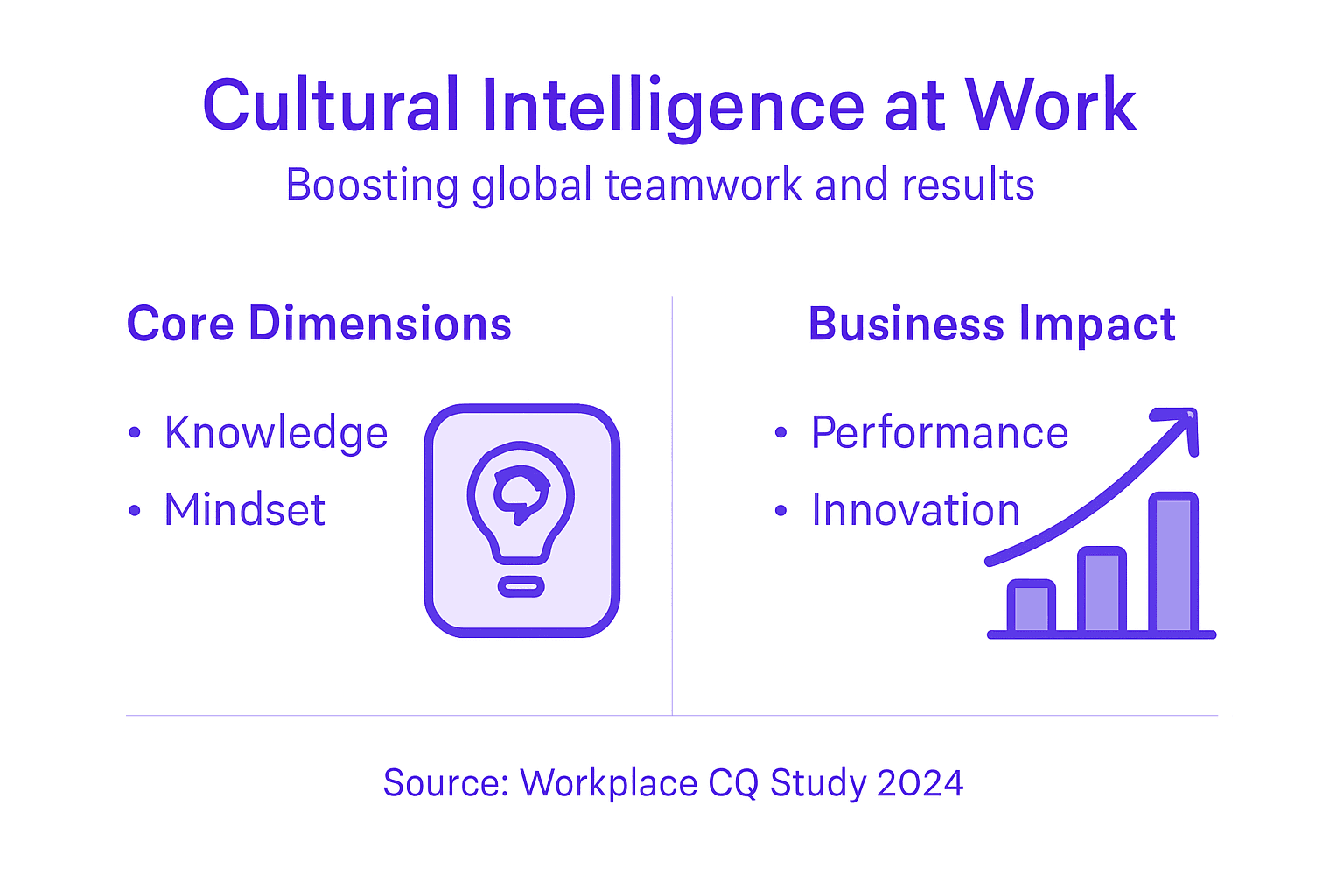
Variations of Cultural Intelligence and Key Dimensions
Cultural intelligence is a multifaceted construct that goes beyond traditional understanding of interpersonal skills. Research reveals four primary dimensions that collectively enable individuals to navigate complex cross-cultural interactions effectively.
The primary dimensions of cultural intelligence include:
- Cognitive CQ: The knowledge and understanding of cultural similarities and differences
- Motivational CQ: The intrinsic motivation and confidence to engage across cultural boundaries
- Behavioral CQ: The ability to adapt communication and conduct appropriately
- Metacognitive CQ: The conscious cultural awareness and strategic processing during interactions
Understanding these dimensions helps organisations develop more nuanced approaches to cultural competence. Psychological measurement tools have been developed to assess an individual’s cultural intelligence, recognising that these skills can be systematically improved through targeted training and exposure.
Cultural intelligence is not an innate trait, but a learnable skill that can be developed with intentional practice and exposure.
Pro tip: Regularly challenge your assumptions about cultural differences and seek opportunities to engage with diverse perspectives through cross-cultural interactions and learning experiences.
How Cultural Intelligence Influences Business Outcomes
Global business performance depends increasingly on an organisation’s ability to navigate complex cross-cultural environments. Cultural intelligence transforms how businesses approach international markets, communication strategies, and collaborative opportunities.
The strategic impacts of cultural intelligence manifest in several critical business domains:
- Market Expansion: Identifying and successfully entering new international markets
- Negotiation Effectiveness: Building trust and understanding across cultural boundaries
- Team Performance: Creating inclusive environments that leverage diverse perspectives
- Innovation Potential: Encouraging cross-cultural collaboration and creative problem-solving
Organisations with high cultural intelligence demonstrate remarkable advantages in global competitiveness. They can more effectively communicate with international partners, adapt quickly to new cultural contexts, and develop nuanced strategies that resonate across different cultural landscapes.

Here is a summary of how cultural intelligence impacts key business domains:
| Business Domain | Benefit of High CQ | Risk of Low CQ |
|---|---|---|
| Market Expansion | Easier adaptation to new markets | Entry barriers and missteps |
| Team Performance | Better integration and trust | Increased conflict and turnover |
| Innovation Potential | More diverse ideas, creativity | Missed opportunities |
| Reputation Management | Positive global brand image | Damage from cultural errors |
Cultural intelligence is not just a soft skill, but a critical strategic asset that directly influences an organisation’s global success and adaptability.
Pro tip: Invest in systematic cultural intelligence training that goes beyond surface-level diversity workshops, focusing on deep understanding and adaptive skills.
Connecting Employee Sentiment to KPI Performance
Machine learning analysis reveals a profound connection between employee sentiment and organisational performance metrics. By systematically tracking and interpreting emotional and engagement signals, businesses can unlock unprecedented insights into workforce dynamics and strategic potential.
Key areas where employee sentiment directly impacts performance include:
- Productivity Correlation: Positive sentiment drives higher output and efficiency
- Retention Strategies: Understanding emotional signals helps prevent unexpected turnover
- Innovation Potential: Engaged employees are more likely to contribute creative solutions
- Performance Predictability: Sentiment trends can forecast potential performance challenges
Modern organisations are recognising that employee experience insights are not just qualitative measurements, but quantifiable indicators of organisational health. By integrating sentiment data with traditional key performance indicators, leaders can develop more nuanced, human-centric approaches to workforce management.
Employee sentiment is not a soft metric, but a critical leading indicator of organisational performance and potential.
Pro tip: Implement continuous, anonymised sentiment tracking that connects directly to performance metrics, allowing real-time insights into workforce engagement and potential.
Risks of Neglecting Cultural Intelligence Efforts
International business failures frequently stem from a fundamental lack of cultural understanding. Organisations that ignore cultural intelligence expose themselves to significant operational, reputational, and financial risks in an increasingly interconnected global marketplace.
The critical risks of neglecting cultural intelligence include:
- Market Entry Challenges: Inability to successfully penetrate new international markets
- Communication Breakdowns: Misunderstandings that lead to conflict and lost opportunities
- Talent Retention Issues: Decreased employee engagement and higher turnover rates
- Reputation Damage: Perception of cultural insensitivity or organisational rigidity
Beyond immediate business consequences, systemic cultural ignorance can result in deeper ethical challenges. These include perpetuating stereotypes, creating exclusionary workplace environments, and fundamentally misunderstanding the nuanced dynamics of diverse workforce interactions.
Cultural intelligence is not optional – it’s a critical competency for sustainable global business success.
Pro tip: Conduct regular cultural intelligence assessments and provide ongoing, immersive training that moves beyond surface-level diversity workshops.
Practical Steps for Building Real-Time CQ Analytics
Developing real-time cultural intelligence analytics requires a strategic approach that integrates multiple data sources and sophisticated technological infrastructure. Modern organisations need robust systems that can capture, process, and interpret cultural intelligence signals with precision and speed.
Key steps for building effective real-time CQ analytics include:
- Data Ingestion: Integrate multiple streaming and batch data sources
- Metric Development: Design SQL-based analytics to extract meaningful cultural insights
- API Integration: Create scalable interfaces for organisational decision-makers
- Continuous Monitoring: Establish dynamic feedback loops for ongoing cultural assessment
Real-time database technologies play a crucial role in enabling low-latency, high-concurrency cultural intelligence tracking. By leveraging platforms that support rapid data processing, organisations can transform cultural intelligence from a static concept into a dynamic, actionable strategic asset.
The following table outlines practical steps for building effective real-time CQ analytics:
| Step | Purpose | Organisational Value |
|---|---|---|
| Data Integration | Gather wide sources of information | Comprehensive cultural insights |
| Metric Development | Quantify cultural engagement | Actionable measurements |
| API & Visualisation | Share data across departments | Informed, aligned decision-making |
| Ongoing Monitoring | Track changes in real time | Proactive strategy adjustments |
Real-time CQ analytics are not just a technological solution, but a strategic approach to understanding organisational culture dynamically.
Pro tip: Select analytics platforms that offer both technical flexibility and intuitive visualization, ensuring that complex cultural insights are accessible to leaders across different operational levels.
Unlock the Power of Cultural Intelligence for Real Business Impact
The article highlights a critical challenge businesses face today: transforming cultural intelligence from an abstract concept into a measurable, real-time strategic asset. Many organisations struggle with understanding employee sentiment across diverse teams and linking those insights to tangible outcomes like productivity, retention, and innovation. This leads to missed opportunities, costly miscommunications, and low engagement in multicultural workplaces.
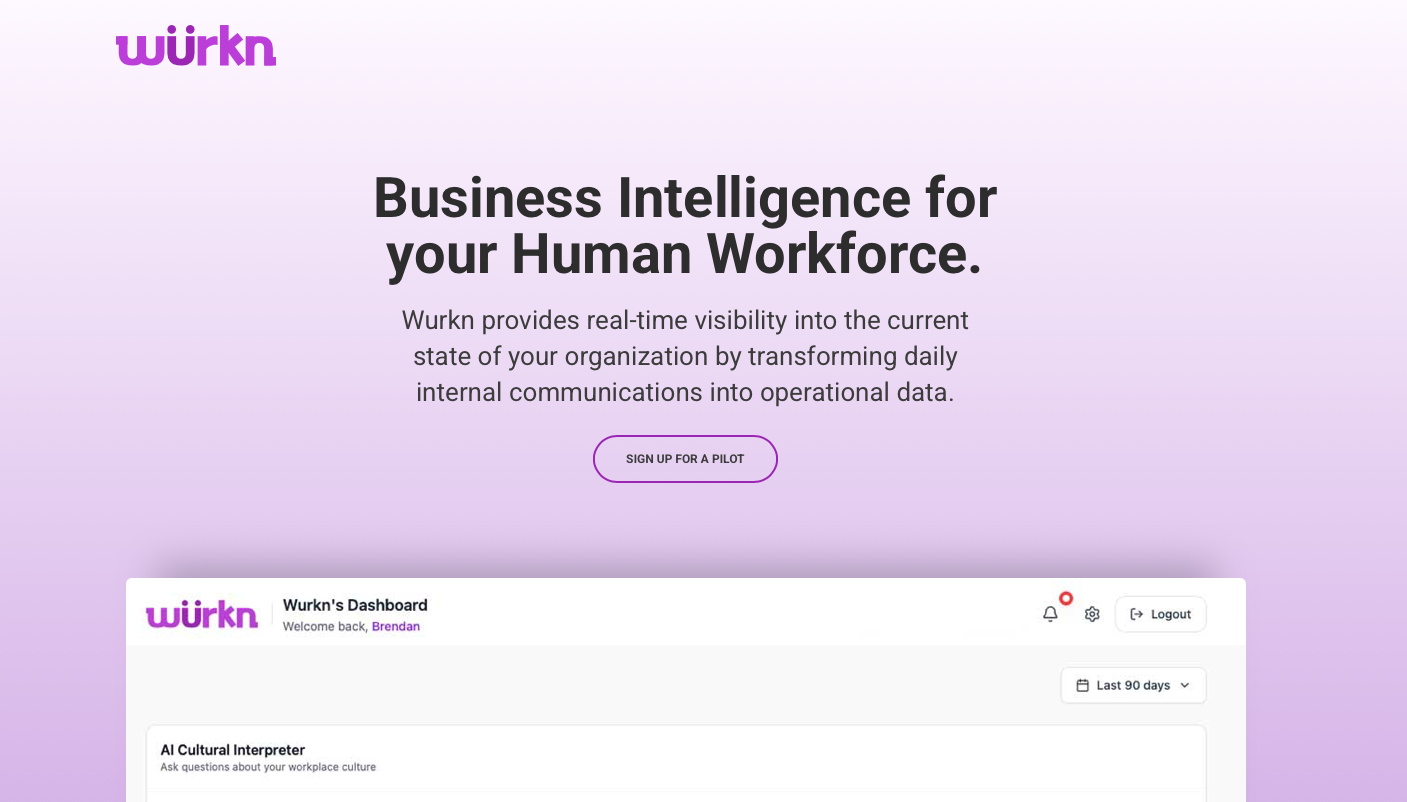
This is where Wurkn provides a powerful solution. Wurkn captures always-on, anonymous employee feedback from platforms like Slack and Microsoft Teams without disrupting workflows. Our platform turns qualitative cultural signals into actionable intelligence tied directly to your organisation’s KPIs. With real-time analytics, your leadership can proactively address cultural risks and foster inclusive, high-performing teams.
Experience how Wurkn bridges the gap between employee sentiment and measurable business results, giving COOs and PeopleOps leaders a clear, immediate view of culture’s impact on performance.
Take the next step in building your organisation’s cultural intelligence. Act now to transform employee sentiment into strategic advantage with Wurkn.
Frequently Asked Questions
What is cultural intelligence and why is it important for businesses?
Cultural intelligence (CQ) is an individual’s ability to interact effectively across various cultural contexts. It is crucial for businesses because it enhances communication, fosters inclusivity, and drives innovation, ultimately leading to improved business performance.
How can businesses assess and improve cultural intelligence among their employees?
Businesses can assess cultural intelligence through psychological measurement tools and targeted training programs. Improvement can be achieved by encouraging cross-cultural interactions, promoting active listening, and creating opportunities for exposure to diverse perspectives.
What are the risks of neglecting cultural intelligence in an organisation?
Neglecting cultural intelligence can lead to market entry challenges, communication breakdowns, talent retention issues, and potential damage to an organisation’s reputation, especially in a globalized marketplace.
How does cultural intelligence influence team performance and innovation?
Cultural intelligence enhances team performance by creating inclusive environments that value diverse perspectives. It also encourages cross-cultural collaboration, which can lead to greater creativity and innovation by leveraging a variety of ideas and problem-solving approaches.
Leave a Reply