
Setting meaningful development goals in the workplace is the bedrock of a thriving, engaged team. It’s about creating a clear path for employees to gain new skills and master new challenges, making sure their personal growth pulls in the same direction as the company's strategic goals.
Why Old-School Goal Setting No Longer Works
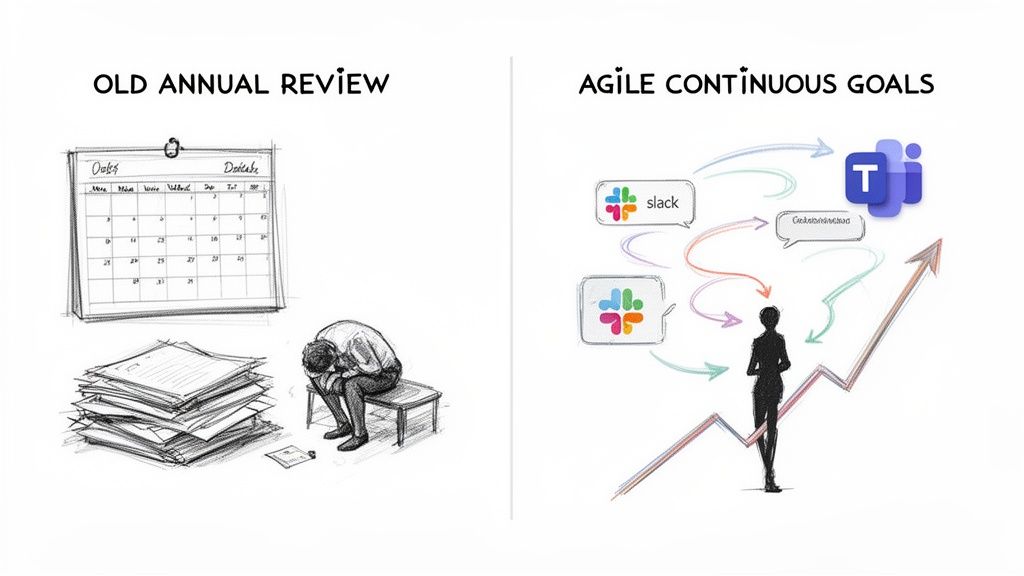
Let’s be honest—the annual review and static goal-setting process is broken. For years, organizations across Canada and the United States have clung to this once-a-year ritual where objectives are set in January and feel completely irrelevant by March. This approach just can't keep up with the real pace of modern work.
This outdated model creates a frustrating gap between high-level company ambitions and what employees actually need to do to grow. When goals are rigid and rarely discussed, they become a formality, breeding disengagement and a feeling that personal development isn’t a real priority.
The Disconnect in a Hybrid World
Today’s hybrid work setups only make these problems worse. Without the casual, in-person check-ins we used to rely on, employees can feel adrift and disconnected from their own growth paths. An annual survey might give you a single snapshot in time, but it completely misses the day-to-day context and evolving challenges your team is facing. This gap hits your morale, turnover, and ultimately, the bottom line.
This is especially true as the entire skills landscape shifts beneath our feet. For instance, according to an OECD analysis, Canada's labour market has seen a significant decline in middle-skilled jobs, entirely offset by growth in high-skilled roles. This trend screams for more agile, continuous learning, yet many traditional programs fail to include the very workers who need it most. You can learn more from the OECD's deep dive into Canada's evolving workforce needs.
Moving from Static Surveys to Real Intelligence
To bridge this gap, businesses need a smarter, more continuous approach. The problem with traditional HR survey tools is that they’re reactive; they tell you about problems long after they’ve taken root. They measure the symptoms without ever diagnosing the cause.
A business intelligence approach flips the script. Instead of asking employees how they feel once a quarter, it analyzes real-time, anonymous sentiment from the tools they already use—like Slack and Teams—to give leaders proactive, actionable insights.
This is where a business intelligence tool like Wurkn provides a clear advantage over simple survey platforms. By turning daily conversations into diagnostic data, Wurkn moves beyond surface-level metrics. It helps People Ops leaders understand the why behind employee sentiment, identifying hidden barriers to growth and uncovering development needs that a static survey would never find.
This allows you to create truly relevant and impactful development goals in the workplace. To get even more specific, you can explore our guide on the differences between OKRs vs KPIs to refine your goal-setting strategies.
Designing a Framework for Meaningful Growth
To build a culture where growth is a constant, you need a framework. But not one that feels like a corporate mandate. It should feel more like a collaborative partnership. Moving past the theory of goal setting means picking a practical method that fits your unique culture—whether you're in Canada or the US—and inspires real ownership from your team.
The most effective development goals in the workplace aren't handed down from on high. They come out of a real conversation between an employee and their manager, connecting individual ambition with the company’s bigger picture. When employees get targeted training that aligns with both their career aspirations and business needs, it boosts everything from productivity to the bottom line.
Choosing Your Goal-Setting Methodology
Two of the most popular frameworks you'll come across are SMART goals and Objectives and Key Results (OKRs). Both are powerful, but they serve different needs and fit different kinds of organizations. Getting a handle on their core differences is the first real step in designing your own approach.
Think of SMART goals as precise and tactical. They're perfect for an individual learning a new skill or tackling a specific project. OKRs, on the other hand, are much bigger-picture. They’re ambitious and directional, designed to connect team efforts to broad, aspirational company objectives.
The right choice boils down to your company's culture and what you're trying to achieve. A fast-moving tech startup in the US might thrive on the ambitious nature of OKRs. A more established Canadian financial services firm might prefer the clarity and structure of SMART goals for specific departments.
To help you decide which path to take, let's break down the two leading methodologies for setting development goals.
Comparing Goal-Setting Frameworks: SMART vs. OKR
This table offers a side-by-side look at the two frameworks, helping leaders choose the best fit for their teams.
| Feature | SMART Goals | OKRs (Objectives and Key Results) |
|---|---|---|
| Primary Focus | Achieving specific, well-defined individual tasks or milestones. | Aligning the entire organization around ambitious, high-level objectives. |
| Best For | Building a specific skill, completing a project, or improving a core competency. | Driving major strategic initiatives, fostering innovation, and measuring impact. |
| Cadence | Often set quarterly or annually, with regular check-ins. | Typically set quarterly, reviewed frequently, and designed to be agile. |
| Mindset | "Did I achieve this specific, measurable goal?" | "How did my work contribute to our big, ambitious objective?" |
Ultimately, whether you lean toward the structured precision of SMART goals or the ambitious vision of OKRs, the goal is the same: to create a clear, motivating path for growth that benefits both the individual and the organization.
Crafting Role-Specific Development Goals
Let's be honest: generic goals lead to generic results. The real magic of a development framework happens when you customize it to an individual’s unique role, career stage, and personal ambitions. A one-size-fits-all template just won’t cut it.
Consider these two very different scenarios from a US-based software company:
For a Junior Software Engineer aiming for a Senior role:
- Generic Goal: "Improve coding skills."
- Meaningful SMART Goal: "By the end of Q3, I will lead the development of one new customer-facing feature, successfully completing code reviews with fewer than 10% revisions, to demonstrate my readiness for senior-level project ownership."
For a Marketing Lead developing strategic planning skills:
- Generic Goal: "Get better at strategy."
- Meaningful OKR-style Goal:
- Objective: Develop and execute a comprehensive go-to-market strategy for our new product launch in the Canadian market.
- Key Result 1: Achieve a 25% increase in qualified leads from the new campaign within 60 days of launch.
- Key Result 2: Secure media placements in 3 key Canadian industry publications before the launch date.
See the difference? The meaningful goals are specific, measurable, and directly tied to both personal growth and tangible business outcomes. This is how you create a system that truly motivates people. They can draw a straight line from their effort to their impact on the company’s success, transforming a routine performance review into a powerful career-building dialogue.
Turning Daily Feedback into Development Goals
The most powerful insights for creating meaningful development goals in the workplace don't come from an annual survey. They’re hidden in the daily, informal conversations your teams are already having. The real challenge is capturing these signals without killing the natural flow of work.
Connecting the dots between everyday chats and strategic growth requires a different mindset. Instead of waiting for periodic, often biased survey results, you can start analyzing the authentic, continuous feedback happening right now in tools like Slack and Microsoft Teams.
Uncovering Hidden Needs with Business Intelligence
Picture a People Ops leader at a growing tech company in Canada. Her latest employee engagement survey shows decent scores, but she’s noticed a slight dip in the metrics for cross-departmental collaboration. The data tells her what is happening, but it offers zero clues as to why. This is where most traditional HR tools hit a wall, leaving her to guess at the root cause.
This is exactly where a business intelligence tool like Wurkn shows its strength compared to simple survey platforms. By synthesizing anonymized, qualitative data from team communication channels, Wurkn's AI can spot underlying themes and sentiment. In this scenario, it might reveal that while engineers and marketers are talking, their language is completely misaligned, causing friction and blowing up project timelines.
Tapping into the authentic, everyday conversations happening on platforms like Slack uncovers development needs that employees would never think to mention in a formal survey.
That's the kind of deep, contextual insight a multiple-choice question will never give you. It moves you past surface-level problems to diagnose the core issue holding your team's performance back.
From Insight to Impactful Action
Armed with this specific insight, the People Ops leader’s path forward is suddenly crystal clear. The issue isn't a lack of willingness to collaborate; it's a gap in cross-functional communication skills. Instead of rolling out a generic "teamwork" workshop, she can design a solution that’s both precise and impactful.
- Targeted Action: She launches a mentorship program, pairing senior engineers with marketing leads.
- Specific Goal: The program's objective is to build a shared vocabulary for product development and go-to-market strategies.
- Measurable Outcome: Success isn't just about participation. It’s tracked by monitoring sentiment around cross-functional projects and a noticeable reduction in clarification requests, using Wurkn’s real-time analytics.
This data-driven approach allows her to create development goals that solve real business problems. It shifts the People Ops function from a reactive support centre to a strategic partner that actively boosts both performance and retention. By truly understanding what the workforce needs, she can invest in development initiatives that deliver tangible returns.
For more on structuring these crucial conversations, check out our guide on how to run an effective one-on-one meeting.
Putting Your Development Plans into Action
A brilliant development plan is just a document until you actually do something with it. The real magic happens when you bring it to life through consistent, deliberate action. Successfully implementing and tracking development goals in the workplace isn't a top-down mandate; it's a shared responsibility that weaves goal-setting into your company’s cultural fabric.
This is where the distinct roles of employees, their managers, and your People Ops team really click into place. Each one is a crucial part of a feedback loop that keeps development relevant, agile, and perfectly aligned with both personal ambitions and what the business actually needs.
Clarifying Roles and Responsibilities
For any development plan to get off the ground, everyone needs to know exactly what they’re supposed to do. When expectations are fuzzy, even the most carefully crafted goals can get derailed, turning initial excitement into frustration.
- The Employee's Role: Employees are in the driver's seat of their own growth. Their job is to own their goals, proactively ask for feedback, and be upfront about their progress and any roadblocks they hit.
- The Manager's Role: Think of the manager as the coach and facilitator. They're there to clear obstacles, provide resources, and offer regular, constructive feedback that ties the employee’s work directly to team and company objectives.
- The People Ops Role: People Ops are the architects of the whole system. They provide the frameworks, business intelligence tools, and training that empower everyone else, making sure the entire process is fair, consistent, and effective.
When these roles work in harmony, you build a culture of ongoing coaching. Check-ins stop being a dreaded quarterly event and become a normal, productive part of the work week.
From Static Check-Ins to Agile Coaching
Let's be honest, traditional goal tracking is often too rigid for the way we work now. A goal set in January can easily become irrelevant by May because of a shift in the market or a change in company priorities. This is where you have to be agile.
Managers need to be able to pivot and adjust goals in real time. This is where a business intelligence tool like Wurkn offers a massive advantage over old-school HR survey platforms. Instead of waiting for a quarterly pulse survey, managers get real-time cultural intelligence, letting them spot shifts in team sentiment or new challenges as they happen.
If anonymous feedback shows a team is feeling swamped by a new project, a manager can use that insight to shift a development goal. Instead of "launching a new initiative," the goal might become "mastering a new project management software to improve workflow efficiency."
This isn't just about moving the goalposts; it's about making development directly responsive to the real-world needs of the business and the well-being of the team.
This simple flow shows how ongoing feedback can directly shape the goals you create.
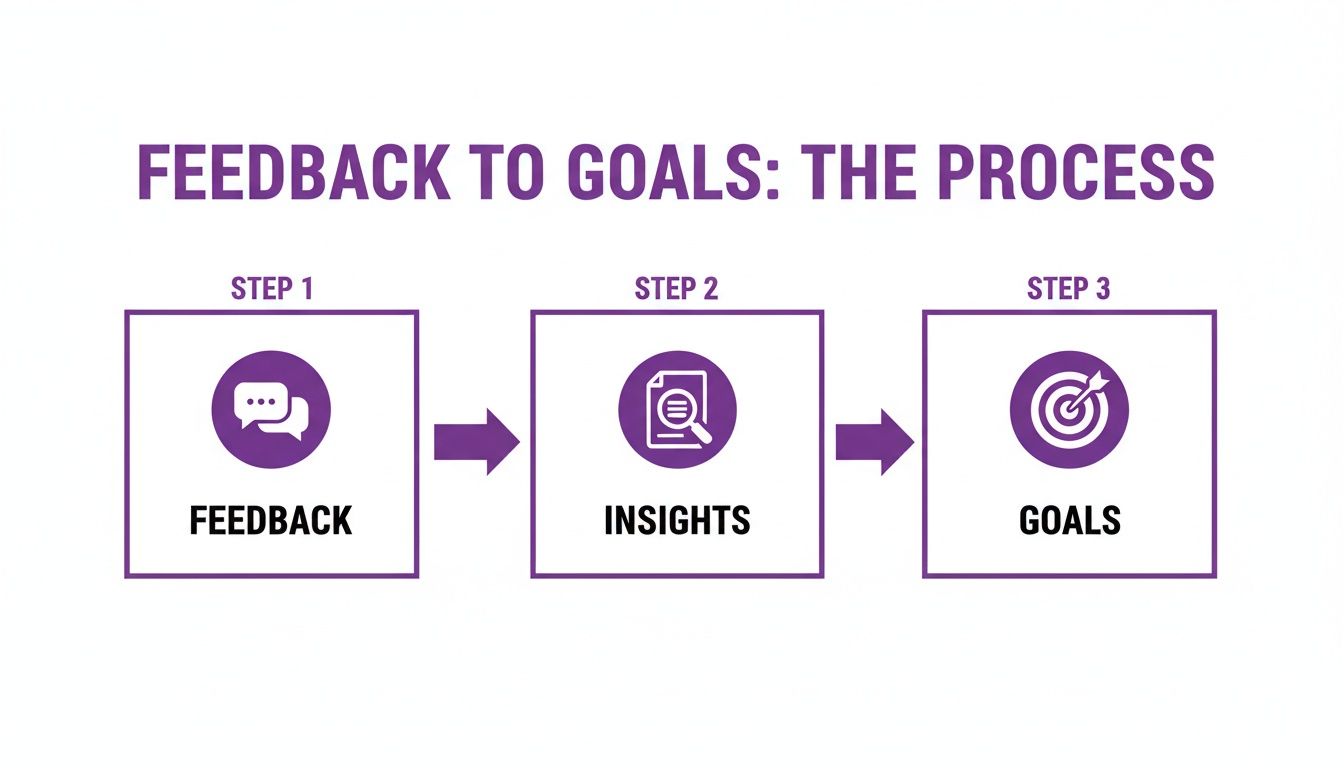
The takeaway here is powerful: meaningful goals aren't created in a vacuum. They're the direct result of listening to what your team is actually experiencing.
This approach lines up with broader national priorities, too. For example, Canada's commitment to workforce development and lifelong learning under its 2030 Agenda for Sustainable Development highlights significant investments in skills training. This mirrors the agility and data-driven focus that modern development frameworks require to succeed in a changing economy.
By linking daily feedback to goal setting, organizations can ensure their development efforts stay sharp, relevant, and truly make an impact.
Measuring the True Impact of Employee Growth
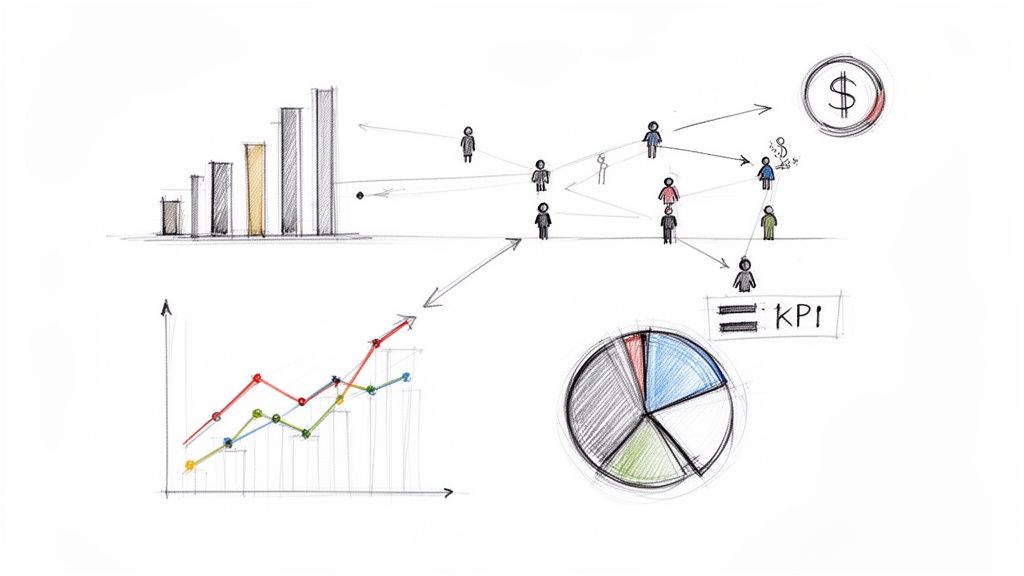
So, how do you actually prove that investing in your people pays off? A successful program for development goals in the workplace has to deliver more than just good vibes; it needs to show a tangible return on investment that gets the executive team nodding along.
It’s easy to report that your team completed a training course. But that doesn't tell a compelling story. The real challenge is connecting an individual’s growth to the high-level business outcomes your leadership team actually cares about.
Connecting Growth to Key Business Metrics
To show real impact, you have to move past simple participation stats. The goal is to draw a clear, data-backed line between your development initiatives and the KPIs that drive the entire organisation forward.
You need to measure the ripple effect of growth in a few key areas:
- Productivity Gains: Are the teams with solid development plans shipping projects faster? Are they hitting their output targets more consistently, or with fewer errors?
- Customer Satisfaction (CSAT): Can you see a direct link between a service team's upskilling program and a real bump in customer satisfaction scores or your Net Promoter Score (NPS)?
- Employee Retention: It’s simple: when people see a clear path for growth, they stick around. Tracking voluntary turnover rates between engaged and disengaged employees can highlight a direct financial win.
- Internal Promotion Velocity: A great development program should be your number one pipeline for future leaders. Measure the rate at which you're filling senior roles with internal talent.
These are the hard financial and operational metrics that prove a strong development culture isn't just a "nice-to-have" HR initiative—it's a direct driver of business success.
The Power of Correlating Culture and Performance
This is where most traditional employee engagement platforms completely miss the mark. A once-a-year survey can't show you how a shift in team sentiment last month directly influenced this quarter's sales numbers. For leadership, that’s a critical blind spot.
Wurkn’s business intelligence dashboard is built to bridge this exact gap. It moves beyond simple HR survey tools by correlating real-time, anonymous cultural health data with your core business KPIs. This creates a living, data-backed narrative for your leadership team.
For example, you could use Wurkn to show how a spike in positive sentiment around "career growth opportunities" came right before a drop in voluntary turnover within your US-based engineering department. You can get a deeper look at this approach in our guide on leveraging analytics for HR.
This level of insight completely changes the conversation. Employee development is no longer just an expense; it's a strategic investment. It’s the proof that a healthier, growing workforce is fundamentally a more productive and profitable one.
Have Questions About Development Goals? We've Got Answers.
Setting up a solid development program always brings up a few tricky questions. Let's tackle some of the most common ones that leaders in Canada and the United States run into when building out their plans.
How Can We Set Effective Development Goals for Remote Teams?
When your team is distributed, you have to shift your focus from tracking activity to measuring outcomes. Forget about monitoring hours logged; what really matters are the skills that make remote work work. We're talking about things like asynchronous communication and digital project management—the real drivers of success when you're not all in the same room.
Getting this right means you need a deep understanding of your team's dynamics without falling into the micromanagement trap. This is where business intelligence tools like Wurkn become invaluable. By integrating into platforms like Slack and Teams, they give you a real-time, anonymized pulse on team sentiment and can surface development needs you’d never catch in a weekly check-in or a quarterly survey.
For a remote team, knowing the cultural context is just as important as hitting project milestones. Anonymous feedback uncovers the friction points that formal check-ins often miss, allowing you to create goals that genuinely support your people.
Of course, technology doesn't replace connection. Structured, consistent virtual check-ins are still the bedrock for tracking progress and offering support, making sure everyone feels aligned and part of the team, no matter where they are.
What's the Real Difference Between a Performance and a Development Goal?
It’s easy to get these two mixed up, but the distinction is simple when you think about it this way:
A performance goal is about the 'what'—hitting a specific target in your current role. Think: 'Increase Q3 lead generation in our US East Coast territory by 15%'. It’s all about immediate business results and the core responsibilities of the job today.
A development goal is about the 'how'—building a new skill or capability for the future. For example: 'Master marketing automation to improve lead nurturing workflows across North American campaigns'. While it definitely connects to performance, this goal is forward-looking. It builds long-term value for both the employee's career and the company's future capabilities.
How Do We Ensure Our Development Programs Are Equitable?
Building an equitable development program starts with one thing: understanding the different experiences your employees are having. This is where anonymized, continuous feedback from a business intelligence platform is a game-changer. It helps uncover the hidden barriers or biases that certain groups might face—the kind of insights that are completely invisible in standard performance reviews.
Once you have that visibility, the next step is transparency. Make sure every development opportunity, from mentorship programs to training budgets, is communicated clearly and is accessible to everyone, regardless of their location or role.
By tying your development metrics directly to your broader DEI initiatives, you can actually track your progress and make sure fairness isn’t just a talking point—it’s a core, measurable part of your growth culture.
Ready to stop guessing and start connecting employee growth directly to business results? See how Wurkn turns daily employee sentiment into the business intelligence you need to build a stronger team. Learn more about Wurkn.