
Every CXO knows that navigating global diversity is more than just a checklist for technology firms. The challenge lies in building a workplace where cultural intelligence amplifies engagement and drives business outcomes. By preparing your organisation for cultural intelligence integration, leaders not only set the stage for meaningful change but also create a foundation for agility and innovation. This guide helps you master key steps that transform employee perspectives into lasting business performance.
Table of Contents
- Step 1: Prepare Your Organisation For Cultural Intelligence Integration
- Step 2: Implement Anonymous Feedback Channels Using Wurkn
- Step 3: Analyse Cultural Signals To Uncover Key Drivers
- Step 4: Link Employee Feedback To Measurable Business KPIs
- Step 5: Validate Cultural Insights With Real-Time Dashboards
- Step 6: Act On Findings To Align Culture And Drive Performance
Quick Summary
| Key Point | Explanation |
|---|---|
| 1. Evaluate Cultural Capabilities | Assess current cultural strengths and gaps to establish a foundation for cultural intelligence integration in your organisation. |
| 2. Implement Anonymous Feedback Channels | Create safe spaces for employees to share honest insights, fostering transparent dialogue and enhancing trust within the organisation. |
| 3. Link Feedback to Business KPIs | Connect qualitative employee insights with quantitative performance metrics to drive actionable organisational intelligence and improve outcomes. |
| 4. Validate Insights with Dashboards | Use real-time dashboards to visualise cultural data, making it easier for leaders to understand insights and make informed decisions. |
| 5. Act on Findings for Change | Ensure strategic actions derived from cultural insights align with business objectives, fostering continuous improvement across the organisation. |
Step 1: Prepare your organisation for cultural intelligence integration
Preparing your organisation for cultural intelligence integration demands a strategic and systematic approach. By understanding the foundational elements and implementing targeted initiatives, you can transform your workplace into a culturally agile environment that drives business performance.
The first critical step involves evaluating current cultural capabilities across your organisation. This comprehensive assessment helps identify existing strengths and potential gaps in cultural understanding. Key areas to examine include:
- Leadership’s cultural awareness
- Team communication dynamics
- Cross-cultural collaboration patterns
- Diversity and inclusion practices
Successful cultural intelligence integration requires a multi-dimensional strategy that addresses cognitive, emotional, and behavioural aspects. Begin by developing targeted training programs that enhance:
- Metacognitive cultural skills
- Emotional intelligence across diverse contexts
- Adaptive communication techniques
- Global perspective building
Cultural intelligence is not just a skill – it’s a strategic organisational capability that directly influences innovation and performance.
Leadership plays a pivotal role in this transformation. Executives must model cultural curiosity, demonstrate inclusive behaviours, and create psychological safety for employees to explore and embrace diverse perspectives.
Pro tip: Start with small, measurable cultural intelligence initiatives and progressively scale your approach based on real-world feedback and organisational learning.
Step 2: Implement anonymous feedback channels using Wurkn
Improving organisational communication requires strategic implementation of anonymous feedback mechanisms that encourage honest, transparent dialogue. By leveraging digital platforms, you can create safe spaces where employees feel empowered to share genuine insights without fear of judgement.
Anonymous feedback systems enhance participant comfort and provide unfiltered perspectives critical for understanding workplace dynamics. Implementing these channels involves several key steps:
- Select a platform with robust privacy protections
- Establish clear communication guidelines
- Ensure complete confidentiality of submissions
- Design user-friendly feedback interfaces
The technical implementation requires careful consideration of privacy and accessibility. Focus on creating channels that:
- Integrate seamlessly with existing communication tools
- Provide real-time anonymous submission capabilities
- Enable secure, redacted reporting
- Generate actionable insights for leadership
Anonymous feedback transforms workplace communication from a controlled monologue to an open, genuine dialogue.
Organisational leaders must commit to acting on feedback, demonstrating that anonymous input drives meaningful change. This approach builds trust and encourages continued honest communication across all levels of the organisation.

Pro tip: Regularly communicate how anonymous feedback has influenced organisational decisions to reinforce the value of employee input.
Step 3: Analyse cultural signals to uncover key drivers
Uncovering the hidden dynamics within your organisation requires a sophisticated approach to analysing cultural signals that reveal deeper insights into workplace behaviour and performance. By developing a nuanced understanding of these signals, you can transform raw data into actionable organisational intelligence.
Cultural sensitivity guides effective signal analysis by ensuring that organisational research respects contextual nuances and underlying cultural perspectives. This approach involves several critical methodological considerations:
- Collect data from multiple communication channels
- Use advanced sentiment analysis techniques
- Contextualise feedback within organisational frameworks
- Identify patterns across different employee demographics
The analysis process demands a structured, multidimensional approach to decoding cultural indicators:
- Map communication networks
- Assess emotional tone in feedback
- Correlate signals with performance metrics
- Develop comprehensive cultural insights
Cultural signals are not just noise – they are the fundamental language of organisational dynamics.
Leaders must move beyond surface-level interpretations, recognising that authentic cultural intelligence requires deep, empathetic understanding of the underlying narratives driving workplace interactions.
Pro tip: Integrate cross-functional perspectives when interpreting cultural signals to prevent individual bias from skewing organisational insights.
Step 4: Link employee feedback to measurable business KPIs
Transforming employee insights into tangible business performance requires a strategic approach to connecting qualitative feedback with quantitative metrics. By establishing clear linkages between cultural signals and key performance indicators, organisations can turn employee perspectives into actionable business intelligence.
Systematic KPI implementation drives organisational performance by creating a robust framework that translates employee experiences into measurable outcomes. This process involves several critical strategic steps:
- Identify core business performance metrics
- Map employee feedback to specific KPI dimensions
- Develop correlation analysis frameworks
- Create visual dashboards tracking insights
The integration process requires a multifaceted approach to connecting cultural intelligence with business performance:
- Select relevant performance indicators
- Establish baseline measurement criteria
- Create feedback-to-KPI translation mechanisms
- Implement continuous monitoring systems
Employee feedback is not just commentary – it’s a strategic asset for organisational transformation.
Leaders must approach this integration with precision and strategic intent, recognising that meaningful connections between employee perspectives and business metrics require sophisticated analytical capabilities.
Pro tip: Develop cross-functional teams that blend HR insights with data analytics expertise to ensure nuanced, comprehensive KPI interpretation.
Step 5: Validate cultural insights with real-time dashboards
Transforming complex cultural data into actionable intelligence requires sophisticated visual analytics and dynamic reporting strategies. By implementing real-time dashboards, organisations can convert nuanced employee insights into clear, immediately understandable performance indicators.
Real-time dashboards enable rapid data exploration by providing instantaneous visualisation of cultural signals and organisational trends. This approach involves several critical implementation strategies:
- Integrate multiple data source streams
- Create customisable visual metrics
- Establish automated reporting mechanisms
- Design intuitive dashboard interfaces
The validation process requires a comprehensive approach to dashboard development:
- Define core cultural intelligence metrics
- Select appropriate visualisation techniques
- Implement real-time data synchronisation
- Enable interactive exploration features
Cultural insights are most powerful when transformed from abstract concepts into tangible, visual narratives.
Leaders must prioritise user-friendly dashboard design that allows for immediate comprehension and strategic decision-making across different organisational levels.
Pro tip: Conduct periodic user experience reviews of your dashboards to ensure they remain intuitive and aligned with evolving organisational needs.
Step 6: Act on findings to align culture and drive performance
Transforming cultural insights into meaningful organisational change requires strategic, intentional action that bridges understanding with tangible performance improvements. Implementing cultural intelligence findings demands a holistic approach that connects employee perspectives with strategic business objectives.
Embedding supportive organizational values involves creating systems that translate insights into actionable strategies. This transformation process encompasses several critical implementation dimensions:
- Align leadership practices with cultural insights
- Develop targeted intervention strategies
- Create accountability mechanisms
- Design incentive structures supporting cultural transformation
The action planning process requires a systematic approach to cultural alignment:
- Prioritise high-impact cultural recommendations
- Design phased implementation roadmaps
- Establish cross-functional change teams
- Monitor and iterate cultural interventions
Cultural transformation is not a destination – it is a continuous journey of organisational learning and adaptation.
Leaders must approach cultural change with strategic commitment and genuine transparency, recognising that sustainable performance emerges from deeply understood and intentionally cultivated workplace dynamics.
Pro tip: Create feedback loops that allow employees to witness how their insights directly contribute to organisational improvements, reinforcing the value of their participation.
The following table outlines key cultural intelligence metrics and their impact on business performance:
| Cultural Intelligence Metric | Example Measurement | Impact on Business |
|---|---|---|
| Metacognitive Skills | Scenario-based assessments | Improved problem-solving |
| Emotional Awareness | 360-degree feedback ratings | Reduced interpersonal conflict |
| Adaptive Communication | Cross-team survey results | Enhanced collaboration |
| Global Perspective | Employee international experience | Greater innovation potential |
Here is a summary of how each step contributes to building a culturally intelligent organisation:
| Step | Main Objective | Organisational Benefit |
|---|---|---|
| Prepare for Integration | Assess culture, develop skills | Establishes a foundation for agility |
| Anonymous Feedback | Enable honest input | Enhances dialogue and trust |
| Analyse Signals | Interpret cultural data | Uncovers hidden workplace drivers |
| Link to KPIs | Translate feedback to metrics | Aligns culture with business outcomes |
| Validate with Dashboards | Visualise insights | Supports quick, informed decisions |
| Act on Findings | Drive strategic change | Reinforces continuous improvement |
Unlock Cultural Intelligence to Drive Real Business Impact
Organizations often struggle to connect the dots between employee feedback and measurable business results, especially when tackling challenges such as limited trust, fragmented communication, and the difficulty of interpreting complex cultural signals. This article highlights the essential steps to move from anonymous feedback to actionable insights and KPI alignment — all crucial goals for executives looking to foster inclusive, high-performing workplaces.
Wurkn is designed exactly for this purpose. Our platform captures continuous, anonymous employee sentiment from tools like Slack, Microsoft Teams, and HRIS without disrupting workflows. By securely anonymizing data and transforming qualitative feedback into visual real-time dashboards, Wurkn empowers CXOs and PeopleOps teams to diagnose cultural issues early and see their impact on productivity, retention, and revenue. With AI-enhanced analysis and human expertise, you gain a clear view of why cultural signals matter.
Experience Wurkn’s cultural intelligence solutions to bridge the gap between employee voices and business outcomes.
Discover how Wurkn transforms feedback into KPIs
Learn more about building healthier teams and reducing churn
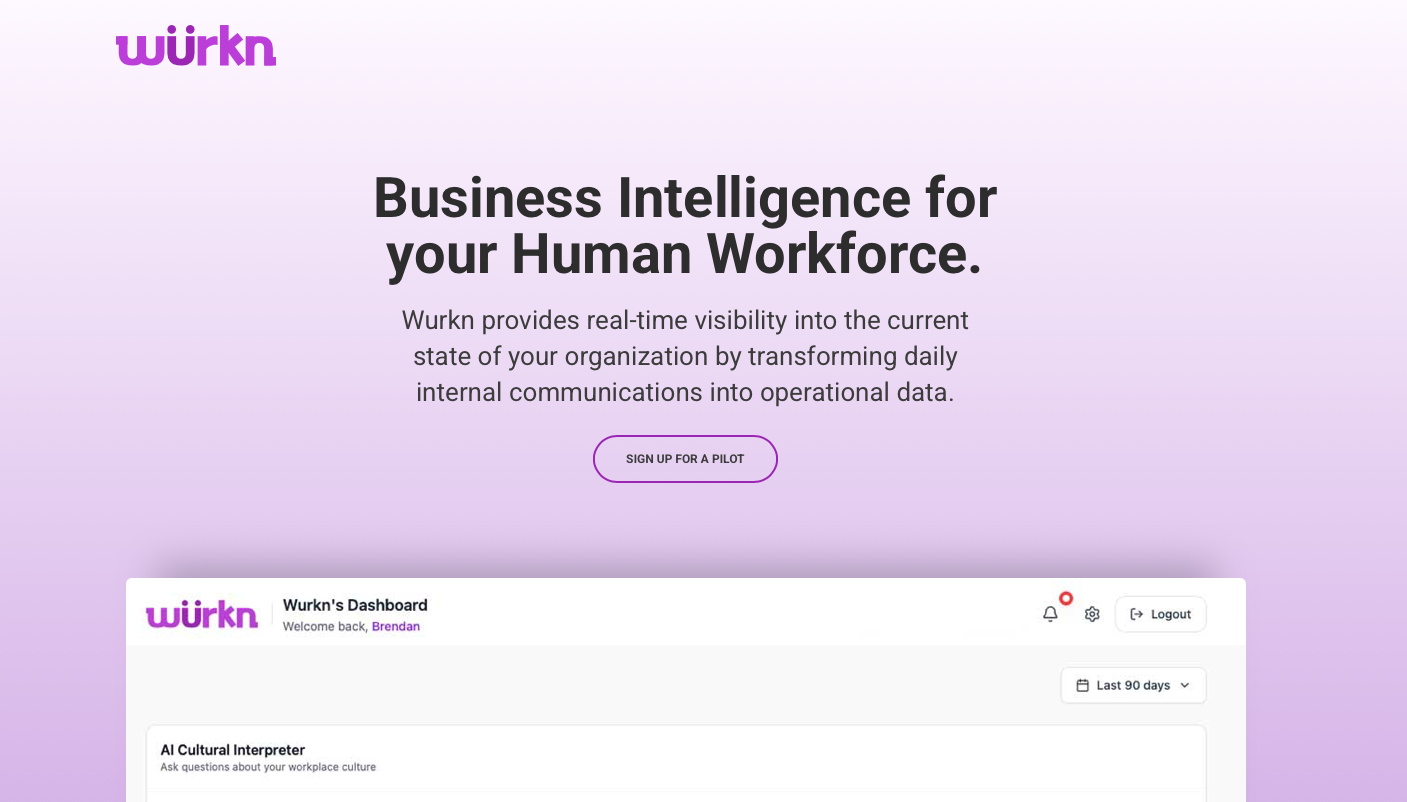
Take the next step to transform continuous employee sentiment into strategic cultural intelligence that drives sustainable performance. Visit Wurkn now to see how your organisation can benefit from always-on, privacy-first feedback that truly moves the needle.
Frequently Asked Questions
How can I assess my organisation’s current cultural intelligence capabilities?
Evaluating your organisation’s current cultural intelligence capabilities involves a comprehensive assessment of leadership awareness, team dynamics, and diversity practices. Start by conducting surveys and focus groups to gather insights from employees at all levels within the next 30 days.
What steps should I take to enhance cultural intelligence training for my employees?
To enhance cultural intelligence training, develop targeted programmes that focus on metacognitive skills, emotional awareness, and adaptive communication. Implement these training sessions within 60 days and consider tracking improvements through employee feedback ratings.
How can anonymous feedback improve our organisation’s cultural dynamics?
Anonymous feedback channels provide employees with a safe space to share their thoughts and concerns, empowering open dialogue without fear of judgement. Implement an anonymous feedback system in your organisation within 30 days to begin fostering a culture of transparency and trust.
What methods can I use to analyse cultural signals effectively?
To analyse cultural signals effectively, collect data from various communication channels and use sentiment analysis techniques to interpret feedback. Begin by mapping communication patterns and emotional tones over the next month to gain deeper insights into workplace dynamics.
How do I connect employee feedback to our business performance metrics?
Linking employee feedback to business performance metrics requires establishing clear correlations between cultural insights and key performance indicators. Start by identifying core business metrics and mapping relevant employee feedback to these dimensions within the next 90 days, creating visual dashboards for ongoing monitoring.
What actions should I take to implement cultural insights for organisational improvement?
To act on cultural insights, prioritise high-impact recommendations, create phased implementation roadmaps, and establish accountability mechanisms. Initiate this process within the next 60 days, ensuring to communicate progress and adjustments to employees based on their feedback.