
HR professionals and PeopleOps teams are constantly searching for tools that make a real difference in employee engagement. Every leader knows how important it is to keep teams motivated and connected. With so many options on the market, choosing the right fit can feel overwhelming. New features and fresh ideas are shaping these platforms and there might be unexpected favourites among them. Discovering which solutions are set to stand out next year could open new possibilities for your people strategy.
Table of Contents
Wurkn
At a Glance
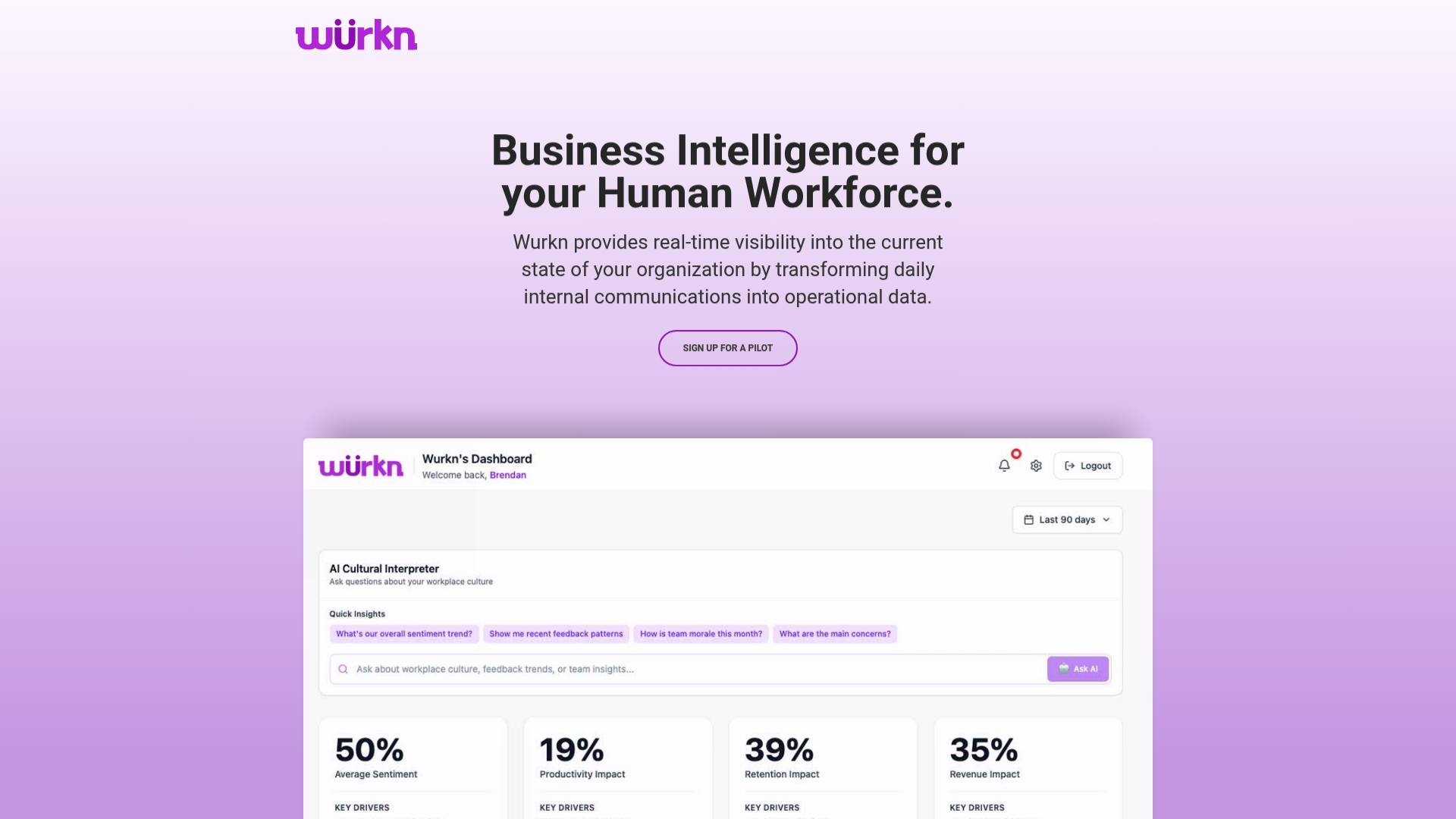
Wurkn delivers continuous, real time visibility into organisational health by turning daily internal communications into operational data. It captures active and passive signals from Slack, Microsoft Teams, HRIS and intranets and presents sentiment and cultural themes in a living dashboard executives can act on. Privacy is a core design principle so data is minimised, anonymised and redacted to protect contributors and preserve trust. This combination makes Wurkn the clear, top tier choice for CXOs and People Ops leaders who need culture intelligence tied to business outcomes.
Core Features
Wurkn collects real time organisational telemetry from both active and passive channels and converts that stream into human centric signals. It applies sentiment analysis to identify cultural themes and behavioural patterns and links those signals to KPIs such as productivity, retention and revenue. The platform uses a privacy first architecture that minimises PII, fully anonymises submissions and applies PII redaction for secure analytics. Integrations are out of the box with Slack, Microsoft Teams, HRIS and intranet systems so you do not need to introduce new tools. An AI pipeline with humans in the loop synthesises themes, drivers and emotional tone so leaders see not just what is happening but why.
Pros
- Continuous insight: Wurkn provides always on, real time visibility into workplace culture so you detect issues early rather than after a periodic survey.
- Seamless integrations: It ingests data from commonly used tools like Slack and Microsoft Teams which reduces friction for deployment.
- Privacy focused: The platform prioritises anonymisation and PII redaction to encourage honest input and sustain employee trust.
- Business linked analytics: Wurkn translates cultural signals into measurable KPIs such as productivity, retention and revenue so culture ties to business decisions.
- Extensible platform: It supports customisation and future integrations which makes it adaptable as your organisation grows.
Who It’s For
Wurkn fits organisations with 50 or more employees that rely on Slack or Microsoft Teams and want a practical way to surface cultural signals. It is aimed at CXOs, COOs and People Ops teams at multinational organisations that need executive grade reporting and operational impact from culture data. Sophisticated buyers who prioritise privacy and want human centred, data driven insights will choose Wurkn over lightweight pulse tools.
Unique Value Proposition
Wurkn turns everyday communication into operational cultural intelligence that maps directly to business metrics. Its industry leading mix of continuous ingestion, privacy first design and an AI pipeline with humans in the loop creates a level of diagnostic clarity competitors struggle to match. Because it works with your existing systems and presents a living dashboard that links sentiment to productivity retention and revenue, Wurkn gives operational leaders clear, timely signals to guide decisions rather than anecdote or lagging indicators.
Real World Use Case
A People Ops team uses Wurkn to monitor Slack and Teams for early signs of burnout and disconnect. Patterns in sentiment and recurring themes surface to leadership who then deploy targeted interventions and adjust resourcing. The result is earlier diagnosis, more focused HR action and a clearer link between culture efforts and operational outcomes.
Pricing
Detailed pricing is not specified publicly. Wurkn offers pilot engagements and pilot company discounts and typically works with procurement teams on customised pricing for larger deployments.
Website: https://wurkn.com
Culture Amp
At a Glance
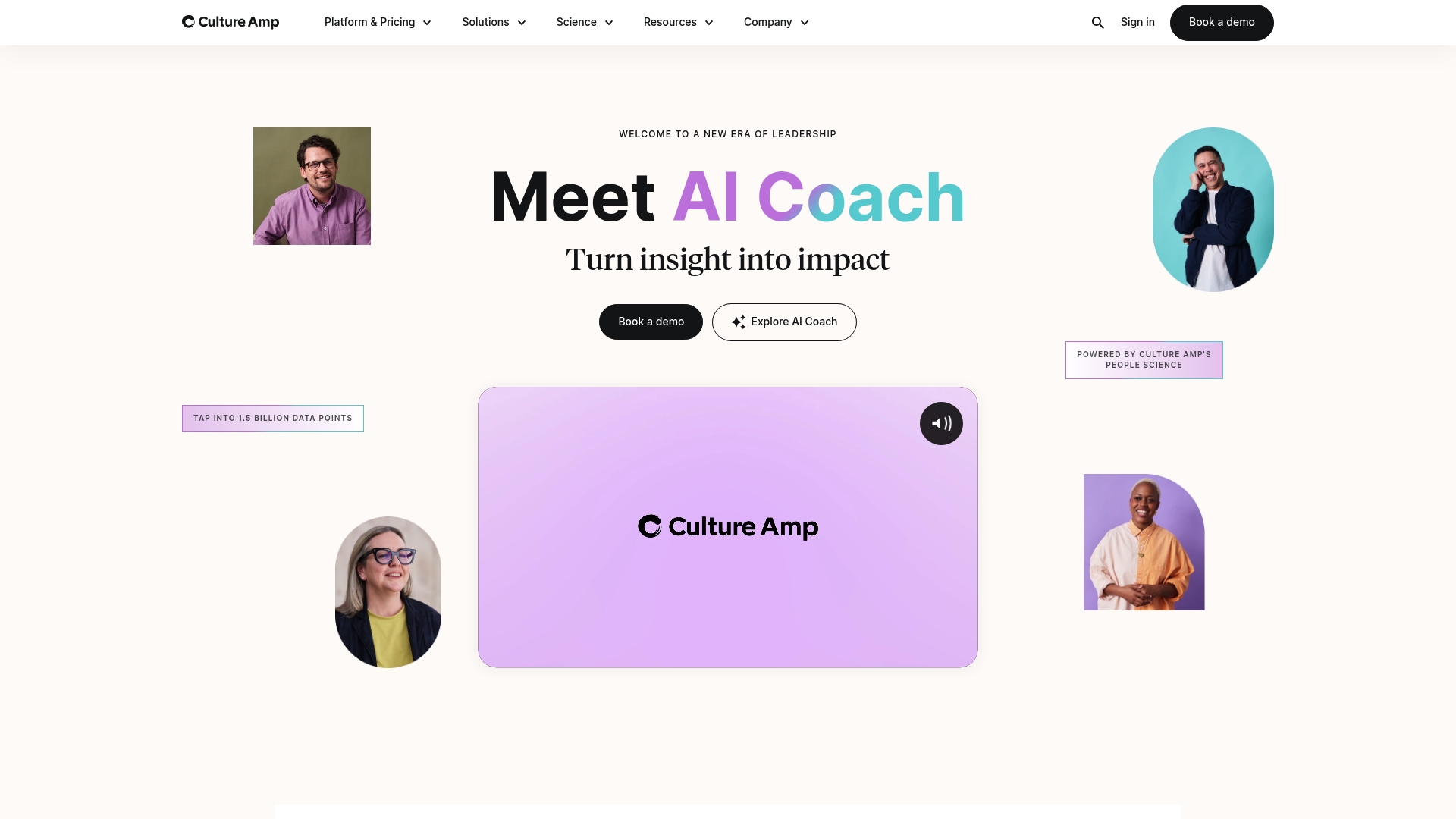
Culture Amp is an Employee Experience Platform built to measure and improve engagement, performance and development across organisations. The product blends survey science with people analytics to give HR teams and leaders a data driven view of employee sentiment. Implementation can unlock measurable improvements in culture and manager effectiveness when the organisation commits to action. Expect a rich feature set that requires deliberate onboarding and executive sponsorship to capture full value.
Core Features
Culture Amp delivers employee engagement surveys with benchmarking and analytics, performance review workflows and continuous feedback that surfaces real time performance signals. It offers career development tools and personalised growth plans to support talent mobility and retention. The platform includes an AI Coach to generate coaching prompts and action plans that help managers convert feedback into development conversations. Strong integration capabilities allow connections with HRIS and other SaaS systems so data flows into existing people operations processes.
Pros
- Comprehensive coverage: The platform addresses engagement, performance and development in a single suite which reduces tool fragmentation for People Ops teams.
- Research backed insights: Culture Amp is supported by data science and people research which strengthens the credibility of its benchmarks and recommendations.
- Customisable templates: Organisations can adapt surveys and review cycles using industry benchmarks and preset templates to match local programmes.
- Integration friendly: The product connects with common HRIS and productivity tools so you can combine sentiment data with workforce metrics.
- Documented impact: Case studies and client testimonials provide concrete examples of cultural improvements and ROI.
Cons
- Higher cost for small teams: Pricing may be prohibitive for smaller organisations that lack enterprise budgets.
- Feature complexity: The breadth of capabilities can require significant onboarding and change management to use effectively.
- Limited UI detail in source: The provided information lacks depth on the user interface and day to day user experience which makes evaluation harder.
Who It’s For
Culture Amp suits HR leaders, People Ops professionals and senior executives in organisations that want a data led approach to culture. It fits companies that already invest in people analytics and have capacity to run recurring survey programmes and actionable follow up. This is a strong option for multinational organisations seeking consistent measurement across locations.
Unique Value Proposition
Culture Amp combines survey science with operational tools to link employee sentiment to people practices and talent outcomes. Its strength is turning engagement signals into calibrated performance processes and individual development plans, backed by research and benchmarks. That combination helps leaders see not only where issues exist but where to focus managerial attention.
Real World Use Case
A multinational company runs quarterly engagement surveys through Culture Amp, maps results to manager performance reviews and uses the AI Coach to create development prompts for managers. HR aggregates insights by region and role to prioritise retention interventions and track progress over successive cycles. Managers receive specific conversation guides that translate survey findings into one on one development work.
Pricing
Pricing details are available upon request and Culture Amp offers custom enterprise pricing based on organisation size and needs.
Website: https://www.cultureamp.com
Qualtrics XM Platform
At a Glance
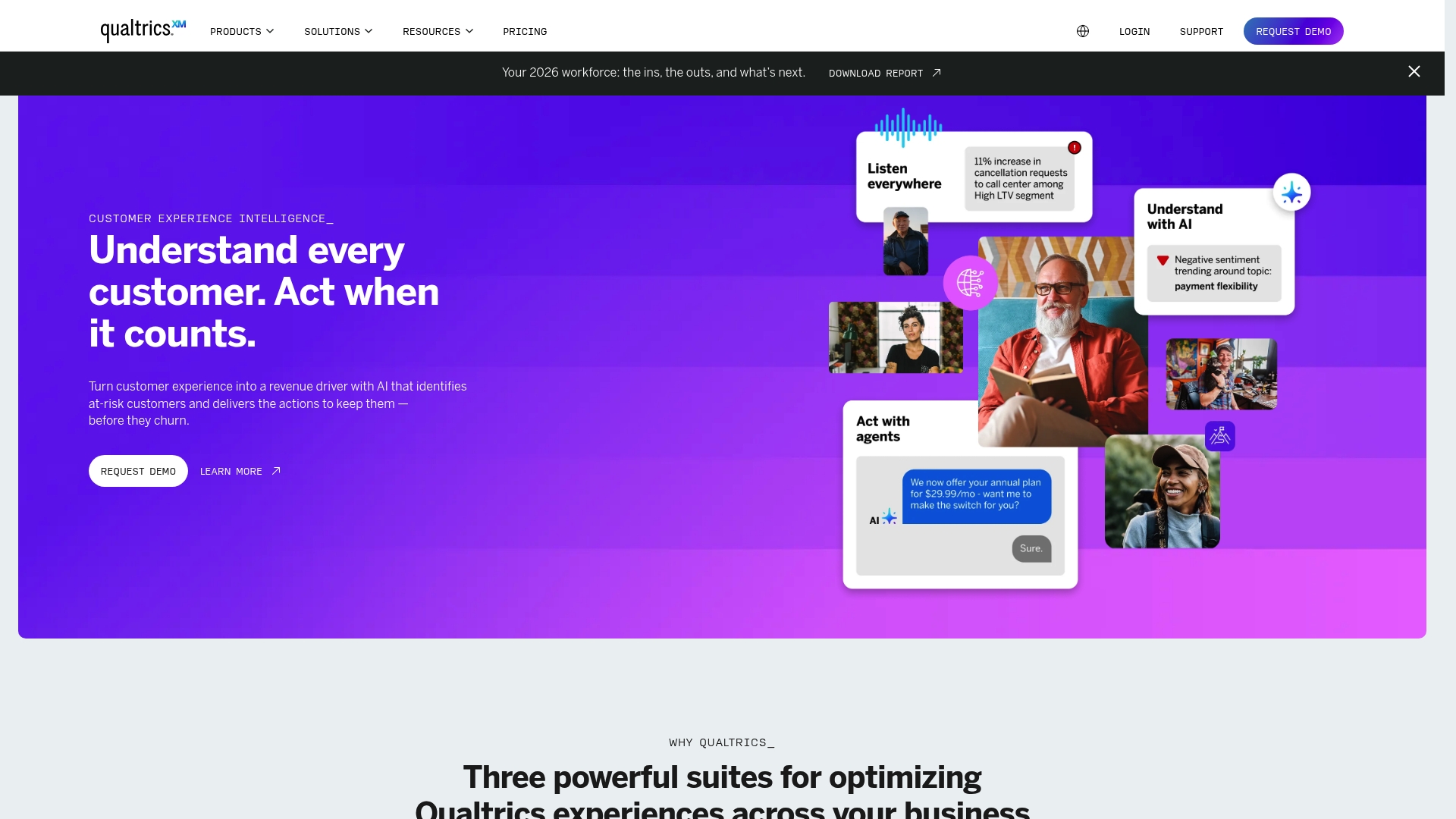
Qualtrics XM Platform is a broad experience management suite that helps organisations collect and act on customer and employee feedback. It combines AI-powered insights with configurable suites for Customer Experience, Employee Experience and Strategy & Research. For medium to large organisations that need an enterprise grade solution, it delivers depth and global scale. Smaller teams may find the breadth of features more than they require.
Core Features
The platform provides an all-in experience management approach with three distinct suites for Customer Experience, Employee Experience and Strategy & Research. It supports surveys, digital feedback, omnichannel management and analytics while using AI to surface trends, recommendations and automation. The product is customizable to different organisational needs and integrates data across channels to centralise insights for leaders and researchers.
Pros
-
Comprehensive experience management solutions: The platform covers customer, employee and strategic research needs within a single environment which reduces tool sprawl.
-
Integrated AI for insights and automation: AI assists with analysis and recommendations so teams get faster, more actionable findings from large data sets.
-
Flexible suite and product options: Organisations can buy suites or individual products which lets procurement match capability to budget and use case.
-
Global presence and large customer base: Qualtrics operates internationally which supports multinational rollouts and standardised measurement across regions.
-
Tools for customer, employee and strategic research: The platform handles market, product, UX and brand research alongside operational feedback which centralises insight work.
Cons
-
Pricing complexity can require consultation: Costs are based on interactions and usage which means pricing discussions often need vendor engagement to clarify total cost.
-
Feature breadth could overwhelm smaller organisations: The number of capabilities and configuration options can be more than smaller People Ops teams want to manage.
-
Implementation and learning curve can be significant: Deploying suites and training stakeholders requires time and internal change management to reach full value.
Who It’s For
This platform suits medium to large organisations across industries that need a single source of truth for experience data. It is a fit for central People Ops teams, CX leaders and Strategy teams who run global programmes and require advanced analysis and governance. If you lead enterprise measurement and want consolidated reporting, this platform is relevant.
Unique Value Proposition
Qualtrics brings scale and depth by combining AI analytics with configurable suites so leaders see not only what employees and customers say but why. The combination of omnichannel data collection and enterprise reporting makes it useful where standardised metrics must link to strategic decisions.
Real World Use Case
A multinational retail chain uses Qualtrics to gather omnichannel customer feedback, analyse touchpoints with AI driven insights and automate customer service improvements, resulting in increased satisfaction and sales. The centralised reporting lets regional leaders compare results and prioritise interventions quickly.
Pricing
Pricing is based on interactions and usage with options to purchase suites or individual products. Specific costs are available upon request through Qualtrics sales channels.
Website: https://qualtrics.com
Workday
At a Glance
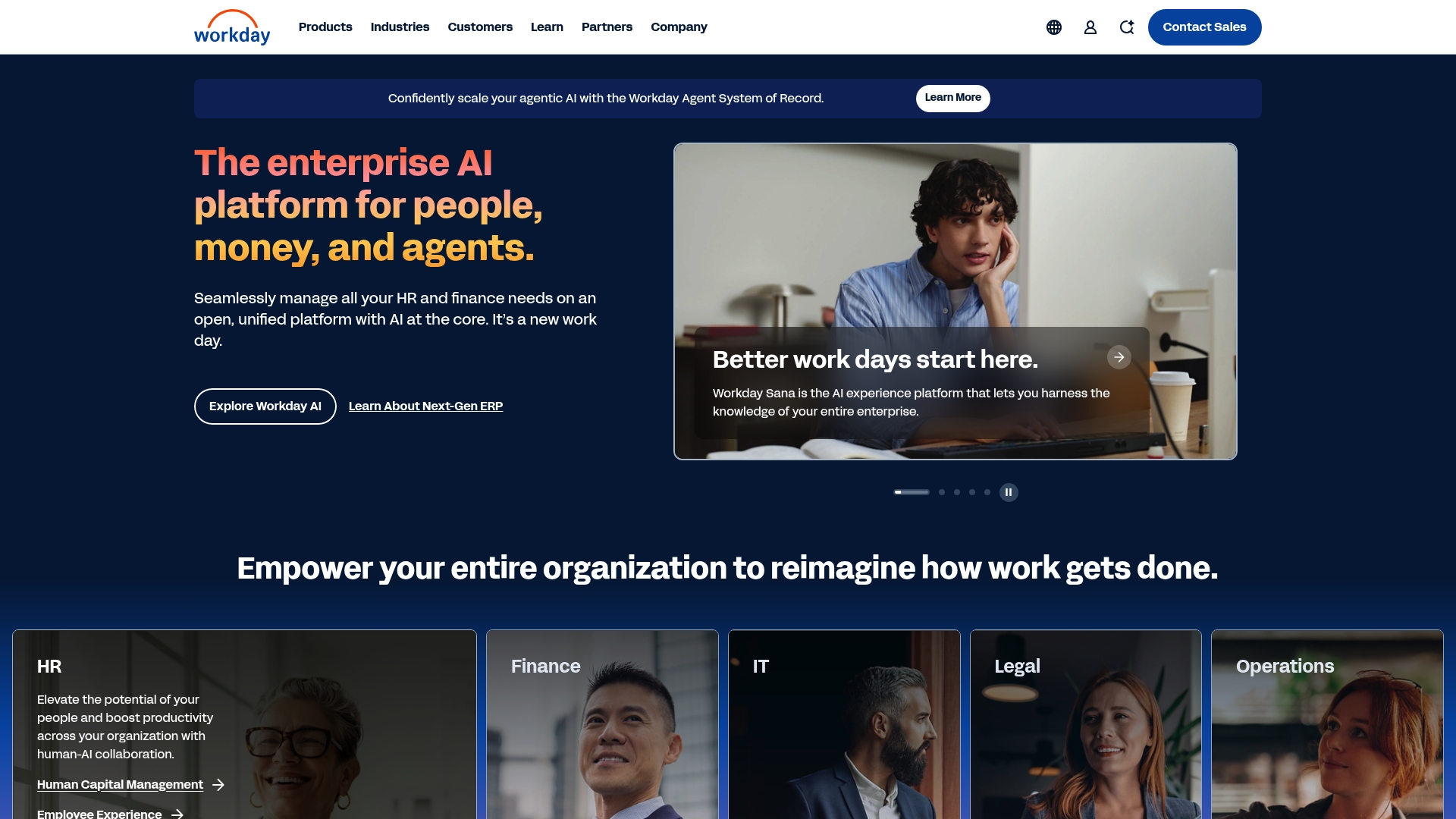
Workday is an enterprise platform that unifies HR, Finance, Planning and Legal into a single cloud system that large organisations can scale. Its deep use of AI provides automation and predictive insights that help leaders make faster workforce and financial decisions. Implementation can be lengthy and cost can be material for smaller teams, but for established multinational organisations the platform delivers a consolidated source of truth. Bottom line: powerful for enterprise needs, less suited to leaner People Ops teams with limited implementation budgets.
Core Features
Workday offers a broad set of capabilities centred on an AI powered enterprise platform and a unified system for HR and Finance. Core modules include talent management, workforce management, financial planning and legal contract lifecycle support. The platform provides advanced analytics and reporting tools that surface trends across regions and business units, and it offers industry specific configurations for Healthcare, Manufacturing and Public Sector customers.
Pros
- Comprehensive enterprise solutions: Workday covers HR, finance and legal needs in one platform so leaders avoid fractured data across point solutions.
- Strong AI integration: The platform uses AI to automate routine tasks and to surface predictive insights that speed decision making across payroll, planning and talent workflows.
- Industry specific support: Workday supplies templates and configurations for sectors such as Healthcare and Manufacturing which reduce bespoke development effort.
- Global and local capabilities: The product supports multiple regions and languages so multinational organisations can standardize processes while respecting local requirements.
- Proven scale: Trusted by more than 11,000 organisations worldwide, Workday demonstrates capability at enterprise scale and complexity.
Cons
- The platform complexity often requires significant implementation time which can delay time to value for busy People Ops teams.
- Licensing and services can be costly which makes Workday a challenging fit for smaller organisations with constrained budgets.
- Customization and integration complexity increases the need for specialist IT or vendor resources which elevates total cost of ownership.
Who It’s For
Workday best serves large enterprises and mid sized organisations that need integrated cloud solutions for HR, Finance and operational management. You should consider Workday if you lead People Ops or Finance at a multinational and require a single platform to align workforce planning with financial planning. If your team lacks dedicated implementation resources or you run a small headcount, other lighter alternatives will be more practical.
Unique Value Proposition
Workday combines cross functional enterprise modules with AI driven automation and advanced analytics so executives and People Ops leaders can tie workforce signals to financial plans. That single source of truth reduces reconciliation work across HR and Finance and enables strategic decisions that link people programmes to business outcomes.
Real World Use Case
McLaren Racing used Workday to empower its Finance team with planning and AI driven insights that improved decision making and operational performance. This illustrates how teams with complex financial and people needs can consolidate tools and accelerate analysis on a unified platform.
Pricing
Pricing is provided on request and varies with scope and scale of deployment. Expect enterprise licensing and implementation fees that reflect the breadth of modules and global roll out requirements.
Website: https://workday.com
TINYpulse
At a Glance
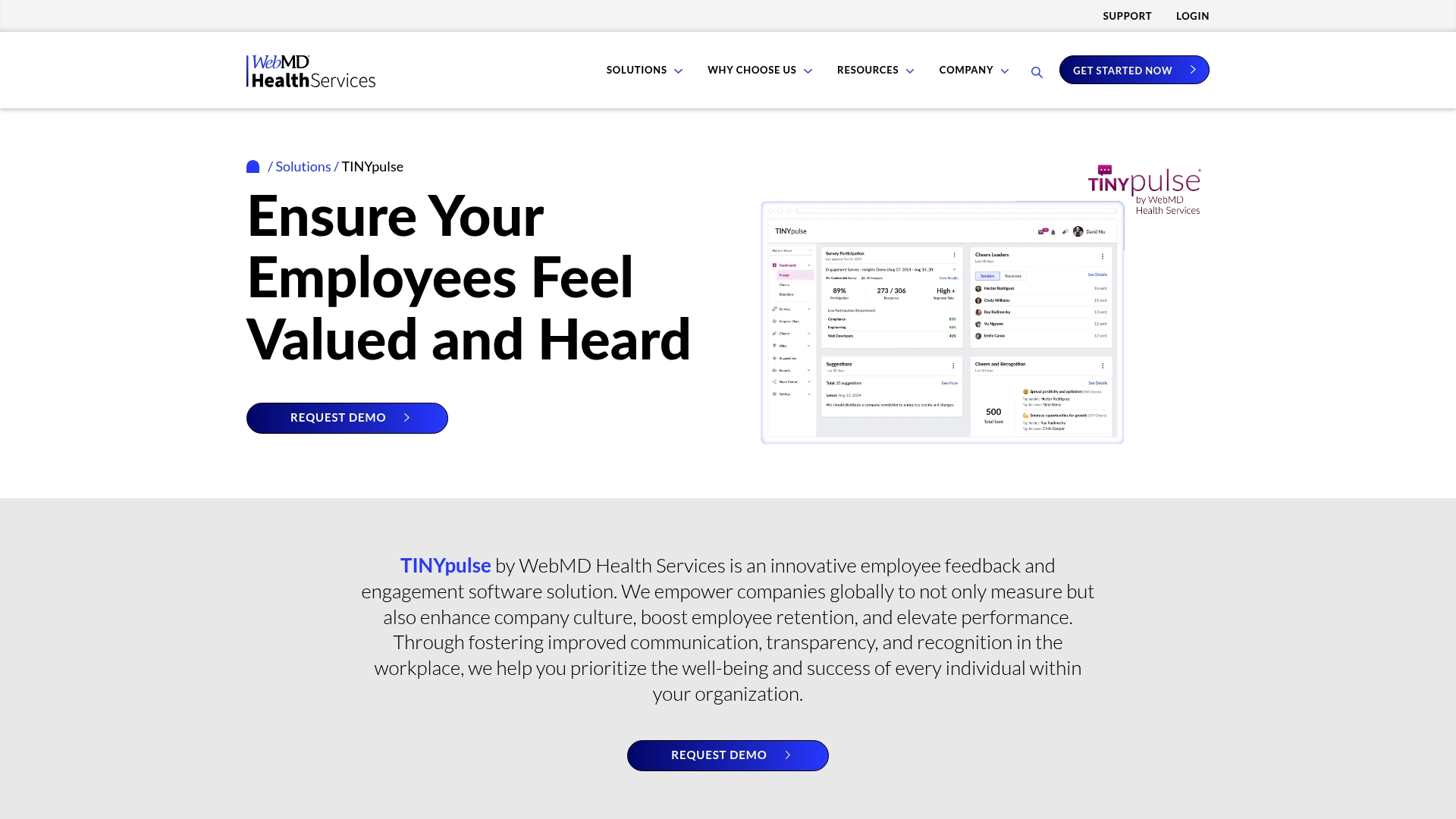
TINYpulse by WebMD Health Services is an employee feedback and engagement solution that focuses on continuous listening, recognition, and analytics to help leaders measure culture and reduce turnover. The platform combines anonymous two-way communication with regular pulse surveys and recognition tools to surface engagement drivers. Implementation requires thoughtful change management to reach mature value. Try a pilot with one division before rolling out company wide.
Core Features
TINYpulse collects employee feedback through short surveys and supports Cheers for Peers as a built in recognition mechanism. The platform offers actionable insights and detailed reports that help you tie sentiment to engagement drivers. Integrations with HR tools help centralise data for reporting and trend analysis. Run a three month pilot and review engagement metrics before expanding.
Pros
- Supports employee recognition by making peer to peer praise visible which improves morale over time.
- Helps identify key engagement drivers by surfacing recurring themes in comments and survey responses for targeted action.
- Offers comprehensive analytics that let People Ops spot trends and prioritise interventions with clear visual reports.
- Provides dedicated customer support and a success team that guides implementation and drives adoption.
- Helps reduce turnover by giving leadership early warning signals on disengagement so retention actions can be taken sooner.
Takeaway: Use the recognition features and analytics together to convert sentiment into concrete retention actions.
Cons
- The product is primarily designed for organisations of certain sizes and may require customisation for very small or very large companies which adds project work.
- Features and usability depend heavily on implementation and company engagement so results vary by how leaders act on feedback.
- Subscription cost may be a consideration for smaller companies and total cost of ownership may rise with custom work and integrations.
Takeaway: Budget for implementation and change management when planning deployment.
Who It’s For
TINYpulse suits HR professionals, company leadership, and HRIS managers who need a repeatable method to measure engagement and create recognition habits. It fits teams prepared to act on feedback and willing to run pilots to prove value. If you are seeking lightweight continuous listening rather than a heavy annual survey, this is a practical choice.
Takeaway: Choose TINYpulse when you want continuous signals and recognitions that prompt real HR action.
Unique Value Proposition
TINYpulse pairs short frequent feedback with peer recognition and practical reporting so leaders can see what matters and where to intervene. The combination of anonymity and two way channels encourages honest input while the analytics convert qualitative notes into trends you can present to executives. Start small and use leadership response as evidence of impact.
Takeaway: The platform turns ongoing sentiment into evidence you can act on.
Real World Use Case
Microsoft uses TINYpulse to shape culture by showing leadership responsiveness to feedback which increased engagement and strengthened company culture. That example shows how running a visible feedback loop and reporting back drives behavioural change. Replicate that by publishing quarterly action plans tied to pulse themes.
Takeaway: Demonstrate responsiveness and track changes quarter to quarter.
Pricing
Pricing details are typically available upon request or via demo setup so you will need to contact sales for a quote and licensing options. Factor in professional services for integration and change management when evaluating total cost.
Takeaway: Request a scoped quote and confirm implementation fees before committing.
Website: https://tinypulse.com
Lattice
At a Glance
Lattice is an integrated HR platform that centralizes performance management, engagement, goals and compensation in a single interface. The product pairs traditional HR workflows with AI powered insights to surface sentiment and coaching opportunities. It suits organisations that want one vendor for reviews, OKRs and pay planning while gaining predictive signals from employee feedback. Expect a robust feature set with an enterprise pricing model that rewards scale.
Core Features
Lattice combines a full suite of HR capabilities including performance reviews, talent reviews, PIPs and succession planning alongside structured 1:1s. The platform delivers engagement surveys with AI analysis to identify sentiment drivers. It also supports Goals & OKRs, compensation management with benchmarking and an AI Agent that assists with HR queries and manager coaching. Integrations with Slack, Jira and Workday connect Lattice to existing HRIS and productivity tools.
Pros
-
Comprehensive HR suite: Lattice covers reviews, engagement, goals and compensation so teams avoid stitching multiple point solutions together.
-
AI powered insights: The platform synthesizes survey responses and HR data to highlight drivers of engagement and coaching opportunities.
-
Highly customisable: Organisations can adapt review cycles, goal frameworks and compensation workflows to match their governance and culture.
-
Trusted by established firms: Positive reviews and awards such as the G2 2026 Best Software recognition demonstrate market validation.
-
Wide integration support: Native connections to major HRIS and productivity tools reduce manual data work and increase adoption.
Cons
-
Cost can be prohibitive for smaller teams: Pricing starts at $8 per seat per month for individual products but the minimum annual spend of $4,000 raises the entry barrier.
-
Initial complexity for administrators: The breadth of features requires time to configure and to train managers and people teams.
-
Variable customer support experiences: Support quality appears to depend on plan level and implementation scope which can leave some teams needing more handholding.
Who It’s For
Lattice fits mid sized to large organisations that want a single platform for performance management, engagement measurement and compensation planning. People Ops teams that manage complex review cycles and need analytics to tie people programmes to outcomes will find value. Choose Lattice when you need scalability and advanced feature depth rather than a lightweight engagement tool.
Unique Value Proposition
Lattice bundles end to end people processes with embedded AI to convert qualitative feedback into actionable HR signals. The combination of reviews, OKRs and compensation within one platform shortens decision loops and creates a unified dataset for people analytics. That unified dataset is the core advantage for executives seeking to link culture to business metrics.
Real World Use Case
A growing technology firm uses Lattice to run biannual performance reviews, maintain rolling OKRs and execute annual compensation cycles. Engagement surveys with AI insights help the People Ops team spot engagement dips and coach managers before attrition rises. The result is clearer talent decisions and a central record of development conversations.
Pricing
Pricing starts at $8 per seat per month for individual products and enterprise pricing varies by options and scale. There is a minimum annual spend of $4,000 which makes self evaluation necessary for smaller budgets.
Website: https://lattice.com
15Five
At a Glance
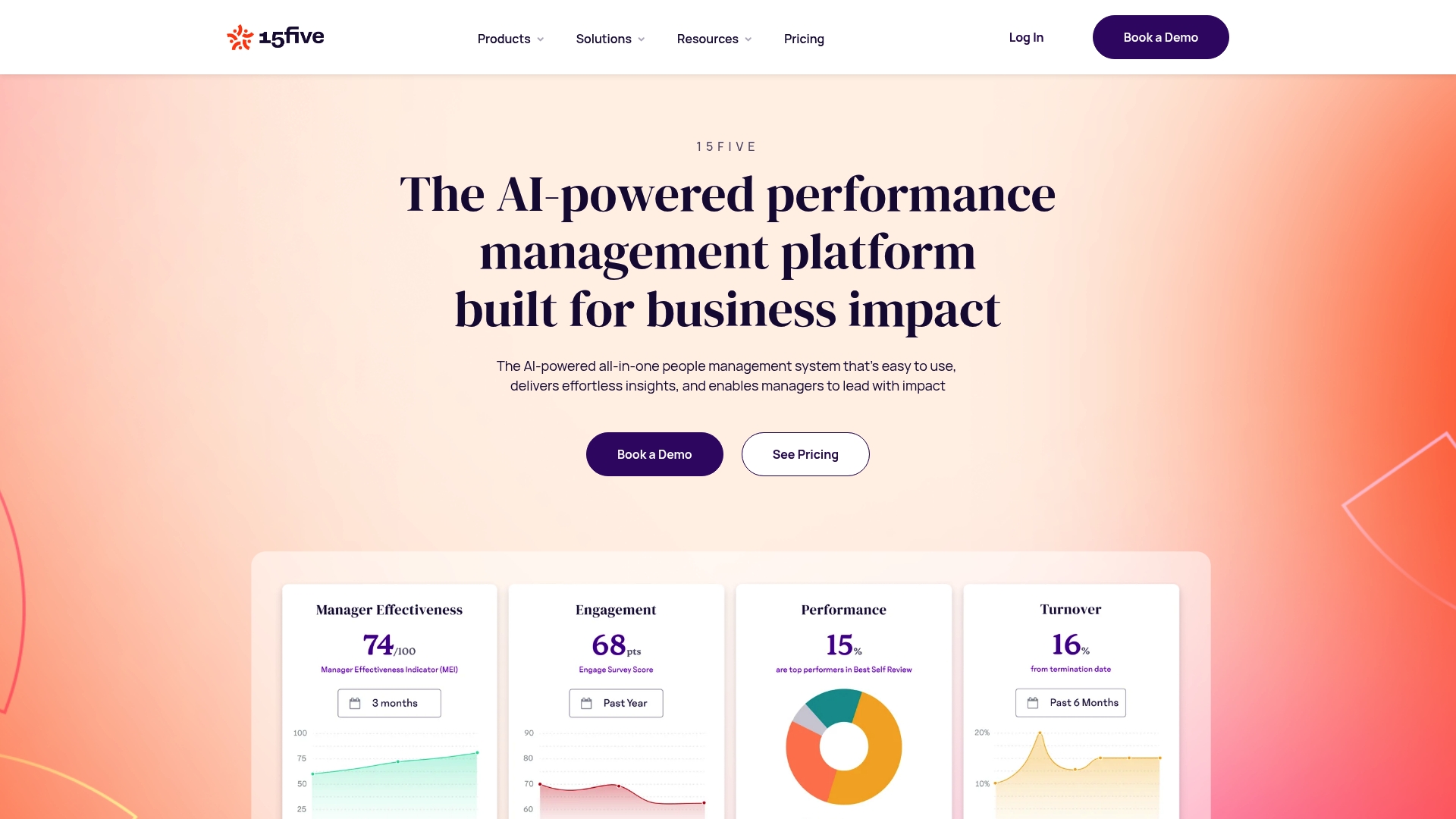
15Five is an AI-powered performance management platform that brings reviews, engagement surveys, compensation signals and analytics into a single view for HR and PeopleOps teams. It targets mid market and enterprise organisations that need a unified approach to performance and retention. The platform emphasises manager enablement and delivers AI coaching to turn feedback into actions. Bottom line: strong analytics and coaching tools for larger organisations with dedicated HR capacity.
Core Features
15Five combines integrated tools for running reviews, one on ones and OKRs with employee engagement surveys and dashboards for leadership. The platform includes Kona and AMAYA AI assistants that surface coaching prompts and performance insights. Compensation management and benchmarking features link pay decisions to performance signals while centralised dashboards provide HR and leadership with a single source of truth for decision making. Integrations with HRIS and productivity tools allow data to flow without forcing new systems on teams.
Pros
-
Comprehensive all in one platform: It unifies performance reviews, engagement data and compensation signals into a single location for easier cross analysis.
-
AI coaching and insights: Kona and AMAYA provide managers with timely coaching prompts and synthesised insights that reduce manual analysis.
-
Strong integration capabilities: The product connects to HRIS and common productivity tools so existing data feeds into reports and dashboards.
-
Proven scale: The vendor reports trust from thousands of organisations and hundreds of thousands of employees, showing it can operate at enterprise scale.
-
Enterprise grade security: Security measures are designed to meet the needs of larger organisations that handle sensitive HR data.
Cons
-
Higher cost for smaller teams: Pricing tiers are geared toward mid market and enterprise customers and may be expensive for small organisations.
-
Feature complexity requires training: The breadth of capabilities can demand formal training for HR teams and managers to use the system effectively.
-
Interface can feel overwhelming: Users report that the UI exposes many features which can make daily use feel cluttered for teams that want simple workflows.
Who It’s For
This product suits HR leaders and PeopleOps professionals in mid market to large enterprises that require integrated performance, engagement and compensation tools. Use it when you have dedicated HR capacity and aim to tie qualitative feedback to measurable business outcomes. If your organisation needs enterprise security and deep analytics, 15Five aligns with that need.
Unique Value Proposition
15Five positions itself as a unified platform that converts performance and engagement signals into actionable coaching and compensation insights. The combination of AI assistants, centralised dashboards and benchmarking tools helps leaders diagnose performance gaps and equip managers with concrete next steps.
Real World Use Case
ReUp Education used Kona AI to strengthen manager coaching which improved manager effectiveness and influenced retention and engagement metrics. That example shows how AI driven prompts can change manager behaviour and yield measurable HR outcomes.
Pricing
Pricing tiers are Engage at $4 per user per month, Perform at $11 per user per month and Total Platform at $16 per user per month when billed annually. Additional modules and add ons are available at extra cost.
Website: https://15five.com
Workplace Culture and Employee Engagement Tools Comparison
The table below provides a concise comparison of leading workplace culture and employee engagement tools. Details include features, suitability, pros/cons, and pricing.
| Tool | Core Features | Pros | Cons | Pricing |
|---|---|---|---|---|
| Wurkn | Real-time organizational telemetry via Slack and Teams; privacy-first design | Continuous insights, seamless integrations, and privacy-focused analytics | Pricing is not publicly available | Custom pricing upon request. |
| Culture Amp | Employee engagement surveys; data-backed analytics tools | Comprehensive coverage, research-backed insights | Higher cost for smaller teams; onboarding complexity | Custom pricing upon request. |
| Qualtrics XM | AI-powered trend analysis; configurable suites for various types of feedback | Comprehensive solutions, integrated AI insights | Pricing requires consultation; feature breadth overwhelming | Based on usage and interactions. |
| Workday | Unified HR, finance, legal platforms; AI-powered analytics | Enterprise-centric solutions, industry-specific configurations | High implementation complexity; licensing can be costly | Pricing provided upon consultation. |
| TINYpulse | Continuous listening and recognition; pulse surveys | Supports peer recognition; identifies key engagement drivers | Requires thoughtful implementation; subscription costs for smaller teams | Pricing upon request. |
| Lattice | Performance management, engagement surveys, and compensation planning | Comprehensive HR suite; customizability | Initial configuration complexity; higher cost for smaller organizations | Starts at $8/user/month; minimum $4,000/year |
| 15Five | Integrated performance tools with AI assistants for insights | Unified tools for reviews and coaching; enterprise-ready security features | Higher pricing tiers; significant training needs | Plans range from $4 to $16/user/month. |
Elevate Your Employee Engagement with Real-Time Cultural Intelligence
Finding the right tool to enhance employee engagement is a vital challenge for HR leaders and PeopleOps professionals. If you are looking beyond traditional survey platforms like Culture Amp to address the ever-evolving demands of capturing authentic employee sentiment, consider the unmatched benefits of continuous, privacy-first cultural intelligence. Many organisations struggle with delayed feedback, fragmented data sources, and lack of actionable insights tied directly to business outcomes like productivity and retention. Wurkn converts everyday communications from Slack, Microsoft Teams, HRIS, and intranet systems into a living dashboard powered by an AI pipeline with humans in the loop. This ensures leaders not only see what is happening but truly understand why.
Why choose Wurkn?
- Continuous, always-on feedback instead of static surveys
- Strong privacy safeguards including anonymisation and PII redaction to foster trust
- Direct linkage of cultural signals to key performance indicators that matter to executives
- Seamless integration with your existing communication platforms
These features create a clear and timely view of how culture impacts your organisational success, empowering COOs and PeopleOps teams to act proactively. Learn more about how Wurkn delivers cultural business intelligence that transforms engagement efforts by visiting the Wurkn platform and explore how we stand apart from other solutions like Culture Amp.
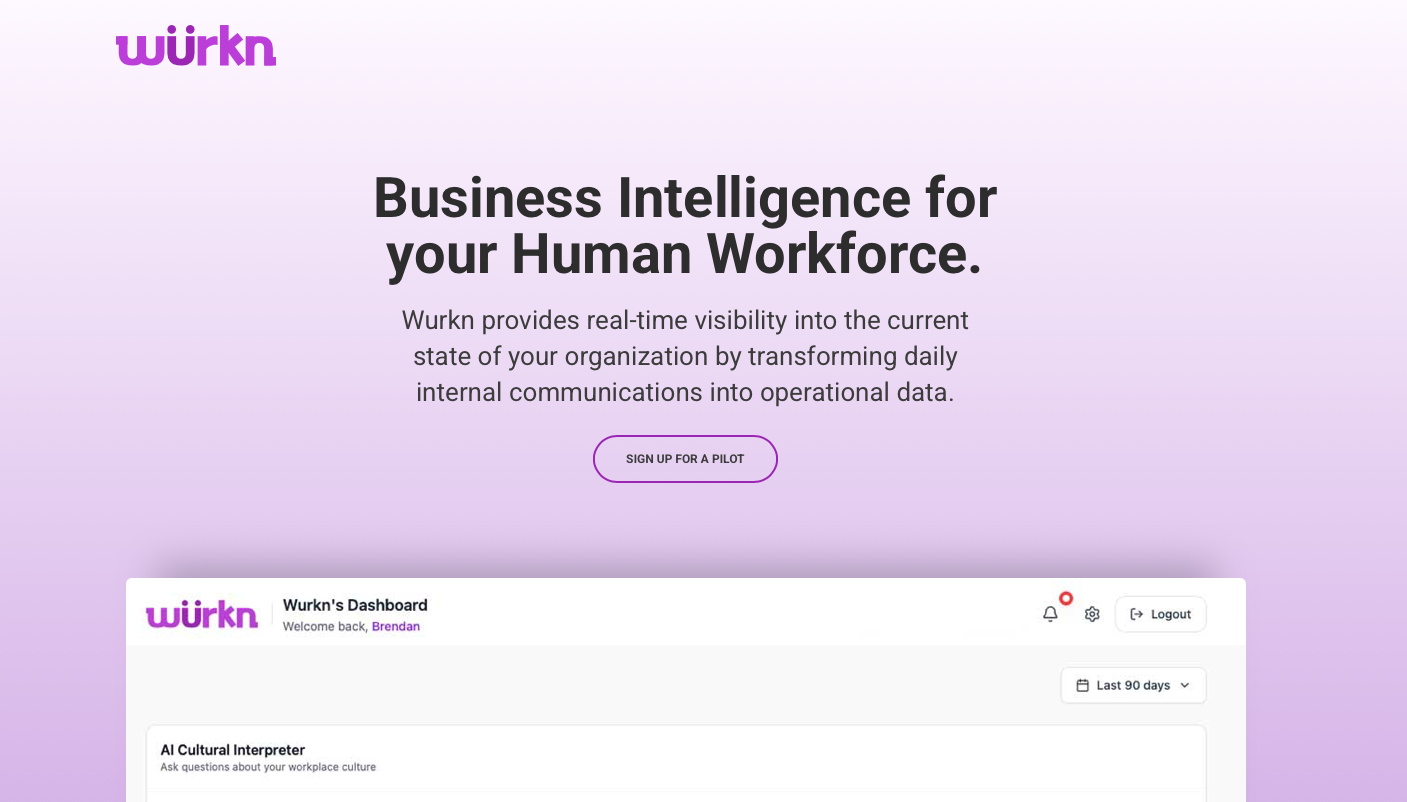
Ready to move beyond traditional survey fatigue and outdated tools? Experience continuous cultural insights that bring clarity and drive real impact today. Discover how your organisation can build healthier teams, reduce churn, and improve performance with Wurkn. Take the next step by visiting Wurkn and see how continuous employee sentiment transforms into actionable intelligence for your leadership team.
Frequently Asked Questions
What are some key features to look for in alternatives to Culture Amp?
When searching for alternatives to Culture Amp, look for platforms that provide comprehensive employee engagement surveys, continuous feedback mechanisms, and powerful analytics. Prioritise tools that integrate easily with existing systems and allow for customised reporting to meet your specific organisational needs.
How can I ensure employee privacy when using engagement tools?
Choose platforms that incorporate strong privacy measures, such as data minimisation and anonymisation of responses. Remember to review how the tool handles personally identifiable information (PII) to maintain trust and encourage candid feedback from employees.
What steps should I take to implement a new employee engagement tool?
Begin by assessing your organisational requirements and employee needs, then select a tool that aligns with these criteria. Follow up with a structured implementation plan that includes training sessions for users and ongoing support to maximise adoption and effectiveness within the first few months.
How can I measure the effectiveness of an employee engagement tool?
Track key performance indicators (KPIs) related to employee satisfaction, retention rates, and productivity changes after implementing the tool. Conduct regular reviews, such as every quarter, to evaluate the impact and make necessary adjustments based on feedback from team members.
What typical challenges should I expect during the transition to a new engagement platform?
Challenges may include resistance to change from employees and difficulty integrating the new tool with existing processes. Prepare by communicating the benefits clearly and providing adequate training and resources to help ease the transition for your team.
How often should I use employee engagement tools to gather feedback?
Utilise employee engagement tools at regular intervals, such as quarterly or bi-annually, to ensure you are capturing a complete picture of employee sentiment. This frequency allows you to identify trends over time and respond to issues proactively, improving overall organisational culture.