
A meeting one on one is more than just a calendar invite. It’s a dedicated, private conversation between a manager and their direct report, specifically designed to build trust, support professional growth, and tackle challenges head-on—away from the noise of team meetings.
Rethinking the One on One Beyond a Status Update
If your one on ones feel like a chore that could have been an email, it’s time for a rethink. Let’s be honest, nobody has time for another status update meeting.
In today’s hybrid work environments across Canada and the United States, the sharpest leaders are reframing this time. They see it not as an obligation, but as a strategic asset for boosting retention, engagement, and performance. This isn't just about checking boxes; it's about building a foundation of trust that pays dividends.
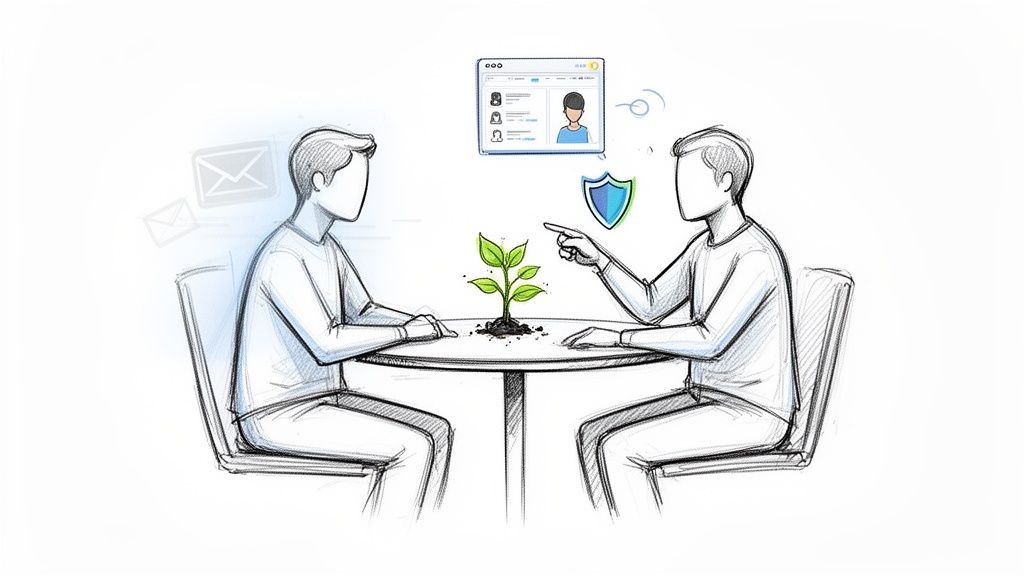
The crucial shift is moving from tactical updates to meaningful conversations about what actually matters to your people. This means carving out protected time to discuss career growth, check in on personal wellbeing, and foster a space of psychological safety. When an employee feels they can share honest feedback without fear of reprisal, their commitment to the team and the organization skyrockets.
It's helpful to see the difference between a low-impact check-in and a high-impact strategic session.
Status Update vs Strategic One on One
| Attribute | Tactical Status Update | Strategic One on One |
|---|---|---|
| Primary Goal | Review task progress | Drive growth, build trust, and remove blockers |
| Agenda Focus | Project updates, deadlines, and completed items | Career goals, skill development, wellbeing, and feedback |
| Manager Role | Project manager | Coach and mentor |
| Employee Role | Reporting status | Driving their own development and agenda |
| Key Outcome | Short-term task alignment | Long-term engagement, retention, and performance |
The goal is to move every one on one firmly into that right-hand column, transforming it from a simple review into a powerful coaching opportunity.
From Conversation to Business Intelligence
This is where traditional employee engagement platforms and HR survey tools fall short. They provide a static, infrequent snapshot of team sentiment—often months after the fact, making the data irrelevant for timely decision-making.
A true business intelligence tool like Wurkn elevates these conversations beyond simple feedback collection. It provides leaders with real-time, anonymized sentiment data, which is a game-changer. This insight allows managers to walk into a one on one already understanding the team's underlying challenges and successes, ready to ask better, more informed questions.
A great one on one is less about discussing the what (tasks completed) and more about exploring the why (motivations, roadblocks, and aspirations). It transforms the manager-employee dynamic from transactional to developmental.
For instance, imagine Wurkn's dashboard flags rising frustration around workload in your department. Instead of waiting for someone to burn out or for the next annual survey, you can proactively use your next one on one to dig into it. You can ask targeted questions like, "How has your capacity felt the last few weeks?" and co-create solutions before it becomes a crisis. This directly connects the qualitative themes from your conversations with quantitative business KPIs, turning a simple meeting into a powerful tool for strategic decision-making.
The Proven Impact on Engagement
The value of this strategic approach is crystal clear. Especially in the competitive talent markets across the United States and Canada, the one on one has become a non-negotiable leadership tool.
The data speaks for itself. Employees who have frequent, meaningful goal-setting discussions during these sessions are significantly more engaged. According to Gallup, employees whose managers hold regular meetings with them are almost three times as likely to be engaged as employees whose managers do not (Gallup, 2014, State of the American Manager). Discover more insights on effective one on ones from Lattice.
When you connect individual growth with business outcomes, you create a culture where people feel seen, heard, and genuinely valued. The meeting one on one stops being just another obligation and becomes the most important conversation you have all week—a true catalyst for both individual and organizational success.
How to Build a Collaborative Meeting Agenda
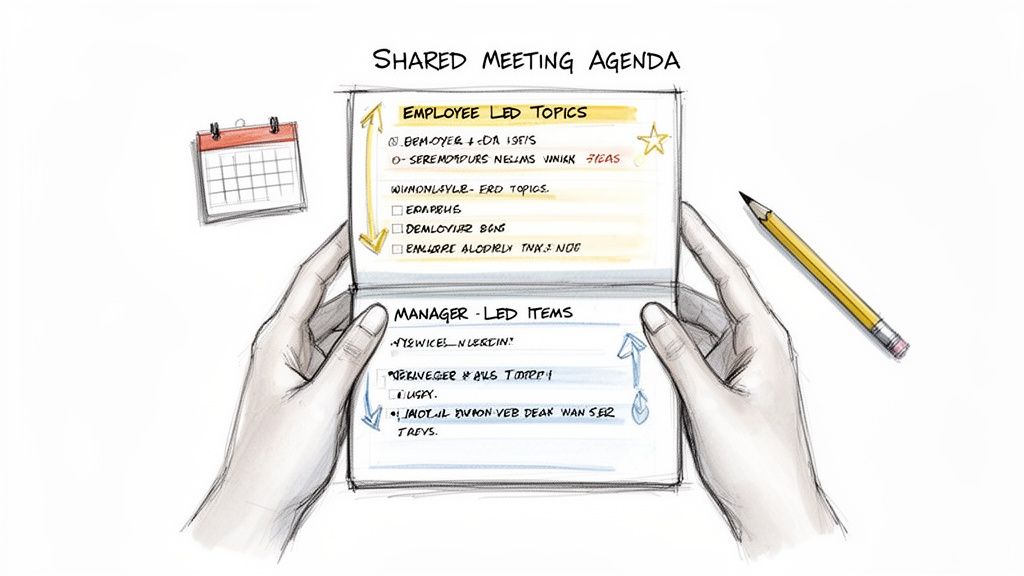
A great one-on-one is rarely improvised; it's engineered. The foundation of any strategic conversation is a collaborative agenda—a shared document that turns the meeting from a top-down monologue into a genuine dialogue. Sending an agenda ahead of time respects your employee’s time and empowers them to show up ready to contribute in a meaningful way.
The most effective structure puts the team member in the driver’s seat. By letting them add their topics first, you immediately signal that their concerns, ideas, and roadblocks are the top priority. This simple act builds psychological safety and encourages them to take ownership of their own development and success.
This approach directly tackles a common failure point in one-on-ones. Without a clear plan, conversations drift into unstructured status updates that don’t really benefit anyone. A solid agenda ensures every minute is spent on what truly matters for engagement and performance.
A Structure for Meaningful Conversation
A simple yet powerful agenda can be broken down into three core parts. This format makes sure you cover personal check-ins, pressing issues, and future-focused growth topics in every single session. It’s a framework that balances the immediate needs of today with long-term aspirations.
- Employee-Led Topics (15 minutes): This section is theirs. It's a dedicated space for them to talk about wins, challenges, ask for feedback, or get support. This should always come first.
- Manager-Led Topics (10 minutes): Now it's your turn. This is your time to share company updates, provide constructive feedback, align on priorities, or discuss any observations you've made.
- Future Focus (5 minutes): Always end the meeting by looking ahead. Discuss upcoming goals, next steps in their career development, and confirm the clear action items you’ve both agreed to.
This structure is flexible enough to adapt to any situation while giving you a reliable framework for a productive discussion.
Tailoring Agendas for Different Scenarios
Not every one-on-one is the same. The context dictates the focus, and your agenda should reflect that. A chat with a new hire will look completely different from a project debrief with a senior team member.
Example 1: New Hire's First 90 Days
The goal here is all about integration and support. The agenda needs to focus on their experience, what they're learning, and what they need right now to feel successful.
- Their check-in: What’s one thing that surprised you this week? Where are you feeling most confident, and where do you need more support?
- Your check-in: Give feedback on their initial projects and check their progress against their 30/60/90-day plan.
- Future focus: What resources or introductions would be most helpful for you next week?
The best agendas are living documents, not rigid scripts. They provide a roadmap for the conversation but allow for detours when something important comes up. The goal is connection and progress, not just checking off topics.
Example 2: Career Pathing Discussion
This meeting is entirely about their long-term growth. The agenda should prompt them to reflect on their aspirations and figure out how you can support them.
- Their check-in: What parts of your current role energize you the most? What skills do you want to develop over the next six months?
- Your check-in: Share potential growth paths within the company and discuss opportunities for mentorship or training.
- Future focus: Let's define one concrete action item you can take toward your career goal before our next meeting.
These tailored agendas ensure the meeting is always relevant and high-impact. This proactive planning aligns individual efforts with team goals, much like how a well-defined team charter form helps set clear expectations and a shared mission from the start. Just as you build a charter for team success, you build an agenda for individual success.
A collaborative agenda isn’t just an administrative task; it’s a tool for empowerment. It shifts the dynamic, making the employee an active participant in their own success and turning a routine meeting into a powerful catalyst for growth.
Asking Questions That Unlock Real Insights
The entire value of your one-on-one hinges on one thing: the quality of your questions. Let’s be honest, generic questions get generic, throwaway answers. If you want to uncover what’s really going on with your team members—their true motivations, frustrations, and ambitions—you have to move past the surface-level chat.
We’ve all done it. You ask, "How are you?" and you get the reflexive "Fine, thanks." It's a social script, not a real inquiry. To get past that autopilot response, you need to be more specific and intentional with how you phrase things.
That simple shift from a vague check-in to a thoughtful question can completely transform the dynamic of the conversation.
Questions That Get to the Heart of the Matter
You wouldn't use a screwdriver to hammer a nail. Likewise, different goals require different questions. You can't use the same approach to discuss career growth as you would to check on someone's wellbeing. By organizing your questions by intent, you make every minute of your meeting productive and focused.
Here are some powerful alternatives to common, less-effective questions, broken down by what you're trying to achieve.
For Uncovering Roadblocks
Instead of the classic, “Is anything blocking you?”—which is just begging for a simple "no"—try digging a little deeper with more probing questions:
- "What's one thing we could change about our team's process that would immediately make your job easier?"
- "If you had a magic wand, what's the one obstacle you would remove from your projects right now?"
- "Walk me through the most frustrating part of your week. What did that actually feel like?"
For Discussing Career Growth
Move beyond the stale, “Where do you see yourself in five years?” That question is intimidating and often useless. Focus on the immediate future and their energy right now:
- "What new skill are you most excited to develop in the next six months?"
- "Which part of your current role energizes you the most? How can we find more opportunities like that for you?"
- "Is there a project or responsibility you'd like to take on just to stretch your abilities a bit?"
For Checking on Wellbeing
Replace the generic, “How’s your workload?”, with questions that show you genuinely care about their experience, not just their output:
- "On a scale of 1-10, how sustainable has your workload felt over the past two weeks?"
- "What part of your work felt most energizing this past week, and what part felt the most draining?"
- "What can I do to better support your work-life balance in the coming month?"
These types of questions open the door to real, honest conversations that a simple status check would never reveal. They are also crucial for uncovering insights that can inform broader leadership decisions, in much the same way a well-run skip-level meeting can provide unfiltered feedback from different layers of the organization.
Using Business Intelligence to Ask Smarter Questions
This is where traditional HR surveys fall behind. They give you lagging indicators—data that is weeks, or even months, old. By the time you get the results, the cultural issues have already taken root and started causing damage.
A true business intelligence tool like Wurkn flips the script by providing real-time cultural intelligence. The platform captures and analyzes anonymized employee sentiment continuously, turning that qualitative feedback into a living, breathing dashboard of your organization's health. This means you can walk into a one-on-one already equipped with insights into your team's collective mood.
When you can see the early signs of burnout or frustration in your team's anonymized feedback, your one-on-one becomes a tool for proactive intervention, not reactive damage control. You can address the smoke before it becomes a fire.
Imagine Wurkn's dashboard flags a rising trend of frustration around workload in your engineering department. Instead of waiting for a key team member to blindside you with their resignation, you can use your next one-on-one to address it with empathy and precision.
You could proactively ask something like, "I want to ensure your workload feels sustainable and that you have the space to do your best work. What’s one task we could deprioritize or offload right now to create more focus for you?"
This approach connects systemic, data-driven insights with a personal, human-to-human conversation. You're not just guessing; you're addressing a known issue with care. It shows you're listening to the team's collective voice while respecting individual privacy, turning a standard check-in into a powerful and strategic leadership moment.
Turning Conversation Into Action with Notes and Follow Up
A great conversation is fantastic, but a one-on-one without clear actions is just a nice chat. The real value shows up when dialogue translates into tangible progress. This is where effective note-taking and disciplined follow-up become absolutely non-negotiable.
The goal isn't to create a word-for-word transcript. That would completely kill the natural, conversational vibe you’ve worked so hard to build. Instead, you need to laser-focus on capturing the most crucial outputs: decisions made, commitments given, and specific action items.
Capturing What Matters Most
Your note-taking method has to be simple and unobtrusive. The key is finding a system that lets you stay present and engaged in the conversation while still documenting the important stuff. For most managers, a shared digital document is the simplest and most effective tool for this.
Using a continuous document, like a running Google Doc or a dedicated page in your project management tool, creates a historical record of progress. This lets both you and your direct report look back over time, see patterns, and track growth from one meeting to the next.
The purpose of one-on-one notes isn't surveillance; it's to build a shared memory of commitments. It's proof that you're listening and a tool to hold both of you accountable for taking action on what was discussed.
By keeping this shared space, you reinforce that the one-on-one is a collaborative effort. It becomes a living log of their journey, proving that their feedback is valued and their development is a priority. This delivers a level of clarity and continuity that basic HR survey tools, which only offer static snapshots, simply can't match.
The Power of a Clear Follow Up
The meeting doesn’t end when the calendar block is over. A concise follow-up email is the final, crucial step to solidify commitments and set the stage for action before you meet again. This simple act transforms agreements made in conversation into concrete tasks with clear ownership.
Sending this summary within a few hours reinforces the importance of the discussion and ensures nothing gets lost in the shuffle of a busy workday. It also gives you both a quick reference point to consult.
Here’s a straightforward template you can adapt:
Subject: Quick Recap & Next Steps from our 1:1
Hi [Employee Name],
Great catching up today. I really appreciated our conversation about [mention 1-2 key topics, e.g., your progress on the X project and your career development goals].
Here’s a quick summary of the action items we agreed on:
- [Action Item 1]: [Briefly describe the task.]
- Owner: [Your Name / Their Name]
- Deadline: [Date]
- [Action Item 2]: [Briefly describe the task.]
- Owner: [Your Name / Their Name]
- Deadline: [Date]
Let me know if I missed anything. Looking forward to our next chat!
Best,
[Your Name]
This isn’t just an admin task; it’s a powerful act of accountability. This structured approach is where a business intelligence platform like Wurkn shows its true value. While traditional platforms might track meeting frequency, Wurkn helps you understand the impact of these conversations. By linking the qualitative data from your follow-ups to quantitative business metrics like project velocity and employee retention, you can see how consistent, action-oriented one-on-ones directly contribute to a healthier, more productive organization.
Connecting One-on-Ones to Business Intelligence
A well-run one-on-one is powerful. But its true value is unlocked when you connect the dots between individual conversations and the overall health of the business. This is how you elevate the meeting from a simple management task into a critical source of operational data.
The problem with traditional engagement platforms or annual HR surveys is that they're a snapshot in time—an outdated one, at that. By the time you get the results, the cultural issues they flag have likely already tanked morale, productivity, and retention. They tell you what employees thought months ago, not what they’re feeling right now.
From Qualitative Feedback to Quantitative Intelligence
To make smart, timely decisions, People Ops leaders and COOs need a living dashboard of organizational health, not an old photograph. This is where a business intelligence tool like Wurkn comes in. Our platform is built to capture always-on, anonymous feedback, transforming the constant stream of qualitative employee sentiment into hard, quantitative cultural intelligence.
This continuous data flow means you can spot systemic issues as they pop up, not after they've done their damage. You get to see trends developing in real-time, letting you be proactive instead of reactive.
- Spot Burnout Hotspots: See a spike in stress-related comments in the engineering department? You can step in before it leads to a wave of resignations.
- Gauge Policy Reception: Is the new WFH policy causing widespread confusion? You can clarify the messaging before it erodes trust.
- Pinpoint Engagement Drivers: Discover what actually motivates your top teams by analyzing their anonymized feedback themes.
This simple flow—from individual conversation to organizational action—is where the magic happens.
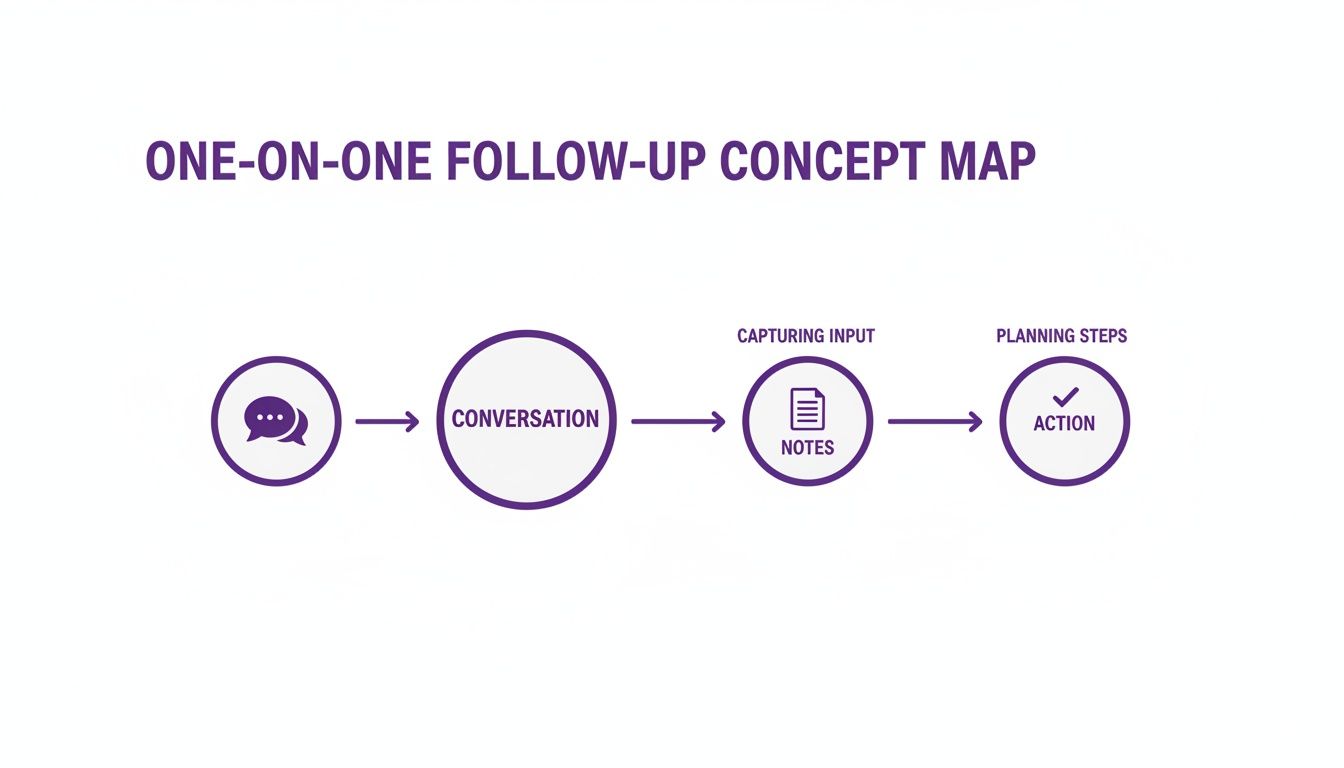
As you can see, a one-on-one, when properly documented and acted upon, becomes a catalyst for real, measurable progress.
Using Data to Empower Managers
This real-time intelligence also makes managers’ one-on-ones incredibly precise. When a manager can see the anonymized themes bubbling up within their team, they can tailor their conversations to address what actually matters. They’re no longer guessing.
For example, if the Wurkn dashboard shows a dip in sentiment around career growth opportunities, a manager can use their next one-on-one to proactively open a discussion about development paths. They walk into the meeting armed with the knowledge that this is a top-of-mind concern. This direct line between data and dialogue makes every meeting more relevant. You can see exactly how COOs get actionable business insights from continuous employee feedback and apply these same principles.
By linking anonymized sentiment data to key metrics like retention and productivity, you stop guessing about company culture and start managing it. The one-on-one becomes your primary tool for targeted, data-informed intervention.
This approach is also a powerful antidote to the meeting fatigue plaguing so many workplaces. A Zippia study found that unproductive meetings cost U.S. businesses an estimated $399 billion in 2019 (Zippia, 2023, 25 Surprising Meeting Statistics). Yet, one-on-ones are consistently ranked as the most valuable—especially when they lead to clear outcomes.
When you use a tool like Wurkn, you ensure these valued conversations aren’t just isolated chats. They become part of a larger intelligence system that connects the qualitative signals from every meeting to the quantitative KPIs that drive your business, proving the direct impact of great management on the bottom line.
Got Questions About One-on-Ones? We've Got Answers.
Even with the best game plan, rolling out a new process for your one-on-ones is going to bring up some practical questions. Let's dig into a few of the most common hurdles managers face when they decide to move from quick status updates to truly strategic conversations.
Getting these details right is often the difference between a meeting that feels like just another calendar invite and one that genuinely moves the needle on performance and engagement.
What’s the Right Cadence for One-on-Ones?
There's no single magic number, but for most teams across Canada and the US, a bi-weekly meeting is the gold standard. Think of it as the sweet spot—it’s frequent enough to jump on challenges before they snowball but spaced out enough that it never feels like micromanagement.
But of course, context is everything. You'll want to adjust based on the situation:
- New Hires: Go weekly for the first 90 days. This isn't hand-holding; it's essential support to get them integrated and up to speed fast.
- Seasoned Pros: For your high-autonomy senior players, you might be tempted to go monthly. Be careful. A lot can go wrong in 30 days, and you risk losing touch.
- Someone Needing More Support: If a team member is wrestling with a tough project or just finding their footing, ramping up to weekly meetings can provide the focused coaching they need to get back on track.
The most important thing isn't the exact interval—it's the consistency. A reliable, locked-in 30-minute chat every two weeks is infinitely more valuable than a longer, ad-hoc meeting that constantly gets bumped. It builds a bedrock of trust and predictability.
How Do I Handle a One-on-One with a Quiet Employee?
Drawing out a more reserved or introverted team member is all about creating psychological safety. Your one and only goal is to make it a low-pressure space where they feel comfortable sharing what’s on their mind. If you push, they'll just retreat further.
A simple but powerful tactic is to share a collaborative agenda with specific, open-ended questions at least a day beforehand. This gives them time to gather their thoughts, which can be a total game-changer. Instead of asking something that gets a simple "yes" or "no," try a prompt like, "Walk me through how you're approaching the X project."
And this is crucial: get comfortable with silence. After you ask a question, pause. Let the silence hang for a few seconds. Give them the space to process and put their thoughts together. Jumping in to fill the quiet sends the message that you're impatient. Over time, as you build that trust, they’ll start opening up naturally.
How Can We Actually Measure the ROI of Our One-on-Ones?
Measuring the return on something as human as a one-on-one meeting means looking beyond whether the meeting happened or not. The real ROI shows up in two places: in the qualitative shifts you can feel and in the hard, quantitative business data you can track.
Qualitatively, you’ll see it in improved trust, your team solving problems more proactively, and just a general increase in honest communication. But to make the business case, you have to connect those conversations to the KPIs that matter.
This is where you move beyond basic HR survey tools and into a business intelligence platform like Wurkn. It’s designed to correlate the frequency and quality of your one-on-ones with the business metrics your COO and CEO actually care about.
For instance, you can finally get clear answers. Do departments with a strong one-on-one culture also have:
- Lower voluntary turnover rates?
- Higher internal promotion rates?
- Better performance against their quarterly targets?
When you overlay this with the real-time, anonymized sentiment data from Wurkn, you can draw a straight line between well-run one-on-ones and higher engagement scores. This isn't "soft" HR stuff; it's tangible proof that these meetings create a healthier, more productive, and ultimately more profitable business.
Ready to turn your one-on-ones from routine check-ins into a powerful source of business intelligence? See how Wurkn connects the dots between what your people are saying and how your business is performing.