

Every People Operations leader faces the challenge of bridging the gap between strategic intent and genuine employee experience. As tech companies across Canada and the United States evolve, the demand for a truly data-driven, human-centric approach is louder than ever. By embracing continuous employee feedback and analytics, People Operations shifts from compliance-focused routines to a transformational role—where real-time insights drive culture, engagement, and business results that matter.
Table of Contents
- People Operations – Core Definition And Myths
- Traditional Hr Versus People Operations Roles
- Key Functions: Analytics, Engagement, And Feedback
- Building A People-First Culture With Data
- Risks, Compliance, And Common Pitfalls
Key Takeaways
| Point | Details |
|---|---|
| People Operations Transcends Traditional HR | People Ops focuses on holistic workforce management through employee engagement, data analytics, and strategic planning, moving beyond mere compliance. |
| Proactive Talent Management | Emphasizing personalized employee journeys and continuous feedback mechanisms can significantly improve organizational performance and workplace culture. |
| Data-Driven Decision Making | Leveraging advanced analytics helps organizations understand employee dynamics and foster a people-first culture aligned with business goals. |
| Compliance and Risk Management | Implementing robust compliance strategies and regular audits is essential to mitigate risks associated with data privacy and algorithmic fairness. |
People operations – core definition and myths
People operations (or People Ops) represents a modern, strategic approach to workforce management that transcends traditional human resources functions. Unlike conventional HR departments focused primarily on administrative compliance, People Ops takes a holistic, data-driven perspective towards employee experience and organizational effectiveness.
The core characteristics of People Operations include:
- Prioritizing employee engagement and development
- Utilizing data analytics for strategic workforce planning
- Designing systems that optimize individual and team performance
- Proactively forecasting talent needs and organizational requirements
- Creating positive workplace cultures aligned with business goals
Strategic workforce management emerged as a response to the limitations of traditional HR approaches. Where old-school HR models emphasized paperwork and legal compliance, People Ops treats human capital with the same analytical rigor applied to financial or product decisions.
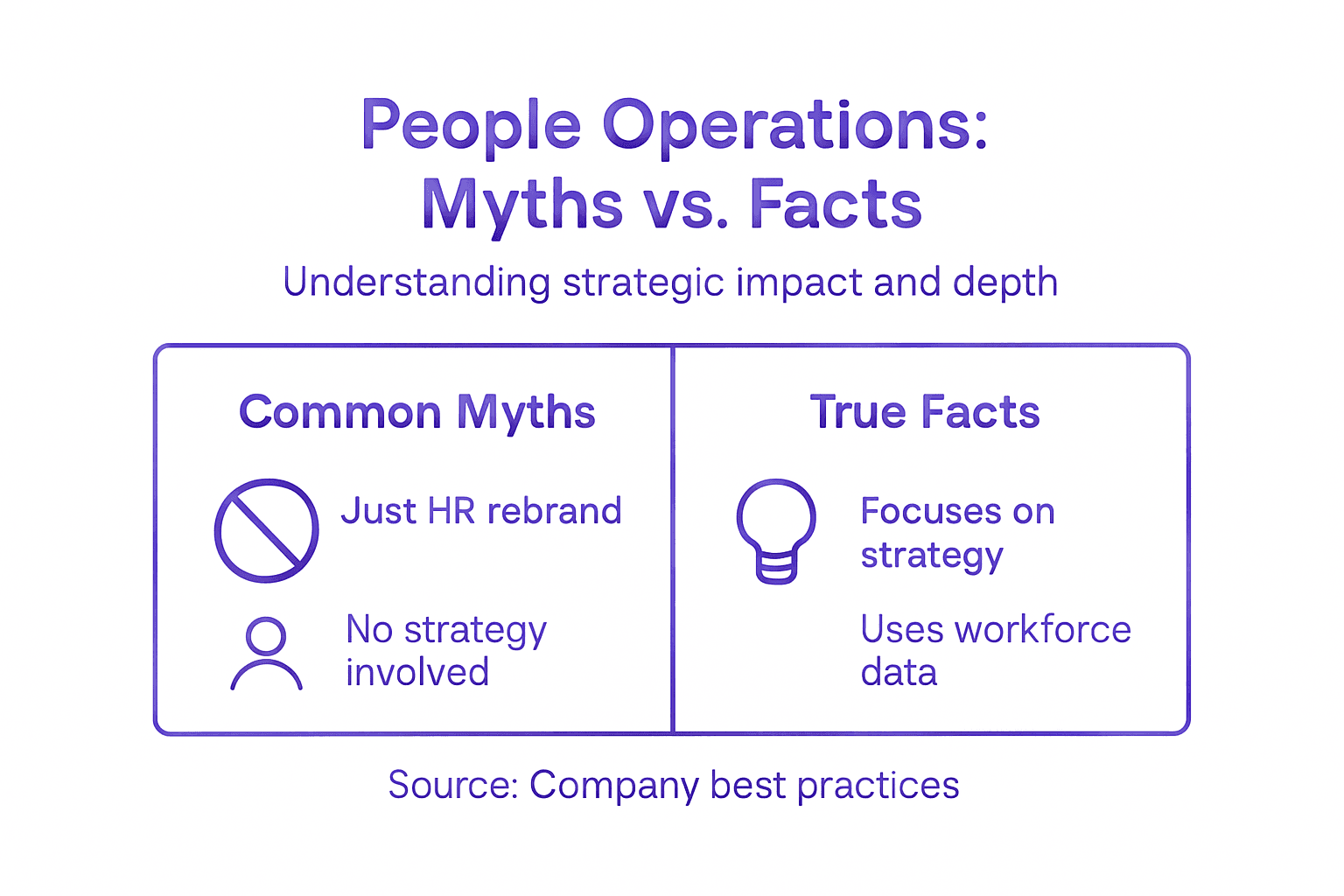
Common myths about People Operations often misrepresent its strategic depth. Many incorrectly assume it’s merely a rebranded HR department or a trendy corporate buzzword. In reality, People Ops represents a fundamental reimagining of how organizations view and invest in their most critical asset: their people.
Pro tip: Implement data-driven feedback mechanisms to transform People Ops from an administrative function into a strategic business partner.
Traditional HR versus people operations roles
Traditional HR and People Operations represent two distinctly different approaches to managing an organization’s human resources, each with unique focuses and methodologies. While traditional HR primarily operates as a compliance and administrative function, People Operations emerges as a strategic, human-centric approach to workforce management.
Key differences between traditional HR and People Operations include:
- Administrative focus vs. strategic partnership
- Reactive problem-solving vs. proactive talent development
- Compliance-driven vs. experience-oriented
- Standardized processes vs. personalized employee journeys
- Limited data utilization vs. advanced people analytics
Strategic workforce management fundamentally transforms how organizations perceive and invest in their human capital. Traditional HR models typically view employees through a transactional lens, managing paperwork, benefits, and legal requirements. In contrast, People Operations views employees as dynamic, multifaceted individuals with unique potential and aspirations.
The evolution from traditional HR to People Operations represents a profound shift in organizational thinking. Where HR once maintained rigid boundaries and standardized procedures, People Operations embraces flexibility, data-driven insights, and a holistic approach to employee engagement. This transformation recognizes that an organization’s most valuable asset is its people, and that nurturing their growth and potential directly correlates with business success.

Here’s a side-by-side comparison of traditional HR practices and People Operations strategies:
| Focus Area | Traditional HR Approach | People Operations Strategy |
|---|---|---|
| Role in Organization | Administrative and compliance-driven | Strategic partner in business goals |
| Employee Perspective | Fixed procedures and policies | Flexible, adaptive, human-centric |
| Use of Technology | Basic HR systems and records | Advanced analytics and automation |
| Impact on Performance | Routine, status quo improvement | Drives growth and innovation |
Pro tip: Conduct a comprehensive audit of your current HR practices to identify opportunities for transitioning from a compliance-focused to a strategic, people-centric model.
Key functions: analytics, engagement, and feedback
People Operations represents a sophisticated approach to workforce management that leverages three critical interconnected functions: analytics, engagement, and continuous feedback. These functions work together to transform raw human capital data into actionable insights that drive organizational performance and employee satisfaction.
Key components of these core functions include:
- Data collection from multiple organizational sources
- Advanced statistical analysis of workforce metrics
- Personalized employee experience strategies
- Real-time sentiment and performance tracking
- Predictive modelling for talent management
- Strategic alignment of individual and organizational goals
People analytics transforms workforce data by integrating information from various touchpoints to understand complex human dynamics within organizations. Unlike traditional HR approaches that rely on retrospective reporting, modern People Operations uses predictive and prescriptive analytics to anticipate challenges, identify opportunities, and proactively design interventions that enhance both employee experience and business outcomes.
Engagement and feedback mechanisms are the lifeblood of People Operations, creating a continuous dialogue between employees and leadership. By implementing sophisticated listening strategies, organizations can capture nuanced insights into workforce sentiment, potential risks, and untapped potential. This approach moves beyond annual surveys, creating dynamic, always-on communication channels that provide real-time understanding of organizational culture and individual employee needs.
Pro tip: Implement a multi-channel feedback system that captures both quantitative metrics and qualitative insights to develop a comprehensive understanding of your workforce dynamics.
Building a people-first culture with data
Building a people-first culture requires more than good intentions—it demands a strategic approach that leverages data to understand, engage, and empower employees. This approach transforms traditional workforce management by placing human experience at the centre of organizational decision-making, using quantitative insights to drive qualitative improvements.
Key strategies for creating a data-driven, people-first culture include:
- Democratizing data access across organizational levels
- Implementing transparent analytics processes
- Developing continuous learning and feedback mechanisms
- Aligning technological tools with human-centric goals
- Creating personalized employee development pathways
- Measuring impact beyond traditional performance metrics
Data-driven organizational cultures fundamentally shift how leadership understands and supports workforce dynamics. By integrating advanced analytics with empathetic leadership, organizations can create environments that simultaneously respect individual potential and drive collective performance. This approach moves beyond treating employees as resources, instead viewing them as complex, adaptable contributors with unique strengths and aspirations.
Successful people-first cultures recognize that data is not just about measurement, but about understanding. They use insights to design holistic employee experiences that promote engagement, well-being, and continuous growth. By combining technological sophistication with human-centred design, organizations can create workplaces where data serves people, not the other way around.
Pro tip: Develop a cross-functional data literacy program that empowers employees at all levels to understand and interpret workforce analytics.
Risks, compliance, and common pitfalls
People Operations navigates a complex landscape of legal, ethical, and operational challenges that require sophisticated risk management strategies. While data-driven approaches offer unprecedented insights, they simultaneously introduce nuanced compliance considerations that demand rigorous attention and proactive management.
Critical compliance risks in People Operations include:
- Protecting employee personal data privacy
- Ensuring transparent data collection practices
- Maintaining ethical algorithmic decision-making
- Preventing unconscious bias in analytics
- Managing cross-jurisdictional regulatory requirements
- Establishing clear consent and opt-out mechanisms
Compliance management requires continuous monitoring of evolving regulatory landscapes. Organizations must develop robust frameworks that balance technological innovation with legal and ethical standards, recognizing that seemingly minor oversights can result in significant financial and reputational consequences. The complexity increases as workforce analytics become more sophisticated and data privacy regulations grow more stringent.
Common pitfalls often emerge from insufficient documentation, inadequate training, and reactive rather than proactive compliance strategies. Successful People Operations teams recognize that compliance is not a static checklist but a dynamic process requiring ongoing education, transparent communication, and adaptive technological infrastructure. By embedding compliance considerations into core operational design, organizations can mitigate risks while maintaining the innovative spirit of data-driven workforce management.
Review the main compliance risks and proactive solutions in People Operations:
| Compliance Risk | Potential Impact | Proactive Solution |
|---|---|---|
| Data privacy breaches | Legal penalties, lost trust | Regular privacy audits, encryption |
| Unethical algorithmic decisions | Discrimination claims | Transparent model documentation |
| Cross-border regulations | Fines, operational delays | Appoint compliance specialists |
| Unconscious bias in analytics | Inequitable treatment | Diverse analytic review teams |
Pro tip: Conduct quarterly compliance audits and maintain a living documentation system that tracks regulatory changes and their potential impact on workforce analytics.
Elevate Your People Operations with Continuous Cultural Intelligence
The article highlights the challenges People Operations teams face when shifting from traditional HR roles to strategic partners who use real-time data and continuous feedback to build a thriving people-first culture. Key pain points include the need for always-on, actionable employee sentiment insights while maintaining data privacy and linking culture with business outcomes like productivity and retention. If you want to move beyond static surveys and gain transparent, anonymized cultural intelligence that drives growth and innovation, this is the ideal time to transform your approach.
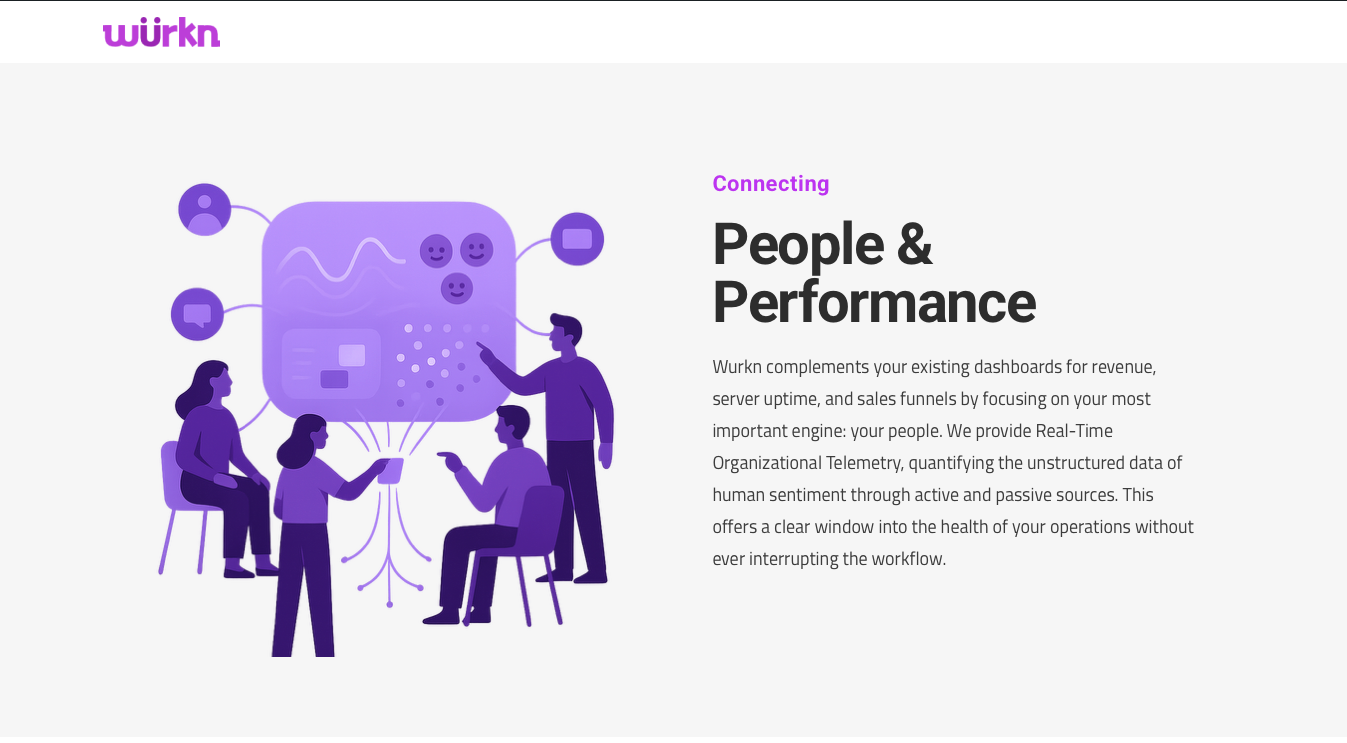
Unlock the full potential of People Operations by integrating Wurkn, a cultural business intelligence platform designed for CXOs and PeopleOps teams. Wurkn captures continuous, anonymous feedback from the tools your employees already use such as Slack and Microsoft Teams. It transforms raw cultural signals into clear insights tied directly to KPIs that matter, enabling leaders to understand not just what is happening in their culture but why. Empower your organisation with real-time analytics to reduce churn and improve performance. Experience how Wurkn can be your strategic partner in creating a data-driven, people-first workplace today.
Frequently Asked Questions
What is the main difference between traditional HR and People Operations?
People Operations focuses on strategic, human-centric workforce management, prioritizing employee engagement and data-driven insights, whereas traditional HR is primarily administrative and compliance-driven.
How do analytics play a role in People Operations?
Analytics in People Operations involves collecting and analyzing workforce data to drive decisions, improve employee experiences, and forecast talent needs, thus enhancing organizational performance.
What are the benefits of a people-first culture in an organization?
A people-first culture fosters higher employee engagement, satisfaction, and retention, while also aligning individual goals with business objectives, leading to improved overall organizational effectiveness.
What are common compliance risks in People Operations?
Common compliance risks include protecting employee data privacy, ensuring ethical algorithmic decision-making, and preventing unconscious bias in analytics. Proactive solutions involve regular audits and maintaining clear documentation.
Recommended
- People and Culture: A Guide to Driving Business Performance
- A COO’s Guide to Leveraging Workplace Culture Data for Better Decision Making – Wurkn
- Positive Workplace Culture: Boosting Employee Engagement, Morale, and Revenue – Wurkn
- What Is Organizational Culture And Why It Matters
- 7-Point Talent Management Checklist for Personality Assessment
Leave a Reply