

Struggling to decode what truly drives your team’s engagement is a challenge every CXO and PeopleOps leader faces. Understanding existing feedback channels is more than a data exercise—it reveals crucial insights about your organisation’s culture and retention risks. By building a thoughtful inventory of feedback, from anonymous surveys to HR system records, you set the groundwork for continuous employee voice that drives meaningful and measurable change.
Table of Contents
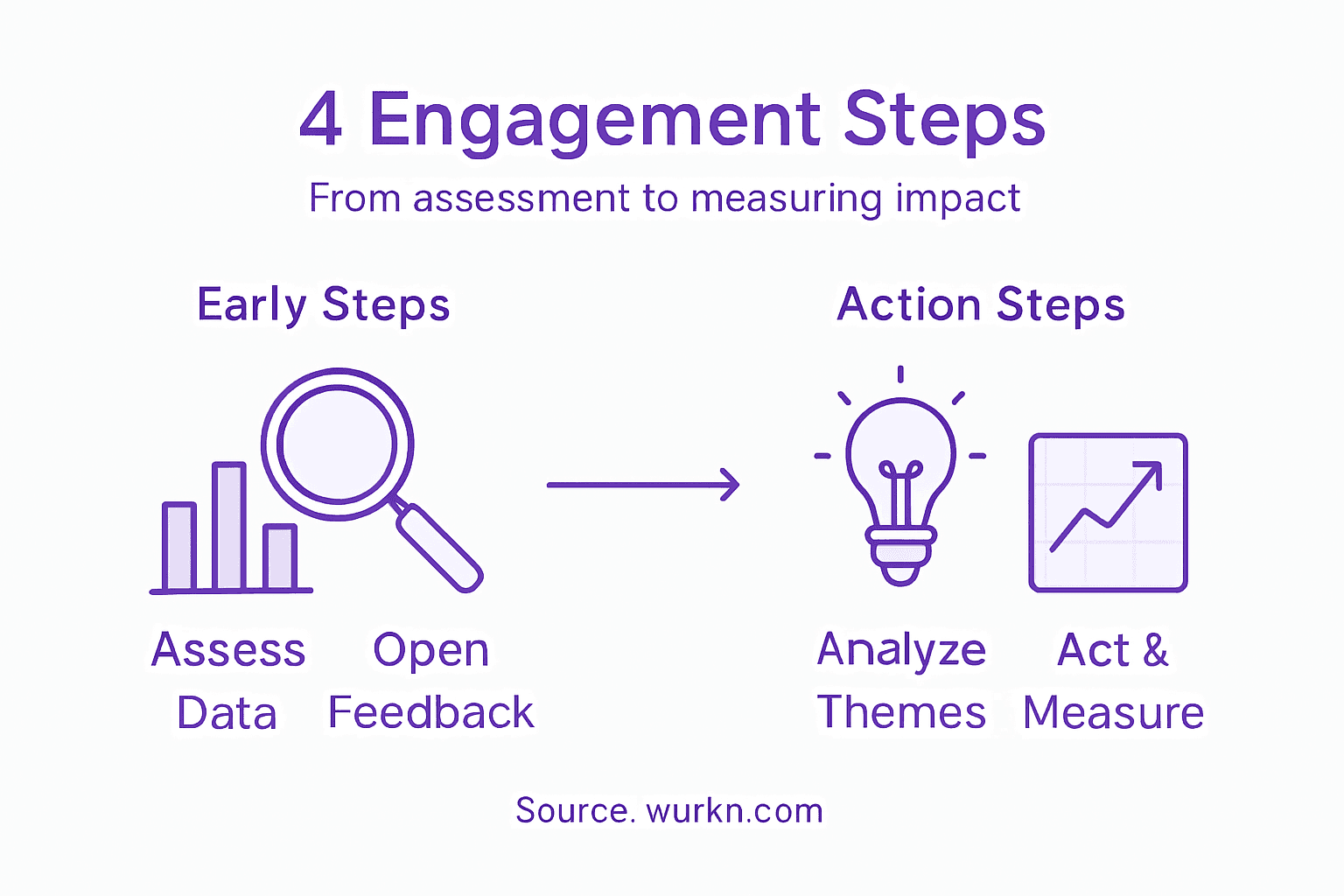
- Step 1: Assess Current Engagement Data Sources
- Step 2: Implement Continuous Feedback Channels
- Step 3: Analyse Feedback For Actionable Themes
- Step 4: Act On Insights And Measure Impact
Quick Summary
| Key Insight | Explanation |
|---|---|
| 1. Assess employee feedback sources | Identify and evaluate all channels for employee feedback to understand current engagement levels. |
| 2. Establish continuous feedback flow | Integrate feedback mechanisms into existing workflows for real-time insights and engagement. |
| 3. Analyse feedback for themes | Systematically review and group feedback to identify patterns that can guide actionable strategies. |
| 4. Act on insights with urgency | Prioritize and implement changes based on themes, ensuring transparency and clear communication with employees. |
| 5. Measure outcomes to validate changes | Track engagement metrics and link them to business results to demonstrate the impact of initiatives. |
Step 1: Assess current engagement data sources
You’re about to uncover what’s really happening in your organisation’s culture. Before implementing any engagement strategy, you need a clear picture of where things stand right now. This step involves identifying and evaluating all the sources of employee feedback and engagement data currently available to you.
Start by mapping out every place where employee sentiment lives. This includes formal channels like surveys, but also informal touchpoints where people express their thoughts and concerns.
Key data sources to evaluate:
- Anonymous surveys and pulse checks capturing employee opinions
- Exit interview data and reasons employees leave
- One-on-one conversation notes from managers
- Performance review feedback and skip-level discussions
- Slack, Teams, and intranet feedback channels
- HR system records showing retention and turnover patterns
- Engagement scores from employee survey templates your team has previously administered
Consider that traditional approaches like annual surveys only capture a snapshot. You’re looking for sources that reveal continuous, real-time sentiment. Many organisations discover they’re sitting on untapped data—comments buried in HRIS systems, feedback scattered across communication platforms, or insights locked in manager notes.
The most valuable data comes from where employees already work, not from new systems they need to learn.
Evaluate each source for quality and reliability. Ask yourself: Is this data anonymous enough to encourage honesty? Does it capture the full employee voice, or just the loudest speakers? How recent is this information, and does it reflect your current culture?
What you’re really doing here is creating an inventory of truth. You’ll use this assessment to identify blind spots and decide which data sources to prioritise or strengthen as you build your engagement strategy moving forward.
Professional tip: Look beyond survey results to find patterns in your HRIS data—turnover spikes, department-level retention differences, and promotion rates often reveal engagement issues before employees formally report them.
Here is a comparison of feedback channels and their typical strengths for employee engagement:
| Channel Type | Anonymity Level | Response Speed | Depth of Insight |
|---|---|---|---|
| Annual Surveys | High | Slow (yearly) | Broad, less detailed |
| Pulse Surveys | Moderate | Fast (monthly) | Focused, actionable |
| 1-on-1 Conversations | Low | Immediate | Deep, individual |
| Slack/Teams Feedback | Variable | Real-time | Informal, ongoing |
| Exit Interviews | High | Post-exit | Honest, retrospective |
| HRIS Data | N/A | On demand | Trend and pattern based |
Step 2: Implement continuous feedback channels
Static annual reviews won’t cut it anymore. You need feedback flowing constantly through your organisation so you can spot engagement issues early and respond in real time. This step is about building infrastructure that captures employee voice continuously, not just once a year.

Start by identifying where feedback naturally occurs. Many organisations try to add new systems, but the best channels already exist—they just need intentional structure. Think about where your employees spend their time: Slack channels, Teams conversations, one-on-one meetings, project retrospectives, and informal conversations.
Build feedback into existing workflows:
- Embed pulse surveys into Slack or Teams that take 60 seconds to complete
- Create dedicated channels for anonymous feedback and culture discussions
- Schedule brief check-ins between managers and direct reports every two weeks
- Use behaviour-focused feedback models like CBIN to structure conversations consistently
- Collect feedback at natural moments: after projects close, during skip-level meetings, or when employees transition roles
The key is making feedback collection feel frictionless. When employees have to log into a separate portal or block time on their calendar, response rates plummet and you miss honest input. Your goal is to meet people where they already work.
Continuous feedback channels thrive when they require minimal effort to contribute and deliver visible action.
Make sure feedback loops are truly two-way. Employees need to see that their input creates change, or they’ll stop contributing. When someone raises a concern, acknowledge it publicly and explain what you’re doing about it. This builds trust and shows that feedback actually matters.
Implement collaborative ownership of feedback data across your leadership team. Assign someone to monitor themes, flag emerging patterns, and bring insights to regular leadership discussions. This turns feedback from a compliance exercise into a strategic asset.
Professional tip: Start with one feedback channel rather than launching five simultaneously—prove the model works, build confidence in the process, then expand to additional channels once people see results.
Step 3: Analyse feedback for actionable themes
Raw feedback data means nothing without analysis. You need to transform what employees are saying into concrete themes that guide your decisions. This step involves systematically reviewing feedback to spot patterns and prioritise what matters most.
Start by gathering all feedback in one place. This might feel overwhelming—hundreds or thousands of comments across surveys, Slack channels, and conversations. The trick is to read with intention, looking for recurring ideas rather than isolated complaints.
How to identify themes:
- Read through feedback and mark comments that address the same issue
- Look for patterns in language: similar words, repeated concerns, or common sentiments
- Group feedback by topic: compensation, leadership, work-life balance, career growth, tools and resources
- Note the emotional tone alongside the content—anger signals urgency differently than mild frustration
- Count how many people mention each theme to gauge priority
When you interpret survey results within context, focus on trends at the team or department level rather than individual responses. This protects confidentiality and reveals systemic issues versus personal grievances.
Not all feedback deserves equal weight. Something mentioned by 40% of your workforce deserves more attention than a single complaint, even if that complaint feels urgent. Be honest about what you can realistically address in the next 90 days.
The goal is clarity, not perfection. Themes don’t need to be scientifically perfect—they need to guide action.
Create a simple framework for translating feedback into targeted action plans so leadership can decide next steps. Document what you heard, why it matters, and what solving it would look like for your organisation.
Share findings back with employees. This closes the loop and shows that analysis actually led somewhere. When people see feedback driving visible change, they continue contributing honest input.
Professional tip: Use AI-powered text analysis tools to accelerate theme identification, then have your team validate and contextualise the results—automation catches volume while humans ensure accuracy.
Step 4: Act on insights and measure impact
Insights without action are just interesting observations. You’ve analysed the feedback, identified themes, and now comes the part that actually moves the needle: implementing changes and proving they work. This step transforms your engagement strategy from data collection into real organisational change.
Start by prioritising which themes to address first. You can’t fix everything simultaneously, so be strategic. Pick two or three high-impact issues that affect large groups of employees and that you can genuinely address within 90 days.
Build your action plan:
- Assign ownership for each priority theme to a specific leader or team
- Set clear, measurable outcomes: what success looks like for this change
- Define the timeline and resources needed to implement
- Communicate the plan transparently to employees, explaining what you heard and what you’re doing about it
- Execute the change with the same urgency you’d give any business initiative
Transparency matters enormously here. When employees see feedback directly leading to visible action, trust strengthens and participation in future feedback cycles increases. Share both what you’re doing and why you’re doing it.
Now measure the impact. Track metrics tied to your engagement initiatives: retention rates in departments with high turnover concerns, productivity changes after implementing flexibility policies, or attrition rates following leadership training. Implementing targeted interventions and measuring their effectiveness against defined organisational outcomes validates your engagement work.
Impact measurement isn’t bureaucracy—it’s proof that engagement matters to your bottom line.
Check back with employees 60 days after implementing changes. Ask whether they’ve noticed the shift and whether the action actually addressed their concern. This follow-up closes the feedback loop and informs your next cycle of improvements.
Link engagement metrics to business outcomes. If you reduce turnover by 12%, quantify the savings in recruiting and training costs. If productivity improves, show revenue impact. Sharing both survey results and subsequent actions with employees reinforces that culture directly affects business performance.
The table below summarises how measuring engagement impacts key business outcomes:
| Engagement Metric | Business Outcome Affected | Example of Impact |
|---|---|---|
| Retention Rate | Recruiting Costs | Lower turnover = reduced hiring |
| Engagement Scores | Productivity | Higher scores = more output |
| Turnover Rate | Organisational Knowledge | Lower rate = expertise retained |
| Feedback Volume | Organisational Trust | More feedback = higher trust level |
| Promotion Rates | Career Development | Higher rates = growth opportunities |
Professional tip: Build a simple dashboard tracking your top three engagement metrics monthly, so leadership can see progress without monthly deep-dives—visibility drives accountability.
Drive Real Change with Continuous Employee Engagement Insights
The article outlines the challenges of relying on outdated feedback methods and highlights the urgent need for continuous, real-time insights to understand and improve employee engagement. If you are striving to transform anonymous feedback into clear cultural intelligence and actionable themes, Wurkn offers a powerful solution tailored for your needs. Address key pain points like fragmented data sources and low response rates by capturing seamless, always-on anonymous feedback from platforms like Slack and Microsoft Teams where your employees already communicate.
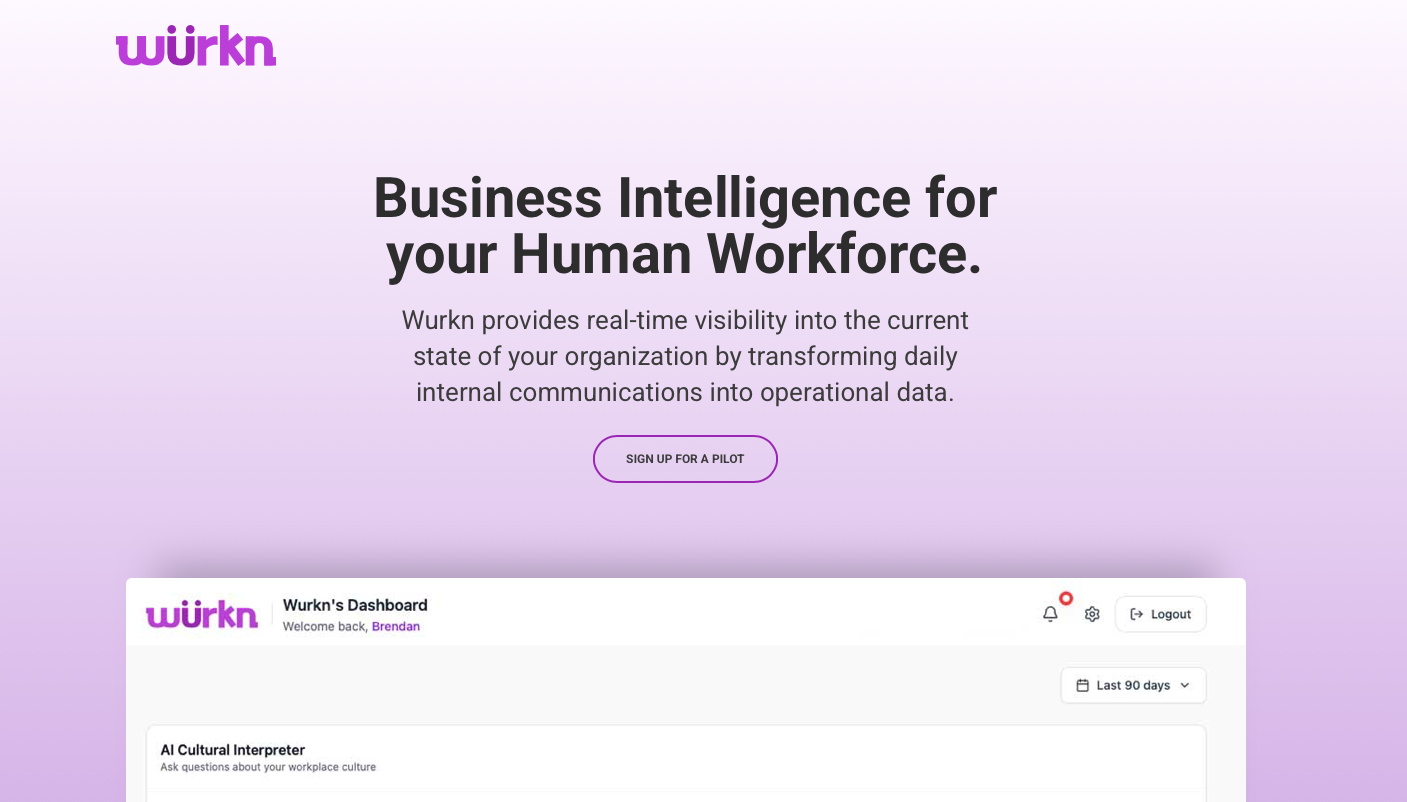
Take control of your organisation’s culture now with Wurkn’s secure, privacy-focused platform that synthesizes emotional tone and drivers into a living dashboard linked directly to critical business outcomes such as retention, productivity, and revenue. Learn how to move beyond static surveys by visiting Wurkn to see how you can build healthier teams and reduce churn today. Start turning continuous employee sentiment into your most valuable strategic asset by exploring our platform and the step-by-step approach to actionable cultural intelligence that executives and PeopleOps leaders trust.
Frequently Asked Questions
How do I assess employee engagement data sources?
To assess employee engagement data sources, start by mapping out where employee sentiment currently resides. Evaluate anonymous surveys, exit interview data, performance reviews, and feedback channels to create an inventory of insights you can use for developing your engagement strategy.
What are some effective continuous feedback channels to implement?
Effective continuous feedback channels include embedding pulse surveys into communication platforms like Slack or Teams, creating dedicated channels for anonymous feedback, and scheduling regular one-on-one check-ins with managers. Aim for minimal effort from employees to contribute feedback, which encourages higher participation.
How can I analyse feedback to identify actionable themes?
To analyse feedback for actionable themes, gather all comments in one place and look for common patterns in language or topics. Group feedback by key areas such as work-life balance or career growth, and prioritise themes based on how frequently they are mentioned by employees.
What steps should I take to act on engagement insights?
To act on engagement insights, prioritise a few high-impact themes and develop a clear action plan outlining ownership, measurable outcomes, and a timeline. Communicate these actions transparently to employees to build trust and demonstrate that their feedback is valued.
How can I measure the impact of my employee engagement initiatives?
To measure the impact of engagement initiatives, track metrics like retention rates, productivity changes, and overall engagement scores. Reassess within 60 days after implementing changes to determine if the actions taken effectively addressed employee concerns and made a difference.
What are the key engagement metrics I should focus on?
Key engagement metrics to focus on include retention rates, engagement scores, feedback volume, and promotion rates. By monitoring these metrics consistently, you can quantify the correlation between engagement initiatives and business outcomes, thereby reinforcing the importance of maintaining an engaged workforce.