

Choosing the right organisational culture can feel overwhelming when every model claims to deliver top results. Rigid structures can stifle creativity, while too much flexibility risks losing direction. Understanding how different workplace cultures impact your team is key to building a productive and positive environment.
You’ll discover practical insights into proven organisational cultures like clan, adhocracy, and market models. Research shows, for example, that organisations with clan culture experience significantly higher psychological safety and stronger trust in management. This list breaks down the strengths and challenges of each approach, so you can match your culture to your business goals and employee needs.
Get ready to uncover actionable strategies and leadership styles that can transform the way your organisation works. Whether you want more collaboration, innovation, or performance, these insights will help you make confident, informed decisions for your team.
Table of Contents
- Clan Culture: Building Teamwork and Trust
- Adhocracy Culture: Fostering Innovation and Flexibility
- Market Culture: Driving Results and Performance
- Hierarchy Culture: Ensuring Stability and Structure
- Purpose-Driven Culture: Aligning Values and Mission
- Customer-Focused Culture: Enhancing Service and Experience
- Continuous Feedback Culture: Leveraging Real-Time Insights
Quick Summary
| Takeaway | Explanation |
|---|---|
| 1. Foster Trust Through Clan Culture | Building a clan culture encourages teamwork and mental safety, enhancing employee loyalty and communication. |
| 2. Promote Innovation with Adhocracy Culture | Adhocracy cultures empower employees to innovate and adapt quickly, driving performance and engagement. |
| 3. Prioritize Customer Experience | A customer-focused culture aligns employee efforts with customer needs, boosting loyalty and brand reputation. |
| 4. Emphasize Continuous Feedback | Transitioning to continuous feedback creates a dynamic environment, enhancing motivation and agility in performance management. |
| 5. Align Values in Purpose-Driven Culture | A purpose-driven culture clarifies the organisation’s mission, increasing employee engagement and societal impact. |
1. Clan Culture: Building Teamwork and Trust
Clan culture represents an organisational approach that prioritises collaboration, trust, and a family-like work environment. This model transforms traditional workplace dynamics by emphasising strong interpersonal relationships and collective success.
In clan cultures, leadership looks dramatically different from hierarchical models. Managers act more like mentors and coaches rather than authoritarian commanders. They focus on building trust and psychological safety through open communication and consensus-driven decision making.
Key characteristics of clan culture include:
- Strong emphasis on teamwork and collaboration
- Shared decision-making processes
- Mentorship-driven leadership approach
- Prioritising employee development and well-being
- Creating a sense of belonging and community
Companies implementing clan culture often see significant benefits. Research involving 2451 employees across 18 societies demonstrates that organisations with clan cultures experience:
- Higher levels of psychological safety
- Increased employee loyalty
- More robust interpersonal communication
- Enhanced overall team performance
Clan culture transforms workplaces from transactional environments to supportive communities where employees feel genuinely valued.
To successfully implement clan culture, HR leaders must intentionally design systems that promote trust, encourage open dialogue, and create opportunities for meaningful connections between team members.
Pro tip: Schedule regular team-building activities that are not work-related to strengthen interpersonal bonds and create a more collaborative organisational environment.
2. Adhocracy Culture: Fostering Innovation and Flexibility
Adhocracy culture represents a dynamic organisational model that prioritises innovation, flexibility, and rapid adaptation to changing market conditions. This approach transforms traditional workplace structures by empowering employees to think and act like entrepreneurs.
Unlike rigid hierarchical systems, adhocracy culture encourages decentralized decision-making and supports continuous organizational innovation. It creates an environment where creativity and experimentation are not just welcomed but actively encouraged.
Key characteristics of adhocracy culture include:
- Minimal bureaucratic constraints
- High tolerance for risk and uncertainty
- Emphasis on individual autonomy
- Quick response to emerging opportunities
- Prioritising innovation over traditional processes
Research on scale-ups reveals several compelling advantages of adhocracy culture:
- Increased organizational performance
- Higher employee engagement
- Faster adaptation to market changes
- Enhanced entrepreneurial thinking
In adhocracy cultures, employees are viewed as innovative problem-solvers rather than task executors.
Successful implementation requires HR leaders to create structures that balance creative freedom with strategic alignment. This means developing frameworks that enable experimentation while maintaining core organisational objectives.
Pro tip: Create dedicated innovation time where employees can work on passion projects unrelated to their primary responsibilities to stimulate creative thinking.
3. Market Culture: Driving Results and Performance
Market culture represents an organisational approach intensely focused on achieving external goals and maintaining competitive superiority. This performance-driven model prioritises measurable outcomes and strategic market positioning above all other considerations.
At its core, market culture is defined by customer orientation and competitive performance. Companies embracing this culture create environments where achievement and results are the primary metrics of success.
Key characteristics of market culture include:
- Aggressive pursuit of organisational goals
- Strong external competitive focus
- Emphasis on measurable performance indicators
- Quick decision-making processes
- Reward systems tied directly to results
The primary advantages of market culture emerge through its performance-oriented approach:
- Clear performance expectations
- Strong customer responsiveness
- Rapid strategic adaptability
- Highly motivated workforce
Market culture transforms organisations into lean competitive machines optimised for external success.
Successful implementation requires HR leaders to design robust performance management systems that balance ambitious targets with employee well-being. This means creating metrics that motivate without causing undue stress.
Pro tip: Implement quarterly performance reviews that focus not just on results but on the quality of strategic thinking and collaborative approaches.
4. Hierarchy Culture: Ensuring Stability and Structure
Hierarchy culture represents an organisational model built on structured roles, clear reporting lines, and well-defined operational protocols. This approach prioritises predictability, control, and systematic processes across all levels of an organisation.
Understanding organizational structure and performance efficiency reveals how hierarchy cultures create stability through predictable management frameworks. By establishing clear chains of command, these organisations reduce ambiguity and streamline decision-making processes.
Key characteristics of hierarchy culture include:
- Clearly defined job roles and responsibilities
- Structured reporting mechanisms
- Emphasis on formal communication channels
- Standardised procedures and protocols
- Incremental career progression pathways
The primary advantages of hierarchy culture emerge through its systematic approach:
- Enhanced operational predictability
- Reduced organisational complexity
- Clear accountability frameworks
- Minimised operational risks
Hierarchy culture transforms organisations into well-oiled machines with minimal operational friction.
Successful implementation requires HR leaders to design flexible structures that balance formal protocols with employee autonomy. This means creating systems that provide guidance without feeling overly restrictive.
Pro tip: Regularly review and update organisational hierarchies to ensure they remain adaptive to changing business environments while maintaining core structural integrity.
5. Purpose-Driven Culture: Aligning Values and Mission
A purpose-driven culture transcends traditional organisational models by embedding meaningful mission and values into every aspect of daily work. This approach transforms workplace dynamics from transactional interactions to profound, mission-aligned experiences.
Leaders committed to creating meaningful organizational purpose recognise that employees seek more than just financial compensation. They want to contribute to something larger than themselves.
Key characteristics of purpose-driven culture include:
- Clear articulation of organisational mission
- Alignment of individual roles with broader goals
- Transparent communication of core values
- Recognition of purpose-driven behaviours
- Emphasis on societal impact beyond profitability
The transformative potential of purpose-driven cultures manifests through:
- Enhanced employee engagement
- Increased organisational loyalty
- More collaborative workplace environments
- Stronger external brand reputation
Purpose transforms work from a job into a meaningful journey of collective impact.
Successful implementation requires HR leaders to design integrated systems that continuously reinforce organisational purpose through storytelling, recognition, and strategic alignment.
Pro tip: Develop quarterly storytelling sessions where employees share how their individual work directly contributes to the organisation’s broader mission and societal impact.
6. Customer-Focused Culture: Enhancing Service and Experience
Customer-focused culture represents a strategic approach that places customer experience at the heart of organisational operations. This model transforms traditional business practices by prioritising customer needs and expectations across every interaction.
Research demonstrates that customer-oriented organizational strategies can dramatically enhance service effectiveness and brand reputation. By aligning employee values with customer satisfaction goals, companies create a unified approach to exceptional service.
Key characteristics of customer-focused culture include:
- Prioritising customer needs above internal processes
- Continuous training on customer experience
- Empowering employees to solve customer problems
- Collecting and acting on customer feedback
- Creating seamless customer journey experiences
The transformative potential of customer-focused cultures emerges through:
- Enhanced customer loyalty
- Improved brand reputation
- Higher employee engagement
- More responsive organisational systems
Customer-focused culture turns service from a department into a company-wide commitment.
Successful implementation requires HR leaders to design comprehensive training programs that embed customer-centric thinking into every level of organisational behaviour.
Pro tip: Implement monthly cross-departmental customer experience workshops where teams share real customer stories to maintain organisational empathy and understanding.
7. Continuous Feedback Culture: Leveraging Real-Time Insights
Continuous feedback culture represents a transformative approach to performance management that replaces traditional annual reviews with ongoing dialogue and real-time insights. This model empowers organisations to create more dynamic, responsive, and supportive work environments.
Research reveals that organisations are rapidly adopting continuous feedback strategies to meet evolving workforce expectations. By moving beyond static, retrospective assessments, companies can foster more meaningful employee engagement and development.
Key characteristics of continuous feedback culture include:
- Regular, informal performance conversations
- Real-time recognition and coaching
- Multi-directional feedback mechanisms
- Emphasis on personal and professional growth
- Technology-enabled feedback platforms
The strategic advantages of continuous feedback cultures emerge through:
- Enhanced employee motivation
- More timely performance adjustments
- Increased organisational agility
- Deeper understanding of workforce dynamics
Continuous feedback transforms performance management from a bureaucratic exercise into a collaborative growth journey.
Successful implementation requires HR leaders to create psychological safety, train managers in effective feedback techniques, and develop robust technological infrastructure.
Pro tip: Implement quarterly 360-degree feedback sessions that invite perspectives from peers, managers, and direct reports to create a comprehensive performance understanding.
Below is a comprehensive table summarizing the organisational culture types discussed throughout the article and their key characteristics and outcomes.
| Culture Type | Characteristics | Outcomes |
|---|---|---|
| Clan Culture | Emphasises teamwork, collaboration, and a family-like environment. | Enhanced psychological safety, loyalty, and performance. |
| Adhocracy Culture | Values innovation, flexibility, and entrepreneurial problem-solving. | Encourages creativity, adaptability, and quick decision-making. |
| Market Culture | Focused on measurable results, competitiveness, and customer-oriented goals. | Supports performance expectations, customer responsiveness, and workforce motivation. |
| Hierarchy Culture | Relies on structured roles and operational procedures for stability. | Ensures predictability, accountability, and risk reduction. |
| Purpose-Driven Culture | Embeds mission and values into organisational practices for deeper alignment. | Builds engagement, loyalty, and a sense of purpose. |
| Customer-Focused Culture | Prioritises customer needs and promotes service training for enhanced satisfaction. | Improves customer loyalty and employee engagement. |
| Continuous Feedback Culture | Implements real-time feedback for performance enhancement and agility. | Enhances motivation, growth, and reaction efficiency. |
Unlock the Full Potential of Your Organisational Culture with Wurkn
Understanding the 7 Types of Organisational Culture is essential for HR Leaders who want to build stronger, more engaged teams. Whether your focus is on fostering a Clan Culture of trust, driving innovation through Adhocracy Culture, or ensuring stability with a Hierarchy Culture, the challenge remains the same: how do you measure and improve these cultures continuously and effectively? Wurkn offers a cultural business intelligence platform designed specifically to capture real-time, anonymous employee feedback from the tools your people already use such as Slack and Microsoft Teams without disrupting their workflow.
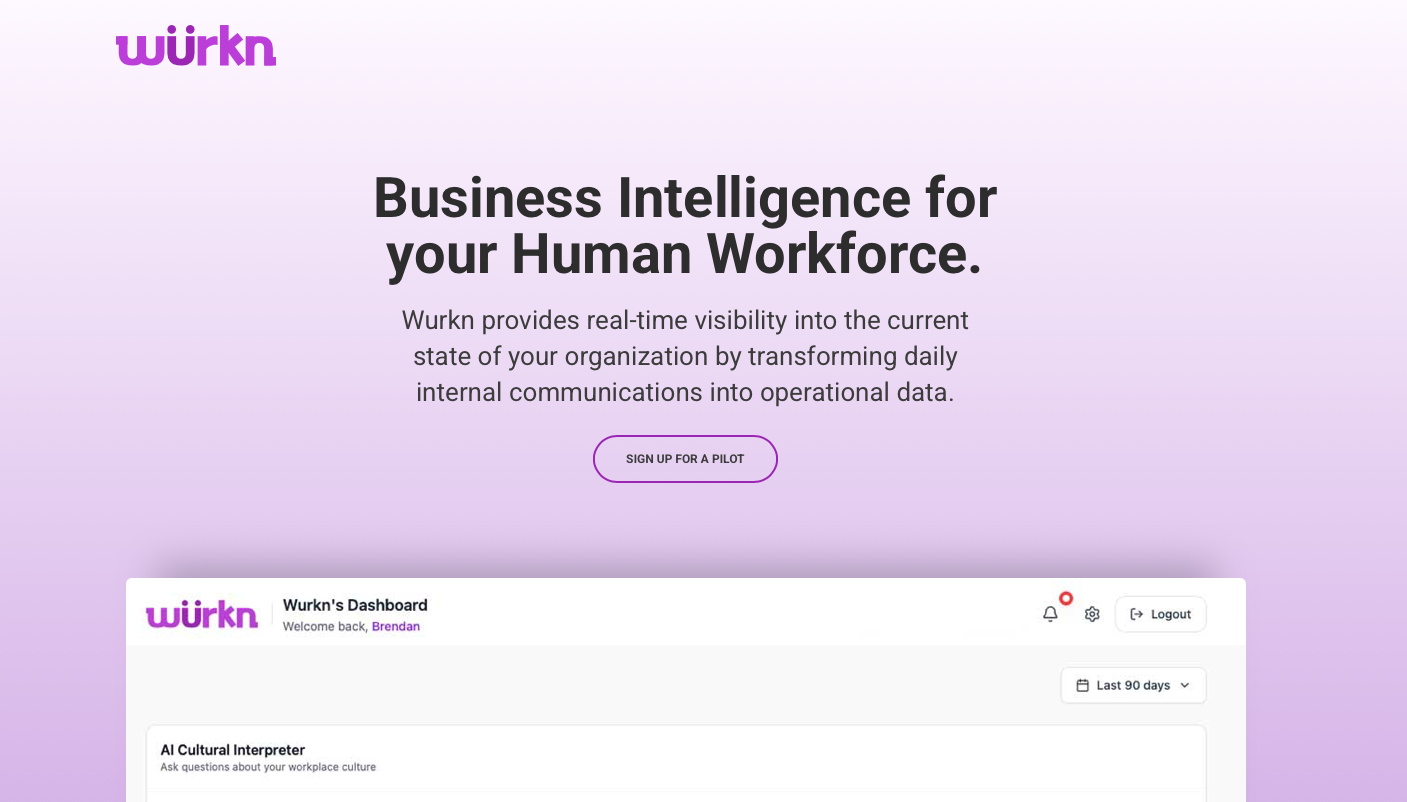
Experience how Wurkn transforms continuous employee sentiment into actionable insights connected directly to your business results. Our AI-driven platform reveals not just what is happening in your culture but why. Start building healthier teams, reduce churn, and improve performance today. Discover the power of real-time cultural intelligence at Wurkn. Take the next step in evolving your workplace culture by exploring our home page and learn how to link workforce dynamics with KPIs that matter.
Frequently Asked Questions
What are the key characteristics of clan culture in organizations?
Clan culture is characterised by strong emphasis on teamwork and collaboration, shared decision-making processes, and a mentorship-driven leadership approach. To foster this culture, HR leaders should focus on building trust and promoting open communication among team members.
How can I implement adhocracy culture in my organization?
To implement adhocracy culture, encourage decentralised decision-making and minimise bureaucratic constraints. Create an environment that allows employees to take risks and think creatively by establishing dedicated time for innovation projects that are unrelated to their main responsibilities.
What steps can HR leaders take to transition to a market culture?
Transitioning to a market culture involves establishing clear performance expectations and developing robust performance management systems. Focus on setting measurable goals and aligning employee incentives with the organisation’s key performance indicators to achieve better results within 30-60 days.
How does hierarchy culture contribute to organisational stability?
Hierarchy culture contributes to stability by establishing clear job roles, structured reporting mechanisms, and standardised procedures. HR leaders should regularly review and update these structures to ensure they remain effective while allowing some flexibility for employee autonomy.
What are the benefits of a purpose-driven culture for employee engagement?
A purpose-driven culture enhances employee engagement by aligning individual roles with the organisation’s broader mission and values. To reinforce this culture, facilitate storytelling sessions where employees share how their work contributes to the organisation’s goals to boost morale and commitment.
What practices support a continuous feedback culture in the workplace?
Practices that support a continuous feedback culture include regular informal performance conversations and real-time recognition. HR leaders can implement quarterly 360-degree feedback sessions to gather insights from peers, managers, and direct reports, fostering a collaborative growth environment.