

Every HR leader faces tough questions when static annual reviews fail to capture real-time employee needs. In today’s fast-shifting tech sector, continuous feedback is not just a trend but a necessary evolution for keeping teams engaged and reducing costly turnover. By embracing dynamic, personalized AI-powered feedback systems, Canadian and global organizations can generate actionable insights, close performance gaps, and create an environment where employee voices truly matter.
Table of Contents
- Defining AI in Employee Feedback Systems
- Types of AI-Driven Feedback Mechanisms
- How AI Transforms Continuous Listening
- Data Privacy, Ethics, and Legal Safeguards
- Risks, Pitfalls, and Adoption Challenges
- Maximizing Impact: Linking Insights to Business Results
Key Takeaways
| Point | Details |
|---|---|
| AI Enhances Employee Feedback | AI-driven systems provide continuous, real-time feedback that personalises insights and assesses performance objectively. |
| Continuous Listening is Key | AI technologies allow organisations to track employee sentiment in real time, fostering a responsive workplace environment. |
| Ethics in AI Implementation | Strong data protection measures and ethical guidelines are essential for maintaining employee trust and ensuring privacy. |
| Linking Insights to Performance | Aligning AI-generated feedback with business objectives can drive organisational success and foster a culture of continuous improvement. |
Defining AI in Employee Feedback Systems
Artificial intelligence (AI) is fundamentally transforming how organisations approach employee performance assessment and development. Advanced AI technologies now enable dynamic, personalised feedback mechanisms that transcend traditional performance review processes.
At its core, an AI employee feedback system leverages sophisticated algorithms and machine learning to analyse complex workplace data streams. These systems can process multiple input sources – including productivity metrics, communication patterns, project outcomes, and collaborative interactions – to generate nuanced, contextualised performance insights. Unlike static annual reviews, AI-driven platforms provide continuous, real-time feedback that adapts to evolving workplace dynamics.
Key characteristics of modern AI feedback systems include:
- Personalisation of insights based on individual employee performance
- Real-time analysis of workplace interactions and productivity
- Objective assessment that minimises human bias
- Predictive capabilities for identifying potential performance trends
- Automated recommendation generation for professional development
Research demonstrates that AI-generated feedback effectiveness depends significantly on how employees perceive its delivery. Factors like feedback tone, perceived emotional intelligence, and social context dramatically influence employee acceptance and motivation.
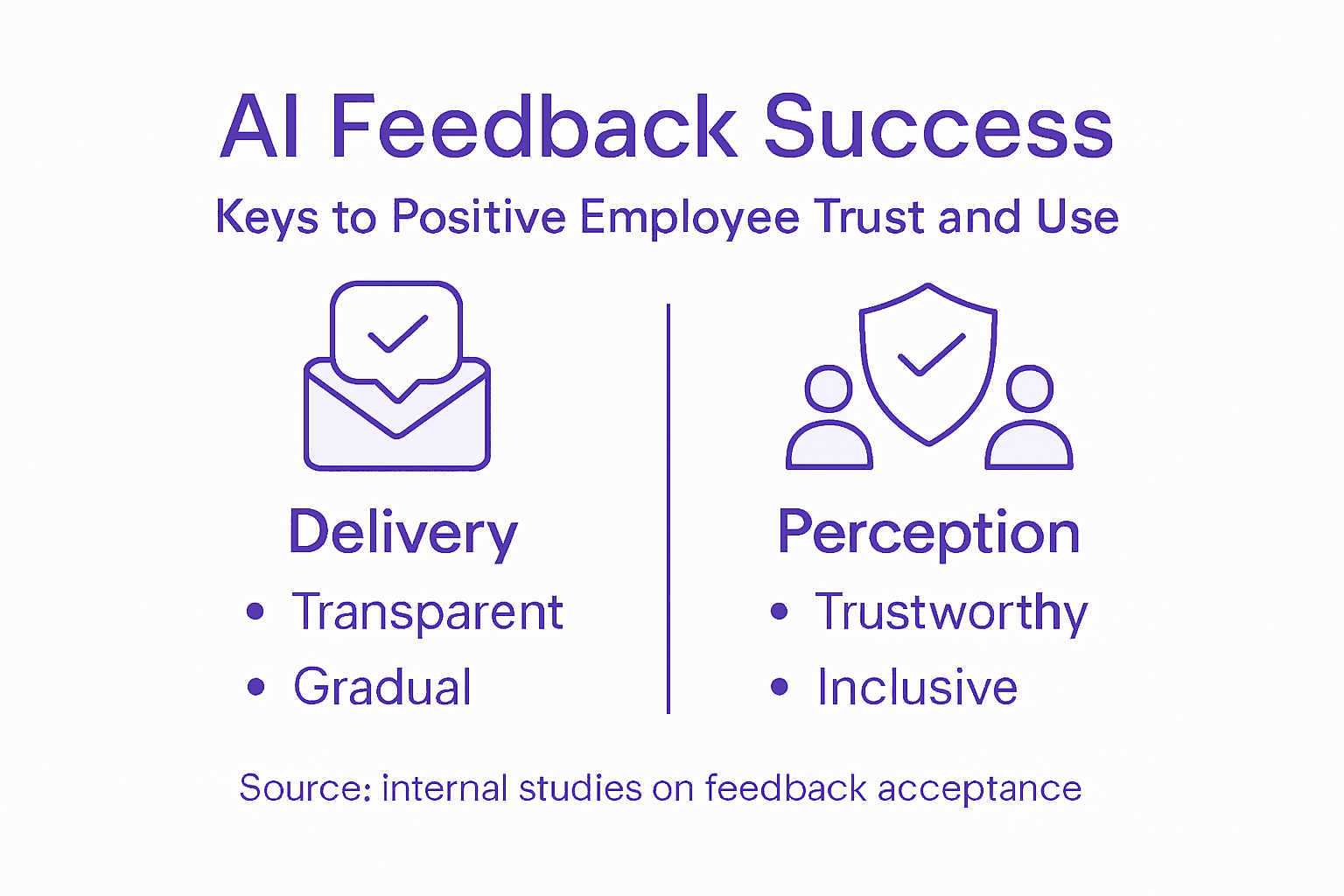
Pro tip: Introduce AI feedback tools gradually, providing transparent explanations about how the technology works to build employee trust and understanding.
Types of AI-Driven Feedback Mechanisms
AI-powered feedback mechanisms represent a sophisticated approach to understanding and improving workplace performance. Automated feedback systems encompass diverse strategies for collecting, analysing, and delivering performance insights across organisational contexts.
These mechanisms can be categorised into several distinct types, each serving unique organisational objectives. Performance monitoring tools leverage advanced analytics to generate comprehensive insights through multiple feedback modalities. The primary types of AI-driven feedback mechanisms include:
-
Automated Survey Platforms
- Real-time sentiment analysis
- Anonymous input collection
- Trend identification and tracking
-
Predictive Performance Analytics
- Skill gap identification
- Career development recommendations
- Potential performance trajectory mapping
-
Chatbot-Driven Feedback
- Immediate performance dialogue
- Contextual interaction
- Personalised coaching suggestions
Each feedback mechanism operates through sophisticated algorithms that process complex workplace data. These systems integrate multiple input streams, including communication patterns, project outcomes, collaborative interactions, and individual productivity metrics to generate nuanced, actionable insights.
Here is a comparison of AI-driven feedback mechanisms and their organisational benefits:
| Mechanism | Unique Strength | Ideal Use Case |
|---|---|---|
| Automated Survey Platform | Captures large-scale sentiment | Organisation-wide engagement checks |
| Predictive Analytics | Identifies trends early | Talent planning and reskilling |
| Chatbot-Driven Feedback | Provides instant support | Onboarding, coaching, peer reviews |
AI feedback mechanisms transform traditional performance reviews from static, retrospective assessments into dynamic, forward-looking development tools.
Pro tip: Implement AI feedback mechanisms incrementally, starting with low-stakes assessments to build organisational comfort and trust in the technology.
How AI Transforms Continuous Listening
Continuous listening technologies represent a revolutionary approach to understanding workplace dynamics, moving beyond traditional periodic feedback methods. AI has fundamentally reimagined how organisations capture, analyse, and respond to employee sentiment in real-time, creating a more responsive and adaptive organisational environment.

The transformation occurs through sophisticated data processing mechanisms that enable unprecedented insight generation. AI-powered feedback tools analyse multiple communication channels, extracting nuanced insights that traditional methods would miss. These advanced systems can detect subtle shifts in employee engagement, emotional states, and organisational sentiment with remarkable precision.
Key dimensions of AI-driven continuous listening include:
-
Real-Time Sentiment Tracking
- Instant emotional temperature checks
- Proactive issue identification
- Continuous engagement monitoring
-
Contextual Data Integration
- Cross-platform feedback aggregation
- Holistic organisational understanding
- Multi-dimensional performance insights
-
Predictive Intelligence
- Early warning systems
- Potential conflict detection
- Proactive intervention strategies
The most significant breakthrough is AI’s ability to transform raw data into actionable intelligence. These systems go beyond simple data collection, providing contextualised recommendations that help leaders make informed decisions about workplace culture and employee experience.
Continuous listening via AI turns sporadic feedback into a dynamic, always-on dialogue between organisations and their employees.
Pro tip: Implement AI continuous listening gradually, starting with low-stakes departments to build organisational trust and demonstrate tangible value.
Data Privacy, Ethics, and Legal Safeguards
Data protection strategies have become increasingly complex with the integration of artificial intelligence in employee feedback systems. Organisations must navigate a sophisticated landscape of legal and ethical considerations to ensure responsible AI implementation that protects individual privacy while maintaining organisational insights.
Ethical AI frameworks demand comprehensive approaches to managing sensitive employee information. These frameworks emphasize transparency, accountability, and rigorous consent mechanisms that balance technological innovation with fundamental human rights. The goal is to create feedback systems that are both powerful and fundamentally respectful of individual autonomy.
Key privacy and ethical considerations include:
-
Data Minimization Principles
- Collect only necessary information
- Limit data retention periods
- Anonymize personal identifiers
-
Consent and Transparency
- Clear communication about data usage
- Opt-in/opt-out mechanisms
- Accessible privacy policies
-
Algorithmic Fairness
- Regular bias audits
- Diverse training data sets
- Equitable assessment criteria
Organisations must implement robust governance frameworks that proactively address potential risks. This involves creating multi-layered safeguards that protect both employee rights and organisational intelligence gathering capabilities.
Ethical AI is not just a legal requirement, but a fundamental trust-building mechanism between employers and employees.
Pro tip: Develop a cross-functional privacy review committee that includes legal, HR, and technology experts to continuously evaluate and update AI feedback system protocols.
Risks, Pitfalls, and Adoption Challenges
Algorithmic risks represent significant challenges in implementing AI-driven employee feedback systems. Organisations must navigate complex technological and human dynamics that could potentially undermine the effectiveness of these innovative tools.
Adoption challenges emerge from multiple interconnected factors that challenge smooth technological integration. Employees often experience skepticism about AI’s credibility, perceiving potential emotional distance and questioning the nuanced understanding required for meaningful feedback.
Primary risks and challenges include:
-
Technological Limitations
- Potential algorithmic bias
- Insufficient contextual interpretation
- Reduced human emotional intelligence
-
Organisational Resistance
- Cultural adaptation challenges
- Technological literacy gaps
- Trust development barriers
-
Employee Perception Risks
- Perceived impersonal feedback
- Motivation reduction concerns
- Privacy and autonomy anxieties
Successful implementation requires a balanced approach that acknowledges these challenges while demonstrating the transformative potential of AI-enhanced feedback mechanisms. Organisations must develop comprehensive strategies that address both technological capabilities and human psychological needs.
Effective AI feedback integration depends not just on technological sophistication, but on creating a human-centred approach that respects individual experiences.
Pro tip: Conduct pilot programs with transparent communication, allowing employees to provide direct input on AI feedback mechanisms to build trust and refine implementation strategies.
Maximizing Impact: Linking Insights to Business Results
Performance management strategies require sophisticated approaches that transform raw employee feedback into actionable organizational intelligence. AI-driven insights provide unprecedented opportunities to bridge the gap between individual employee experiences and broader business outcomes.
Feedback dynamics play a critical role in translating employee sentiment into measurable performance improvements. By creating precise feedback mechanisms that align individual contributions with strategic organizational goals, companies can develop a more responsive and adaptive workplace culture.
Key strategies for maximizing business impact include:
-
Strategic Performance Alignment
- Mapping feedback to key performance indicators
- Identifying skill development opportunities
- Connecting individual contributions to organizational objectives
-
Predictive Analytics Integration
- Forecasting potential performance trends
- Early identification of talent potential
- Proactive intervention strategies
-
Continuous Improvement Frameworks
- Real-time performance tracking
- Adaptive learning mechanisms
- Data-driven decision support
Successful implementation requires a holistic approach that goes beyond traditional metrics. Organizations must create ecosystems where AI-generated insights become catalysts for meaningful cultural transformation, driving engagement, innovation, and sustainable business growth.
This table summarizes key strategies for linking AI-powered insights to measurable business results:
| Strategy | Main Outcome | Example Application |
|---|---|---|
| Strategic Alignment | Drives goal-focused actions | Linking feedback to KPIs |
| Predictive Analytics | Anticipates workforce needs | Forecasting talent gaps |
| Continuous Improvement | Sustains culture of learning | Real-time skill tracking |
Transformative business impact emerges when employee feedback becomes a strategic asset, not just a measurement tool.
Pro tip: Develop cross-functional dashboards that translate AI feedback insights into clear, actionable business metrics visible to leadership and employees alike.
Transform Employee Feedback into Real Culture Change with Wurkn
The article highlights the challenge organisations face in moving from static, infrequent performance reviews to dynamic, continuous listening powered by AI. Key pain points include maintaining employee trust, ensuring data privacy, minimizing bias, and turning complex feedback into actionable insights that align with business goals. Wurkn offers a powerful solution that directly addresses these needs by capturing always-on, anonymous employee sentiment from everyday channels like Slack and Microsoft Teams. This creates a seamless, non-disruptive experience for employees while providing PeopleOps and CXOs with real-time cultural intelligence.
With Wurkn, you can harness AI that thoughtfully synthesizes emotional tone and overarching themes with human oversight, offering a clear picture of not just what is happening in your workplace culture but why. The platform’s rigorous approach to privacy and data security ensures employees feel safe sharing honest feedback, overcoming common adoption challenges discussed in the article such as skepticism and resistance. By linking cultural signals directly to KPIs like retention and productivity, Wurkn enables leaders to proactively detect risks, support continuous improvement, and drive measurable business outcomes.
Elevate your employee feedback from a static process to a dynamic cultural asset with Wurkn. Discover how our platform supports the AI-driven continuous listening approach featured in the article and helps your organisation build healthier teams and reduce churn.
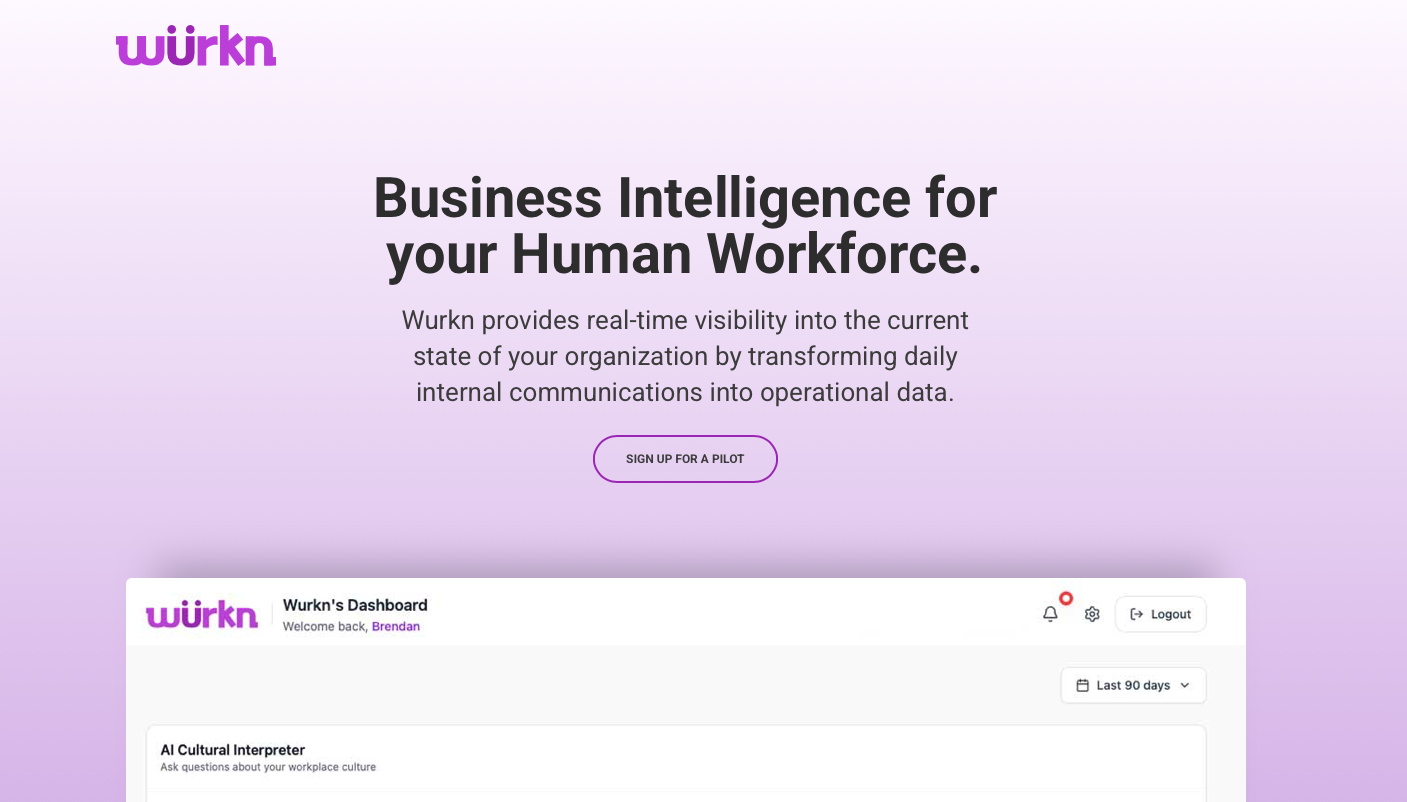
Are you ready to embrace intelligent, trustworthy, and actionable employee feedback? Visit Wurkn today and start transforming continuous employee sentiment into real culture change that drives business success.
Frequently Asked Questions
What is AI in employee feedback systems?
AI in employee feedback systems uses advanced algorithms and machine learning to analyze workplace data, providing personalized, real-time insights on employee performance, productivity, and engagement.
How does AI transform traditional performance reviews?
AI transforms traditional performance reviews by offering continuous, real-time feedback instead of static annual assessments, enabling a dynamic dialogue between employees and employers focused on ongoing improvement.
What are the main types of AI-driven feedback mechanisms?
The main types include automated survey platforms, predictive performance analytics, and chatbot-driven feedback, each serving unique purposes such as sentiment analysis, trend identification, and immediate support.
What are the ethical considerations in using AI for employee feedback?
Key ethical considerations include data minimization, transparency about data usage, obtaining consent, and ensuring algorithmic fairness to protect employee rights and build trust in the feedback system.