

When employees hold back honest feedback, critical issues can stay hidden and threaten your workplace culture. Traditional surveys often miss important concerns, especially when staff worry that their responses could be traced back to them. Without consistent, candid input, your ability to address problems and improve employee experience is limited.
The right feedback strategies open the door to continuous, anonymous communication that builds trust and drives meaningful change. This list reveals proven methods to protect privacy, gather real-time insights, and make feedback a natural part of daily work. Get ready to discover actionable steps that will help you transform employee sentiment into real progress.
Table of Contents
- 1. Encourage Always-On Anonymous Feedback Channels
- 2. Protect Privacy to Build Trust and Honesty
- 3. Integrate Feedback Tools Seamlessly at Work
- 4. Link Feedback to Business Metrics and KPIs
- 5. Use AI and Humans to Analyse Sentiment and Trends
- 6. Act on Insights to Guide Culture Improvements
Quick Summary
| Key Message | Explanation |
|---|---|
| 1. Establish Anonymous Feedback Channels | Create always-on anonymous feedback channels to encourage continuous and honest employee input without fear of repercussions. |
| 2. Ensure Privacy Protection | Implement strong privacy measures to build trust, ensuring employees feel safe sharing honest feedback without fear of identification. |
| 3. Integrate Feedback Tools Seamlessly | Embed feedback tools into existing platforms like Slack or Teams to facilitate ease of use and encourage frequent participation. |
| 4. Link Feedback to Business Metrics | Connect employee feedback to key performance indicators to transform sentiment into actionable insights that matter to leadership. |
| 5. Act on Feedback for Cultural Improvement | Regularly communicate what has been learned and the changes made from feedback to reinforce trust in the process and drive participation. |
1. Encourage Always-On Anonymous Feedback Channels
Anonymous feedback channels transform how your organisation captures employee sentiment. Unlike annual surveys that come and go, always-on channels let staff share thoughts continuously without fear of repercussion.
Why does anonymity matter? Employees often withhold honest feedback when they worry about being identified. An anonymous feedback system removes that barrier, encouraging candid conversations about sensitive topics that traditional channels might miss entirely.
Always-on channels differ from periodic surveys in a fundamental way. They’re accessible whenever employees need them, creating a constant pulse on workplace culture rather than snapshots taken once a year. This continuous approach reveals emerging issues before they become serious problems.
Consider the practical benefits for your People Ops team:
- Capture real-time sentiment without waiting for annual review cycles
- Surface concerns about management, work conditions, or company decisions that employees hesitate to raise directly
- Build psychological safety by protecting identity and demonstrating that feedback leads to action
- Identify patterns across departments that might stay hidden in one-off conversations
- Reduce the anxiety employees feel when sharing opinions that contradict company direction
Success depends on trust and follow-through. If employees submit feedback but see no change, they’ll stop using the channel. Your team must commit to acting on insights and communicating back to staff about what you’ve learned and changed.
Always-on anonymous channels work best when employees believe their voices matter and will influence real decisions, not when feedback disappears into a black box.
Implementation looks different at mid-sized tech companies. You might integrate anonymous feedback into tools your team already uses—Slack, Microsoft Teams, or your HRIS platform. This removes friction; employees share thoughts where they work rather than logging into a separate system.
Start by clearly communicating why you’re adding this channel. Explain that feedback is confidential, will be analysed for themes and patterns, and will inform company decisions. Show employees that past feedback has actually driven change. This builds the credibility needed for honest responses.
Pro tip: Monitor response rates and sentiment trends weekly, not quarterly, so you can spot shifts in employee mood and address urgent concerns before they escalate into retention risks.
2. Protect Privacy to Build Trust and Honesty
Employee trust hinges on one thing: the belief that their feedback won’t be traced back to them. Without genuine privacy protection, even the best feedback channels will sit empty.
When staff submit feedback anonymously, they’re more likely to share candid thoughts. They’ll mention the difficult manager, the unclear strategy, or the frustration nobody voices in meetings. Conversely, privacy breaches undermine organisational culture by creating fear and hesitation around honest communication.
Privacy protection operates at multiple levels. Your tech stack matters, but so does your process. Employees need to know that data is encrypted, stored securely, and accessible only to trusted team members.
Here’s what effective privacy protection looks like:
- Use secure platforms that encrypt submissions before they reach your servers
- Limit access to feedback data to a small group of People Ops leaders, not every manager
- Minimise personally identifiable information when collecting responses
- Train all stakeholders on confidentiality policies so they understand what information is protected
- Communicate clearly with employees about how anonymity works and what safeguards exist
- Regularly audit your systems for potential privacy gaps
Your communication matters as much as your technology. Employees won’t trust privacy protections they don’t understand. Explain your anonymisation approach in plain language. Show them how you strip away identifying details before themes are analysed.
One practical step: publish your confidentiality guidelines. State explicitly that individual responses won’t be shared with managers or executives unless there’s a safety concern. This transparency builds credibility.
When employees understand your privacy safeguards and see them working consistently, they stop holding back and start sharing the insights that drive real change.
At mid-sized tech companies, this often means choosing platforms that handle anonymisation for you rather than managing it manually. Manual processes introduce human error and opportunities for accidental identification.
Pro tip: Audit your feedback platform quarterly to ensure data minimisation practices are working, check that only authorised People Ops leaders have access, and document these reviews so employees know you’re taking their privacy seriously.
3. Integrate Feedback Tools Seamlessly at Work
Your feedback tool is only as useful as the friction it removes. If employees must log into a separate system, navigate unfamiliar interfaces, and carve out time from their day, adoption plummets.
Seamless integration means embedding feedback directly into platforms your team already uses daily. Whether that’s Slack, Microsoft Teams, your HRIS, or collaboration software, the tool should feel like a natural extension of how work happens, not an interruption.
Why does this matter? When feedback is integrated into existing workflows, employees can share thoughts without disrupting their day. They provide input at the moment something matters to them rather than waiting for a survey period. This creates timely, frequent feedback that’s more actionable than annual reviews.
Consider what “seamless” looks like in practice:
- Slack integration allows employees to submit feedback with a slash command without leaving the app
- Teams integration puts feedback collection directly in chat channels or as a bot interaction
- HRIS integration syncs feedback data automatically so you’re not managing spreadsheets across multiple tools
- Intranet embedding makes feedback accessible during moments when employees are already engaged with company communications
- API connections reduce platform silos so insights flow into your analytics dashboard without manual data entry
Integration also supports multiple feedback forms. Employees might leave peer feedback via Slack, submit upward feedback through your HRIS, or share anonymous pulse responses through your intranet. Each channel captures different perspectives.
The technical side matters, but behaviour matters more. Promoting two-way dialogue is critical. When employees see that their feedback sparked conversation, triggered action, or influenced decisions, they’ll use integrated channels more frequently and more honestly.
Feedback tools that live in your existing work systems don’t require adoption efforts because adoption happens naturally through daily use.
At mid-sized tech companies, integration often reveals misalignment between platforms. Your HRIS might not connect smoothly to your collaboration tools. Overcoming these platform silos through careful integrations is essential to creating those continuous feedback loops that actually influence performance and engagement.
Pro tip: Start with one integration that covers your largest employee population—if 70 per cent of your team uses Slack daily, integrate there first to maximise participation before adding channels.
4. Link Feedback to Business Metrics and KPIs
Feedback without business context is just noise. When you connect employee insights to measurable outcomes like retention, productivity, and revenue, feedback becomes a strategic asset that executives understand and act on.
This connection transforms how your organisation views culture. Instead of collecting sentiment for its own sake, you’re building a bridge between what employees experience and what the business achieves. A manager’s feedback about unclear priorities suddenly matters when you can show it correlates with missed deadlines.
Linking feedback to KPIs requires two things: the right metrics and the discipline to track them consistently. Your KPIs might include employee net promoter scores, engagement indices, voluntary turnover rates, or productivity measures.
Here’s what this looks like in action:
- Collect feedback about management effectiveness and track how it relates to team retention rates
- Monitor engagement scores and compare them against project completion timelines and quality metrics
- Capture feedback on career development and measure its correlation with internal promotion rates and employee tenure
- Ask about workplace culture concerns and link them to absenteeism, disability claims, or healthcare costs
- Gather feedback on compensation satisfaction and analyse its impact on recruitment costs and time-to-hire
The magic happens when you can tell leadership, “Our engagement scores dropped 12 per cent in Q2, and we saw a corresponding 8 per cent increase in voluntary departures. Here’s what the feedback told us was causing it.” That’s actionable intelligence.
Modern feedback systems support this by integrating 360-degree assessments with measurable organisational outcomes. Your platform should let you visualise how feedback themes map to specific KPIs over time.
When feedback is tied to business metrics, it stops being a People Ops exercise and becomes a business imperative that captures executive attention and drives change.
Building these connections starts with understanding how KPIs relate to strategic objectives. You need clarity on which metrics matter most to your organisation, then intentionally design feedback questions that illuminate those areas.
At mid-sized tech companies, this often means creating a quarterly review where your People Ops team presents feedback themes alongside KPI trends. Show the correlation. Tell the story. Recommend actions tied to both employee and business needs.
Pro tip: Choose three to four KPIs maximum that directly connect to feedback, then build a monthly dashboard that shows trends in both feedback themes and corresponding metrics so patterns become obvious quickly.
5. Use AI and Humans to Analyse Sentiment and Trends
Thousands of feedback submissions mean nothing if you can’t extract meaning from them. This is where the combination of AI and human expertise becomes your competitive advantage.
AI alone can process large volumes of feedback quickly, but it misses nuance. Humans alone can’t scale analysis across thousands of comments. Together, they create something neither could achieve alone.
AI excels at the heavy lifting. It performs sentiment analysis to detect whether feedback is positive, negative, or neutral. It identifies recurring themes across hundreds of responses. It spots patterns you’d miss manually, like noticing that turnover correlates with specific manager teams or that engagement drops after certain policy changes.
But AI has blind spots. It might misinterpret sarcasm, miss cultural context, or flag something as negative when employees meant it as constructive. It doesn’t understand what matters most to your business strategy.
Here’s where humans come in:
- Validate AI findings by reading raw feedback and checking if identified themes are accurate
- Interpret context and nuance that algorithms might misread
- Determine which insights are actionable and which are noise
- Develop targeted interventions based on what the data reveals
- Communicate findings to leadership in ways that drive decisions
- Ensure the organisation acts on insights in ethically sound ways
AI tools for sentiment analysis can process feedback at scale, detecting emotional tones and patterns across surveys and open-ended comments simultaneously. The output gives your team a starting point, not the final answer.
Your workflow might look like this: AI flags that “manager communication” is trending negatively in Q3 feedback. Your People Ops team then reads twenty representative comments to understand what employees actually mean. They discover it’s not about frequency but about clarity around decisions. Now you have actionable intelligence.
The most effective feedback programmes aren’t fully automated or fully manual—they’re human-guided AI that scales insight without losing context.
At mid-sized tech companies, this means implementing tools that do the heavy lifting but keeping humans in the loop for interpretation and decision-making.
Pro tip: Have one team member review AI-identified themes weekly to validate accuracy and catch any misinterpretations before they influence leadership decisions.
6. Act on Insights to Guide Culture Improvements
Feedback without action is a betrayal of trust. Employees share honest thoughts expecting change. When nothing happens, they stop participating, and your feedback programme becomes theatre.
This is where most organisations fail. They collect feedback, analyse it, then shelve the insights. Employees watch and learn that their voice doesn’t matter. Participation plummets in subsequent feedback cycles.
Closing the feedback loop requires three deliberate steps: communicate what you learned, explain what you’re changing, and prove that change happened. This cycle builds belief in your feedback process.
Start by prioritising which insights to act on. You can’t solve everything at once. Choose a small number of solvable issues that matter to employees and map to your business strategy. Maybe it’s unclear communication from leadership, inconsistent remote work policies, or weak career development pathways.
Here’s what effective action looks like:
- Involve employees in designing solutions, not just reporting problems
- Delegate ownership of action items to specific managers or departments so accountability is clear
- Set timelines and measurable milestones for each initiative
- Communicate progress publicly on a regular cadence, ideally monthly
- Share what worked and what didn’t, even when experiments fail
- Measure impact through KPIs tied to the original feedback themes
- Adjust your approach based on follow-up feedback
Your communication strategy matters enormously. When employees see that feedback directly shaped a new policy, a training programme, or a process change, they understand their input has weight. This transforms culture.
At mid-sized tech companies, continuous listening paired with targeted action creates momentum. A pulse survey reveals that managers feel overwhelmed by administrative tasks. You respond by implementing automation tools. The next pulse shows manager stress decreased. You close the loop publicly. Participation in your next feedback round increases.
Organisations that treat feedback as an ongoing dialogue, not a compliance exercise, build cultures where people speak up because they believe their voice influences outcomes.
Meaningful organisational change comes from involving employees throughout the improvement process, establishing clear ownership of action items, and regularly measuring whether initiatives actually reduced the concerns employees raised.
Pro tip: Publish a quarterly “feedback to action” report showing which insights sparked which changes and the measurable results, so employees see direct evidence that feedback drives real decisions.
Below is a comprehensive table summarising the key practices and strategies outlined in the article regarding the implementation and benefits of employee feedback mechanisms.
| Key Focus Areas | Description | Implementation Strategies | Benefits and Outcomes |
|---|---|---|---|
| Encourage Always-On Anonymous Feedback | Facilitate continuous, safe feedback channels for employees. | Introduce anonymous feedback tools integrated with commonly used workplace systems like Slack or HRIS platforms. | Sustained and candid input from employees, enabling early identification and resolution of workplace concerns. |
| Protect Privacy to Build Trust and Honesty | Foster trust by ensuring privacy and confidentiality of feedback submissions. | Use secure and encrypted platforms, limit data access, perform regular system audits, and transparently communicate privacy measures. | Encourages open and honest communications, enhancing the reliability and volume of received feedback. |
| Integrate Feedback Tools Seamlessly | Embed feedback tools within daily workflows for ease and increased engagement. | Integrate tools into existing systems like communication or HR platforms for real-time feedback opportunities. | Increased participation and timely input, leading to actionable insights directly tied to current events or processes. |
| Link Feedback to Business Metrics and KPIs | Connect employee feedback with organisational performance metrics to validate the impact of changes. | Design feedback questions aligned with organisational KPIs, track gathered data against performance measures, and use dashboards to disclose patterns. | Demonstrates the strategic value of employee input and fosters management’s commitment to informed decision-making. |
| Use AI and Humans to Analyse Sentiment and Trends | Combine AI capabilities with human interpretation to efficiently and accurately analyse feedback for actionable insights. | Employ AI for large-scale sentiment and trend analysis, followed by human review to grasp nuances and context, ensuring relevance to business objectives. | Enables scalable feedback analysis while maintaining meaningful and reliable outcomes. |
| Act on Insights to Guide Culture Improvements | Establish trust and accountability by implementing recognised feedback into actionable changes. | Prioritise feedback areas for improvement, involve employees in developing solutions, and share public progress updates to ensure everyone understands the impact of shared input. | Develops an organisational culture where employees feel valued and motivated, fostering a sense of shared ownership over the company’s progress and success. |
Transform Employee Feedback into Strategic Advantage Today
The challenge for People Ops leaders is clear: how to capture always-on, anonymous feedback that truly reflects employee sentiment while ensuring privacy and seamlessly fitting into daily workflows. This article highlights critical best practices like protecting privacy, integrating feedback tools into work systems, and linking insights directly to business KPIs — all essential to building trust and driving meaningful culture improvements.
Wurkn is designed to tackle these exact pain points. Our cultural business intelligence platform collects continuous, anonymized feedback from Slack, Microsoft Teams, HRIS and more, so you meet employees where work happens without disruption. With secure data handling, AI-powered sentiment analysis combined with human expertise, and actionable dashboards tied directly to metrics such as retention and productivity, Wurkn empowers CXOs and People Ops teams to see not only what is happening in their culture but why. Learn more at Wurkn and discover how our platform helps you build healthier teams, reduce churn and improve performance.
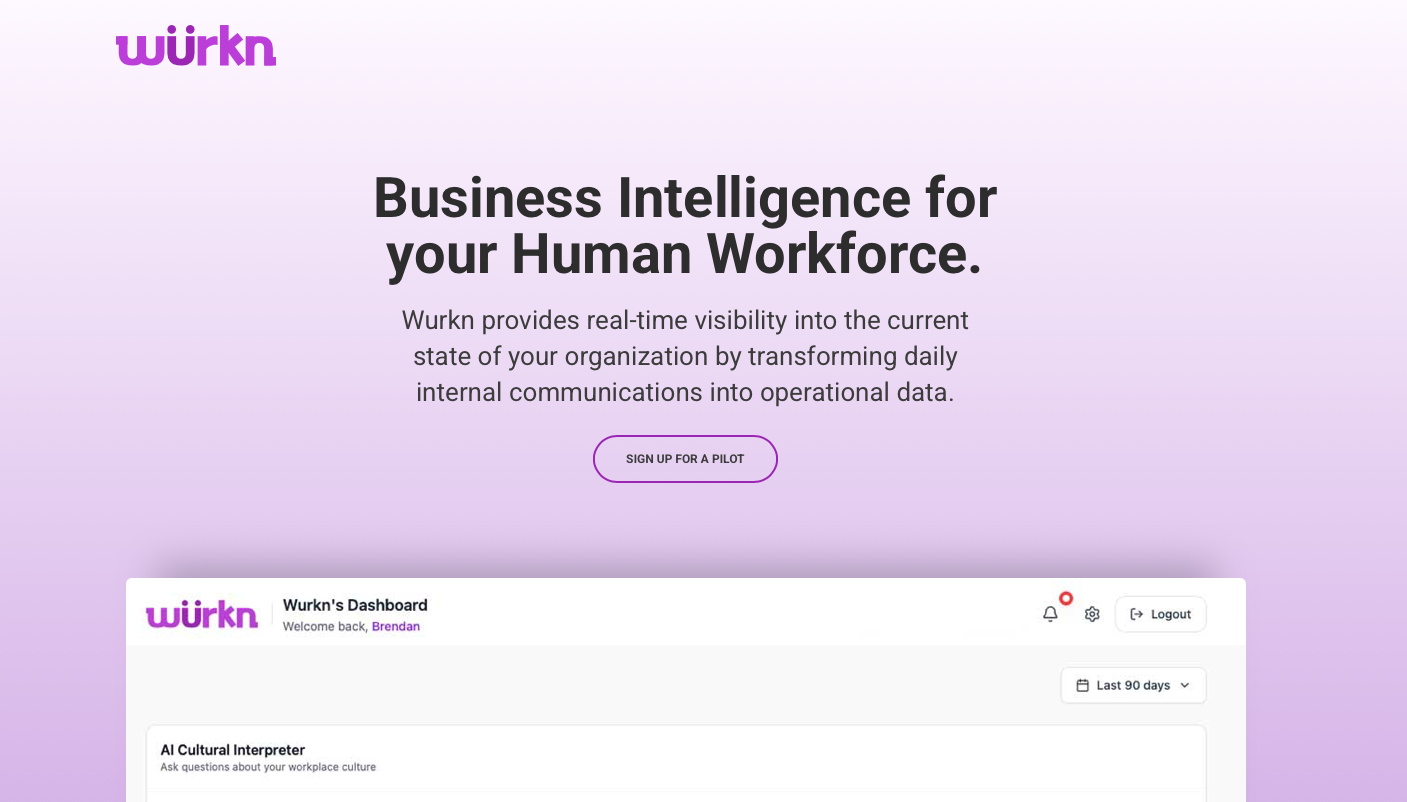
Ready to upgrade your employee feedback strategy with privacy-first, integrated, and insightful tools? Visit Wurkn now and start turning continuous employee sentiment into real business results that matter.
Frequently Asked Questions
How can I encourage employee participation in anonymous feedback channels?
Creating a culture of trust is key to encouraging participation. Clearly communicate the purpose of the feedback channels, ensure anonymity, and show employees that their voice leads to actionable change. Start with an initial communication campaign to explain how insights will be used for improvements.
What steps should I take to protect employee privacy during feedback collection?
Implement secure platforms that encrypt feedback submissions and limit access to a small group of trusted team members. Train your staff on confidentiality policies to ensure everyone understands how privacy is maintained and conduct regular audits to identify potential gaps.
How can I seamlessly integrate feedback tools into my existing workflow?
Choose tools that fit seamlessly into platforms employees are already using, such as Slack or Microsoft Teams. Focus on one integration first, particularly in the platform where most of your team communicates daily, to encourage immediate participation and minimize disruption.
What key performance indicators (KPIs) should I link to employee feedback?
Select KPIs that directly relate to employee experiences, such as retention rates, engagement scores, or productivity metrics. Regularly review these metrics alongside feedback trends to illustrate the connection between employee sentiment and business performance.
How can AI and human analysis work together to improve feedback insights?
Combine AI’s ability to process large volumes of feedback quickly with human expertise to interpret context and nuance. Implement a process where AI flags themes, and assign team members to validate findings and extract actionable insights from the data.
What are effective ways to act on employee feedback to improve workplace culture?
Prioritise the most impactful feedback and decide on a few key issues to address first. Engage employees in developing solutions and communicate progress regularly to demonstrate that their input leads to measurable changes.
Leave a Reply