
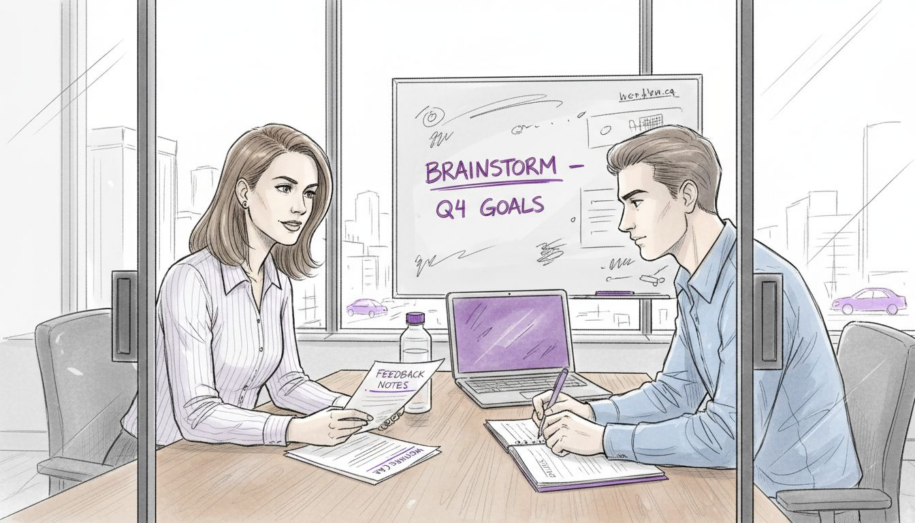
Performance reviews used to be a tense, once-a-year ritual that left employees guessing and managers scrambling to course correct too late. Today, organisations across Canada, the United States, and Europe are moving toward continuous feedback to keep teams engaged and on track. This approach replaces static ratings with real-time conversations, giving leaders ongoing visibility into talent while employees gain clarity on expectations and growth, creating stronger business outcomes for companies that adopt it early.
Table of Contents
- Defining Continuous Feedback In Business
- Types Of Continuous Feedback Systems
- How Continuous Feedback Works In Practice
- Best Practices For Implementation And Culture
- Benefits And Measurable Business Impact
Key Takeaways
| Point | Details |
|---|---|
| Continuous Feedback Improves Performance | Ongoing feedback allows employees to adjust in real time, enhancing engagement and work quality. |
| Reduces Turnover Costs | Regular feedback fosters employee satisfaction, thereby lowering voluntary turnover rates. |
| Supports Organisational Adaptability | Continuous input helps identify capability gaps early, enabling quicker responses to market changes. |
| Enhances Strategic Alignment | Frequent feedback aligns employee efforts with organisational goals, improving execution of strategic priorities. |
Defining Continuous Feedback in Business
Continuous feedback represents a fundamental shift in how organisations manage employee performance. Rather than waiting for annual reviews or quarterly check-ins, this approach delivers ongoing feedback about performance throughout the year, creating a real-time dialogue between managers and employees.
Traditionally, companies relied on static performance ratings delivered once or twice annually. These systems created pressure-filled moments where employees learned their standing only after months of work had passed. By then, any opportunity to course-correct was already lost.
Continuous feedback changes this dynamic entirely. It emphasises conversation over evaluation, ongoing input over final judgement, and qualitative insight over numerical ratings.
What Makes Continuous Feedback Different
Continuous feedback operates on a fundamentally different premise than traditional performance management. Here’s what sets it apart:
- Real-time adjustments: Employees receive input immediately when it matters most, allowing them to adjust their approach while projects are still underway
- Person-mediated interactions: Feedback comes through meaningful conversations, not impersonal review documents
- Qualitative depth: The focus shifts from “how many objectives met” to “why outcomes matter and how to improve”
- Motivation-driven: Rather than assigning ratings that damage morale, continuous feedback motivates better performance
- Task engagement: When employees understand expectations throughout the process, they remain more invested in their work
Organisations implementing this approach see measurable improvements. Feedback mechanisms significantly impact employee performance and productivity across different sectors and cultural contexts.
Why This Matters for Your Organisation
Your C-suite knows that retention costs money. Your PeopleOps team understands that engagement drives productivity. Continuous feedback addresses both challenges simultaneously.
Employees who receive regular feedback feel valued, understood, and equipped to succeed. They know exactly where they stand and what growth looks like. This clarity alone reduces voluntary turnover significantly.
Continuous feedback systems build trust between managers and employees whilst maintaining the honest, ongoing dialogue necessary for genuine transformation.
When feedback becomes continuous rather than occasional, your organisation gains visibility into emerging issues before they become crises. You spot capability gaps early. You identify cultural tensions that static surveys might miss.

The Business Transformation Connection
Workplace transformation requires knowing what actually needs to transform. Continuous feedback provides that clarity through real employee voices in real time.
Instead of relying on annual engagement surveys that become outdated before the ink dries, you have living feedback that evolves as your organisation evolves. This allows you to guide decisions with confidence rather than assumptions.
Pro tip: Start with one department or team to test continuous feedback approaches before organisation-wide rollout. This lets you refine processes and demonstrate value to sceptics.
Types of Continuous Feedback Systems
Not all continuous feedback works the same way. The delivery method, content type, and source all influence how employees respond and what outcomes you achieve. Understanding these distinctions helps you build a system that actually transforms your culture.
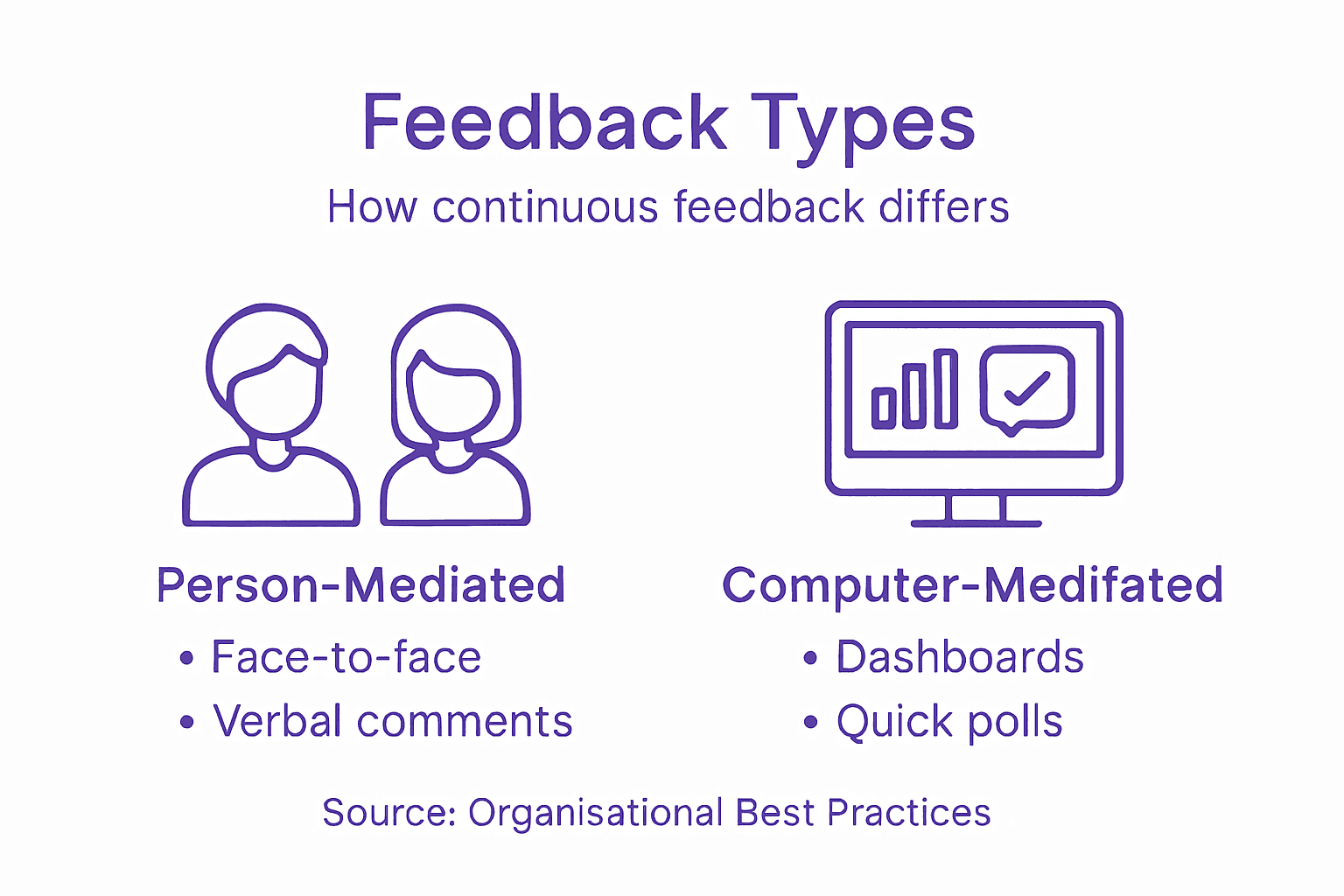
Person-Mediated vs. Computer-Mediated Feedback
The channel through which feedback travels matters enormously. Person-mediated and computer-mediated feedback each serve different purposes in your feedback ecosystem.
Person-mediated feedback comes directly from managers, peers, or mentors during conversations, one-on-ones, or team meetings. It includes tone, nuance, and the opportunity for real-time dialogue. Employees feel heard because they can ask questions, clarify intentions, and respond immediately.
Computer-mediated feedback arrives through platforms, dashboards, or automated systems. It provides consistency, anonymity, and data-driven insights without personal bias. However, it lacks the human connection that builds trust and motivation.
Your strongest approach combines both. Use person-mediated feedback for sensitive topics, developmental conversations, and recognition. Deploy computer-mediated systems for anonymous input, trend analysis, and objective metrics.
Here’s a summary of how feedback channels differ in continuous feedback systems:
| Channel Type | Human Connection | Data Consistency | Best Use Cases |
|---|---|---|---|
| Person-mediated | High | Variable | Sensitive topics, recognition |
| Computer-mediated | Low | High | Trend analysis, anonymous input |
| Blended approach | Moderate to High | High | Development and performance review |
Qualitative vs. Quantitative Feedback
The content type determines what insights you gain and how employees experience the feedback.
Qualitative feedback describes the “what” and “why” behind performance. Managers provide specific observations, examples, and suggestions for improvement. Research shows qualitative feedback strengthens motivation and engagement more effectively than numerical ratings alone.
Quantitative feedback uses numbers, metrics, and ratings. It tracks progress, benchmarks against targets, and identifies gaps. This type excels at measuring results but often fails to explain the path forward.
Effective systems layer both together:
- Qualitative insights: “Your client communication improved significantly. You listened more carefully and asked clarifying questions.”
- Quantitative markers: “Client satisfaction scores rose 8% in your accounts this quarter.”
Together, they create a complete picture. The employee understands what changed, why it matters, and how to sustain it.
Feedback Sources and Perspectives
Where feedback originates shapes its credibility and usefulness. Multi-source feedback provides richer insight than single-channel systems.
Consider these complementary sources:
- Manager feedback: Provides performance context and strategic alignment
- Peer feedback: Reveals collaboration skills and cultural fit
- Customer or stakeholder feedback: Shows external impact and real-world effectiveness
- Self-assessment: Enables employees to reflect on their own growth
- Team feedback: Captures group dynamics and contribution visibility
You don’t need all sources simultaneously. Start with manager and peer feedback, then expand based on role and organisational needs.
The most effective feedback systems blend person-mediated conversations with digital platforms, qualitative insights with quantitative metrics, and multiple perspectives into one coherent view.
Pro tip: Match your feedback delivery method to the message. Use face-to-face conversations for developmental feedback and recognition, and reserve systems-based feedback for trend analysis and objective metrics.
How Continuous Feedback Works in Practice
Continuous feedback isn’t a single moment or annual event. It’s a rhythm built into how your organisation operates. When implemented effectively, it becomes a natural part of work rather than an interruption to it.
The Rhythm of Ongoing Feedback
Instead of waiting for formal review cycles, real-time, frequent performance input happens throughout the year in smaller, digestible conversations. A manager notices strong work on a project and mentions it during a one-on-one. A peer flags a communication challenge immediately after a meeting. An employee shares what’s working and what feels unclear in a quick check-in.
This frequency prevents performance issues from festering. Successes get recognised while they’re still fresh. Employees adjust course before months of effort move in the wrong direction.
Formal and Informal Input
Practical continuous feedback blends structured and spontaneous moments. Both matter for different reasons.
Formal touchpoints include scheduled one-on-ones, quarterly pulse checks, or project debriefs. These create space for deeper reflection and documented progress. Informal input arrives through hallway conversations, Slack messages, or brief check-ins. This feels less intimidating and captures authentic reactions.
Your system needs both:
- Formal channels: Scheduled one-on-ones, quarterly reviews, project retrospectives
- Informal channels: Real-time recognition, quick feedback conversations, peer observations
- Anonymous systems: Platform-based input for sensitive topics
- Team discussions: Group reflections on shared wins and challenges
Making Timely Adjustments
The power of continuous feedback lies in responding quickly. When you spot a capability gap, you address it immediately rather than waiting months. When an employee excels, you build on that momentum.
Timely adjustments based on observations support employee growth and engagement dynamically. Instead of surprises during reviews, employees know where they stand constantly.
This requires managers equipped to give feedback well. They need comfort with conversations, clarity on what matters, and courage to address issues early. Your PeopleOps team should provide frameworks that make this straightforward, not burdensome.
Building a Feedback Culture
Continuous feedback only works when it’s genuinely valued. If it feels like a compliance box to tick, employees disengage. If managers give feedback sporadically, the system loses credibility.
Culture shift happens when:
- Leadership models regular feedback conversations
- Employees see feedback leading to real change
- Recognition happens as often as correction
- Psychological safety allows honest input
- Systems support rather than complicate the process
Continuous feedback transforms from a management tool into a shared responsibility where every person contributes to collective improvement.
Your role as a leader is creating conditions where this happens naturally, not forcing it through policy alone.
Pro tip: Start with your leadership team giving and receiving feedback openly before rolling out organisation-wide. Employees will adopt the practice faster when they see executives modelling it authentically.
Best Practices for Implementation and Culture
Successful continuous feedback systems don’t emerge from mandates alone. They require thoughtful design, manager capability, cultural alignment, and genuine commitment from leadership. Here’s how to make it stick.
Start with Leadership Buy-In
Your continuous feedback system will only go as far as your leaders take it. If executives model the behaviour, teams follow. If leaders treat feedback as bureaucratic busywork, employees disengage.
Leadership commitment shows up as:
- Actively soliciting feedback from direct reports
- Responding visibly to what employees share
- Allocating time for meaningful feedback conversations
- Removing barriers that prevent frequent dialogue
- Celebrating wins that emerge from feedback-driven improvements
Without this visible commitment, the most elegant system becomes theatre.
Build Manager Capability
Managerial training and technological tools are critical for successful adoption. Many managers never received formal training in giving feedback. They avoid difficult conversations. They soften honest observations to spare feelings, then wonder why nothing changes.
Your PeopleOps team needs to provide:
- Structured training on feedback conversations
- Templates and frameworks that make feedback straightforward
- Regular coaching and reinforcement
- Safe spaces to practise difficult conversations
- Clear metrics showing how feedback improves outcomes
Don’t assume managers will figure this out on their own. They won’t.
Embed Feedback at All Levels
Embedding feedback loops throughout the organisation means it flows in all directions. Top-down feedback from managers matters. So does peer feedback, upward feedback, and team input.
Bidirectional communication creates psychological safety. Employees see that anyone can voice concerns. Issues surface earlier. Innovation ideas reach decision-makers. Collaboration improves because people know they’re heard.
Address Change Resistance
Moving away from traditional annual reviews feels risky to some. Managers worry about liability. Employees fear constant scrutiny. Cynics remember past initiatives that faded.
Countering resistance requires:
- Transparent communication about why this matters
- Early wins that prove the approach works
- Acknowledgement of legitimate concerns
- Patience through the transition period
- Data showing improved retention and engagement
Implementation success depends less on perfect systems and more on creating psychological safety where honest feedback becomes the norm rather than the exception.
When people see feedback leading to better decisions and genuine improvement, resistance transforms into buy-in.
Use Data to Guide Decisions
Continuous feedback only drives culture change when you actually use what you learn. Spot trends in feedback. Identify recurring themes. Connect cultural signals to business outcomes. Share insights transparently with teams.
This closes the feedback loop. Employees see that their input matters because it shapes decisions they observe.
Pro tip: Pilot your continuous feedback approach with one department for 90 days before rolling out organisation-wide. Use this period to refine processes, train managers thoroughly, and build credibility with early success stories.
Benefits and Measurable Business Impact
Continuous feedback isn’t a soft HR initiative. It directly moves business metrics that matter to your CFO and board. When you connect cultural signals to performance outcomes, you prove that people strategy drives results.
Enhanced Employee Performance and Motivation
Continuous feedback improves employee performance, motivation, and engagement more effectively than traditional annual ratings. Employees who receive regular, qualitative input understand expectations clearly. They adjust their approach in real time. They stay engaged because they see progress and feel valued.
This translates to measurable gains:
- Higher-quality work output
- Faster problem-solving and adaptation
- Increased discretionary effort
- Better collaboration across teams
- Stronger alignment with organisational priorities
When motivation increases, productivity follows naturally.
Retention and Cost Savings
Turning over a skilled employee costs 150% of their annual salary when you factor in recruitment, training, and lost productivity. Continuous feedback directly reduces voluntary turnover because employees feel heard and invested in.
Your finance team will appreciate the impact. Lower turnover means:
- Reduced recruitment costs
- Preserved institutional knowledge
- Stronger team continuity
- Better client relationships and account management
- Improved team stability during transitions
Retention improvements alone often justify the investment in continuous feedback systems.
Adaptability in Dynamic Environments
Continuous feedback enhances organisational adaptability and performance outcomes in rapidly changing markets. When you spot capability gaps early, you upskill before problems escalate. When you hear emerging concerns from frontline teams, you course-correct strategy before competitors move.
This creates genuine competitive advantage. Your organisation responds faster to market shifts because you have real-time visibility into what’s working and what isn’t.
Alignment and Strategic Execution
Misalignment between employee goals and organisational objectives drains resources. Continuous feedback closes this gap. When employees understand how their work connects to strategy and receive regular input on progress, alignment happens naturally.
Better alignment shows up as:
- More efficient resource allocation
- Fewer false starts and wasted initiatives
- Faster execution of strategic priorities
- Improved cross-functional collaboration
- Clearer decision-making at all levels
Your strategic initiatives gain traction because teams operate with shared understanding rather than competing interpretations.
Measurable Business Outcomes
You can quantify these benefits. Track retention rates before and after implementation. Monitor productivity metrics. Measure project completion timelines and quality outcomes. Survey engagement scores. Connect these to revenue impact.
Organisations that implement continuous feedback coupled with clear business goals see noteworthy improvements in performance, retention, and adaptive capability across sectors and cultures.
This data gives your leadership team confidence that continuous feedback isn’t an expense—it’s an investment generating measurable returns.
Pro tip: Establish baseline metrics for retention, engagement, and productivity before launching continuous feedback, then measure progress quarterly. This builds credibility with sceptics and justifies ongoing investment.
Below is a reference table illustrating business impacts of continuous feedback:
| Business Outcome | Impact of Continuous Feedback | Supporting Factor |
|---|---|---|
| Employee retention | Lower voluntary turnover | Improved clarity and trust |
| Performance improvement | Higher-quality work and engagement | Real-time course correction |
| Adaptability | Faster response to market changes | Early detection of capability gaps |
| Strategic alignment | More efficient goal achievement | Ongoing visibility into progress |
Unlock Real-Time Cultural Intelligence to Drive Continuous Feedback Success
The challenge of transforming continuous feedback into meaningful workplace change calls for more than traditional surveys and inconsistent check-ins. Your organisation needs a dynamic solution that captures honest, ongoing employee sentiment without disrupting workflows or sacrificing privacy. Wurkn addresses these pain points by converting continuous, anonymous feedback from channels like Slack and Microsoft Teams into actionable cultural intelligence. This helps CXOs and PeopleOps teams detect issues early, understand the emotional drivers behind performance, and link cultural signals directly to business KPIs such as retention and productivity.
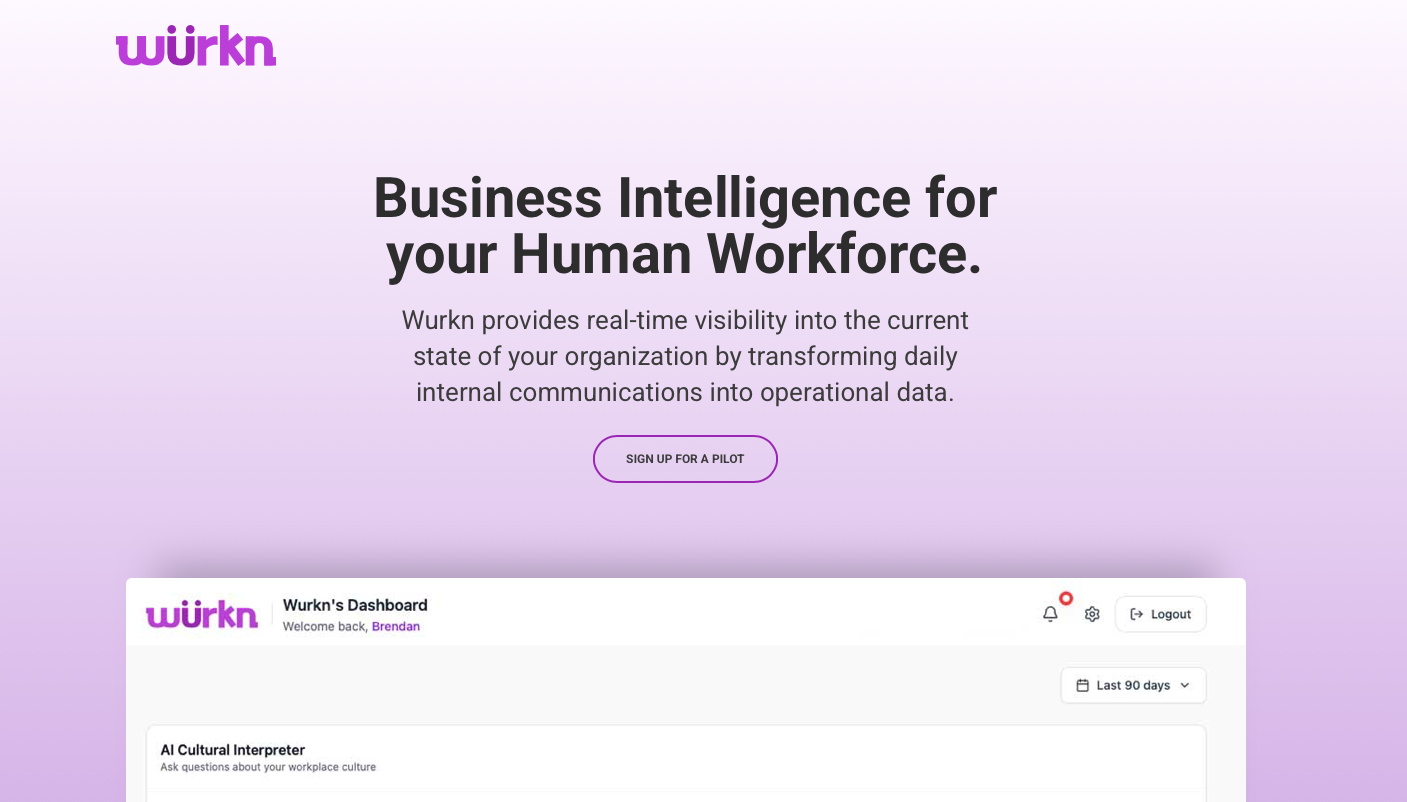
Experience firsthand how Wurkn’s AI-powered platform with human insight enables real-time dialogue beyond static ratings and one-off reviews. Start building a healthier, more engaged workforce today by leveraging continuous feedback that truly transforms workplace culture and business results. Don’t wait for the next review cycle—visit Wurkn now to see how you can make continuous feedback work in practice and gain a living dashboard for smarter decision-making.
Frequently Asked Questions
What is continuous feedback in the workplace?
Continuous feedback is an ongoing performance management approach that provides employees with real-time insights and discussions about their work, replacing the traditional annual review process. It fosters regular communication between managers and employees to promote engagement and course correction.
How does continuous feedback differ from traditional performance management?
Continuous feedback focuses on real-time, qualitative insights and meaningful conversations, whereas traditional performance management relies on static ratings and infrequent evaluations. This approach emphasizes immediate adjustments and ongoing dialogue rather than occasional assessments.
What are some effective methods for implementing continuous feedback?
Effective methods for implementing continuous feedback include using a blend of person-mediated and computer-mediated feedback, incorporating both qualitative and quantitative insights, and fostering an open culture where all levels of employees can share feedback.
What are the benefits of continuous feedback for organizations?
Benefits of continuous feedback include enhanced employee performance and motivation, reduced turnover costs, improved adaptability to changes, and better alignment between employee goals and organizational objectives. It directly contributes to measurable business outcomes, such as increased productivity and retention.
Leave a Reply