
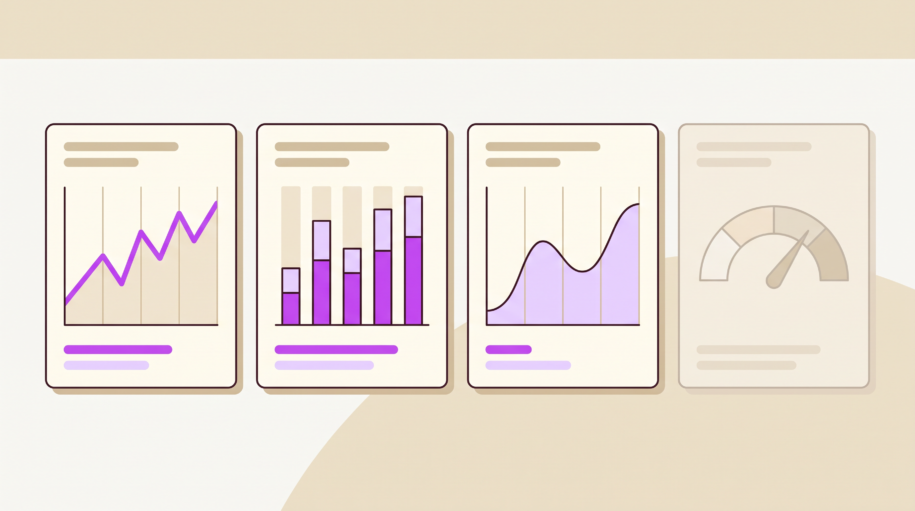
Revenue updates every day. Margin updates every day. Churn updates every day. Culture updates once a year, in a survey your people rush through in four minutes on a January Thursday, and then leadership argues about the stale result for two quarters.
This is the cadence gap. It is not a reporting problem. It is a decision problem.
Gallup’s latest global data put the cost of disengagement at roughly ten trillion dollars. Ten trillion. Not because unhappiness is hard to measure. Because the organizations that should catch the decline are measuring it too slowly to act.
The Cadence Gap, Defined
The cadence gap is the difference between how fast your business changes and how fast your people signal reaches a decision. For most organizations it is measured in months. For the ones competing on culture as a real business input, it is measured in days.
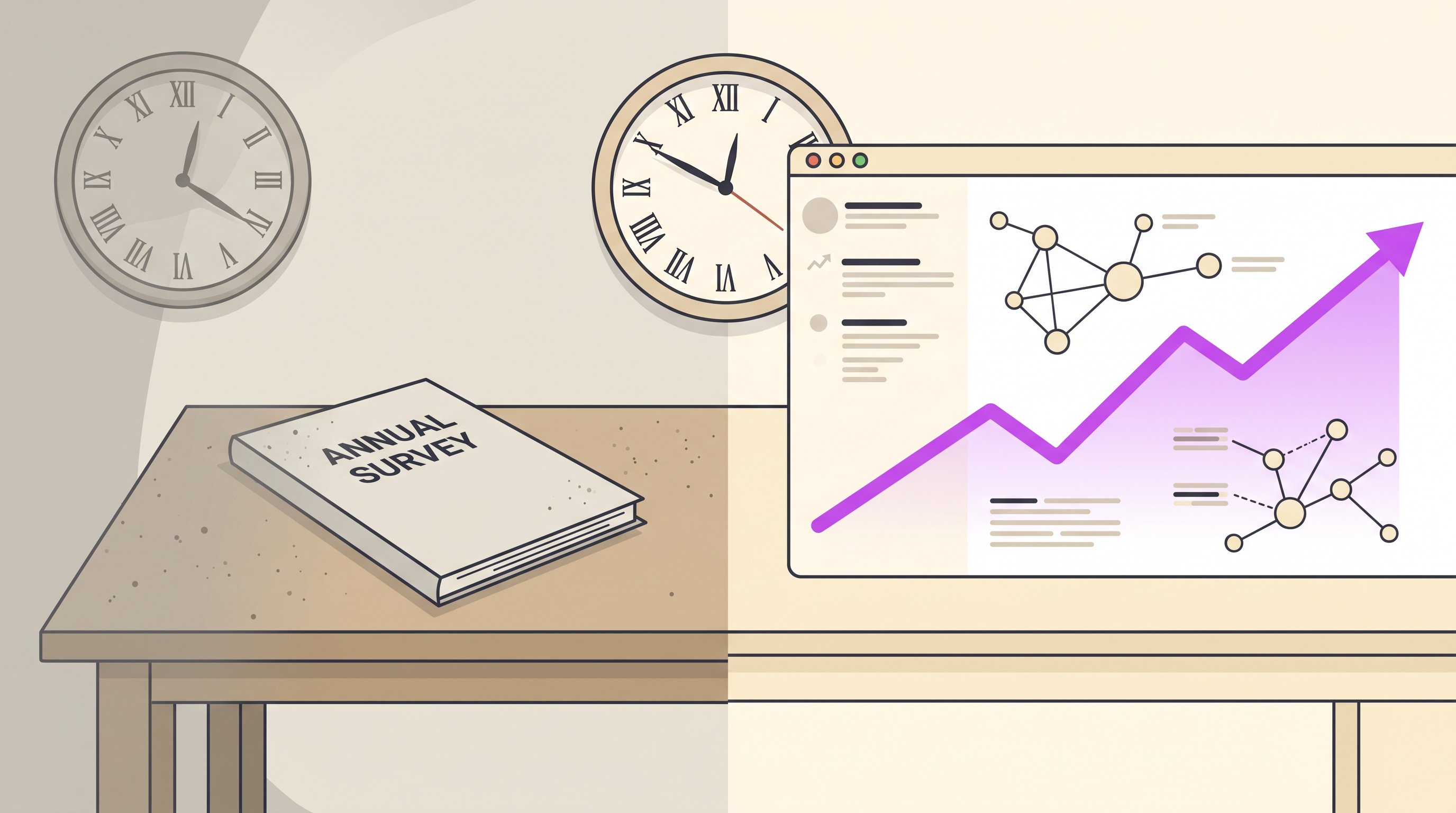
Think about what an annual engagement survey actually captures. A point in time. One afternoon. The mood on a Thursday. Then weeks to compile, more weeks to analyze, months to reach a decision. By the time the number is in a leadership meeting, the reality it described has already moved.
The people who would have changed the number have left. The team that was quietly disconnecting has fractured. The manager who was burning out a team has lost them.
Culture Is Not a Report. It Is a Decision Input.
Revenue, margin, and churn are decision inputs. They update continuously. They have owners. They drive action within days.
Culture is treated as a report. Something you produce periodically and file.
The companies that win on culture treat it like revenue. As a live signal that feeds decisions. When a team’s collaboration density drops, that is a leading indicator of a roadmap slipping. When a department’s meeting load crosses a burnout threshold, that is a trajectory, not a risk. When sentiment in a group trends negative over consecutive weeks, that is a resignation wave forming.
None of these are visible in an annual survey. All of them are visible in real-time communication patterns. The pattern repeats when your teams adopt new technology: AI agents change how teams collaborate overnight, and the shift shows up in these signals within days.
The Cadence of Your Culture Should Match the Cadence of Your Business
You would not run your business on last year’s revenue number. You should not run your people decisions on last year’s culture number.
Real-time organizational telemetry reads the signals your teams already produce. Slack messages. Meeting cadences. Cross-team DM density. It anonymizes at the collection layer, so you see organizational patterns, never individual behavior. And it surfaces shifts within days, so a culture decision has the same data foundation as a pricing decision.
This is not about replacing the survey. It is about putting culture on the same decision cadence as everything else you manage. The same logic applies to one of the biggest decisions you will make this year: RTO policy should be set on measurement, not vibes. The organizations with the shortest signal-to-decision latency move faster. That advantage compounds every quarter.
Wurkn puts a live culture signal on the same shelf as your revenue dashboard, your margin line, your churn curve. Measure culture the way you measure money, and you can manage it the way you manage money.
Wurkn is accepting pilot partners. Learn more at wurkn.com.
Frequently Asked Questions
What is the cadence gap in workforce data?
The cadence gap is the difference between how fast a business changes and how fast its people data reaches a decision. Revenue and margin update daily, but culture data from annual surveys takes months to reach leadership.
Why do annual engagement surveys fail?
Surveys capture a single point in time and take weeks or months to analyze. By the time results reach leadership, the organization has already changed, and the people who would have altered the number have often left.
What is organizational telemetry?
Continuous measurement of workforce communication patterns, collaboration density, meeting load, and sentiment, anonymized at the collection layer and surfaced as real-time health signals for leadership.
How does Wurkn close the cadence gap?
Wurkn reads collaboration signals from Slack, Teams, email, and calendar, anonymizes at collection, and surfaces organizational patterns within days, so culture is measured at the same cadence as revenue and churn.
One Comment
The Signal Your Board Keeps Asking About Is Already in Your Metadata - Wurkn
[…] surveys produce snapshots that are stale by the time the report renders. We wrote about this exact cadence problem and what it costs your decisions. And the frame itself is off. Leaders do not need another opinion poll about whether people are […]