

The board conversation has changed. Five years ago, culture showed up near the end of the deck as a single slide, a survey score, and a color. Now the question sounds different. How healthy is the organization, really? Which teams are at risk? What is happening underneath the numbers we already have?
That is a financial question wearing different clothes. Which is exactly why it should worry you. The shift is now being framed plainly in the business press: in 2026, an organization’s people data will rival its financial data. Most companies, though, still answer that question with data that would never survive a finance review.
Financial Data Earned Its Discipline. People Data Never Got The Same Treatment.
Think about what it takes for a number to reach a board deck in finance. It follows rules. It reconciles against a source of truth. Someone whose job is to find the error audits it. It closes monthly, and it gets restated when it was wrong.
People data arrives by a different road. An annual survey. A spreadsheet. A vendor slide deck with a score on the cover. Nobody audits it. Nobody reconciles it. It is stale the day it lands, and nothing in the process makes it current again.
Both numbers describe the same company. Only one of them is defensible.
An Annual Snapshot Cannot Answer A Current Question
A board asks a live question. Is this team at risk right now? Did the reorganization we approved in June actually land?
An annual survey answers a historical question. Your honest workforce looked different in March. Answering an October question with March data is archaeology, not measurement.
There is a second failure, and it is quieter. Survey data is filtered by trust before it reaches you. When people do not believe the climate rewards honesty, they under-report, and the instrument keeps counting. Clean results from a nervous team read like good news. It is the most expensive kind of wrong.
What An Unauditable People Number Actually Costs You
A weak people number does not stay in the People team. It travels.
It shows up in headcount decisions, where a leader cuts a team that reads fine on a survey and is quietly burning out. It shows up in retention forecasts that miss, because the flight-risk signal was never in the data. It shows up in the culture narrative a CEO gives an investor, which sounds confident in the room and collapses under one informed question.
The cost is not the survey fee. The cost is every decision made on a number nobody can defend.
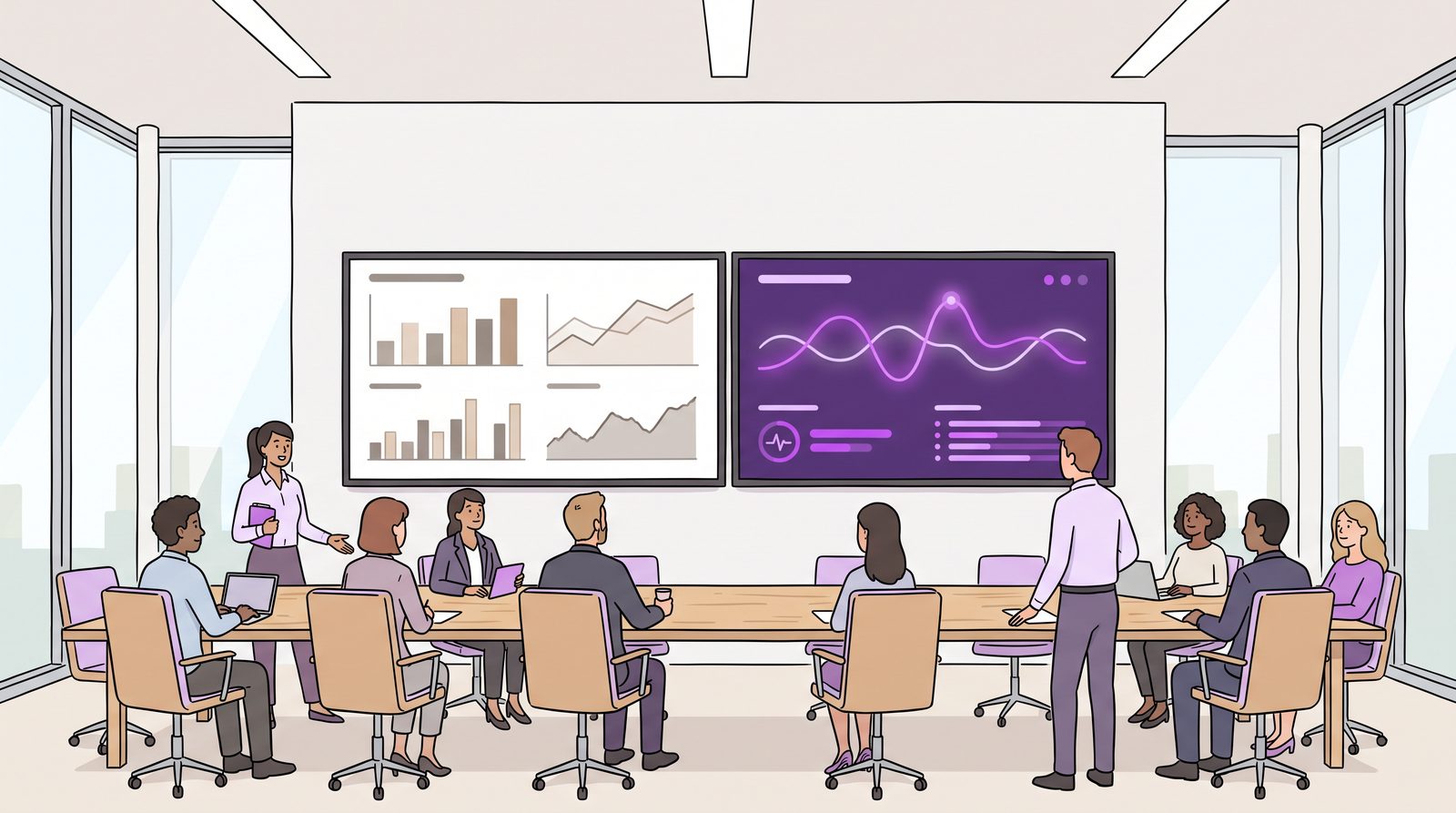
What A Live, Event-Level People Record Looks Like
Financial discipline rests on three properties. The record is current. It is governed. It is defensible.
A people record can carry the same three.
Current. Read the signal from where work already happens, continuously, rather than asking people to reconstruct their experience on a calendar. Cadence is the whole point.
Governed. Aggregate at the team level. Redact personal identifiers. Hash the link between employer and employee so one-to-one traceability does not exist in the data. No individual scorecards. No activity monitoring. Nothing that would let a manager work out who said what.
Defensible. You can show what you measured, over what period, and how the number was produced. When a board member pushes on it, you have an answer that is not a shrug.
That is the workforce equivalent of the ledger. A better survey would not produce it. A different instrument does.
What To Do Before The Next Board Meeting
Ask your people data the questions you already ask your financial data.
- Is it current, or is it a snapshot?
- Is it governed, or is it a spreadsheet someone maintains by hand?
- Can you defend it if a board member challenges it?
- Does it reconcile to anything?
If the honest answer is that you run a survey every year, you have found the gap your board is about to find. Better that you find it first.
The teams that close this gap will not do it by asking harder questions once a year. They will do it by instrumenting the work itself, so the read is continuous and the record is real.
Frequently Asked Questions
What does it mean to treat people data like financial data?
The same standards finance already meets. A current record, governed rules, and a defensible audit trail. Financial data is reconciled and audited. People data usually is neither.
Why is an annual survey not enough for a board?
It answers a historical question with a lag, and its answers are filtered by trust. By the time it reaches the board, the situation it describes has already moved.
How does Wurkn make people data auditable?
It reads the event-level signal from where work already happens, continuously, and aggregates at the team level with hashed identifiers. You can show what was measured, when, and how.
Does this mean monitoring employees?
No. The record is built on team-level aggregation, with no individual scorecards and no activity monitoring. Privacy is architectural in Wurkn, not a setting.
Wurkn puts a live people record on the same shelf as your financial one. If you lead an organization of 50 or more and want a baseline, join the open benchmark at wurkn.com.
Leave a Reply