

Finding real signals in employee sentiment often feels elusive, especially when annual surveys barely scratch the surface of workplace reality. For CXOs and PeopleOps leaders, the challenge is not just gathering feedback, but activating a continuous feedback loop that actually transforms engagement. The right approach reveals actionable insights, closes communication gaps, and builds trust so cultural change aligns with business outcomes.
Table of Contents
- Defining Feedback Loops in Employee Engagement
- Key Types of Feedback Loops for Organisations
- How Continuous Feedback Fuels Engagement
- Linking Feedback to Cultural and Business KPIs
- Privacy, Analytics, and Common Feedback Pitfalls
Key Takeaways
| Point | Details |
|---|---|
| Continuous Feedback is Essential | Implement dynamic communication channels that promote real-time employee engagement and foster a culture of continuous improvement. |
| Diverse Feedback Loops Enhance Strategy | Utilize various feedback types to align employee actions with organisational goals, driving productivity and adaptive behaviours. |
| Link Feedback to Business Outcomes | Connect employee insights to measurable KPIs to enhance retention, satisfaction, and overall organisational performance. |
| Data Privacy is Crucial | Prioritise privacy and clear communication about data use to maintain employee trust and ensure effective feedback systems. |
Defining Feedback Loops in Employee Engagement
Employee engagement is fundamentally about creating continuous, dynamic communication channels that transform workplace interactions. Continuous feedback mechanisms represent a sophisticated approach to understanding and enhancing organisational culture beyond traditional annual survey models.
Feedback loops in employee engagement operate through several interconnected stages:
- Collection: Gathering real-time employee sentiments and experiences
- Analysis: Synthesising qualitative and quantitative data to identify patterns
- Action: Implementing targeted interventions based on insights
- Validation: Measuring the impact of organisational changes
These mechanisms are more than mere data collection tools. They represent a strategic approach to understanding workplace dynamics. Performance feedback research demonstrates that qualitative, person-mediated feedback substantially enhances employee motivation and engagement compared to traditional quantitative approaches.
Organisations committed to continuous improvement recognise that feedback loops are living systems. They require ongoing investment, technological infrastructure, and a culture of psychological safety where employees feel comfortable sharing genuine perspectives.
Pro tip: Design feedback mechanisms that prioritise anonymity and demonstrate tangible action to build employee trust and participation.
Key Types of Feedback Loops for Organisations
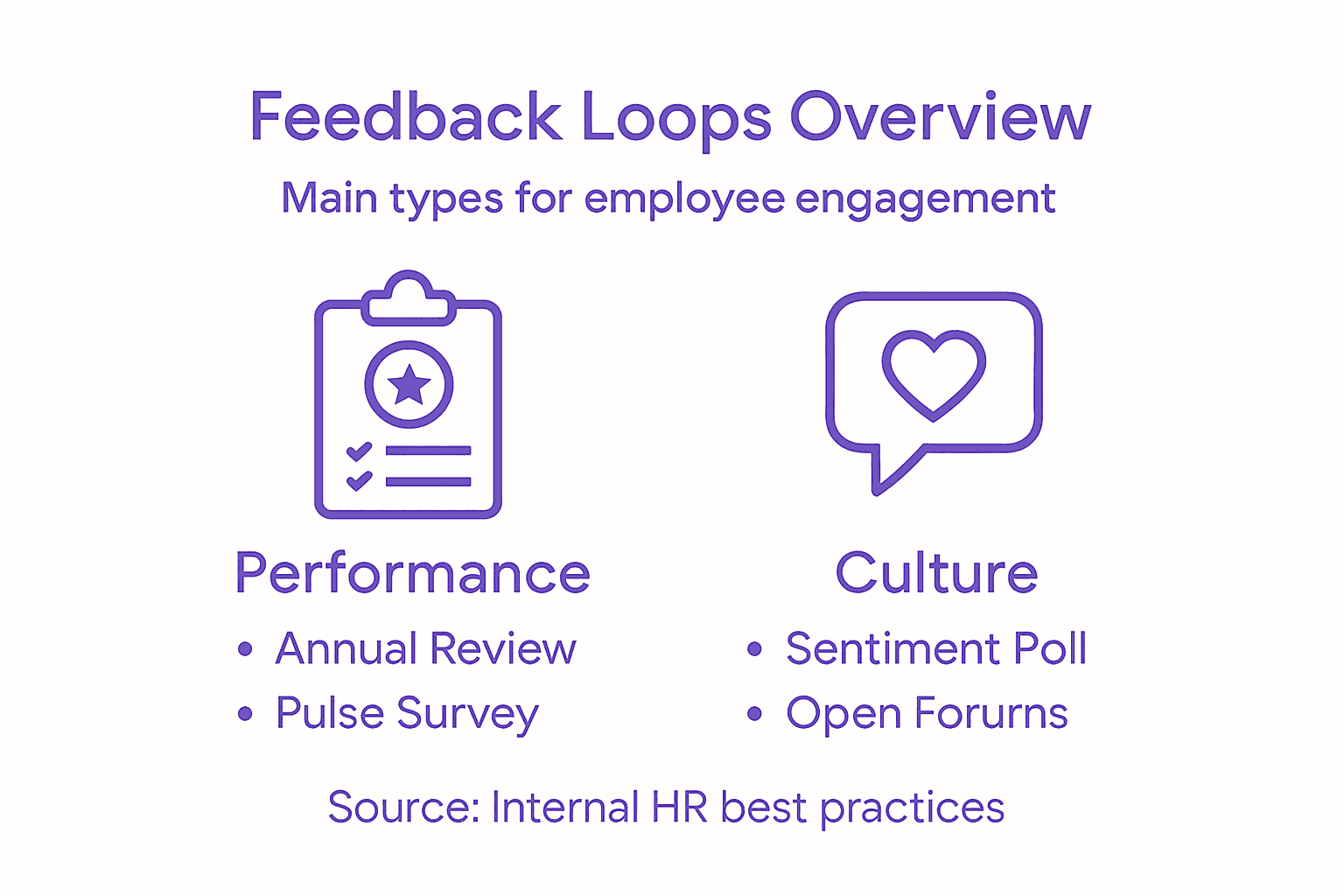
Feedback loops in organisations are sophisticated communication strategies designed to capture, analyse, and respond to employee experiences and organisational dynamics. Comprehensive feedback categorizations reveal multiple types of feedback mechanisms tailored to different organisational objectives.
Organisations typically implement several key feedback loop types:
- Performance Feedback Loops: Direct assessments of individual and team performance
- Cultural Sentiment Loops: Capturing organisational mood and employee engagement levels
- Strategic Alignment Loops: Ensuring employee actions align with organisational goals
- Innovation and Improvement Loops: Gathering suggestions for process and product enhancement
- Learning and Development Loops: Identifying skill gaps and training needs
Effective feedback design principles emphasise the importance of creating bidirectional, purposeful interactions. These loops are not one-way communication channels but dynamic systems that facilitate mutual understanding and continuous improvement.
Successful organisations recognise that feedback loops are more than data collection tools. They are strategic instruments for building trust, enhancing employee engagement, and driving organisational adaptability. By implementing diverse, contextually appropriate feedback mechanisms, leaders can create a more responsive, transparent workplace culture.
Here’s how major feedback loop types differ in purpose and benefit:
| Feedback Loop Type | Main Purpose | Strategic Benefit |
|---|---|---|
| Performance | Support assessment and development | Drives productivity and skill growth |
| Cultural Sentiment | Gauge morale and engagement | Informs culture and retention efforts |
| Strategic Alignment | Ensure actions match goals | Enhances goal clarity and unity |
| Innovation & Improvement | Gather improvement ideas | Boosts adaptability, drives change |
| Learning & Development | Identify training needs | Reduces skill gaps, supports growth |
Pro tip: Design your feedback loops with flexibility, ensuring they can evolve alongside your organisation’s changing needs and technological capabilities.
How Continuous Feedback Fuels Engagement
Continuous feedback transforms traditional workplace communication by creating dynamic, responsive interactions that directly impact employee motivation and organisational performance. Early employee engagement research reveals the critical importance of frequent, reciprocal communication during the first 180 days of employment.
Continuous feedback drives engagement through several key mechanisms:
- Rapid Learning: Accelerates skill development and role clarity
- Psychological Safety: Creates environments where employees feel valued and heard
- Performance Transparency: Provides real-time insights into individual and team contributions
- Adaptive Behaviours: Encourages proactive problem-solving and innovation
- Emotional Connection: Builds trust between employees and leadership
Systematic feedback reviews demonstrate that sustained communication significantly enhances employee motivation and productivity. These feedback mechanisms are not just about evaluation, but about creating a collaborative ecosystem where continuous improvement becomes the cultural norm.

Successful organisations understand that continuous feedback is a strategic investment. It transforms traditional hierarchical communication into a fluid, multidirectional dialogue that empowers employees, reduces uncertainty, and aligns individual efforts with broader organisational objectives.
Pro tip: Implement feedback channels that prioritise anonymity and provide immediate, actionable insights to demonstrate genuine commitment to employee perspectives.
Linking Feedback to Cultural and Business KPIs
Business performance and organisational culture are deeply interconnected, with employee feedback serving as the critical bridge between individual experiences and strategic outcomes. Quantitative engagement research demonstrates how feedback mechanisms directly correlate with key performance indicators such as retention, productivity, and job satisfaction.
Organisations can link feedback to critical KPIs through several strategic approaches:
- Performance Metrics: Tracking employee engagement scores alongside productivity rates
- Retention Analytics: Correlating feedback sentiment with turnover and recruitment costs
- Cultural Health Indicators: Measuring psychological safety and collaborative potential
- Leadership Effectiveness: Evaluating management impact through employee perspectives
- Innovation Potential: Assessing organisational adaptability through feedback channels
Systematic feedback implementations reveal that structured communication can transform cultural metrics into tangible business outcomes. These approaches move beyond traditional measurement, creating a dynamic ecosystem where employee insights become strategic intelligence.
Successful organisations understand that feedback is not just a communication tool, but a strategic lever for organisational transformation. By creating transparent, responsive feedback mechanisms, leaders can convert qualitative employee experiences into quantifiable business improvements that drive competitive advantage.
The following table links feedback-enabled practices to measurable organisational outcomes:
| Practice Informed by Feedback | Corresponding Business KPI | Example Impact |
|---|---|---|
| Tailored training programmes | Productivity improvement | Faster onboarding times |
| Leadership coaching | Retention rate | Lower voluntary turnover |
| Cultural initiatives | Employee satisfaction | Higher engagement survey scores |
| Process enhancements | Innovation metric | Increased idea implementation |
Pro tip: Design feedback systems that translate employee sentiments into actionable, measurable insights that connect directly to your organisation’s strategic objectives.
Privacy, Analytics, and Common Feedback Pitfalls
Data privacy represents the cornerstone of effective feedback systems, transforming potential vulnerabilities into strategic opportunities for organisational learning. Continuous feedback challenges highlight the complex landscape of maintaining employee trust while extracting meaningful insights.
Common feedback pitfalls organisations must navigate include:
- Data Overload: Collecting excessive information without clear analysis strategy
- Privacy Breaches: Risking employee trust through inadequate data protection
- Misaligned Metrics: Using feedback mechanisms that don’t connect to strategic goals
- Lack of Transparency: Failing to communicate how feedback influences decisions
- Inconsistent Implementation: Sporadic or unpredictable feedback processes
Effective feedback design principles emphasise creating collaborative environments that balance analytical rigor with human-centric approaches. Successful organisations understand that analytics are not just about data collection, but about creating meaningful dialogue that respects individual privacy and organisational objectives.
Navigating these challenges requires a sophisticated approach that prioritises employee psychological safety, implements robust anonymisation protocols, and creates clear, transparent communication channels about how feedback will be used and protected.
Pro tip: Develop a comprehensive privacy framework that explicitly outlines data usage, ensures anonymity, and demonstrates how individual perspectives contribute to organisational improvement.
Transform Your Feedback Loops into Strategic Cultural Intelligence
The article highlights the challenges organisations face when trying to build continuous, meaningful feedback loops that truly drive cultural impact and business results. Capturing anonymous, real-time employee sentiments without disrupting workflows and linking these insights directly to KPIs like productivity, retention, and innovation is no easy feat. This is where Wurkn excels by turning continuous feedback into actionable cultural intelligence. Our platform integrates seamlessly with tools like Slack, Microsoft Teams, and HRIS, so employees share honest input effortlessly while privacy remains fully protected through robust anonymization and data security.
Unlock the power of continuous feedback to fuel engagement and align culture with strategic goals.
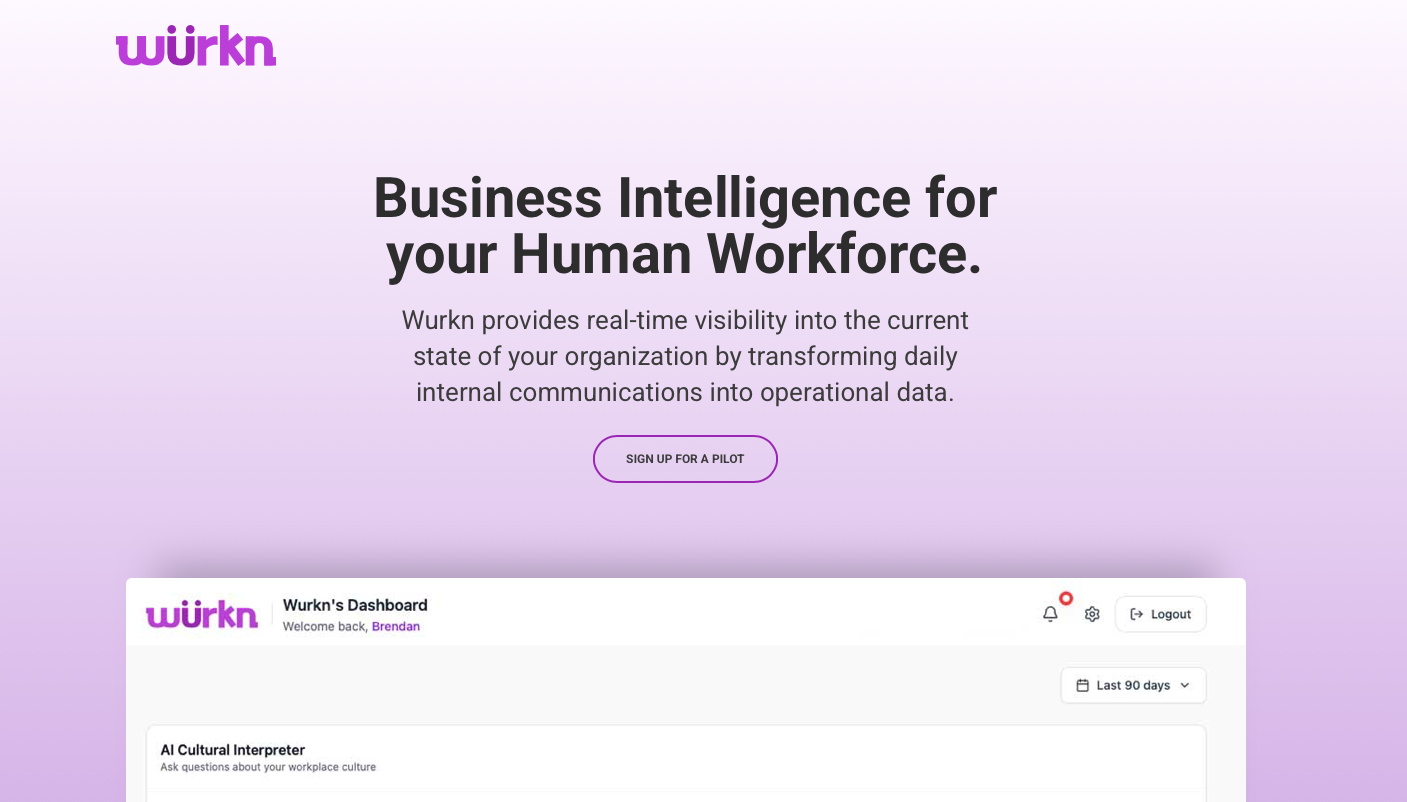
Ready to move beyond static surveys and leverage a living dashboard that reveals not only what is happening in your organisational culture but why? Discover how Wurkn enables leaders and PeopleOps teams to diagnose issues early and make data-driven decisions that improve performance and reduce churn. Explore how you can build healthier, more adaptable teams today by visiting Wurkn’s platform and see firsthand how continuous, anonymized feedback drives measurable business success.
Frequently Asked Questions
What are feedback loops in employee engagement?
Feedback loops in employee engagement are continuous communication strategies that enable organizations to gather, analyze, and respond to employee sentiments and experiences. They aim to enhance workplace dynamics beyond traditional annual surveys.
How do continuous feedback mechanisms benefit organizations?
Continuous feedback mechanisms foster rapid learning, promote psychological safety, enhance performance transparency, encourage adaptive behaviors, and build emotional connections between employees and leadership, ultimately driving engagement and organizational performance.
What types of feedback loops should organizations implement?
Organizations typically implement various feedback loop types, including performance feedback loops, cultural sentiment loops, strategic alignment loops, innovation and improvement loops, and learning and development loops, each serving a specific purpose in enhancing engagement.
Why is data privacy important in feedback systems?
Data privacy is crucial in feedback systems as it helps maintain employee trust while collecting meaningful insights. Effective feedback systems must include robust anonymization protocols and clear communication on how feedback will be used to protect employees’ privacy.
Recommended
- Employee Engagement vs Satisfaction – Driving Culture and Results
- Organizational Culture Explained: Impact on Performance
- 10 Strategic Team Bonding Activities to Elevate Your Culture
- 10 Positive Feedback Examples to Supercharge Your Team in 2026
- Measuring Team Engagement: Impact on Global HR Success – Blog
- What Makes a Great Culture—and Why It Matters in a Small Business
- Talent Retention Strategies: Boost Engagement With Personality