

Employee engagement is more than a feel-good measure or a tick-box policy. Many organisations worldwide still mistake it for satisfaction or compliance, ignoring its true impact. Engagement represents a multi-dimensional, psychological connection to work and mission, shaping discretionary effort and business results. Understanding these distinctions helps leaders drive innovation, retention, and profitability. This article outlines how engagement differs from common myths, why it matters, and practical strategies for linking cultural insights to business performance.
Table of Contents
- Defining Employee Engagement And Common Myths
- Variations And Models Of Engagement Drivers
- How Engagement Impacts Business Outcomes
- Key Characteristics Of High-Engagement Cultures
- Practical Strategies For Leaders And Chros
Key Takeaways
| Point | Details |
|---|---|
| Engagement is Active | Employee engagement involves emotional and cognitive investment, driving productivity and innovation beyond mere job satisfaction. |
| Distinct from Compliance | Engaged employees proactively contribute to outcomes, while compliant employees merely follow rules without investment. |
| Unique Drivers per Context | Engagement strategies must be tailored to your organisation’s specific culture, industry, and workforce dynamics. |
| Link to Business Outcomes | Engagement should connect directly to key performance indicators, impacting retention, productivity, and profitability. |
Defining employee engagement and common myths
Employee engagement isn’t what most leaders think it is. Many confuse it with job satisfaction or employee happiness, which are fundamentally different concepts.
Employee engagement refers to the emotional and cognitive investment employees make in their work and organisation. It goes beyond just showing up and performing tasks. Employees who are truly engaged invest their physical, cognitive, and emotional energies into their roles.
This distinction matters because engagement involves multi-dimensional psychological connection to both the work itself and the organisation’s mission. It’s about discretionary effort—the energy people choose to give beyond minimum requirements.
Unlike satisfaction, which is passive contentment, engagement is active. A satisfied employee might be comfortable in their role but not particularly invested in outcomes. An engaged employee drives results because they care about success.
Here’s how employee engagement, satisfaction, and compliance differ in their business impact:
| Aspect | Engagement | Satisfaction | Compliance |
|---|---|---|---|
| Motivation Source | Emotional and cognitive investment | Contentment with role | Adherence to policies |
| Contribution Type | Discretionary effort, proactivity | Performing expected tasks | Following rules, minimal initiative |
| Impact on Results | Drives innovation and team performance | Maintains stability, not outcomes | Ensures risk control, not growth |
| Effect on Retention | Increases loyalty and tenure | May reduce churn, but less commitment | Prevents infractions, but engagement may be low |
Common Myths About Engagement
Your team likely holds misconceptions about what drives engagement. Here are the most damaging ones:
-
Myth: Engagement equals happiness. Content employees aren’t necessarily engaged. You can have a pleasant workplace with checked-out workers.
-
Myth: High engagement only affects individual performance. Research shows engagement directly impacts organisational performance, retention, and well-being across all levels.
-
Myth: Engagement is the same as compliance. Compliant employees follow rules. Engaged employees innovate and solve problems independently.
-
Myth: You can measure it with annual surveys. Static surveys capture a moment in time, not the continuous shifts in employee sentiment that predict real problems.
-
Myth: It’s solely an HR problem. Leadership behaviour, culture, and everyday interactions shape engagement far more than HR programmes.
Engagement is a leading indicator of business results—not a feel-good metric. When it declines, turnover, productivity loss, and missed revenue follow.
Why does this matter for your organisation? Because the difference between a team that’s satisfied and a team that’s engaged shows up directly in your KPIs. Engaged employees stay longer, produce better work, and attract talent. The leaders who understand this distinction gain competitive advantage.
Pro tip: Stop measuring engagement as a score and start treating it as a diagnostic tool. Ask your teams what’s shifting in their commitment and emotional connection to work, then tie their feedback directly to business outcomes you care about.
Variations and models of engagement drivers
Engagement doesn’t work the same way across every organisation. What motivates teams in your tech startup differs significantly from what drives engagement in a manufacturing firm or financial services company.
Research identifies key drivers ranging from work environment to leadership style across different sectors. These drivers operate at different levels of importance depending on your organisation’s structure, culture, and industry context.
Universal Drivers Across Organisations
While specific engagement levers vary, certain patterns emerge consistently.
Organisations worldwide see engagement shaped by:
-
Emotional commitment. Employees care about the mission and feel personally invested in outcomes.
-
Empowerment. Teams have autonomy to make decisions without excessive approval chains.
-
Work-life balance. Sustainable workloads prevent burnout and build loyalty.
-
Organisational citizenship. People go beyond job descriptions because they believe in the culture.
-
Personalised career growth. Individual development paths matter more than generic training programmes.
Model-Specific Approaches
Different frameworks emphasise different components. Motivational theories focus on intrinsic rewards. Contemporary engagement models emphasise autonomy, purpose alignment, and organisational culture impact on discretionary effort.
The reality for your organisation is this: engagement drivers aren’t fixed. They shift as your culture evolves, as leadership changes, and as your workforce demographics shift.
What matters most in a fast-growth tech company (autonomy, innovation opportunity) differs from what matters in a regulated industry (clarity, stability, compliance understanding). Your job is identifying which drivers create the most impact for your specific context.
Compare how universal and industry-specific engagement drivers influence team behaviour:
| Driver Type | Example Drivers | Impact in Tech | Impact in Manufacturing |
|---|---|---|---|
| Universal | Emotional commitment, empowerment | Fosters creativity, rapid innovation | Builds dedication, reduces turnover |
| Industry-Specific | Autonomy, purpose alignment | Speeds product development, attracts talent | Enhances safety, ensures compliance |
| Tailored Approaches | Leadership style, work-life balance | Enables decentralised teams, supports flexibility | Strengthens teamwork, reinforces clarity |
Different organisations require different engagement strategies. A one-size-fits-all approach guarantees mediocre results across the board.
Why This Matters for Your Business
Understanding your engagement drivers helps you allocate resources effectively. Instead of investing equally in every programme, you focus on the levers that move your KPIs.
Leaders who map their unique engagement drivers see faster improvements in retention, productivity, and revenue contribution. They stop chasing generic “best practices” and build strategies rooted in their culture.
Pro tip: Map your top three engagement drivers by asking frontline teams what actually influences their decision to stay, perform, and recommend your company to others. These become your strategic priorities, not generic HR initiatives.
How engagement impacts business outcomes
Engagement isn’t a soft benefit. It’s directly connected to your bottom line through measurable business outcomes that executives care about.

When employees are genuinely engaged, they contribute discretionary effort. They stay longer, produce higher-quality work, and drive innovation. This translates into concrete financial results.
The Direct Business Impact
Research shows engagement positively correlates with productivity, profitability, and retention. Organisations with high engagement levels experience measurable gains across multiple KPIs.
Engaged employees deliver:
-
Higher productivity. Teams accomplish more because people care about outcomes, not just completing tasks.
-
Improved retention. Engaged staff stay significantly longer, reducing expensive turnover costs and knowledge loss.
-
Better customer satisfaction. Employees who care deliver superior service, which directly impacts customer loyalty and revenue.
-
Increased profitability. Reduced absenteeism, lower training costs, and higher output improve your financial performance.
-
Greater innovation. Engaged teams solve problems creatively because they’re invested in organisational success.
The Cost of Disengagement
Low engagement isn’t neutral. It actively costs you money through turnover expenses, reduced productivity, and missed opportunities.
Disengaged employees contribute minimal discretionary effort, follow rules without enthusiasm, and leave when better options appear. They also influence others negatively, creating cultural drag.
Organisations with high engagement experience fewer turnover and absenteeism costs, delivering competitive advantages that compound over time.
Engagement isn’t a people operations metric. It’s a business strategy that directly impacts revenue, cost structure, and market competitiveness.
Linking Engagement to Your Specific KPIs
Engagement drives outcomes, but the mechanism differs by organisation. For tech companies, engagement often predicts product quality and innovation velocity. For customer-facing businesses, it predicts satisfaction scores and retention.
Your job is mapping which engagement drivers move your specific KPIs. Once you understand these connections, you prioritise investments that deliver measurable returns.
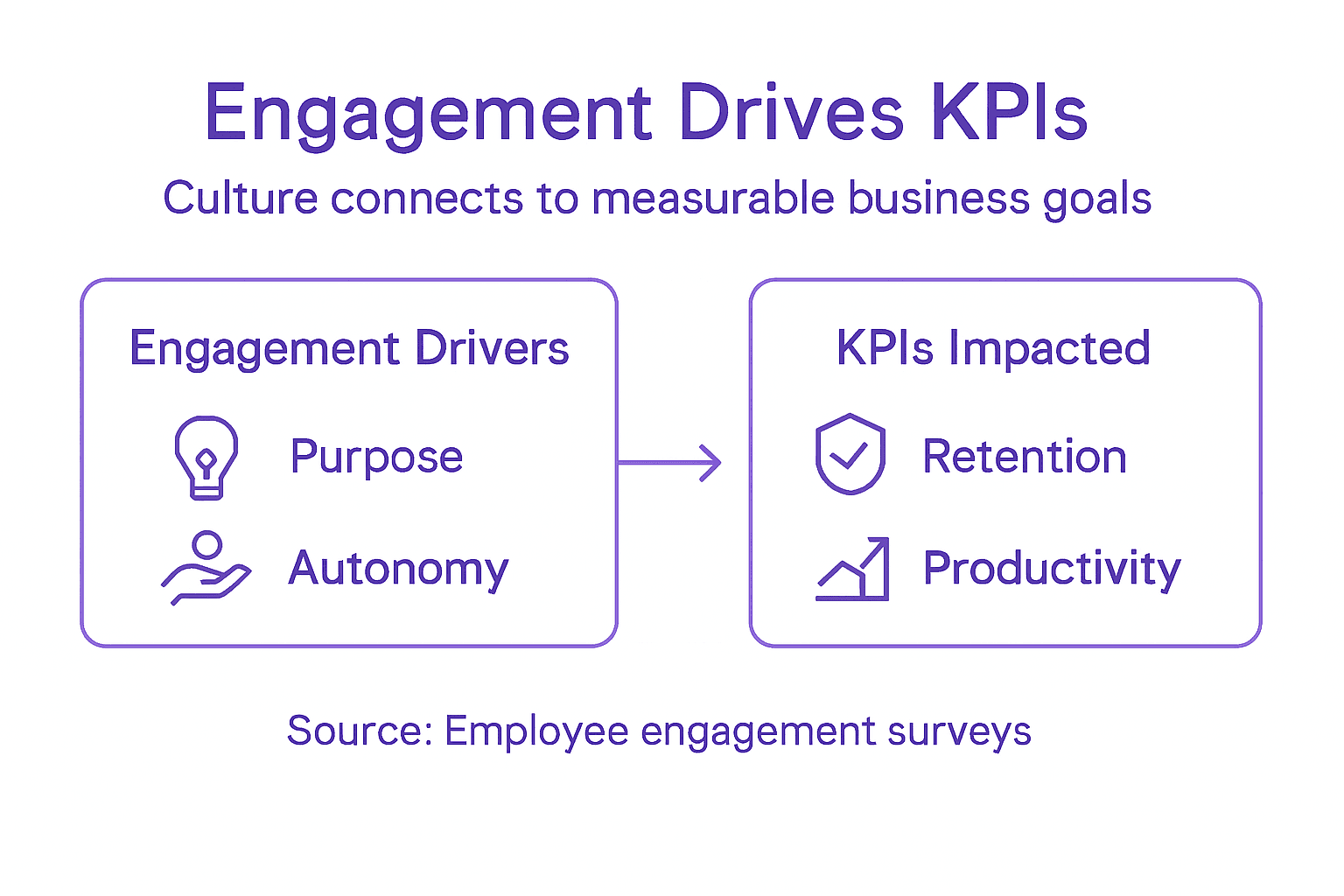
Leaders who treat engagement as a strategic business lever, not an HR initiative, see faster improvements in financial performance.
Pro tip: Connect engagement metrics directly to your revenue, retention, and productivity KPIs using historical data. When leadership sees engagement correlated with profit, it becomes a strategic priority, not a nice-to-have initiative.
Key characteristics of high-engagement cultures
High-engagement cultures aren’t accidents. They share consistent characteristics that make employees want to stay, contribute fully, and recommend their organisation to others.
These cultures feel different from day one. People experience psychological safety, clarity about purpose, and genuine investment in their growth.
The Foundation: Meeting Core Psychological Needs
Supportive environments fulfilling autonomy, competence, and relatedness needs create the foundation for sustained engagement. Employees perform best when they control how they work, develop expertise, and build meaningful connections.
High-engagement cultures deliver:
-
Autonomy. Teams make decisions without excessive approval chains or micromanagement.
-
Competence. Clear development paths and skill-building opportunities help people grow.
-
Relatedness. Inclusive practices foster genuine connections and belonging across the organisation.
The Infrastructure: Systems That Enable Engagement
Psychological needs alone aren’t enough. High-engagement cultures build specific systems and practices that reinforce engagement daily.
These include clear organisational values that guide decisions, collaborative leadership that solicits input, and frequent feedback with meaningful recognition practices. Employee voice matters because leaders actually listen and act on feedback.
Professional growth opportunities align with organisational purpose, so people see how their work contributes to something larger.
The Invisible Element: Psychological Safety
High-engagement cultures feel safe because people can be honest without fear of punishment or embarrassment. This safety enables people to contribute fully, challenge ideas respectfully, and admit mistakes.
Without psychological safety, people play it safe. They withhold ideas, avoid risk, and disengage.
High-engagement cultures aren’t built through programmes or initiatives. They’re built through consistent leadership behaviour that reinforces autonomy, growth, and belonging every day.
The Reality Check
Building a high-engagement culture requires discipline. It means making hard trade-offs between short-term efficiency and long-term engagement. It means listening to difficult feedback and acting on it.
Leaders who commit to these characteristics see engagement improve, retention increase, and business outcomes strengthen.
Pro tip: Audit your culture against these characteristics: Do employees control their work? Do they grow? Do they belong? Can they speak up safely? Start with the weakest area and build your improvement strategy there.
Practical strategies for leaders and CHROs
Understanding engagement drivers is worthless without action. CHROs and leaders need concrete strategies that move the needle on both culture and KPIs.
The most effective approaches start with listening, then adapt based on what you hear. Generic programmes fail because they ignore your specific workforce.
Start with Employee Voice
Your teams already know what drives engagement. The problem is most leaders don’t ask—or worse, they ask but don’t act.
Conducting regular stay interviews reveals why people stay and what keeps them engaged. Unlike exit interviews, stay interviews happen before people leave, so you capture honest feedback while it still matters.
Ask simple questions: What keeps you here? What would make you leave? What would make you recommend us to others?
Personalise Everything
One-size-fits-all benefits don’t work anymore. Different people want different things from work. Some value flexibility, others want learning opportunities, still others prioritise stability.
Effective strategies include:
-
Customised benefits. Let people choose what matters to them rather than imposing standard packages.
-
Personalised learning pathways. Build development plans aligned with individual career goals, not organisational templates.
-
Flexible reward systems. Recognition should match what employees actually value, not what feels easiest to deliver.
Empower Decision-Making
Micromanagement kills engagement. Teams who make decisions contribute more discretionary effort because they own outcomes.
Empowering teams with decision-making authority requires trust. Set clear guardrails, then step back. Let people make mistakes and learn.
This shift feels uncomfortable for many leaders because it requires letting go of control. But the engagement gains justify the discomfort.
Engagement strategies succeed when they’re built on listening, personalised based on actual workforce needs, and supported by consistent leadership behaviour.
Link Strategies to KPIs
Don’t implement engagement strategies in isolation. Connect each initiative to specific business outcomes you’re trying to improve.
If retention is your priority, focus on personalised development and decision-making authority. If innovation matters, emphasise psychological safety and autonomy. This focus prevents engagement work from becoming a disconnected HR function.
Pro tip: Pick one engagement strategy based on your biggest people problem, measure its impact on related KPIs over 90 days, then scale what works. This builds credibility and data-driven engagement practices across your organisation.
Transform Employee Engagement Data into Actionable Business Intelligence
Understanding the true drivers of employee engagement is critical for leaders who want to link culture directly to KPIs such as productivity, retention, and revenue. If you are grappling with continuous shifts in employee sentiment, struggling to personalise engagement strategies, or want to move beyond static survey snapshots, you are not alone. The challenge lies in capturing honest, real-time feedback that reveals why your teams feel engaged or disconnected—and using that insight to make strategic decisions that improve business outcomes.
This is where Wurkn stands apart. Wurkn delivers continuous cultural intelligence by anonymously gathering employee feedback right where work happens — whether on Slack, Microsoft Teams, HRIS or other platforms — without disrupting workflows. Its AI-powered insights illuminate the emotional tone and key engagement drivers, giving executives an early warning system tied to measurable KPIs. With robust privacy protections and out-of-the-box integrations, Wurkn empowers PeopleOps and leadership teams to build healthier, high-engagement cultures that reduce churn and boost performance.
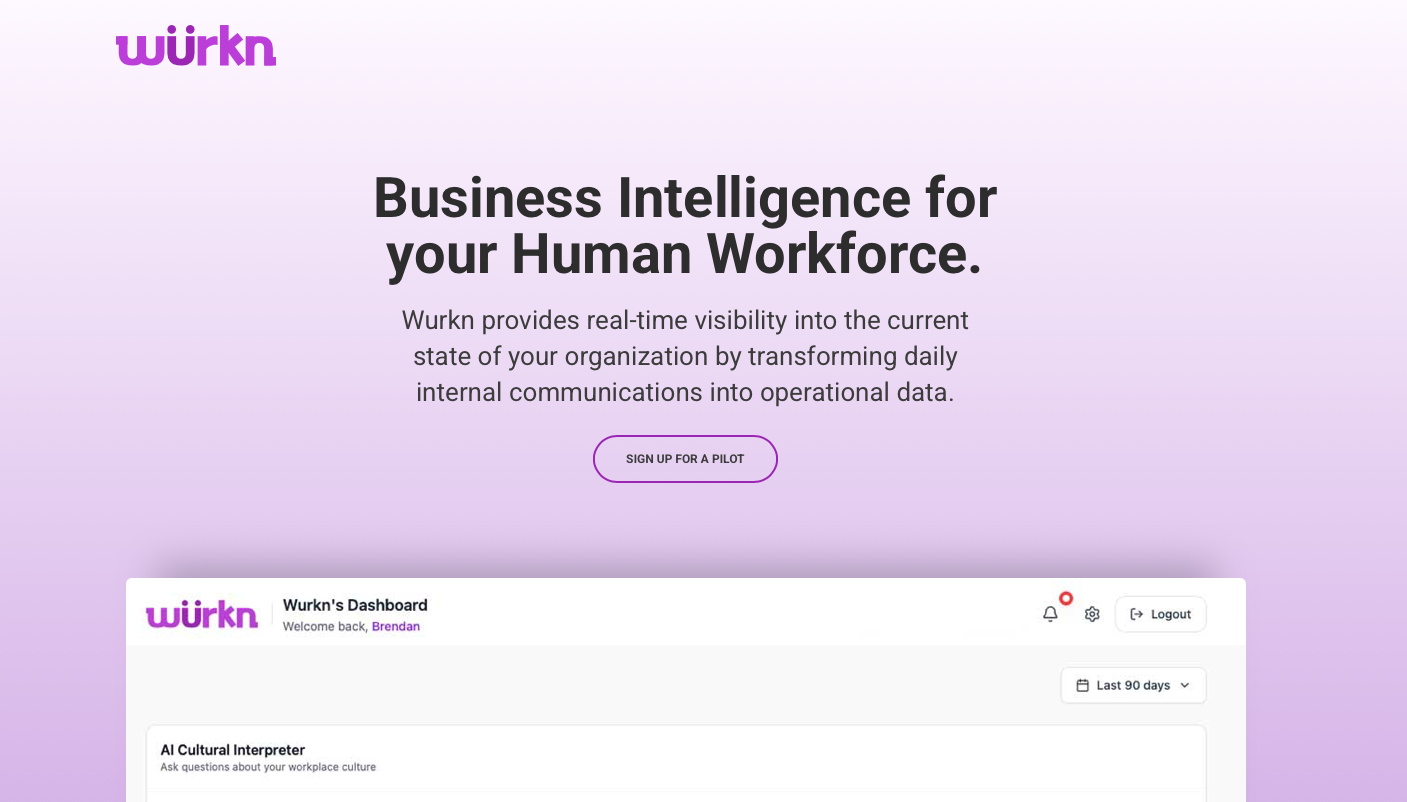
Take control of your employee engagement strategy today by leveraging real-time, actionable data. Visit Wurkn now to discover how you can connect culture with business results and transform employee sentiment into your organisation’s competitive advantage.
Frequently Asked Questions
What is employee engagement?
Employee engagement refers to the emotional and cognitive investment employees make in their work and organisation. It involves discretionary effort and a multi-dimensional psychological connection to both work and the organisation’s mission.
How does employee engagement differ from job satisfaction?
While job satisfaction is about general contentment with a role, employee engagement is more active. Engaged employees are emotionally and cognitively invested in their work and strive for organizational success beyond just meeting minimum requirements.
What are some common myths about employee engagement?
Common myths include the belief that engagement equals happiness, that high engagement only impacts individual performance, and that compliance is the same as engagement. Another myth is that engagement can be accurately measured solely through annual surveys.
How can leaders increase employee engagement in their organisation?
Leaders can increase engagement by fostering a culture of psychological safety, personalizing employee experiences, and empowering decision-making. Conducting regular stay interviews to gather feedback and aligning engagement strategies with specific KPIs also contribute to higher engagement levels.